26 C
Jerusalem
Monday, June 8, 2026
Sample Page
Home Blog Page 162

Earl Shugerman’s Aliyah Story.

0
Reading Time: 3 minutes

My Aliyah Story.

By: Earl Shugerman

Earl Shugerman is a regular contributor to Jewish newspapers around the world.  This is his Aliyah story.

earl shugermanMy first and favorite tour of Jerusalem was two months after my Aliyah in May of 2007. I was accompanied by my cousin Chaya (Heb. fem. name for life). She is Jewish Orthodox and by the age of thirty has six wonderful children. She is also an American Oleh (immigrant). Her family immigrated to Israel, two decades ago. Their intention was to be in the holiest city of the holiest nation on earth. My pride and joy is her three year old son – a “Sabra” (colloquial term for Israeli born) – Elchanan. He is a handsome, brilliant, and very precocious young man with dark hair, brown eyes and a very enchanting but somewhat sly smile. His mom refers to him as a walking “Chamsin” (turbulent hot storm), and his proud grandma jokes that he is Israel’s greatest threat to stability.

As an oleh, and now an Israeli citizen, I marvel at the fact that I can, at any time, visit many of the most famous sites from history. My favorite destination in Jerusalem is the Tower of David, where King David composed the 23rd psalm. When I finish my tour of the Tower of David, I dine at my beloved Middle-eastern restaurant where I enjoy traditional cuisine accompanied by a cold beer. It still amazes me that the distance between The Tower of David, my favorite  restaurant and some other holy and historical sites is just a few hundred meters.

Chaya, now a “vatika” (veteran resident) takes great pride in giving guided tours of her beloved metropolis. During my last visit, we enjoyed touring the city on the famous Jerusalem double decker, open-air bus no. 99.  Elchanan managed to get into everything and talk to everyone to the merriment of all, including our bus driver Haim, a resident of the city for forty years.  On the 99 bus we navigate a route of both scenic and cultural interest. Mount Scopus boasts a visage encompassing the Old City, the Temple Mount and Bethlehem. As the Old City passes into the remote distance, the New City boasts iconographic sites. The Knesset housing Israel’s parliament. The Yad Vashem Holocaust Memorial remembers all those that were the victims of history’s most insidious crime.  The Israel Museum, testimony to Jewish endurance and continuity of their presence in the Land of Canaan (between the Jordan River and the Mediterranean Sea) is also the home of one of the most impressive and famous discoveries dating back more than two thousand years – The Dead Sea Scrolls which describe the Jewish way of life as well as part of the holy books written by a group called “The Esseim”.  By the end of our bus tour many of the travelers felt like old friends.

The heart of Israel is the holy city of Jerusalem.  For two thousand years Jews living in exile annually chant “Next year in Jerusalem”. Next year in Jerusalem is “now”. Our capital is the birth place of the three major monotheistic faiths and I am lucky to be living in the heart of it all.

Haifa’s Holiday of Holidays Festival

0
Reading Time: 4 minutes

The Haifa Festival of Festivals or Holiday of Holidays – an annual celebration.

Hebrew: חג החגים

What’s on in Haifa? Sometimes referred to as the Haifa Festival of Festivals and sometimes the Haifa Holiday of Holidays Festival (HEBREW – חג החגים), this annual event takes place in Haifa in December. Although much needed, we all pray the rain will stay away and the winter weather will be pleasant enough for this unique outdoor event not to be interrupted in any way.

haifa holiday of holidays
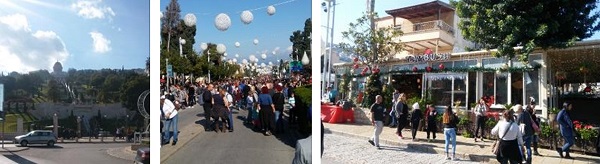
From L-R: A view of the Bahai Temple from Ben Gurion Blvd., The crowds at the 2018 festival and one of many restaurants – food to sink your teeth into on the Boulevard

A few weekends of festivities, cultural activities, markets and fun and events celebrate the three monotheistic religions that live in mutual harmony, cooperation, tolerance and respect in Haifa.  Jews, Christians and Moslems are celebrating their holy days and in Haifa, everyone puts their religious and cultural differences aside, and gets together to enjoy this fun-filled event.

Now in it’s 28th year, the festival has grown in size and popularity. The festival hi-lights the unique flavor of Haifa and its residents.  Yona Yahav (previous Mayor of of Haifa) aptly described the Festival as one “without boundaries of culture and religion.  Just show up and rejoice!”


2021 Festival Dates

 December 2-4, 9-11 & 16-18


Location

Since 2018 The Festival of Festivals Holiday of Holidays is held in the German Colony.  The incumbent, and first, lady Mayor of Haifa – Dr. Einat Kalisch-Rotem moved the main festival events from the Wadi NisNas neighborhood  to the German Colony.  This change in venue has been a success allowing ten’s of thousands of visitors to the Festival.

For first time visitors to Haifa, the German Colony is nestled between the Haifa Port and the Bahai Temple.  The festival is focused along Ben Gurion Boulevard and many performances are held at Beit HaGeffen Cultural Center on the corner of Allenby and Hatzionut Streets.

Wad NisNas – a 10-15 minute walk (no hills) from the Germany Colony, is a quaint place to visit.  If you have the patience to stand in a long queue, Falafel Hazkaynim, Falafel Michel and Falafel George have a reputation for the best falafel in Haifa. These ‘falafelerias’ have been battling for the falafel crown for years. They have been featured on Travel-Israel television and culinary programs with Yishai Golan, Yisrael Aharoni and Hila Alpert. Falafel Orion on Hertzliya street serves a great falafel too. If you’re into hummus; Abu Shakker, Hummus Abu Marwan are just a few of the very best local ‘hummuserias’.

Performances, exhibitions and other Holiday of Holiday events also take place at:

  • The Rappaport Center at the Haifa Auditorium
  • The Tikotin Japanese Museum
  • The Studio Theater at Bet Hecht
  • The St. Johns Church.
  • Haifa Art Museum
  • Haifa City Museum

Transport guide

How to get to the festival? By foot, by car, by bus, by Metronit or by taxi:

Walk through Haifa’s many alleys and stairways that run from Mount Carmel down to Ben Gurion Boulevard. Starting from Yefe Nof Street in the Central Carmel the Gadera stairs, near the Dan Panorama Hotel, descend. Walk down the stairs to the German Colony. It’s a 30+ minute walk to the Festival of Festivals from the Central Carmel. There are hundreds of stairs – don’t do this if you have knee problems but if you can, it’s a wonderful way for you to meander around Haifa, take in the spectacular views, see the suburbs and feel the Haifa vibe.

Haifa runs a limited bus and Metronit service on Saturdays so check on the Egged website or apps like Efobus and Moovit for updates.

Festival Parking

Parking in the German Colony is available but remember that it will be in serious demand during the festival.  These are the main parking zones close by.

  • Migdal HaNeviim
  • HaParsim St. 3 & 16
  • Ben Gurion 6 & 18
  • HaNamal St.
  • HaAtzmaut 67
  • HaGanim 21
  • Y.L. Peretz St.
  • Lavontin St.
  • Herzliya St.
  • Kadoshei Bagdad St.

Corona Updates

Current Ministry of Health directives will apply to all indoor events.  Have your Green Pass on hand.  


What you can expect to see at the festival

Ben Gurion Blvd, the center of the festival is flanked on both sides with wonderful restaurants and coffee shops and some free performances are held here.

Market stalls along Ben Gurion Blvd., sell all manner of craft and flea market items, toys, food and drink, handmade jewelry and items of clothing. Home made pita, labane, koubbeh, kebabs, zaatar, mejadra and tabbouleh are also on sale.  Sample delicious home made nougats, peanut brittle, halva and knafeh.  For the kids, sticky toffee apples are a must.  Hot legumes, corn on the cob and roasted chestnuts are also on sale. A glass of freshly squeezed pomegranate, orange or carrot juice will quench your thirst for about 10 shekels.

The Christmas lights are on every evening and when you look up you will also have a fabulous night view of the Bahai Temple.

Bet Hageffen – the Jewish Arab Cultural Center hosts numerous performances and exhibitions and this year is no exception.

German Colony and Wadi NisNas map with some attractions you might want to take in.

Top Festival Tips

  1. Don’t be shy to bargain – it’s part of the Middle Eastern culture
  2. Keep your wallet and mobile phone in a safe place
  3. Wear comfortable shoes – plenty of walking
  4. Some stalls will take credit cards but not all, so bring plenty of cash

If the weather is fine and you’re coming to Haifa for the day, you might want to combine your visit to the Festival with other activities.  Haifa’s beaches stretch for miles and while it might be too cold for a dip in the ocean, a walk along the promenade and Park Hecht can be invigorating. A selection of cafes and restaurants on the boardwalk are a  great way to relax and enjoy the day, the waves and the ocean breeze. You might also want to take in a visit to the Druze Villages, the Haifa Zoological Gardens or the view from the Bahai Garden main entranceyou will need a car to get to these destinations.

See you there!

Israel Railways and Train Services

Reading Time: 3 minutes

Israel Railways & Train Services.

Hahagana Station

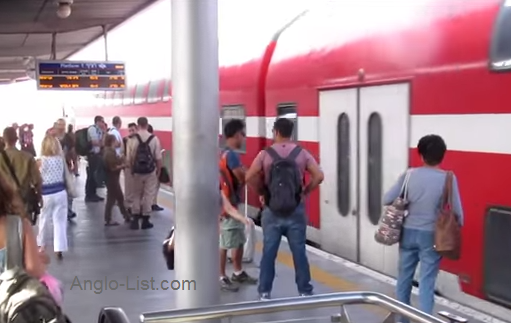
Israel Railways operates the only train service in Israel. Trains run from Nahariya in the north to Beer Sheva in the south.  Trains also service the Karmiel, Bet Shean, the Sharon, Modiin, Jerusalem and Dimona to the East. Click here for train stations route map…

Northern Stations

The northern most station is Nahariya.  There is also a station in Akko.  In 2016, the  line serving Afula from Haifa was completed.

There are 4 main stations in Haifa

  • Carmel Beach (Merkazit Hof Hacarmel) –  opposite the Central Bus station, next to the Haifa beach area, MATAM (Hi-tech center) serving Southern Haifa
  • Bat Galim – next to the old Egged central bus station, close to Rambam Hospital.
  • Hashmona Central station – serving Downtown Haifa, the Haifa Port on Haaztmaut Road and the government offices on Pal Yam (the Bullet Building – Ministry of the Interior, the Courts, Bituach Leumi and other public offices)
  • The Haifa Bay Station (Merkazit Lev Hamifratz) – adjacent to the Central Bus Station, at the Check-post and serving the Cinemall and  Haifa Bay industrial area and the smaller stations of the Krayot and those travelling north.

Binyamina Stations

The Binyamina station is a main junction, between Haifa and Tel Aviv, here you can switch trains and connect to the main north and southbound lines around the country and all the way to Beer Sheva.

Tel Aviv

Tel Aviv has 4 main train stations which connect to the North as well as the East – The Sharon Plain, Ben Gurion International Airport and Modiin, Jerusalem and to the South; Rishon le Zion, Beer Sheva and Ashkelon

  • Tel Aviv University & Show Grounds – also known as Ramat Aviv.  In Hebrew: Universita Ve Gan Hairuim
  • Tel Aviv Center-Savidor – also known as Arlozorov.  In Hebrew: Tel Aviv Merkaz-Savidor
  • Tel Aviv HaShalom – also known as Azrielli. 
  • Tel Aviv HaHagana

Jerusalem

There are 2 main train stations in Jerusalem

  • Biblical Zoo
  • Malha (by the mall)

There is no direct line from northern Israel to Jerusalem. To do so, you need to take the train to Ben Gurion International Airport and then connect to the Jerusalem stations. 

Raanana

Raanana train stations

Modiin

Modiin is the last stop on the direct Nahariya – Modiin Line (including Ben Gurion International Airport).  If you need to get to Modiin, from other parts of the country, you need to swap trains in Tel Aviv at Savidor, HaShalom or HaHagana

Ben Gurion International Airport

Getting to and from Ben Gurion International Airport (NATBAG) is not a problem.  The direct train from  Nahariya in the north to Ben Gurion Airport (and then onto Modiin) runs frequently into the early hours of the night.  You need to swap trains in Tel Aviv at Savidor, HaShalom or HaHagana if you are coming from other parts of the country. The train runs from around 6am till 4am the following morning.

(Due to work on the lines the train to the airport does not currently run on Friday’s – 2021). Shuttle services are available from Tel Aviv. Consult the Israel Railways website for updates.

At times during the coronavirus, the station at Ben Gurion International Airport was shuttered.  Before you set out, make sure that the train is scheduled to stop at the airport.

Train to Eilat

A fast train route between Tel Aviv and Eilat has been approved.  There is still no expected commencement or completion date.

The proposed 350-kilometer track will connect the center of Israel with Eilat, the best scuba diving, Red Sea resort city and port. It is estimated that the train will travel  at some 250 kilometers per hour.

In the meantime you can take a train to Beer Sheva and then a bus onto Eilat.

Wheelchair Access

Unfortunately, not all the train stations in Israel, are wheelchair friendly.  You need to contact Israel Railways and coordinate your journey with them and they will arrange for wheelchair assistance for you.

Top Tips

  • If it is possible to make use of a return ticket, then do so.  There is a 10 per-cent discount on the ticket price if you purchase a return ticket. The discount is only applicable if you use the Rav-Kav multi-transport, smart-card.
  • Train announcements at the stations are made in Hebrew and English
  • “Next Stop” announcements in the trains are also made in Hebrew and English.  They are also displayed on a monitor in each coach. Ask a fellow passenger if you are unsure.

Contact

Please note that Anglo-List does NOT provide information regarding schedules, ticket rates, stations, train accessibility and more.  

Dial *5770 for the Information and Customer Service Call Center at Israel Railways.

Carmel Tunnel & Road No. 6 – Two toll Roads.

Reading Time: 3 minutes

Israel’s 2 Toll Roads – The Carmel Tunnel & Road No. 6

Hebrew: כביש 6 ומנהרות הכרמל  

The Carmel Tunnel

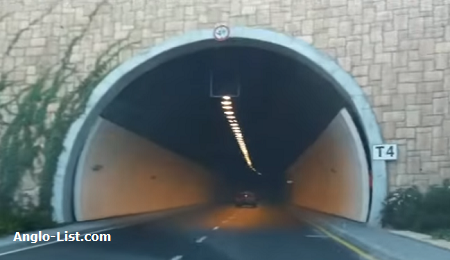
carmel tunnels haifaThe Carmel Tunnel (Minheret HaCarmel) is one of two toll roads in Israel. It is a relatively new toll construction in Haifa. A set of road tunnels in and around Haifa was built to reduce congestion in the industrial area and downtown area.  The tunnels provide an alternate route of reaching the Haifa Bay, the Checkpost, the Krayot (on the Haifa – Akko road) and the hi-tech park, MATAM at the southern entrance to the city thus avoiding the congestion caused by traffic in downtown Haifa.  The tunnels cut the current travel time,  from the Haifa South interchange in the west to the Checkpost interchange in the east, from 30–50 minutes down to 6 minutes.

The tunnels provide easy access to the following Haifa shopping centers:

  • Haifa Mall at the southern entrance to Haifa
  • Castra Mall at the southern entrance to Haifa
  • The Grand Canyon in Neve Sha’anan
  • The Cinemall at the Checkpost

The tunnels also provide easy access to Highway No. 1 – the coastal highway as well as to the new Sammy Offer Stadium in Tirat HaCarmel, also at the southern entrance of Haifa

Carmel Tunnel Fees & Toll

There are two tolls or segments on the road:
  1. The Checkpost at the northern entrance of Haifa –> Grand Canyon segment
  2. The Grand Canyon –> The southern entrance of Haifa

Payment can be made in the following 3 ways:

  1. Cash at the toll booth
  2. Video tolling using automatic number plate recognition for subscribers
  3. Video or transponder tolling for Highway 6 subscribers

The current rates

Prices correct as at December 2015 and are subject to change.

One Segment Two Segments
Private vehicle 8.69 ₪ 17.38 ₪
Public transport 26.07 ₪ 52.14 ₪
Trucks 43.45 ₪ 86.90 ₪

Please note:  The navigational app – Waze – does not work in the Carmel Tunnels

The complex system of roads surrounding the tunnels is affectionately called ‘the spaghetti highway’ by Haifa residents.

Highway 6 – Kvish Shesh

Hebrew: כביש 6

Highway 6 or Kvish Shesh is a major highway and toll road in Israel. The highway runs from the north to the south of the country starting at Ramat Menashe (between Yokneam and Zichron Yaakov) finally connecting to Highway No. 4 in the south of the country near Beer Sheva.  The road is 140 km long, all of which is a freeway.

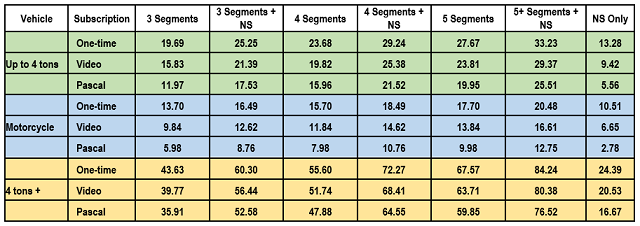
Unlike the Carmel Tunnels, there are no toll booths. Highway 6 uses a system of cameras and transponders to toll vehicles automatically. For vehicles without a transponder, an automatic license plate recognition system is used. Monthly statements are mailed to users. The pricing scheme for Highway 6 is based on the number of segments a driver passes in a given trip. Each segment is the road span between two interchanges.

How much does it cost to use the toll road?

The pricing for non-subscribers up to 3 segments, is 19.39 NIS, for 4 segments –  23.68 NIS and for 5 or more segments – 33.23NIS. An additional fee is paid when driving through the ‘northern segment’ (NS), the cost of which is additional 13.28NIS. Pricing for motorcycles and heavy vehicles is different.  If a license plate is not located in Highway 6’s database then the bill is sent to the owner of the vehicle according to the car registration with the Israeli Ministry of Transportation. Prices correct as at December 2015 and are subject to change.

Renting a vehicle? Verify toll road rates with your car rental company.  Rental companies also charge an additional administration fee.

Payments & Late Fees

The bill for Kvish Shesh is sent to you and includes a payment deadline.  Should you exceed the deadline, you will be charged late-fees.  The late-fees are steep so make sure you pay your bill on-time.  Bills can be paid online on the Kvish 6 website or at the post office or via a Kvish 6 customer service rep.

Ben Gurion International Airport in Israel

Reading Time: 4 minutes

Ben Gurion International Airport – Israel’s main airport.

Everything you need to know about airports in Israel.

Hebrew:  נמל תעופה בן גוריון

Ben Gurion International Airport – Image credit: Unsplash

Israel’s main international airport, Ben Gurion, is located in the center of the country at Airport City, near the town of Lod, between Tel Aviv and Jerusalem. In Hebrew it is called ‘Namal Teufa Ben Gurion’.  It is also known by the acronym ‘NATBAG’.

Getting to and from Ben Gurion Airport; public transport, transfers, shuttles…

Driving to Ben Gurion by car

  • Ben Gurion is accessed via Israel’s main highway – Road No. 1
  • Via Road No. 6 (Kvish Shesh): the toll road, and then taking the Road No. 1 turn off

There are buses, trains and sheruts (10 seats, shared taxi) from all the major cities to the airport.  Israel has convenient and reasonably priced public transportation and public transport options for getting to and from Ben Gurion Airport.  You can get there by bus, private shuttle services; by rail; private taxis, sheruts, rented cars or even limousine services.  For details regarding transportation depots and general airport information, please visit the Israel Airports Authority website.

Traveling by bus to Ben Gurion

Egged Information:  Call 03-694-8888 or *2800 from any telephone for schedule and fare details

Public transportation depots are located in the three-story bridge on the second floor, near Gates 21 and 23.  Buses leave from there to the Egged station at nearby Airport City where one can transfer to regular Egged bus lines.  Passengers traveling from Airport City to the airport will receive free passage tickets for the internal shuttle service that operates the route.  Various Egged lines run between the Airport City station and central points in Israel at frequent intervals throughout the day. It is worth phoning or checking the website for details.

SuperbusOperates a bus route from the airport to nearby Shoham. MargalitOperates a bus line from Ben Gurion to the city of Modi’in.  MetropolineOperates a bus line to the city of Be’er Sheva which travels through Gedera and Kiryat Gat.
Tel: 1-700-700-181 Tel:  08-655-4201  Tel: *5900

The train to Ben Gurion Airport

Israel Railways provides comfortable and efficient service on all routes.  The South bound train from Nahariya to Modiin stops at Ben Gurion Airport.  Passengers from other areas in the country need to connect at any of the stations along that line.  Railways route map

Israel Railways Information:  03-577-4000 or *5770

Note: The train station is located on Level S (the lowest level and can be accessed from the Arrivals Hall via elevators, escalators or stairs. Tickets may be purchased from automatic machines located on Level G.

Free shuttle to Ben Gurion

While repairs and work on the Israel Rail system is being carried out, intermittently there are changes to the train schedule and the stop at Bet Gurion is sometimes not operational.  A free shuttle bus is offered from certain locations across the country.

Airport taxi services

The taxi companies based at Ben Gurion Airport operate under the supervision of the Israel Airports Authority. We recommend that you only use a licensed taxi. The taxi stands and dispatcher’s booth are located at Terminal outside the Arrivals Hall.

Licensed taxi services

Hadar Lod – transportation to all parts of the country.
Tel.: 03-9711103

Nesher Tours – transportation to and from Jerusalem.
Tel.: 02-6257227

Amal – transportation to Haifa and the North area.
Tel.: 04-8662324

Local taxi fares

Taxi drivers are required, by law to use a meter on all trips. Unless you know the official rates, do not be tempted to set a price beforehand. For long trips, the driver must charge passengers according to the Ministry of Transport price list posted in all taxis.

A 25% surcharge for night trips – effective from 9:01pm until 5:29am (from 4pm on Fridays and holiday eves). Trips out of Ben Gurion Airport are charged an additional NIS 5.00, and passengers pay approximately NIS 3.00 for each suitcase. Passengers who request use of Road 6 (a toll road) will pay an extra fee.

You are fully entitled to request a receipt at the end of the journey.

Car rental at the Airport

The car rental companies can be found on the first floor in the Arrivals Hall and are open 24/7.  Returning vehicle can be done at the airport or at another location in Israel, as agreed upon.

Airport limousine services

Several companies provide special transportation services from Ben Gurion Airport to various destinations throughout Israel.  Present your limo voucher at the appropriate counter in the Arrivals Hall.

General Ben Gurion information

Click here for complete list of useful airport telephone numbers

Flight arrivals & departures

Real time flight arrivals and departures to and from Ben Gurion International Airport

List of airports in Israel

  1. Ben Gurion Airport Tel Aviv (International)
  2. Ilan & Assaf Ramon Airport Eilat 
  3. Herzlia Airport
  4. Haifa Airport
  5. Ovda Airport
  6. Kiryat Shmona Airport
  7. Rosh Pina Airport

Airport coronavirus testing

Israelis, vaccinated and recovered, wishing to travel to countries where active coronavirus case numbers are low, are required to present their vaccination and/or recovery certificate at the airport.

The four health funds: Maccabi, Clalit, Leumit and Meuhedet provide coronavirus testing for their members for the purpose of international travel. Private quick testing can be done at the airport.

Incoming travelers are required to take a coronavirus test upon landing in Israel.

Please check the Israel Ministry of Health website for latest information regarding coronavirus regulations, isolation and entry to Israel.

The Carmelit Underground Funicular in Haifa.

Reading Time: 4 minutes

The Carmelit – Haifa’s underground funicular transport system.

Hebrew: הרכבת התחתית – כרמלית חיפה

new carmelit
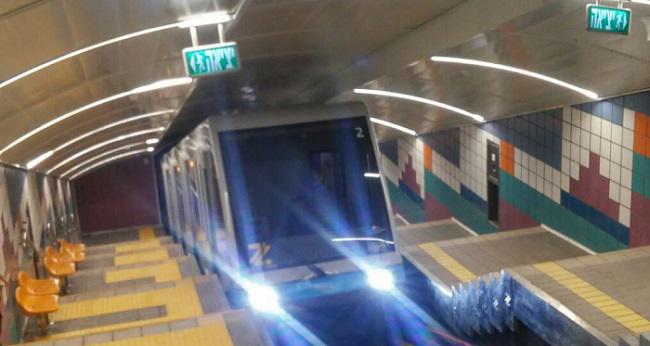
The Carmelit – Golomb Bnei Zion Station

Who’d have thought you can travel and explore Haifa from Downtown to the Carmel Center in just 8 minutes.  The  Carmelit is the underground funicular railway in Haifa. The Carmelit is one of the smallest subways in the world, having only six stations and a single tunnel 1800 meters long. Two, two-car coaches run on a single track with a short double-track section halfway to allow the train coaches to pass each other. The altitude difference between the first and last stations is 274 meters.

Carmelit route & stations

Forget about traffic jams, parking problems and pollution.  The Carmelit travels along a straight line, up and down Mt. Carmel.  There are 6 stations along the way each with access to tourist attractions.

carmelit stations
Carmelit Stations: Gan HaEm, Bnai Zion, Massada, Haneviim, Solel Boneh & Paris Square – carmelithaifa.com


  1. Gan Ha’em (“Mother’s Garden”): The main station in the Carmel Center neighborhood is adjacent to the Haifa zoo, the Louis Promenade, the Haifa Auditorium, and many high-end shops, restaurants, sidewalk cafes and most of Haifa’s largest hotels.
  2. Bnei Zion (“The Sons of Zion”) – named after the nearby Bnei Zion Hospital. The station was previously called “Golomb”. The station is conveniently located near the Bnei Zion (Rothschild) hospital and the offices of The Bahá’í World Center.
  3. Massada, Upper Hadar: on Massada street with quaint art galleries, antique shops, cafes and restaurants. Close to the “Madatech” or the Haifa Science and Technology Museum located in the old Technion building opposite Nordau street.
  4. Hanevi’im (“The Prophets”) in the Hadar Hacarmel neighborhood: Near Hanevi’im, Herzl and Hechalutz streets – a main shopping district. Close to the Haifa Museum.
  5. Solel Boneh: near Hanevi’im tower, Ha’atzmaut Park, The Haifa City Hall and the municipal offices
  6. Kikar Pariz (Paris Square), Downtown: near the new Haifa University Campus (Campus HaNamal), the government buildings (on Pal Yam street in the ‘missile building’) and the courthouse on Ha’atzmaut Street.  Kikar Pariz is also in walking distance to one of Haifa’s train stations – Haifa Central or HaShmona. The tax offices (meches) and the entrance to the port are close by.  The revamped and now trendy, Turkish Market buzzes on Thursday nights.  In summer local pubs and restaurants are packed with students and young people.  Craft markets, artists’ workshops and young Israeli designers are also selling their wares.

Carmelit train travel time

The Carmelit runs every 10-12 minutes and is the quickest way of getting from the Central Carmel to the Downtown area. It takes approximately 8 minutes to travel the entire line.

Wheelchair access

Unfortunately the Carmelit is not wheelchair or disabled friendly.  There are no ramps or elevators, only lots of stairs and one escalator going up at selected stations.

Tickets & fares

Children under the age of 5 travel for free as do IDF soldiers (in uniform) and the blind.

As at January 2017 the Carmelit was incorporated into the Haifa Metropolin public transport network. The Metropolin public transport network includes bus transport, Metronit transport and now the Carmelit.

Fares are as follows:-

Single ticket adult 5.90 Carmelit only
Group ticket – 10 people or more 3.00 Carmelit only
Single continuation ticket adult 5.90 Haifa area only
Single continuation ticket adult 9.10 Haifa and beyond
Single continuation ticket adult 12.50 Metropolin network
Daily ticket (only valid on date of purchase) 13.50 Haifa ring – 1
Weekly ticket (valid for 7 days from date of purchase) 64.00 Haifa ring – 1
Monthly ticket (valid for 1 calendar month) 213.00 Haifa ring – 1
Student semester ticket 527.00 Haifa ring – 1
Student annual ticket 1278.00 Haifa ring – 1

Paying for your Carmelit ticket

The Carmelit uses the Rav Kav – multipurpose transport ticketing system for multi-ride tickets.  You can load your Rav Kav at one of the Rav Kav vending machines across the city and of course in the Carmelit stations.

Single ride, paper tickets are available at the Carmelit ticket vending machines.

Operating hours

 Sunday – Thursday  06:00-24:00
 Friday and holiday eves  06:00-15:00
 Saturday & holiday end  Shabbat end – 24:00

Members of the public have asked for the Carmelit to be open on weekends as well.  Will this ever happen? We’ll update you if it does.

Life saving tip!

It is very important to remember that the Carmelit was built to double as a public bomb shelter in the event of missile or rocket fire – a very safe place to seek shelter should it become necessary.

Our Petition

In August 2015, Anglo-List joined the campaign to fight for the rights of passengers of the Haifa underground – The Carmelit.  We petitioned the Haifa Municipality and the Ministry of Transport. We wanted the Rav Kav multi-transport ticketing system to include the Carmelit…

Sheruts & Taxis in Israel

Reading Time: 5 minutes

Israel Public Transportation – Sheruts & Taxi Services

Hebrew: תחבורה ציבורית בישראל

The Sherut Service – Shared Taxi

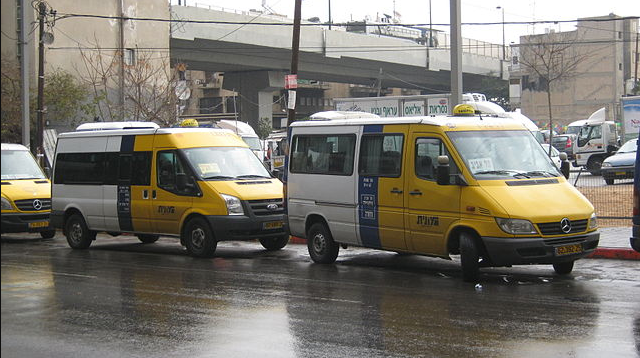
Sheruts: Image Credit: Wikimedia – Leineabstiegsschleuse

Numerous taxi companies operate sheruts – a shared taxi with 10 passengers. They are a convenient and fast way to get around. In most cities they travel along the most popular routes. The sherut will leave its initial point of origin only when it has filled up with passengers – usually 10. Unlike buses, sheruts stop and let you off wherever you wish along a specific route. You can hail a sherut at a bus stop, or close to one, on the various designated routes.

There is a standard sherut fare.  Currently, the fare is 6 shekels.  Bus fare within the city is 5.90NIS

A special sherut service is available to Ben Gurion International Airport . The sherut will collect you, and your luggage, from your home, at a specified time.

The sherut rank at Ben Gurion Airport will take you to  almost any destination in Israel. The sherut will only depart from Ben Gurion when it is full. This may take a long time.  You have to be patient.

Sherut fares are standard and laid out by the Ministry of Transport.  On occasion, the taxi driver may ask the passengers if they are willing to share in the cost difference of the missing passengers, so that the sherut can leave straight away. This may add an additional 10 or 20 shekels to the regular fare but it is often worth it.

Just “Google” sherut from your location to Ben Gurion Airport for more information and a list of  taxi companies offering this service. They all speak English.

 Private Taxi Services to Ben Gurion Airport (Natbag)

There are many smaller, private individual, taxi and shuttle services who are  honest and offer reliable service, to and from Ben Gurion Ariport (Acronym NATBAG) and other destinations.  Do not confuse these  with a “special taxi” (explained below), operated by  the large taxi companies having fleets across the country.

The Taxi Service – A “Special”

If the bus or regular sherut service cannot get you to your destination, there is always the option of calling one of the large taxi companies and ordering a taxi-cab. Commonly known as a “special”, you can hail a cab on the street or order one by phone through the taxi company or on one of the mobile apps like GetTaxi. There are two options for paying the fare; the first option is to agree on a rate prior to commencing the journey.  The second option is to pay according to the metered rate.  Like most things in Israel, taxi fare is negotiable to a certain extent and it is generally expected of you to do some haggling.

Taxi Fares in Israel

The metered rate starts at 11.50 ILS (this being the minimum rate as of March 2017).  The meter works on distance and on time.  If you have agreed upon a rate you can be sure that the taxi driver will drive fast, try to beat the traffic-lights and overtake wherever possible so that he can pick up another fare as soon as possible. Buckle up and pray you’ll make it to your destination!  If you have chosen the metered rate, the taxi driver will take his time, drive carefully, slow down wherever necessary and sit patiently behind the garbage truck so that that meter can continue to roll.

Whichever way you choose to pay, you have the right to ask the driver for a receipt, for the air conditioner to be turned on, to open or close the windows and change the radio station from some foreign language channel to the latest news broadcast.

It is not our intention to put you off.  Israeli taxi drivers are generally very helpful.  They are often protective of teen-age children traveling without adult supervision.  The drivers may give the kids a discount if they are a little short of the full fare and will do there best to make sure that they get home safely late at night.

Cabs in Israel are always clean and in good working order.

The Gett Taxi App

Use the Gett taxi-app for taxi rides around the country.  Anglo-List does not promote one app over another or any public transport company, but we received this info from a kind reader – Alan – somewhere in Israel:

I just wanted to add something to the article:
If you hail a cab from the street, there should not be an additional 4.80 added to the final fare. Only the 11.50 starting price. 4.80 should only be added if your called to order a cab. Actually the way to work around that is by ordering through Gett during certain non-peak hours. (see Gett’s pricing schedule). I don’t work for Gett but I use it often and part of the reason is because it gives me recourse if they try to add charges that don’t belong. In a weeks time, I’ve had 3 different charges removed from my credit card. It really does work. The other thing about Gett is that if you enter the address, it will show up on the drivers phone and he has the option of using the GPS to take the route. Another thing I’ve done in the past to make sure that the driver stays on track in an area that I”m not familiar with is to enter the address on my phone and instruct the driver on the route that I’d like to take. All of these methods have saved me much money. Lastly, make sure to always as for the receipt. Even when using Gett. Gett will only refund a discrepancy when you email them a copy of the receipt. It’s also useful if you need to dispute the charge with the Taxi station or if you intend to take it to the Ministry of Transport. That’s it for now. I hope this information will help fellow cab riders. Thanks.

Laura & David reflect on taxi services:

We took a cab in the Sinai some years ago.  It was hot!  Seven people were crammed into an 8 seater Mercedes taxi and their luggage piled high (stretch limmo style, model year – circa ’70s).  They used to use those models in Israel too before they started using vans.  The windows were closed because of the dust. We asked the driver to switch on the air-conditioner so we could get some relief from the mid-day, mid-summer, Egyptian desert sun.  The driver responded by reaching into the glove compartment and said “Here is the air-conditioner” and he handed us the crank to open the window!

The Israel Bus Service.

Reading Time: 6 minutes

Israel’s Bus Service; Egged, Dan, Superbus, Kavim, Golanbus…

The Israel bus service is served by 8 different bus companies with Egged and Dan being the most popular. Egged operates from North to South and Dan focuses on Tel Aviv and surrounding Dan region. The Israel bus service is reliable, on-time, runs frequently and connects to almost everywhere in Israel.

Israel’s major bus companies, offering services, are:

Bus Company
Major Locations
Website
 Egged  Countrywide  www.egged.co.il
 Dan  Center  www.dan.co.il
 Superbus  Center  www.superbus.co.il
 Kavim  Center & North  www.kavim-t.co.il
 Connex Center & North  www.connex.co.il
  Nateev Express  North  www.nateevexpress.co.il
 Nazereth Buses  North  www.ntt-buses.com
 Metropoline  South  www.metropoline.com
 Golanbus  North  www.golanbus.co.il

The Tel-Aviv Bus Service

Tel Aviv is served by several public transport operators, primarily Dan Bus Company within the city and Egged for routes connecting Tel Aviv to other parts of Israel. In recent years, additional operators such as Kavim and Metropoline have also begun operating some routes in the metropolitan area.

The main transport hubs include the Central Bus Station (Tachana Merkazit), the Arlozorov Terminal (next to Tel Aviv Savidor Central railway station), and the Azrieli Terminal near the Azrieli Center. Note that many intercity buses now depart from terminals like Arlozorov rather than the Central Bus Station, which is used less than in the past.

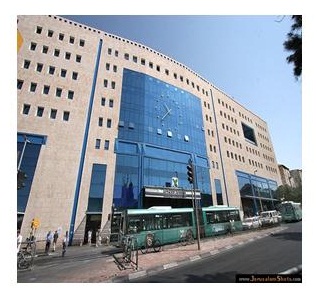
Jerusalem’s Central Bus Station

jerusalem bus station

Jerusalem is served primarily by Egged, which operates most urban and intercity routes, along with Dan Bus Company and its subsidiary Dan Badarom, which run select lines connecting Jerusalem with other regions.

The main transport hub is the Jerusalem Central Bus Station on Jaffa Road, where both city and intercity buses operate. It is located next to the Jerusalem Light Rail and within walking distance of the Jerusalem–Yitzhak Navon railway station, providing easy connections to trains and light rail services.

Many intercity buses depart from platforms along Zalman Shazar Boulevard, directly outside and across from the Central Bus Station, making transfers between routes straightforward.

Haifa’s Central Bus Stations

Haifa is served by several public transportation operators, including Egged, Superbus, Kavim, and Nateev Express, which together operate urban and regional routes across the city and the north.

The two main transport hubs are the Carmel Beach Central Bus Station (Merkazit Hof HaCarmel) at the southern entrance to the city, and the Haifa Bay Central Bus Station (Merkazit HaMifratz) at the northern entrance, near the “Check Post” junction. Both terminals are adjacent to Israel Railways stations and connect directly to the Metronit, providing seamless transfers between bus and rail services.

Haifa serves as a major transportation hub for Northern Israel, with extensive connections reaching towns and cities across the region, including destinations as far north as Kiryat Shmona.

Bus Tickets & Fares

Ticket purchases are generally not made on the bus. Instead, you must pay using a Rav-Kav, via a mobile payment app, or most recently (2026), with a credit card or an NFC enabled smart watch.

You can load your Rav-Kav at vending machines located in central bus stations, at select ATMs, online, or at authorized retail points. Vending machines and ticket offices also allow you to purchase and load fares using a credit card.

Alternatively, several mobile apps (such as Rav-Kav Online, Moovit, and HopOn) allow you to pay directly by scanning when boarding—no physical card required.

Avoid a 100 shekel fine – make sure you pay the fare.

Single Journey

A regular one-way ticket (כרטיס / kartis) in most cities costs around 8.00 ILS. Included in this fare is a 90-minute transfer (כרטיס מעבר / kartis ma’avar), which allows unlimited transfers between buses (and, in many areas, light rail or Metronit) within that time frame.

This transfer is applied automatically when you pay using a Rav-Kav or a mobile transport app, so there’s no need to purchase a separate ticket for each leg of your journey.

Inter-city fares are determined by distance.

Multiple Bus Journeys

  • A pre-paid season ticket (כרטיסיה / kartisiya or free pass) allows unlimited travel within a defined zone or “ring,” where standard fares apply. It’s a cost-effective option if you use public transport frequently—typically more than two rides per day.

  • Students are eligible for significant discounts (often around 50%) when using a Rav-Kav with a valid student profile. Pensioners are also entitled to reduced fares, which can be loaded onto the Rav-Kav or used via mobile apps.

  • Children under the age of 5 travel free, provided they do not occupy a separate seat.

  • A day pass (חופשי יומי / hofshi yomi) offers unlimited travel across multiple modes of transport—including buses, trains, the Carmelit, the Metronit, and light rail systems (where applicable). The pass is valid until 03:00 the following morning, making it a convenient option for a full day of travel.

The Rav Kav (Multiple Journey Ticket)

rav kav

Introduced in 2010, the Rav-Kav is a prepaid smart card used for single rides, transfers, and season tickets across Israel’s public transportation system.

You can obtain a personalized Rav-Kav at central bus stations, train stations, and authorized service points. When issuing a personalized card, you’ll need to present identification, and a digital photo will be taken and printed on the card. It is issued on the spot and includes your personal details, allowing access to discounted fares (such as student and senior rates).

Once loaded with credit or a travel plan, simply tap the Rav-Kav on the card reader when boarding. The appropriate fare is automatically deducted.

In most cities, a single fare includes a 90-minute transfer window (כרטיס מעבר / kartis ma’avar), allowing unlimited travel on buses and other local transit (such as light rail or Metronit) within that time. This generally does not include travel on Israel Railways trains.

An anonymous version (Rav-Kav Anonimi) is also available for a small one-time fee (around 5 ILS). It does not include personal details and therefore does not provide eligibility for discounts, but it still supports the 90-minute transfer feature. This makes it a convenient option for tourists or short-term visitors. More…

School Bus Routes

Student-designated routes are clearly marked at bus stops. On one side of the sign, it will say “STUDENTS” in English, and on the other side, it will say “תלמידים” (talmidim) in Hebrew.

Panoramic Bus Tours in Jerusalem & Tel Aviv

The panoramic bus tour in Jerusalem (the Red Bus) is the best way to see the city.  The day-long excursion, on the open-top bus, allows you to hop-on and hop-off at various stops of public interest and tourist attractions.

Tel Aviv city tour invites you to a panoramic tour of Tel Aviv in a two story bus along the main sites of the city. There are 28 stops.

Transport tip:  Guided tours on the panoramic buses, are available in 8 different languages  Contact +972 3639 4444 (Tel Aviv) or +972 50 842 2473 (Jerusalem)

The Disabled & Wheelchair Bound

Inner-city buses in Israel are generally wheelchair accessible, and drivers are required to assist passengers with mobility needs when boarding and disembarking. Most buses are equipped with a ramp or kneeling system to facilitate easy access, which the driver will deploy as needed.

Once on board, there is a designated space for wheelchairs, typically fitted with safety restraints. The driver will ensure the wheelchair is properly secured before the journey continues. When it’s time to get off, the driver will assist again by releasing the restraints and deploying the ramp for a safe exit.

A cute, true story

Circa 1990, somewhere in Haifa: A man boards a bus and heads toward what appears to be an empty seat beside an elderly woman. As he gets closer, he notices her small dog sitting comfortably on the seat.

He politely asks her to move the dog. She ignores him. He asks again—this time she refuses, and a heated exchange begins. Other passengers quickly join in, each offering their opinion, but no one can agree on a solution.

Finally, they turn to the driver for a ruling. After a brief check, the driver confirms: the woman has purchased a ticket for the dog. The dog, therefore, is entitled to the seat.

Defeated, the man sighs—and goes off in search of another place to sit.

Israel Currency, Exchange Rate & Currency Converter

0

Reading Time: 3 minutes

Israel Currency – The Shekel

Hebrew:  מטבע ישראלי – שקל

The currency of the State of Israel (Israel currency) is the New Israeli Shekel – abbreviated to NIS or ILS. One shekel is divided into 100 agorot.

In Hebrew it is represented by the acronym ש”ח–  ‘which stands for שקל חדש

Israel Shekel Coins

One and five agorot coins are no longer in use. Today we use the 10 agorot, 50 agorot (also called half a shekel – Hebrew: ‘hetzi shekel’), one shekel, two shekel, five shekel and ten shekel coins. The 10 agorot and 50 agorot coins are copper.  The 1, 2 and 5 shekel coins are silver. The 10 shekel coin is silver and brass.

Israel Shekel Notes

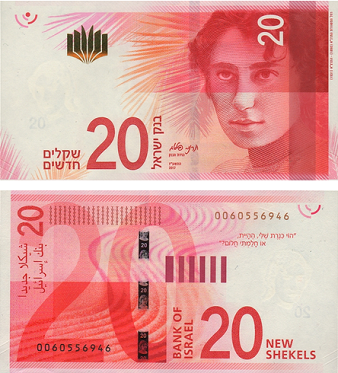
The 20 Shekel Note

The red 20 shekels note is the smallest bank note and includes a portrait of Rachel the Poetess against a background of palm tree fronds.

israel currency 20 shekels

The 50 Shekel Note

The new 50 shekel note is green includes a portrait of Shaul Tchernichovsky, a citrus tree and its fruits.

israel currency 50 shekel note 

The 100 Shekel Note

The 100 shekel note is yellow and red and includes a portrait of Leah Goldberg against a background of almond tree blossoms

israel currency 100 shekel note

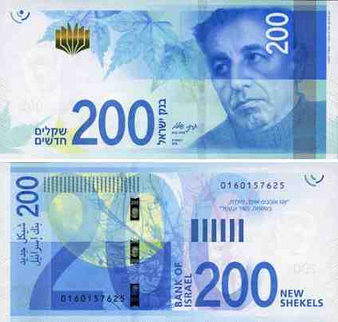
The 200 Shekel Note

The 200 shekel note is blue and includes a portrait of Nathan Alterman set against a background of autumn leaves.

israel currency 20 shekel note

Shekel Definition and Value in Biblical Times

Did you know that a shekel was a coin that represented a claim on a weight of barley held in the city warehouse, This coin weighed the equivalent of about 180 grains of barley (approximately 11 grams). The Hebrew word shekel is based on the Semitic verbal root for “weighing” -שקל

Current Shekel Value

The New Israeli Shekel, like all currencies, fluctuates on a daily basis.

Currently (November 2021)

One Shekel is worth 0.32 cents to the US dollar, or just over 3.117 Shekels to the US dollar.

One Shekel is worth 0.28 Euro cents or just over 3.611 Shekels to the Euro.

Currency Converter

Israel Shekel to Dollar and more than 100 other currencies

Currency Converter by OANDA

International Clothing Size Converter for Adults

Reading Time: 2 minutes

Adult clothing size converter for Israel

Clothing size converter for Israel, Europe, Australia & New Zealand, the U.K & South Africa and the U.S.A & Canada

clothing size converter

This  clothing size converter is a guideline only.  When shopping for the right size you will discover that clothing sizes can differ considerably between different clothing manufacturers and brands. When shopping online for clothes it has been our experience that clothes advertised on Chinese websites or sites in the Far East, are much smaller than we are used to so order one size up.  Make sure you compare your measurements to the ones listed online. If you usually order XL on one site, for example, don’t assume that XL is your size on another site.

Men’s Suits and Jackets

Australia 36 38 39.5 41 42.5 44 45.5 47 49
Israel & Europe 46 48 50 52 54 56 58 60 62
U.K & South Africa 36 38 39.5 41 42.5 44 45.5 47 49
U.S.A. & Canada 46 48 50 52 54 56 58 60 62

Men’s Shirt Sizes

Australia 37 38 39 41 42 43 44 45 46
Israel & Europe 37 38 39 41 42 43 44 45 46
U.K & South Africa 14.5 15 15.5 16 16.5 17 17.5 18 18.5
U.S.A. & Canada 14.5 15 15.5 16 16.5 17 17.5 18 18.5

Men’s Shoe Sizes

Australia 36 38 39.5 41 42.5 44 45.5 47 49
Israel & Europe 38 38.7 39.3 40 40.5 41 42 42.5 43
U.K & South Africa 5 5.5 6 6.5 7 7.5 8 8.5 9
U.S.A. & Canada 5.5 6 6.5 7 7.5 8 8.5 9 9.5

Women’s Dress Sizes, Suits and Sweaters

Australia 8 10 12 14 16 18 20 22 24
Israel & Europe 36 38 40 42 44 46 48 50 52
U.K & South Africa 8 10 12 14 16 18 20 22 24
U.S.A. & Canada 6 8 10 12 14 16 18 20 22

Women’s Shoe Sizes

Australia 5.0 5.5 6.0 6.5 7.0 7.5 8.0 8.5 9.0
Israel & Europe 35 36 36 37 37 38 38 39 39
U.K & South Africa 3.5 4.0 4.5 5.0 5.5 6.0 6.5 7.0 7.5
U.S.A. & Canada 5.0 5.5 6.0 6.5 7.0 7.5 8.0 8.5 9.0