17.1 C
Jerusalem
Tuesday, April 21, 2026
Sample Page
Home Blog Page 148

MEDICAL & HEALTHCARE SERVICES

Reading Time: 4 minutes

A detailed overview of community medical and healthcare services in Israel. Expect private healthcare services to be very different to those offered by the public healthcare services that the four Israeli health funds (kupat holim) offer; hospital systems, patient care, ambulatory services, dental and all other aspects of medical and healthcare.

health


ADHD

Attention Deficit Hyperactivity Disorder (ADHD) & its impact on families. Are you, or is your family dealing with ADHD? Practical information, tools and strategies by Linda Avitan, MSW.


An overview of the healthcare system and health services in Israel

An in-depth overview of the Israeli medical and health-care system


Ambulance and emergency services

Magen David Adom – MADA – emergency services, private ambulances, payments and entitlements


Blood donation information

Blood donor criteria and blood donor stations country wide


Choosing a Health Fund – Heb: Kupat Holim

There are 4 Health Funds in Israel: Maccabi, Clalit, Leumit & Meuhedit and according to the law, you can become a member of any one of them. Which is the best one for you?


Changing & switching over to another Health Fund

Changing Health Funds is easy but there are rules and regulations for switching to another Kupah


Contact information MOH

Contact details for Israel’s Ministry of Health


Coronavirus vaccination

How and where to get the coronavirus vaccination for HMO members


Coronavirus – Rules of conduct

Rules of conduct as set out by the Ministry of Health during the Coronavirus.


Dehydration- signs, symptoms, causes & prevention

Life saving tips for preventing and treating dehydration during Israel’s hot summer months


Dental care in Israel

Private dental care vs the Health Fund dental clinic


Doctor’s appointments & fees

Be prepared! What you can expect to happen at your doctor’s appointment in Israel


Drowning

First aid for a drowning victim


Family healthcare clinics – Heb: Tipat Halav

Ministry of Health family healthcare clinics, services and branches countrywide


First-aid for Burns

Emergency treatment for the 3 types of burns – each type needs to be treated differently.


Fluoridation

A question commonly asked by olim – Is there fluoride in Israel’s drinking water and should we bring a fluoride supplement with us on Aliyah?


Flu vaccine

Procedure for getting the flu shot or nasal flu vaccine in Israel


The New Green Pass

The NEW Green Pass for Israelis who have received the Covid-19 coronavirus vaccination and recovered patients.


The Health Basket – Heb: Sal Briut

The Israel national basket of health services and medical entitlements


Home visits and consultations

Emergency medical house-calls or regularly required home-visits day and night


Hospital care in Israel

Public and private hospital care and services, information, paperwork and admissions


Israel’s national health insurance law

The provisions of Israel’s National Health Insurance Law


Israel’s patient’s rights act

The legal rights of every patient in Israel as stipulated in the 1996 law


Jellyfish stings

First aid for jellyfish stings. What is the best way to treat a jellyfish sting? Sea water, vinegar or urine?


Medical emergencies

Bikur Rofeh offers emergency medical services o the general public, health fund members, soldiers and insurance policy holders


Medical and health care options in Israel for non-residents

Health insurance options and services for non-residents, internationals and expats in Israel


Medical resources & assistance

The Ministry of Health, medical support and social services


Medical terminology

Free word sheet! Useful Hebrew, English and transliterated medical words and phrases


Mental health care services. Get help!

The 2015 mental health care reform. Mental health services are now the responsibility of the Health Funds


Organ donation & transplants

Register with ADI – the national body that oversees organ donation and transplants in Israel


Paying for medical & healthcare services – ‘Hitchayvut’

Called ‘Tofes 17’ or ‘Hitchayvut’, you need payment authorization for numerous medical and ambulatory services as well as diagnostic procedures. A free Hebrew to English translation


Plastic surgery

Cosmetic and reconstructive surgery in Israel


Poison information – must know

The Israel National Poison Information Center at Rambam hospital operates a 24 hour hotline for all your questions, queries and emergency situations


Prescriptions & Medications

Meds offered in the Health Basket, generic equivalents, filling your prescription, labeling, dosage instructions and fees


Registering for a Health Fund – Heb: Kupat Holim

New immigrants/olim can register for a Health Fund upon their arrival at Ben Gurion airport or at any post-office


Social services for your medical needs

Social and welfare services programs, projects and care in Israel.


Suffering from skin ailments? Free word sheet

Learn new Hebrew words for common skin ailments and conditions. With English and transliterations


Stab wounds

A spate of terrorist events: Should you have to offer first aid to a stab wound victim, this is what you need to know


Treating sunburn

Don’t overdo it in the sun. Tips for sun protection and treating sunburn in Israel’s harsh climate


Upgrading health services

For an additional fee, you can upgrade your health services to a supplementary health package.  These superior health plans incorporate services not included in Israel’s Health Basket.  What’s involved?


Vaccinations & immunizations for babies & children

The Israel Ministry of Health suggests these vaccinations and immunizations for children


Measles outbreak in Israel

The 2018 measles outbreak; symptoms, treatment and vaccinations.

Herbs & Spices of the Israeli Kitchen

Reading Time: 6 minutes

Herbs, spices & flavorings commonly used in the Israeli & Middle Eastern kitchen – a picture dictionary.

Hebrew: המטבח הישראלי הים תיכוני – תבלינים

spices

Tonight you might grind a bit of pepper onto your salad or use it to perk up a steak, but did you know pepper was once so valuable that it could be used to pay the rent.  Pepper, along with other spices such as cinnamon, cloves and nutmeg, were used for flavoring food.  They were also used for making perfume, embalming the dead, preserving meat and sprucing up salve recipes in traditional medicine.

Israel’s flavors are drawn from the Mediterranean, Middle-Eastern and European kitchens.   These are some of the herbs and spices that are most popular in the Israel and you will find them in abundance in the markets and on supermarket shelves.

The English word is followed by the Hebrew transliteration and then the actual Hebrew word.

aniseed


Baharat


Basil

Aniseed – Anis – אניס


Baharat – Baharat – בהרט


Basil- Bazilikum – בזיליקום

bay leaves dafna   caraway kimel   carob haruv

Bay leaves- Aley Dafna – עלי דפנה


Caraway – Kimel – קימל


Carob – Haruv – חרוב

cardamon 


 pepper


celery

 Cardamon – Hel – הל


Cayenne Pepper – Pilpel Harif – פלפל חריף


 Celery- Selery/Karpas – סלרי / כרפס

chili


chives


 cinamon

Chilli – Pilpel Adom/Chili – פלפל אדום


 Chives – Irit – שום העירית


Cinamon – Kinamon – קינמון


cloves   cilantro kusbara   cumin

Cloves – Tzipporen – ציפורן


Coriander / Cilantro – Kusbara – כוסברה


Cumin – Kamun – כמון

 dill    fennel shumar   garlic shum 

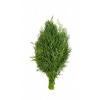
Dill – Shamir – שמיר


Fennel – Shumar – שומר


Garlic – Shum – שום

 ginger    hawaij    

Ginger – Zingavil – זנגביל


Hawaij – Hawaij – חוויאג׳


Horseradish- Hazeret – חזרת

 lemon verbena    lime   Mace

Lemon verbena – Limonit – לימונית


Lime – Lime – ליים


Mace – Klipat HaMuskatit – קליפת המוסקטית


mint nana    mustard hardal    nigella katzach

Mint – Menta/Nana – נענע


Mustard – Hardal – חרדל


Nigella seeds – Katzach – קצח


nutmeg       paprika

Nutmeg – Egoz Muskat – אגוז מוסקט


Oregano – Oregano – אורגנו


Paprika – Paprika – פפריקה

 pepper   parsley     

Pepper – Pilpel – פלפל


Parsley – Petroziliya – פטרוזיליה


Pimento (Allspice)- Pilpel Angli – פלפל אנגלי

 rosemary    saffron    sage

Rosemary- Rozmarin – רוזמרין


Saffron – Zafran – זעפרן


Sage – Marva – מרווה

salt melach   sorrel     sumac

Salt – Melach – מלח


Sorrel – Hamtzitz – חמציץ


Sumac – Sumak – סומאק


 thyme   turmeric    vanilla

Thyme – Temin – טימין


Turmeric – Kurkum – כורכום


Vanilla – Vanil – וניל

     zaatar    
   

Zaatar – Zatar – זעתר


Fresh herbs are plentiful in the markets.  Parsley, coriander, mint and others are sold in large bunches often for only one shekel on Friday afternoons.  There is nothing to beat the flavor of fresh herbs, but for the most part, we land up throwing most of the bunch out after a few days.  We’ve found a way to store them.  Take your herbs, rinse them off under the tap, you can cut of the stalks if you want, chop them finely (or in the food processor), add a drizzle of olive oil, fill an ice-tray with the chopped herbs (ice-trays that have lids) cover the ice-tray and freeze.  When needed take a cube or two and add them to your food during cooking.  Obviously this technique is not appropriate for decorating a plate of food or where fresh herbs are called for but they are fine in soups and stews.  

Join us on a a virtual tour through Jerusalem’s Mahane Yehuda market

Medical Poll Results

Reading Time: 2 minutes

Results of our in-house medical poll on Israel’s medical & healthcare system

The purpose of our recent medical poll was to ascertain whether the English speaking community, in Israel, is satisfied with the Health Funds and the services they provide. 206 people participated in the poll and on the whole they seem pretty satisfied with their health fund.

The results of our medical poll are as follows:

Details Percentage
Are you a member of a Health Fund?  If so, which one?  
 Maccabi Health Fund47.5
 Kupat Holim Clalit22.2
 Kupat Holim Meuhedet20.7
 Kupt Holim Leumit1
 I am not a member of a Health Fund (foreign workers)8.6
  
What is your residential status? 
I have been in Israel for more than 10 years38.6
I have been in Israel for between 5 – 10 years16.5
I have been in Israel between 1 and 5 years 27.8
This is my first year in Israel 8.9
I have a date and will be arriving within the next 12 months    4.5
I am still considering, researching and planning my Aliyah 2.3
I am a foreign resident, contract worker, other 1.4
  
Do you have a regular Health Fund membership plan or an upgraded plan (mushlam)? 
 Upgraded 91.1
 Regular 8.9
  
Are you happy with the service your Health Fund provides?  
 Completely satisfied 36.2
 Moderately satisfied 57.4
 Not satisfied at all 6.4
  
Do you have any additional, private medical insurance?  
Yes37
No53.8
I did have but I cancelled my private insurance7.6
I am planning to take out extra medical insurance1.7
  
Do you use your Health Fund’s website for information? 
 Yes 50
 No 19.4
 Their website does not have enough English information 30.6
  
Does your Health Fund have sufficient English service? 
 Yes 21.4
 No 33.3
 They could improve their English service 45.3
  
 Are you likely to be changing your Health Fund? 
 No 84.4
 Yes 2.7
 I am considering it 12.9
  
Why did you choose the Health Fund you are with?  
 It was recommended to me by a friend or family member 75.8
 A representative of the Health Fund was at the airport when I arrived in Israel 15.2
 I researched them on the internet 9.1
 A representative of the Health Fund was at an Aliyah Expo abroad 0.0

A self-employed lawyer talks about setting up a legal practice in Israel.

Reading Time: 3 minutes

Born to Olim parents Michal started a legal practice in Israel

Hebrew:    הקמת  משרד עורכי דין בישראל

If you’re planning on setting up a business in Israel, it is important to understand the system and learn from other people’s experience.  These interviews are designed to give you some insight into the process and requirements of the profession.  This is an interview with Michal Tsarfati.

Please tell us a bit about yourself

My name is Michal Tsarfati, I am a lawyer and specialize in commercial law including real estate, labour law and contracts.  My parents are Anglos, but I was born and educated in Israel.   I have a B.A LLB from the Netanya Academic College as well as practical business experience.  I worked for a number of years as an associate in a large law office and  I have also worked in the insurance business. 

Do you need to know Hebrew in your profession?

In some professions in Israel, you can get by without knowing Hebrew.  But in the legal field you have to know Hebrew.  I am fluent in both Hebrew and English and so, naturally, my clients are both Hebrew and English speakers. As a lawyer with fluent Hebrew and English skills and an understanding of the needs of the Anglo-saxon community, I have  a unique and marketable skill.

How did you go about setting up your business?

I did not really need to do any market research when I  went out on my own. I had years of work experience already and knew exactly what niche I would fit into.  I knew after years of working and commercial experience, that with my language skills, there was a demand and necessity for someone like me. There are other lawyers out there who speak English and Hebrew, but I don’t feel like I am in direct competition with them.  Being an Israeli with strong Anglo-Saxon roots creates a “comfort zone” for English speaking clients.

I had a business plan before I went out on my own and it took me a few months to set everything in place.  There were a lot of things that needed to be taken care of and this all took time.

Fortunately, I had sufficient capital to start my business and I did not have to take out any loans.

What kind of operating expenses do you have in your business?

My office is in Petach Tikva and obviously there are certain expenses involved in that.  There are some professions you can work out of home in Israel, but lawyers have to have offices. 

Do you have any employees?

I did not need any employees to start up and so I did not have those additional expense as well. I have a partner in my business.  As a lawyer it is important to have back up as well as other lawyers to consult with.

Many new immigrants going into business for the first time in Israel, don’t fully understand the Israeli tax system, do you think it is important to have an Anglo accountant?

My accountant is an Israeli. I am an Israeli.  I have a good knowledge and understanding of the Israeli tax system so I have not had any real surprises along the way.  It is always good to have an accountant who is patient and can answer your questions if you are not very familiar with Israeli tax laws.

Do you actively market your business?

I have to market and advertise my business to a certain extent.  I make use of social media, selected publications and contact groups and not forgetting word of mouth.  The younger generation do all their research on the internet and so today you have to have a website if you want to be in the game.  My website will be up soon.  Of course, there is a lot I need to learn about that.

If your business were to fail, what would I do? 

Failure is not an option.

After all these years, if you had a choice, would you still choose to be self-employed?

Knowing what I know now about the profession, if I had my time over once more, I would choose the same path and do it all over again.

Any tips and advice?

My advice to anyone wanting to set up an independent legal practice in Israel; don’t rush into it. Make sure that you are fully prepared financially and emotionally. Work with good and reliable professionals to guide you on the road.

Youth & Teen Aliyah & Relocation

0

Reading Time: < 1 minute

Challenges of youth and teen Aliyah and relocation.

Youth and teens who are making Aliyah, with or without their parents, have their own interests, needs and Aliyah issues and challenges. It is important for them to make friends prior to and after their Aliyah with other English speakers who are in a similar situation.

Friends, we want you to have a place where you can network with other English speaking youth and teens.

You may have lots of questions regarding your Aliyah; school, socializing, fun activities, the army etc.  You can now do that here, now.

This is a place for friendly exchanges.  Remember to follow basic internet rules and not post any private information.  You are welcome to use a pseudonym when posting your question.

The page is moderated and any unsuitable postings will not be approved.

Ask an Expert

0

Reading Time: < 1 minute

Have an Aliyah or Relocation Question? Need Advice?

We will try to help!


Post a question for our panel of experts and get your answer ASAP.  Have an Aliyah related question, a financial or legal question,  Hebrew learning, household maintenance, employment questions, finances, healthcare or lifestyle related issue and one of our panel members will try to help, give you an answer or point you in the right direction. 

  Ask a plumber   Ask a lawyer
  As a foreging currency expert   Ask a Hebrew educator
  Ask a psychotherapist   Ask a realtor
  Ask an accountant   Ask a fitness expert
  Ask a shipper   Ask a general question

You can also ask questions or leave your comment on some of the articles on this site.  Please note that all comments are moderated and any inappropriate content will be deleted

.


Aliyah & Relocation Stress

Reading Time: 3 minutes

Coping with Aliyah & Relocation Stress – 21 Coping Tips.

aliyah stress

Image credit: Unsplash

Aliyah and relocation are major life decisions and require a lot of thought and consideration.  Your relocation will require you to call a new and unfamiliar place ‘home’, You will need to become acquainted with your new environment, master a new language, fit into an unknown working environment, be positive and help your young children through their journey, make new friends and build a new support network.  What makes it stressful is that you have to do all of these things at the same time.  When things get tough new immigrants (olim) sometimes feel that the only way out is to pack up and leave and go back to their countries of origin.  Hopefully you are one of those who chooses to stay, but what can you do?  Relocation Stress Syndrome or Transfer trauma is a known medical condition. The recent Mental Health Reform makes access to emotional support easier and more affordable.  You can get private help too from an English speaking counselor and this may be a better route to take.

It can take a few months before you work through all your issues, but you are also in need of a few practical solutions and alternatives that you can implement right now.  No one knows the stresses quite like those who have overcome it.  We asked members of our social networks what they do in times of stress.  Here are their 21 top tips:-


  1. Avoid unnecessary stress by learning the language.  If you do not work hard at this, you are automatically isolating yourself and will miss out on a lot.
  2. Have realistic expectations.  Israel is not, and will never be like your former home.
  3. Think about and focus on, why you came here in the first place. That puts things into perspective when daily stresses seem overwhelming.
  4. Find distractions – try not to think about, or get swept up by, your stress.  On the other hand – don’t ignore it completely.
  5. Take up a new hobby.  Join an art class, learn to paint, or play a sport. Do something creative
  6. Identify the issues that cause you stress.  Once you have, it will be easier to find solutions for each one.
  7. Share your feelings with others.  You are not alone
  8. Surround yourself with positive people.
  9. Focus on the positive.  Decide to acculturate as much as possible rather than expect Israelis to bend and change for you
  10. Surround yourself with familiar things:-  photographs of family members or treat yourself to something delicious you know from home. 
  11. Take advantage of Home Hospitality programs. There are lots of kind-hearted volunteers willing to host you.
  12. Volunteer to take care of someone less fortunate than yourself and this will help put your life in perspective.
  13. Join social networks
  14. Embrace your fears and anxieties, we all have them and then forge ahead.
  15. For those that come here for religious and idealistic reasons, it was suggested that you should think of everything you do in Israel, is a mitzvah.  This is how it was put “When I shop at the shuk I am helping the merchants fulfill their mitzvah of Yishuv B’Aretz Yisroel.  How can there be any difficulty or challenge too big?”
  16. Reflect.  Every few months, sit back and reflect on what you have done.  You will be surprised how far you have come.


On the lighter side!

  1. Drink lots of coffee or whatever!
  2. Watch lots of programs on Netflix from the ‘old-country’ and at the same time nosh on Jelly-Bellies, Seers Candy, Cadbury’s, Marmite sandwiches and other delicious goodies.
  3. Go to the beach, a park or a favorite place and just watch other people go by.
  4. Exercise is a great stress reliever
  5. Find some comic relief

Let’s talk business! Interviews with self-employed Olim

Reading Time: 2 minutes

Self-employed olim share their experiences and valuable tips.

Being self employed (Atz’ma’i) in Israel, like in any other country, has its advantages and its disadvantages. New immigrants – olim – are often fearful and one of their main concerns is their Hebrew language skills.  If you are living in a community with a large Anglo population you may be able to get by with minimal Hebrew skills.  Generally, you probably wont be able to rely solely on the Anglo community for clients and you will have to develop your Hebrew language skills to increase your customer base.

Israeli income tax laws differ considerably to those in the US, Canada, Australia, UK or South Africa.  There are fewer “tax saving” opportunities in Israel.  Consult with an accountant and a tax expert before you open your business.  Trade licensing and educational requirements also differ in Israel.  As an Atz’ma’i you have to open a file, at the Income Tax Authorities (Mas Hachnasah), Value Added Tax (Maam) and National Insurance Institute (Bituach Leumi).

A business coach or counselor can help you through the various stages from setting up a business plan, taking loans, understanding the Israeli market, advertising and marketing campaigns.

MATI  – מטי, is a non-profit organization, established in 1991 to assist and promote the development of small and medium businesses (SMEs) in Israel. There are 24 MATI offices throughout Israel, each with their own website. They run a number of courses, some in English, others in Hebrew which are heavily subsidized.  They are a good starting point for familiarizing yourself with the Israeli market and business practices.  Some of MATI’s programs are subsidized for new immigrants.

We conducted a series of interviews with English speaking immigrants – small and medium sized business owners in Israel.  Via a series of standard questions, you will get some insight, the advantages and disadvantages, of being self-employed in Israel.

Interview with one of Israel’s small business owner in the beauty industry.

Reading Time: 5 minutes

Starting a Business in Israel

Hebrew:הקמת עסק בישראל

My name is Yochi. I began my journey into the beauty industry because I was fired. I always loved this industry, I just never thought about taking that first step into it.

Being self-employed in the beauty industry is the best option for success.  I do hair styling, I’m a bridal makeup artist, wig stylist and beauty school teacher.

I had no work experience in this field,  but  I did study and graduate from accredited beauty schools before opening my business.

I have been in the business world for over twenty-five years and was self-employed many years ago in the field of business consulting and development.

You can have a business, in Israel, that depends solely on English speakers, but you MUST be able to communicate effectively and properly, in Hebrew, with all the government authorities (taxes, “social security” – bituach leumi, banks etc.), and NOT DEPEND on others to communicate for you.  So knowing Hebrew is an absolute must. Knowing Russian is a huge advantage in many fields in this country as well!

I did some intensive market research before I went into business. I saw what beauty industry-related businesses were open in my geographical area (Netanya to Zichron) and saw that someone with native English language skills, like me, has an even larger audience.  By incorporating the needs of the religious/ultra religious community I could increase my customer base even more.  I started my business with a wide range of services and as time went on, I narrowed and focused my business to the bridal beauty area which is the most lucrative.  At the same time, I widened my geographical area and now serve almost the whole country as I travel to my clients (for weddings)!

My client base started with women (religious and not) in my area – providing hair cutting and coloring services,  as well as wig services and sales for religious women and women with health problems.  I quickly added other skills that also helped draw clients with other needs.

With time, I saw that financially this was not as viable a business as I had hoped so now I focus my attention on the bridal business which is far more lucrative. I give a full list of beauty services to brides and their bridal parties.

I saw I had very little competition vis-à-vis wig styling.  However, the bridal industry is huge and cut-throat. My differentiation is my knowledge of wedding planning, my English and Hebrew communication skills and my ability to provide all my services in the privacy of the bride’s home.  All of these skills together with my interpersonal skills contribute to my business being quite unique.

I had a very sketchy business plan before starting up. I am now taking a full year marketing and sales course specifically designed for the beauty industry.  This has really helped grow my business from the inside out!

Setting up my business was a process over time.  First, I did a course in hairstyling. Towards the end of the first year I hired a graphic artist to create my logo and first business card.  Of course I had to register with all the government authorities as well. I have an extensive computer and art/graphics background (and one of my sons is a computer programmer). I created my first website and every site since.  I am about to design a new site but am going to be working with professionals who will take care of the SEO and online advertising.   I started taking my first clients – all friends – most of whom are still my loyal customers! about four months after I graduated.  After about half a year all clients were paying customers.   As I take more and more courses, I became more proficient and add on services.

My first premises were in an empty bedroom in my house. This saved me a lot of money.  I still work out of home.  I continue to keep all overheads to a minimum and have the freedom to travel to customers without leaving my business unattended.  I did not need any employees to start up and that was a saving too.

My marketing and advertising efforts; I had an ‘open house’ when I officially started the business and also relied on word-of-mouth.  I advertise in a variety of media – both big and small. Some of it I pay for and some of it is free.  With the help of the course I am taking, I am now understanding the need for advertising via social media. I have a blog as well. I plan to begin paid online advertising in the next month or so.

My original investment in my business was about 70,000 NIS (my pension savings) including courses, set-up, electrical equipment and furniture, studio set-up and supplies (my makeup bag has about 10,000 NIS worth of supplies in it at any one time).  The cost of the website, domain and the like was minimal as my son did most of the back office work.  I have kept to my budget and did not spend more money than I planned.

My husband is a silent partner.  He is only connected to the beauty industry through me, but is involved in all decisions from pricing to design and nearly all my photography.  I trust him and my business and its success affects him as well!

I worked as a bookkeeper many years ago – we’ve been here since 1979) – so I have a handle on bookkeeping and dealing with government offices.  The first time I was self-employed I had an accountant – but as I now work with women and not large companies, I do not need to deal with an accountant – at least at this point.

My former accountant was an Anglo.  He had been in the country for years and could do US and Israel taxes.  He was also an old friend of my husband’s from his Bnei Akiva days.

I pretty much understood the Israeli tax system before I started. But really NO ONE ever does completely. You always need to be up-to-the-date on the rules.  I am happy to say that the tax offices have gotten much more user-friendly and efficient. I have never had a problem finding a friendly person to talk to. I sometimes had bad experiences with the clerks, but often I simply do my reporting online and drop-off envelopes where necessary.  I have always gotten everything I needed on time and as required by law!

I am a workaholic so I work a lot of hours. As my business grows and develops I’ll have to put in even more.

If my business were to fail, what would I do? It won’t. I have too much invested in it. I am always developing new skills.  Even today, to ensure a steady cash flow, I teach English do translating and writing.

Would I do it all again?  Yes!  In a heartbeat!

My advice to anyone wanting to start a business in Israel; take it slow, do your homework, ask for help, know that every business has its ups and downs and competition, learn from your mistakes and for crying out loud: enjoy yourself doing it.

Interview with an Oleh Retailer.

Reading Time: 3 minutes

Starting a Retail Business in Israel

Hebrew: הקמת עסק בישראל

Interview with Alan Silver of Kolbo Alan, a retail store in Kiryat Ye’arim (Telzstone), near Jerusalem.

Alan is typical of many olim who come to Israel without formal qualifications but have many years of valuable work experience. With relatively few options many of them choose to become self-employed.  These olim don’t really have a plan but are forced to do whatever it takes to make a go of things.

Please tell us a bit about yourself

I made Aliyah from South Africa more than twenty years ago where I had worked in a family run business.  We finally settled in the religious community of Telzstone where we opened our business.  My wife helps out and so do my sons when necessary.

Why did you start a business in Israel?

I thought if I was working this hard for someone else, I might as well do it for myself.

What field are you in?

Retail: Hardware, toys, household goods, electrical, plumbing, gifts and much more.

Did you have experience in this field before opening your business?

No

Do you have any previous business skills or expertise: university degree, courses etc.?

No, I have no formal qualifications.

Do you need Hebrew in your business?

Yes.  My Hebrew is quite good.

Did you do any market research before opening your business?

No, not really. I knew I had to make a living and that was all.  I’d figure it out as I went along.

Did you determine your target market before opening your business?

Yes, I was asked to open the store as there was nothing similar in the area.

Did you research your competitors before opening your business?

There were none

What makes your business unique?

The South African way of giving service – with ones soul.

Did you have a business plan before starting up?

No!

How long did it take you to set up your business in Israel?

One month

Did you have the required capital to start a business or did you have to take a loan?

I just started slowly with the little money I had. Like most small businesses, I have to have an overdraft facility.

Did you spend more money on getting your business going than you had originally planned?

No, not really. I was lucky in that respect.

How do you market and advertise your business?

I did a lot of marketing in the beginning, but now I do not need to.

Do you have a business partner?

No.  My sons are very involved though.

What about your premises?

My shop is located in the community where I live – 5 minutes from home.

Did you need any employees to start up?

No

Do you manage your books on your own or do you have an accountant?

Both – parts I do myself and other parts my accountant takes care of.

Is your accountant an Israeli or an Anglo-Saxon? Why?

Israeli, one needs accountants and lawyers to be local with all their “protekziot” (connections).

Did you understand the Israeli tax system before you started your venture?

Not at all.

Does your business take up more of your time than you anticipated?

Yes, much more.

If your business were to fail, what would you do?

Cry…  Not much else to do.

After all these years, if you had a choice, would you still choose to be self-employed?

Yes

What advice would you give anyone wanting to start a business in Israel?

First check things out thoroughly, and speak to as many people as possible.

Extra Reading & Resources