19.3 C
Jerusalem
Saturday, June 20, 2026
Sample Page
Home Blog Page 132

Suggestion Box

0
Reading Time: < 1 minute

Drop us a line & tell us what you think!

We strive for excellence. We want you to benefit from this website by providing you with practical and useful  information.  For this we need your participation and feedback. We reach thousands of families around the world who are contemplating Aliyah and relocation and many thousand who are already living here, Your insightful suggestions for improvement will make this site a better experience for all.

Is there information on a particular topic you would like to see in this site?

Is there an inaccuracy in one of our articles?

Do you have something you wish to share or contribute?

We would like to here from you, please take a few moments to contact us and share your thoughts and suggestions with us.


New Egged & Other Bus Routes – Krayot

Reading Time: 2 minutes

New Bus Routes & Changes – Krayot

Hebrew: שינויים במערך התחבורה הציבורית בקריות

Commencing May 24th, 2013 a number of changes have been made to the bus service,  routes and timetables in the Krayot just north of Haifa, as follows:

6 New Lines

From Hutzot Hamifratz – Kiryat Ata junction – Kiryat Binyamin Line 21
From Neve Ganim – Kiryat Ata junction – Ben Ami Line 22
From Kiryat Yan – Kiryat Ata junction – Ben Ami Line 23
From Kiryat Bialik industrial area /Zevulun – Kiryat Ata junction – Givat Tal Line 24
From Givat Tal – Kiryat Ata junction – Zevulun clinic/Kiriyon Line 25
From Kiryat Haim beach – Kiryat Ata junction – Tel Hai neighborhood Line 26

Changes in Schedules

Verify on the Egged website for changes to the schedules of the following bus lines – https://www.egged.co.il/eng/

Line 52 Kiryat Motzkin – Motzkin railway station – Merkazit Hamifratz
Line 59 Kiryat Yam – Kiryat Ata junction – Merkazit Hamifratz
Line 62 Ben Ami – Givat Ata – Merkazit Hamifratz
Line 63 Ben Ami – Shavit Center – Merkazit Hamifratz

New Bus Routes

There are new ways to travel to main destinations in the Krayot, as follows

From Bus Line To
Kiryat Ata center 21, 22, 23, 24, 25, 26, 61, 61A, 62, 63 or 63A Kiryat Ata junction
Kiryat Ata center 24 or 25 Zevulun clinic Kiriyon
Kiryat Ata center 22 or 23 Kiryat Motzkin railway station
Kiryat Ata center 21 Hutzot Hamifratz railway station
Kiryat Yam municipality 23 Kiryat Motzkin railway station
Neve Ganim 22 or 52A Kiryat Motzkin municipality
Western Kiryat Yan 25, 51 or 51A Kiryat Ata junction


Reduced Frequency

Line 61 – – Check the Egged website for details.

Canceled Lines

Line 64 – Use lines 24 or 25 instead

Line 64A


Aliyah Absorption Basket – Sal Klita

Reading Time: 2 minutes

Absorption Basket for New Immigrants to Israel – The Sal Klita

Hebrew – סל קליטה לעולים חדשים

 benefits for aliyah

Israel’s Ministry of Immigrant Absorption offers you financial assistance during the initial Aliyah absorption period.  This assistance is paid during the first year following your Aliyah.

Am I eligible for Aliyah benefits?

Immigrants from all countries, as authorized by the Ministry of Immigrant Absorption (Misrad HaKlitah) are able to receive Aliyah benefits. 

New Olim (new immigrants), Ezrachim Olim (an oleh citizen), and Ktinim Chozrim (returning minors) are eligible for the ‘Sal Klitah’. The Sal Klitah is only granted to those who have spent less than 18 months in Israel in the three years prior to their Aliyah, and less than three years in Israel in the seven years prior to their Aliyah.

When do I receive the financial assistance?

The absorption basket is paid in installments and you will receive the first installment upon arrival at Ben Gurion Airport.  The absorption basked is partly paid in cash and partly paid by bank transfer. The cash is given at the airport only.  The remaining installments will be transferred to your bank account.

How many installments do I receive?

In total you will receive 8 payments; a lump sum at the airport, a lump sum transferred to your bank account and then an additional 6 consecutive monthly payments.

Opening a Bank Account

It is recommended that you open a bank account within a few days of your arrival in Israel.  As soon as you have your bank account number, you must provide this information to the Ministry of Immigrant Absorption so that the remaining installments and financial assistance can be transferred to your account. 

How much are we entitled to?

There various categories of olim, and the category you fall under, will determine the amount of assistance you receive.  It is important that you verify this with your shaliach/emissary or your aliyah office.

The Categories

  • A family or couple
  • A single parent family
  • A single
  • A couple before retirement
  • A single parent, before retirement
  • A single, before retirement
  • A retired couple
  • A retired head of a single parent family
  • A single retiree
  • Child between the ages of 0-4
  • Child between the ages of 4 – 18
  • Child between the ages of 18 -21
  • A family with 6 or more members

What will happen when I no longer receive this financial assistance?

You will probably be finishing your ulpan around the time this assistance comes to an end. Hopefully your job search will be successful and you will gain employment within a short space of time.  If not, you may be entitled to assured income payments – ‘havtachat hachnasa’ from Bituach Leumi (National Insurance) but first the Ministry of Aliyah & Absorption will guide and refer you to the necessary departments and offices that will determine if you are entitled to this additional help.

Yad Sarah – Homecare Support Services in Israel

Reading Time: 2 minutes

Yad Sarah – יד שרה Homecare Support Services in Israel

Yad Sarah, Israel’s leading organization of volunteers, was founded in 1976 to help alleviate the suffering of disabled, sick, isolated and elderly people, those homebound or wheelchair bound for any reason, and anybody needing HOME CARE.

Over 100 branches provide a range of free or nominal-cost services for sick, disabled and elderly people enabling them to stay at home rather than in hospitals or institutions.

Services

  • Lending medical equipment remains its best-known service, and today a stock of over 300,000 pieces of equipment ranges from wheelchairs, crutches and walkers to hospital beds, oxygen-concentrating machines, electronic baby breathing monitors, glucochecks, breast pumps – more than 300different items in all.
  • A personal alarm response center which gives elderly people who live alone a lifeline for help, and relieves their families of worry. The touch of a button connects them to a reassuring, trained volunteer at the computerized main call center who sends help if needed – or calms the caller with a friendly chat.
  • Guidance and exhibition centers showing the range of assistive devices available to enable the disabled or frail person to function independently, and providing guidance for adaptation of the home environment.
  • A fleet of vans fitted for wheelchairs providing transportation to medical, social and other appointments for people with mobility problems, liberating them from their four walls.
  • Day rehab centers serving post-CVA and others with physical, occupational and other kinds of therapy (art, music, gardening and more)
  • Geriatric dental clinic with specialized care by volunteer dentists, also operating a mobile unit that makes house calls.
  • Legal advice for the elderly
  •  A unique play center for special-needs children and their families, including a lending library of toys, playrooms for gross and fine motor activity, creativity rooms, computer center, and guidance for families with a special needs child.
  • Support groups – for caregivers; for terror victims; for Parkinson patients; and more
  • Activities for shut-ins to keep their hands and minds active and dispel their loneliness. Crafts, volunteer visits, computer instruction, and a life stories project recording their personal histories.

Yad Sarah helps visitors and tourists services, whether to pre-arrange the loan of equipment for a disabled visitor, to adapt hotel rooms in advance or to arrange airport transfers in the special Yad Sarah vans or to deal with emergencies that arise during their stay. For tourism information call 02-644-4628 or e-mail tourism@yadsarah.org.il.

Volunteering at Yad Sarah

For information about volunteering call 02-644-4411or e-mail  volunteering@yadsarah.org.il

Contact information

Yad Sarah

Headquarters: 124 Herzl Blvd., 9618722 Jerusalem

02-644-4444 or *6444

If your require any further information, please contact Mr. David Rothner, Spokesman   Tel. 02-644-4430 Mobile: 052-360-6726

Israel Relocation & Aliyah Tips

Reading Time: 7 minutes

Best selection of tried-and-tested tips for your Aliyah or relocation to Israel.

Hebrew: טיפים לעולים חדשים

Many olim go through a similar emotional journey. They are anxious about many things; the language, employment, housing, integration and many more. As you pack and prepare your move to Israel you’ll be wondering if there are ways to reduce the stress levels. From the advice on seasoned olim we’ve put together a selection of tips that touch on ten important topics. 


moving boxes


Know the 4 stages of cultural adjustment and be prepared for them

  1. Honeymoon stage, in which your new country is idealized.
  2. Rejection stage, which emerges once you encounter the inevitable problems with work, language, education and housing.
  3. Regression stage, during which life in your home country is idealized.
  4. Cultural adjustment stage, when you become comfortable and happy in your new environment and gain a mature appreciation of cultural differences.

Remember that culture shock can affect some family members more than others.

If you have relocated for work, the non-working partner may suffer more with symptoms of culture shock. Psychologists advise validating your partner’s feelings and support them during their difficult time.

Your attitude is key

Look at your Aliyah and your entire relocation experience as a positive opportunity for personal growth and development rather than as a difficult situation with huge hurdles that have to be overcome. When you do that, the huge hurdles transform and become smaller, more manageable steps and life becomes a much easier.

Don’t be offensive

When moving to Israel, it’s important to keep an open mind. The idea is to learn about Israeli culture and not impose your beliefs, values and cultural habits on the locals. If you do attempt imposing your beliefs, chances are it will boomerang and you will become bitter. When you publicly start making comparisons to your country of origin, be careful not to be degrading even though you may be right. The person you are speaking with may or may not share your opinion and you need to be careful not to offend. Being negative a lot of the time could leave your friends and colleagues resentful of you.

Compromising and making concessions

Ask yourself these questions; if I am unable to find a product I am familiar with, in Israel, or a level of service that I am used to, will it have a dramatic or severe impact on my new life? Can I live without? Am I prepared to compromise?

The opposite of compromise is conflict. The ability to deal with conflict is one of the most important skills you will need to create success in your career and personal life.

Remember that you may not be able to avoid using services and products that are different to that which you are used to.

Education

Best school experience

Finding a good school for your young children is on the top of your list. In the early stages it is important for them not to feel alienated or left out especially as their Hebrew skills may be limited. The criteria you used for choosing a good school back home, may need to be adjusted slightly. Consider that the definition of religious education in Israel, may differ completely to that which you were used to. Perhaps an international school is a better option for your child? Research available educational options, discuss them with your kids and let them feel they have a say in their future.

After school activities

After school activities (Heb: chugim), are not included in the school fees but they are a great way for your children to integrate and bond with their new peer group. Budget around 150 – 200 shekels per child/per month/per activity. There are lots of free alternatives and things you can do with your kids on weekends or during the holidays. Take some time to research the options.

Employment

Your first job interview

Your first job interview in Israel fills you with dread. Your will be anxious and will worry about what to wear, how to behave, what to say and how to say it. The interviewer will ask you all the usual questions; your background, work experience, your job and salary expectations and then, be prepared for a whole lot more! There is a good chance that you will be asked a range of seemingly unrelated questions that will catch you off guard. You need to be completely prepared to answer any questions on any subject. Here are a few examples:

  1. Do you have a favorite quote? What is it?
  2. What is your favorite animal?
  3. Who is your role model and why?
  4. Who do you respect? Why?
  5. Would you be willing to take a salary cut?
  6. Define cooperation, quality, service, commitment. dedication, integrity etc.
  7. And, one of our favorites; do you put salt on your food before you taste it?

The list is seemingly endless. Jacob share has put together a list of more than 400 questions you could be asked in your job interview. Study them and prepare yourself.

Family life

Impact on the children

Relocation has a huge impact on your children and your own progress is challenged and influenced by their integration. Every member of the family has to adjust to a new lifestyle. Try to be understanding and sympathetic to their crisis, insecurities and dilemmas. Move before the start of the academic year and use the long summer holiday period to give your children as much special one-on-one time as possible and do with them the things they love to do. Showing them how much you care will build their confidence and prepare them for a new set challenges and hurdles at the beginning of the school year.

Keeping them informed

Preparing for your new life is challenging enough for an adult, but for children the challenge is on an entirely different level. Here are a few key issues that can help them prepare for and get excited for their new life.

The basics

Involve them on gathering basic information about Israel, its people and their lifestyle. Make this process interesting and fun for them. Make them feel like it is an adventure. Imagine their anxieties they are experiencing at the thought of being uprooted.

Food

It’s not uncommon for children to have food related issues while growing up. Suddenly when faced with moving to Israel, food becomes a challenge of its own. Gather information about local eating habits; which foods are popular, are your favorite brands easily obtainable? What about allergies and special dietary requirements? For instance, sesame and nuts are very common ingredients in Israel but on the other hand, there is a huge selection of non-dairy, lactose free items. Plenty of gluten-free and vegan options are also available.

Communication

Introduce your children to ways in which they can communicate with their friends and family back home. 

  • Make use of free video and chat software out there like ooVoo and Camfrong, Messenger, WhatsApp or FaceTime. Getting a call, a message, a photo or video will make their day.
  • If there is a life-cycle event or a special family function, consider live-streaming the event thereby making it possible for family and friends back home to share the special day.
  • Use Google Maps/Earth to show your family and friends back home exactly where you live and even an up-close photo of your street and building. This helps connect them to understand exactly what your living conditions are like.
  • Use social networks to keep in touch.
  • Let’s not forget about old-fashioned letter writing either. How joyful it is to receive a letter from a loved one – children will treasure a post-card or letter knowing that their grandparents or a loved one took time to carefully think about and share their thoughts and feelings.

Housing

Before the big move

You’ve made the decision to relocate to Israel but can’t quite decide if you should sell or rent the home you’re living in now…aside from the financial aspect, it’s a maintenance issue too.

Have a professional inspection done before you rent or sell. It may cost a few hundred dollars, but it will determine any current or potential future maintenance issues. Once you know what you are in for, you can make the decision to rent or sell.

Small or large? Apartment size

You’ve sorted your belonging and based on your current lifestyle you’ve filled your container to the brim with everything you want and could possibly need. You’ve moved into your first rental apartment and then your container arrives; oh boy! What a surprise; the lounge is too small, the bedrooms are cramped and there are fewer kitchen cupboards. Your huge washing machine blocks the doorway and you wonder where you are going to put all that flatware and those dishes. The average Israeli apartment is likely to be smaller than you are used to. If only you had known the average room dimensions when your were still in the planning stages of your relocation.  Well, here they are;

Stress

Threats, acts of terrorism and war are enough to stress anyone out and Israel regularly has those. Sara Jacobovici, an Anglo therapist in Raanana, suggests that when confronted with this type of stress make changes to your routine while maintaining it as much as possible. She says : “Routine is a crucial structure in which we can continue to function. Common safety strategies prevail but activities, although modified, need to happen.”

Transport

An economical way to get around

The Israel public transport infrastructure deserves a thumbs up! Public transport has come down in price and the Transport Tariff Reform allows you to combine your bus rides, train rides and light rail rides at a reduced rate when you use the RavKav multi-transport smartcard. Load your Rav Kav ticket with different routes an fare combinations.  You can load your personal Rav Kav online via the Rav Kav website, at selected ATMs and bus and train stations.

Buying a car with Aliyah benefits

Should you bring or should you buy here?  Olim are entitled to buy a car in Israel within three years after making Aliyah at a reduced tax rate. Find out more…

Selling a car you bought with your Aliyah benefits

It is now time to sell the car you bought with your Aliyah benefits. Four years have passed and you are no longer obliged to pay back the reduction received at the time of purchase. However, when you sell the vehicle you have to have it released from the Israel Customs Authority – Meches.

To do this you have to present the car’s license and your teudat zehut (identity document) to your local Meches office. They will discharge the vehicle and you are then able to sell it. You can also fax them this information together with a cover letter.

Your emotional well-being

Typically, around 9 months after you have made Aliyah, you could experience a terrible sense of loss for the loved ones you left behind, for all the material comforts you had, job security etc. It’s important to grieve and work through these feelings of desperation. Take it one day at a time. Consult with a psychologist or life coach if necessary, they will give you a plan to help you to deal with your anxieties.

LinkedIn: Anglo-list’s Professional Networking Group for English Speakers in Israel

Reading Time: < 1 minute

Networking groups for Anglos in Israel

With so many professionals and business people are using the Anglo-list,  we have taken networking one step further with our new group on LinkedIn. You are invited to join our LinkedIn group: Anglo-list Professional Networking Group for English Speakers in Israel.

Promote your business, join in our discussions and participate in out meetings. Whether you are an oleh, an expat, here for business, a student or just have some professional interest in Israel, we’d love to have you in our group.

Join here…>>>

Also of interest

Aliyah and Relocation Tip of the Day

Reading Time: < 1 minute

Tip for Relocating & Making Aliyah

Hebrew: טיפים לעולים חדשים

real estate israel

Household Maintenance

You’ve made the decision to relocate to Israel but can’t quite decide if you should sell or rent the home you’re living in now…aside from the financial aspect, it’s a maintenance issue too.

Have a professional inspection done before you rent your property out (we suggest this if you are selling too).  It may be a bit expensive but a professional inspector will discover and highlight any current or potential future maintenance issues.  Once you know what you are in for, you can make the decision to rent or sell.

I.D.F. Lone Soldiers – Chayalim Bodedim

Reading Time: 2 minutes

A Lone Soldier –  Chayal Boded: Serving in the IDF

Hebrew: חייל בודד

soldier in bus

Who is a Lone Soldier?

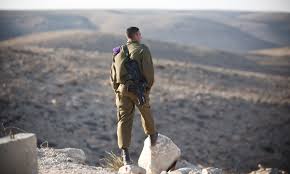
A lone soldier – or a chayal boded in Hebrew – is a single person, living in Israel without his/her parents, serving in the Israel Defense Force – IDF, and is in possession of a Teudat Oleh (new immigrant status).  The soldier can also have the status of returning resident.

How do I get Lone Soldier Status?

In order to obtain Lone Soldier status, you need to present your Teudat Oleh when you report to your local IDF recruitment office – lishkat giyus.  If you have family in Israel, but you have no contact with them or are estranged, you need to provide an official report from a social worker or counselor together with a recommendation.

Benefits for Lone Soldiers at discharge

  • A one-time grant which can be used for housing, studies, marriage, medical care, entrepreneurial ventures or special needs.
  • A scholarship for the purpose of completing high school studies, preparation for matriculation exams of improving matriculation results.
  • Scholarships for higher, tertiary education.
  • Financial assistance towards the cost of psychometric exams, pre-academic studies and preparatory studies for new immigrants – mechina.
  • One-time assistance towards rental costs and initial housing expenses.
  • Finding employment.
  • A 30 days stay in a soldier’s hostel.

Resources for Lone Soldiers

For more information on funding assistance for lone soldiers call +972-3-737 5200

The Lone Soldier Center

The Lone Soldier Center in Memory of Michael Levin is a non-profit organization founded and run by former lone soldiers.  The Lone Soldier Center is the only organization providing for all the physical and emotional needs of the more than 5,000 lone soldiers in the IDF before their draft,  during their service and following their release from the IDF.  The Center creates a community of lone soldiers by offering social events such as Shabbat and holiday meals, tiyulim (hikes), recreational activities, educational programs and more.  The Center provides one-on-one counseling, food, furniture, household appliances, assistance in finding apartments, adoptive families, support at ceremonies and other milestone events, post-army guidance, vouchers and so much more! For more information visit their website at www.lonesoldiercenter.com or call: 02-502-2211.

Eran, A lone soldier shares his story

Lots of unsteady, Zionist motivated, young American adults come to Israel to show their Jewish/Israeli attachment. Maybe it’s just an excuse, and they are searching for their identity in what they presume is a different and friendlier society.  In my case, I came to Israel, not because I wanted to contribute to Israel, but because I needed to get away from a hectic way of life in Los Angeles.  I was searching for a combination of stability, equality, loyalty, individuality and even similarity.  I hoped that my endeavors would propel my personal growth, maturity and purpose in life. Read More…


Israel Parking Rules & Regulations Explained

Reading Time: 4 minutes

Avoid a fine and don’t get towed! Brush up on parking rules and regulations in Israel.

Hebrew – חוקי חנייה בישראל

parking rules in israel

You’ve now made Aliyah, finally bought a car and you’re read to hit the road.  As a foreign driver there are some road markings and road signs that you may not be familiar with.  Our guide will help you learn the parking rules and regulations in Israel.

Sidewalk markings

Sidewalks are marked with a series of blue and white, red and white or yellow and red markings. This is what they mean

  1. No sidewalk markings – free parking
  2. Blue and white stripes – paid parking
  3. Red and white stripes – parking is prohibited
  4. Red and yellow stripes – designates a bus stop or place reserved for public transport (no private vehicles whatsoever)

Identify road markings  for the disabled

A wheelchair painted on the road, indicates a parking designated and reserved for the disabled.

If you have applied for a disabled parking permit, once the application has been approved, you will receive a sticker which is affixed to the front windscreen of the registered vehicle. Israel strictly enforces the disabled parking regulation and if your vehicle does not display the permit, you will be given a hefty fine and your vehicle may even be towed.

Paid parking options

In areas within the designated blue and white parking area, parking vending machines are posted along the street. The machines accept 10 agorot coins, 50 agorot coins (half a shekel), one shekel coins, two and five shekel coins. You can purchase up to 2 hours of parking at a time.

In some towns you may find a central parking machine which accepts coins and prints out parking stickers for a specific length of time.

These parking machines are being phased out to be replaced by parking apps on your smartphone.

Best parking apps for Israel

Parking app: Pango and Cellopark for public parking payments. PinkPark allows you to reserve an a available private parking space. This is especially useful in Tel Aviv where there are 30% more cars than available public parking spots

Prepaid parking options

Easy Park is a national electronic parking card.  This yellow plastic, prepaid parking device can be bought at the post office.  Once activated, you set the device for a specified amount of time or alternately, to run for an indefinite amount of time until you return to your vehicle.  When you have used up all your prepaid parking time, you can refill the device via their website, from the comfort of your own home or at the post office.  This is also being phased out.

Free parking options

In order to provide the residents of a city with free parking, the city is divided into parking zones. There is an official parking permit, a sticker, which must be affixed to your front windscreen. Residents of a zone can park in any blue and white area, within the zone limits, free of charge. Non-residents have to pay for parking between 9:00am and 5:00pm.

Parking from 5:00pm until 9:00am, in a blue and white area, is free.  In some cities only residents may park in the blue and white area from 5;00pm until 9:00am for free.  Check with your local municipality or regional council.

Some shopping centers mostly offer free parking while others may only offer the first hour for free.

The parking shortage

Most families, in Israel,  these days own at least one car and many already have two.  With this a serious parking problem has developed in all the major cities and centers across the country.  As we said earlier, there is a serious parking shortage in Tel Aviv.

Parking lots and parking garages

There are private parking lots and parking garages in the central business districts of cities and towns.  You could pay between 10 and 20 shekels per hour in these garages – more than double the municipal rate. Hospital parking grounds are notoriously expensive.

Parking in some parking garages (often those in commercial buildings) require payment to be made at a vending machine, prior to exiting, vai credit cards or cash.  These vending machines have English options.

Parking violations, tickets and fines

If you should get a parking ticket, it will be left under the front windshield wiper of your vehicle. The violation will be registered under the vehicle registration number. If your vehicle is rented, the rental company will charge your credit card upon receipt of the fine.  A copy of the fine will also be sent to the address registered by the owner of the vehicle.

Should you get a parking fine, there are 3 options:

  1. Pay it by the specified date
  2. Request a court date/hearing to present your defense
  3. Write a letter and request that the fine be squashed.  Of course you need to provide credible proof and a valid reason for the request.

The parking fine should be paid within 90 days and no later than the date specified on the fine.  Failing to pay a fine on time will result in additional charges.

Joining the I.D.F: What to Bring from Home?

Reading Time: 3 minutes

Serving in the Israel Defense Force – The IDF

Make your life easier and bring these items from home

Hebrew: שירות צבאי – צה”ל

serving in the idf
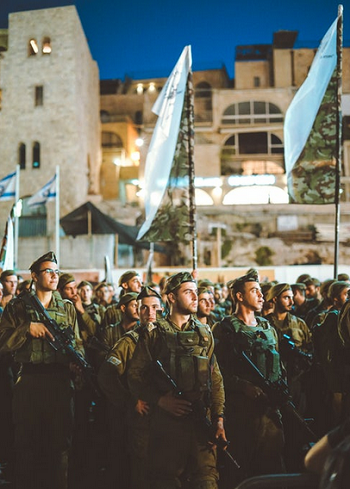
Soldiers in the IDF (Image credit: Unsplash)

One of the biggest steps your olim children will take, is joining the IDF.  Doing their utmost to get into a good unit and to achieve, can be very stressful.

The new recruit will be taken to “Bakum” – where he/she will processed and receive their kit.

These items will be issued to the new recruit on induction day:

Army Issue

  • A kit bag
  • Two towels (medium size)
  • Three pairs of underwear, three undershirts (white) and five pairs of socks (gray)
  • Three pair of army pants, shirts and one belt
  • One beret
  • 2 pair of boots
  • A bag full of miscellaneous equipment
  • One sweater
  • One winter jacket

Very basic indeed!

The Ministry of Aliyah and Integration recommends that new recruits bring the following items from home:

  • A personal and basic first aid kit; band-aids, mosquito repellent, personal medications.  Please note that the IDF is completely responsible for your health and welfare during the time you are serving in the army.  Any medication you may need, even a headache pill, has to be taken with their full knowledge and consent.
  • Plastic bags to organize and separate your clothes and equipment and also for dirty laundry
  • A length of elastic – about one meter long.  You may need this to keep your spectacles on your head or to use as a garter on your socks or to hold up your pant leg.
  • A multi-purpose pocket knife
  • Razor blades, matches and candles
  • Observant male soldiers; Siddur, Talit and Tefillin
  • Waterproof pen and a laundry marker
  • Length of strong cord to use as a clothes line, for tying up blankets and bedding etc.
  • Small flashlight
  • Some toilet paper (5 rolls is recommended)
  • Small screwdriver and an old toothbrush for cleaning your weapon
  • A lock to lock your kit bag
  • Laundry soap
  • Shoe polish
  • Safety pins
  • Shower sandals
  • Extra grey socks, shoelaces and underwear
  • Toiletries
  • Electrical tape
  • A sheet
  • Your own towel


Veteran soldiers have added to this list and recommend:

  • Ear plugs
  • Extra socks
  • Extra underwear
  • Vests and long-johns (for the winter)
  • Clothes for sleeping in
  • Basic sewing kit
  • Lip balm
  • A basic watch
  • Talcum powder
  • Balm to rub into tight, stiff muscles
  • Anti-chafing balm
  • Suntan lotion
  • Five and ten shekel coins for the vending machines.
  • A key ring
  • Contact adhesive and super-glue
  • Writing paper, envelopes and a pen
  • Your mobile phone, battery and charger
  • Your contact lenses, your prescription spectacles and a spare pair.  Leave your sunglasses at home.

An Olah’s personal experience in the IDF

Talia

It seemed to me that I would need more than the standard army issue so my parents agree to buy all the extras.  There were some things I never used and others items I bought at a later stage for my personal comfort.  My parents spent over 1,000 shekels on all the extras which included a large suitcase on wheels (which they now use to go abroad).  During my army service I spent (or should I say my parents spent) a lot of extra money on food.  The food at our base was awful.  The girls I shared a room with, all clubbed in and we bought a small fridge and brought food items from home.  We cooked and ate together and it was all part of the army experience (chavaya).  My army pay was a little over 500 shekels a month.  After I was discharged in 2015, I heard that soldiers were expected to get a 50 percent pay rise at the beginning of 2016.  That’s a good thing – pity it took so long, we could have used the extra income too.  Without my parent’s financial help during my 2 year service which included extra pocket money, money for food and some transport expenses, I would not have managed.