16.5 C
Jerusalem
Thursday, May 28, 2026
Sample Page
Home Blog Page 47

Vegetarian Burger for Yom HaAtzmaut

Reading Time: 3 minutes

The best darn veggie burger I’ve ever eaten!

Basically, I am a carnivore and anything done on the BBQ (grill or braai) is, in my opinion, food of the gods.  Lately, I’ve been trying to cut down on my beef intake – my age, budget and the environment are at the forefront in my mind.  Did you know that the methane gas, produced by cows, traps more than 30 times more heat than carbon dioxide (released when fossil fuels are burned), making it a major greenhouse gas? But, Yom HaAtzmaut, in Israel, without a BBQ is like eating bread without butter – it just doesn’t work, but a vegetarian burger is a good alternative.

Lately, I have been making black bean and mushroom burgers and am really enjoying them.  Spice them right and you have a tasty, satisfying, economical and healthy alternative to a beef burger.

vegetarian burger

Did you know that Israelis eat approximately 65kg of chicken per person/year – that’s the highest per capita in the OECD?

Ingredients

  1. I use canned black beans for the burger – a 400g tin.  The important thing is to get rid of the brine and dry them out so that you get a granular rather than mushy paste. Rinse the beans, lay on a baking tray and bake at 180ºC until the beans have dried out a bit.  Pulse in a food processor – don’t over pulse, you want a chunky and not smooth consistency.
  2. But, if you prefer you can soak black beans for 24 hours, cook them until they have softened, bake them, until they have dried out and then grind them in the food processor.
  3. Portobello mushrooms or brown mushrooms have a rich meaty flavour.  Coarsely chop 3/4 of a cup and then fried lightly.
  4. One small chopped onion, fried lightly with one clove garlic, chopped
  5. Salt, pepper, grilled paprika and cumin to taste
  6. I like to add a dash of soya, teriyaki or Worcestershire sauce for added depth of flavour – one teaspoon should suffice. A little yeast extract (Marmite) is also a good flavour enhancer.
  7. One teaspoon of ketchup also adds depth to the flavour – optional
  8. If you are making a vegan burger you will need an egg replacement to bind – my vegan niece uses tahini paste. If eggs are not an issue, you need one medium egg, beaten, to bind.
  9. Bread crumbs as necessary.
  10. Oil for frying.

Mix all the ingredients in a bowl (except for the breadcrumbs).  Don’t overmix, you want a chunky mixture.  If you feel your mixture is too moist, add breadcrumbs.

When frying things of this type (falafel and legumes also), I due a test first.  I roll a little ball of the mixture and fry it in shallow oil. If the test mixture is too dry, then add a little more liquid (soya, teriyaki or ketchup) to bind. If the mixture is too wet, and does not hold it’s shape, then add breadcrumbs.

Shape the mixture into 4 patties (damp but not wet hands help to shape) and lightly fry, in a non-stick pan, until crisp and brown on the outside.

Nothing worse than eating a burger on a bun that falls apart, so grill or toast the bun before serving –  it helps to hold everything together.

Serve with whatever takes your fancy; lettuce, sliced tomatoes, sliced red onions, gherkins, avocado, sprouts, fries on the side and condiments of your choice; ketchup, mayo, mustard, sweet chili etc.

I’ve never tried this recipe with cheese (cheese-burger style) or with a fried egg (egg-burger style) but I am sure, the recipe would work well with them.

Enjoy!!

Yom HaAtzmaut 2022

Reading Time: 3 minutes

Yom HaAtzmaut 2022 celebrations in Israel.

Yom Ha’Atzmaut, May 5th, 2022, Israel’s 74th birthday: upcoming gatherings, observances, festivals and celebrations.

The mandatory face-mask directive was lifted on April 24th, 2022 and so this year, a regular program of events for  Yom Hazikaron and Yom HaAtzmaut can be expected. 

The Yom Ha’Atzmaut usual program includes

  • 9:40am – The annual Israel Air Force (IAF) flyover – ‘MATAS
  • 10:00am – Annual Jerusalem broadcast from the President’s house
  • 11:00am – Annual international bible quiz
  • 7:30pm – Awarding the prestigious ‘Israel Prize’ to a deserving citizen for his/her outstanding contribution to Israeli society.

Yom HaAtzmaut balcony barbecue jokes

Independence Day background and traditions

David Ben-Gurion publicly read the Israeli Declaration of Independence on the 14th May, 1948 corresponding to the 5th day of the month of Iyar in the Hebrew calendar.  Later, David Ben Gurion became Israel’s first Prime Minister.  His declaration concluded that the Jewish state in Eretz Israel,  would be known as the “State of Israel”.

Independence day is marked as a public holiday in Israel but before the celebration, there is great sadness and an outpouring of grief.

Yom Hazikaron – Memorial day for fallen soldiers and victims of terrorism

The day before Yom Ha’atzmaut is marked as a day of mourning. The State of  Israel commemorates the soldiers that fell defending the country, its heroes and the civilian victims of battles, wars and terrorist events.  This day is called the Remembrance Day or Yom Hazikaron.  It is a day of mourning and is marked with official ceremonies and memorial services across the country. Read more…

Yom Ha’atzmaut – Independence Day

At 8pm on the eve of the 5th of Iyar, the heavy sadness of Remembrance Day turns into joy as official and public Independence Day activities start. Usually there are free concerts, dancers, singers and artists perform at venues country-wide and  fireworks light up the sky.  Street vendors sell falafel, Israeli flags and party items.  People go out and many party late into the night.  It’s a fun and festive evening.

Yom Ha’Atzmaut Celebrations

During the day of the 5th of Iyar, celebrations continue.  Families get together at their homes or in public and nature parks.  Kibbutz communities have fun activities for their members and guests;  tractor rides, water slides and other fun stuff for ages 0-99.

It is customary to have a huge BBQ lunch.  Israelis enjoy eating steak, shishlik, kebabs, ribs and fish all prepared on the grill.  Pita, hummous, tehina, middle-eastern and other salads accompany the meal.  End your meal with the first watermelons of the season.  Families and friends spend the afternoon together chatting, catching up, drinking Turkish coffee and snacking on varieties of garinim (roasted seeds of all kinds; sunflower, pumpkin etc.), nuts and toasted marshmallows.

On Yom Ha’atzmaut The Israel Prize is awarded – largely regarded as the country’s highest honor – it is awarded to Israeli citizens or organizations who have displayed excellence in their fields or have contributed in a significant way to Israeli culture. The prize is awarded in a state ceremony in Jerusalem, in the presence of the President and the Prime Minister.

The International Bible Contest, also held on Yom Ha’atzmaut, is an annual, worldwide competition on the Tanach (Jewish Bible) for high school students. Regional competitions are held in the Diaspora, and the winners of these contests, together with their Israeli counterparts, participate in a final quiz contest in Jerusalem.  The Prime Minister usually attends.

As this fun day draws to an end, Israelis head back to their homes, happy and satisfied and just a little reluctant to have to go back to work the following day!

Calendar date

Yom Ha’atzmaut is celebrated on the 5th day of Iyar.  However if the 5th of Iyar falls on a Friday or Saturday, the Independence Day celebrations are moved up to the preceding Thursday.  If the 5th of Iyar is on a Monday, the festival is postponed to Tuesday.  This is to avoid potential violation of Sabbath laws by preparing for Yom Hazikaron or Yom Ha’atzmaut on a Shabbat. 

Free word sheet

Learn new Hebrew words and phrases with this free word sheet

More free word sheets – by topic

Independence Day Terminology

English Transliterations Hebrew
BBQ Mangal מנגל
Celebration/s Chagiga/chagigot  חגיגה/חגיגות
Fireworks Zikukim  זיקוקים
Independence Day Yom Ha’atzmaut  יום העצמעות
Independence Day Eve Erev Yom Ha’atzmaut  ערב יום העצמעות
International Bible Quiz Chidon HaTanach חידון התנך
Israeli flag Degel Yisrael דגל ישראל
Israel Prize Pras Yisrael פרס ישראל
Remembrance Day Yom Hazikaron  יום הזיכרון
Remembrance Day Eve  Erev Yom Hazikaron  ערב יום הזיכרון

Israel Election Results 2021

0
Reading Time: 3 minutes

Israel 2021 election results and swearing in of the new government.

Naftali Bennett

Naftal Bennett, Head of the Yamina party and Israel’s new Prime Minister – Image credit: Wikimedia
13 June 2021
Unless there is some surprise at the 11th hour, Israel’s new Prime-Minister, Naftali Bennett (head of Yamina)  and Yair Lapid (head of Yeish Atid) are  expected to be sworn in today after a vote of confidence in the Knesset.  Bennett will be sworn in as Israel’s 13th prime minister, replacing Prime Minister Benjamin Netanyahu.
Today’s program 
The session will begin with Bennett introducing his cabinet and presenting the government’s guidelines.  Lapid and Netanyahu are also set to speak thereafter.  A vote to replace the Speaker of the Knesset will follow.
If the vote passes, Bennett and Lapid would be sworn in as prime minister for each of the two halves of their term, followed by the other ministers
Swearing in of the new government ministers commences.  The new government includes a minister from the United Arab List (Ra’am) who will be tasked to deal with Arab affairs.
The new government’s first session will follow.

7 June 2021
  • The draft coalition agreement between the Yesh Atid and Yamina parties says that if the government fails to pass a state budget within 100 days after its formation, the government will collapse and Yesh Atid leader Yair Lapid will not succeed Yamina’s Naftali Bennett as prime minister.
  • Benjamin Netanyahu has vowed to “overthrow” the new coalition poised to replace his government and alleges “the greatest election fraud”.

6 June 2021
Yamina head Naftali Bennett called on Prime Minister Benjamin Netanyahu “to let go and allow Israel to move forward”

2 June 2021
Presidential elections are held as well and Isaac (Boojie) Herzog was elected the 11th President of Israel with 87 Knesset members voting for him

30 May 2021
Bennett announces he will join centrist rivals to unseat Netanyahu.

21 May 2021
Ceasefire declared. Coalition talks resume.

10 May 2021
Fighting erupts between Israel and Hamas in Gaza, and unrest breaks out in many mixed Jewish-Arab cities in Israel. Coalition talks break down.

5 May 2021
President Reuven Rivlin hands Israel opposition chief Yair Lapid the mandate to form a government

4 May 2021
Bibi Netanyahu’s mandate to form a coalition expires.  It is now up to President Reuven Rivlin to had over the mandate to either Yair Lapid or Naftali Bennett in the hope that they will manage to execute this task.

27 April, 2021
There are 7 days left for Benjamin Netanyahu to form a coalition government.  Will he pull it off? Chances are slim but we will have to see if he can pull a cat out of the bag in time.

7 April, 2021
Rivlin announces that Benjamin Netanyahu is tasked to form the new coalition and meetings will commence this morning between Netanyahu and other party leaders.

6 April, 2021
President Reuven Rivlin to announce his decision – who will he task to form a new coalition?

5 April, 2021
120 members of the Knesset are sworn in and Benjamin Netanyahu gets the most nominations with 52.  Yair Lapid (Yeish Atid) gets 45 nominations and Naftali Bennet (Yemina) gets 7.

These are  the results of the Israel elections held on March 23rd, 2021:
120 seats in the Knesset and 61 seats needed for a majority
Turnout 67.4% Decrease
Party Leader   % Seats
Likud Benjamin Netanyahu 24.19 30
Yesh Atid Yair Lapid 13.91 17
Shas Aryeh Deri 7.17 9
Blue and White Benny Gantz 6.61 8
Yamina Naftali Bennett 6.21 7
Labor Merav Michaeli 6.09 7
UTJ Moshe Gafni 5.64 7
Yisrael Beiteinu Avigdor Lieberman 5.64 7
Religious Zionist Bezalel Smotrich 5.11 6
Joint List Ayman Odeh 4.81 6
New Hope Gideon Sa’ar 4.74 6
Meretz Nitzan Horowitz 4.59 6
Ra’am Mansour Abbas 3.79 4

Transport to the designated polling stations

Reading Time: 2 minutes

Instructions for getting to the polling stations on election day – transport arrangements.

Here are the possible transport options for getting to the specially designated polling stations, for the upcoming elections for Israel’s 24th Knesset on Tuesday, 23rd March, 202, for coronavirus patients or those in isolation as well as for the general public

Coronavirus patients or those in isolation

If you are currently diagnosed with the coronavirus, recovering in hospital, are in home isolation or in a corona hotel, you can still vote . You have a personal responsibility, to yourself and others to follow the instructions for safe voting.

election transport

You will be required to travel to a dedicated  polling station (one of 740 set up for this specific purpose)  in specially arranged transport. You will not be allowed to use other forms of public transport.  On Election Day, 12,127 regular polling stations will operate, 374 polling stations in nursing homes, 365 in hospitals, 61 polling stations in prisons, 3,776 polling stations are accessible to the disabled and about 740 polling stations for Corona patients and those in isolation.

In order to register for the special transportation, every confirmed coronavirus patient or in isolation, must be registered on the the Ministry of Health website.

The transport company BonTour has been elected to facilitate transport for coronavirus patients and isolated persons.  To arrange your transportation, o to their website bontour.co.il and then “Order verified transportation to the polling station on election day” (it’s the big blue rectangle in the middle of your screen where you have to fill in your teudat zehut number and your telephone number), or call 077- 6017137 directly.

The Election Committee is to announce the address list of the special coronavirus polling stations, shortly.

Members of the general public

If you are not coronavirus-positive or in isolation, you can get to the polling stations using public or private transport without restriction. Some of the lines and routes will be available free of charge.  We do not have a list of free routes and we suggest you contact your local bus service or Israel Railways to verify the options.

Once you get to the polls, this is the procedure for casting your vote.

Israel Election Day Procedure 2021 – Coronavirus

0
Reading Time: < 1 minute

The Israel Election Procedure: What you need to know ahead of Israel’s elections.

This is an English translation of the Hebrew text from the Ministry of the Interior website

Ahead of the elections for the 24th Knesset, the Ministry of the Interior is operating an information center regarding the voting register.

Pay attention and carefully check if any changes have been made to your usual polling station.

Those who are in isolation or a verified patient on Election Day will vote at a separate designated polling station.

You can verify your specific details in the following ways:

Telephone 1-800-222-290 – English service available

Fax: 1-800-222-291 – include your teudat zehut number and the date it was issued.

SMS: 050-808-5500 – include your teudat zehut number and the date it was issued.

Website https://www.gov.il/apps/moin/bocharim/ (Hebrew only)

For your convenience, here is an English translation of the Hebrew web page to help you determine your polling station.

ELECTIONS 2021 POLLING STATION

Getting to the polling stations; members of the general public, coronavirus patients or those in isolation

Once you get to the poll, this is the procedure for casting your vote.

Please take your voting privilege seriously. Whether you want things to remain the same or you want change, please vote.  By not voting you are handing others the power to decide your future.

Israelis Stranded Abroad

0
Reading Time: 32 minutes

An Israeli stranded abroad – in South Africa. 

I am not sure how long it will take before I manage to get on a flight back to Israel.  This story may end in a few days, or fear of the South African variant may result in it continuing for a while, but while I wait, I thought I’d share the experience. This is not intended to be my sob story – it is meant to bring awareness to those who are not aware of what is going on for some of us abroad.

STRANDED

Week One

Day 1 – January 23rd, 2021

My story begins after midnight on Friday, January 23rd, 2021.  The dreaded phone call arrived, the call that I have thought about many times over the last few years, the call that can only be bad news.  I can hear my brother’s voice on the other end quavering.  “What’s wrong?”, I ask. “Mom, she’s stopped breathing” he answered. 

South Africa is in full lockdown, there is a curfew.  “I’m going down to mom’s cottage to see what’s going on” my brother says (I respect their privacy so I’ll refer to my brothers as S and E from here on).  As thoughts begin to fill my head, I forget to tell S to call me back. All logic escapes me. I wake my husband and tell him what has happened. We have a short conversation, and when I think back on it, I realize that I had not grasped any of it at all. 

“She’s stopped breathing. He’s going to see what’s going on. Nwabisa (the carer on duty) has taken her to the emergency section”, and in all that, I figure that there is still hope.

I wait and wait, S does not call back.  His Whatsapp shows that he hasn’t been online since he called me. I am pacing up and down.  I send him a message – “Call me, let me know what’s going on”.  A few hours later around 3am, he calls. “She’s gone, Sue”

The last 10 years of my mothers almost 90 year-long life, had been filled with dementia related issues.  Her cognitive abilities diminishing day by day. She couldn’t hear me when I phoned, she refused to wear her hearing aids.  All she would say is  “Sukela is that you? What are you saying? I can’t hear, are you coming?”.  I would talk to Julia regularly, another one of her three caregivers – “Yes, she’s fine, she’s eating, she’s sleeping, but she is fine, you know she is old now”. Julia said that to me every time except for earlier that week when she said “she seems weak”.

“She’s gone Sue”, I hear S say, and slowly I realize that my dear mother has just died. My mother is no longer. She took her last breath in her sleep.

S and I weep together for a few moments and then begin to talk about the next steps. I volunteer to call E, the elder of my two brothers in Melbourne.  It’s Shabbat and he is observant.  He won’t answer. How do I let him know, we have to move fast. We both have to cross continents and corona restrictions will make it doubly difficult.

Naturally, E doesn’t answer.  Shabbat or not Shabbat, I send a message “Call me asap. Mom!”.  About 20 minutes later he calls and of course, he already understood what the message meant. He lets out a yelp and cries a bit.  We end the conversation shortly thereafter both of us now faced with getting to South Africa within the shortest possible time.

The practicalities of getting on a flight ensue; there is serious talk of shutting the airport down and travel will be for emergency purposes only.  What has to be done in order to get out the country? Could it transpire that I may not even be able to go?

Luckily the day before mom’s death – Thursday, I received my second Pfizer Covid-19 vaccine earlier than most because of the risk involved with my chronic condition. (I now believe that was divine intervention)

After getting disconnected with the Ethiopian Airline’s call center in Addis Ababa a few times, I finally manage to book a ticket directly to Johannesburg where my mother wished to be buried next to my father.

I need a negative Covid test (not more than 72 hours old).  Will the results come in time for me to board the Sunday night flight?  I am assured they will.  I spend Saturday preparing and making arrangements.  I speak to S every couple of hours and he updates me all the time.  I make my way to the corona drive-in testing site in Haifa and have the test.

Everything is in place,

Her funeral will be slightly delayed because of Shabbat.  The Chevra Kadisha is willing to give us a window so that E and I can get to South Africa. Her body needs to be moved from Cape Town to Johannesburg but that’s not complicated (or so we think) – it’s only a two hour flight.  Her funeral is expected to be on Tuesday afternoon.

Day 2 – January 24th

Sunday morning S calls.  There are more delays because of Covid.  South Africa’s public health regulations need to be adhered to and all the red tape needs to be sorted. The funeral could be Wednesday. S asks me to change my ticket and fly to Cape Town first and then fly up with him to Johannesburg.

In the meantime, the official announcement comes through that the airport will be shuttered commencing midnight Monday, 25th January. I breathe a sigh of relief, I’ll make it out in time.  It’s risky. There is talk of it being shuttered for a few weeks but I cannot over think this, this is for my mother and it’s my final act for her.

My negative covid test comes in in time.  I can leave on the Sunday flight and connect to Cape Town instead of Johannesburg.

I contact the airline to change the second part of my ticket. I tell them that I am booked on the Sunday flight but need to change my final destination.  “Which Sunday flight?” the service representative asks.  “Tonight’s flight” I answer and think “what?” to myself.  “There is a flight just after midnight Saturday arriving Sunday and a flight after midnight Monday arriving Tuesday” – the sweet call-center customer service representative, Bianca, tells me.

I am unaware at this stage that this is just the beginning of a long list of hitches, glitches and delays.

I pay the airlines $100 change fee to change the flight. I will arrive in Cape Town Tuesday lunchtime and will have to fly up to Johannesburg 12 to 18 hours later. There is nothing I can do, I’ll have to wait it out till Monday night, but I am now basically set to go.

S keeps calling me, there is one delay after another on the Cape Town side. I’ll spare those details – they are way too private. I can hear that the stress is getting to him. 

In the meantime my brother in Melbourne calls – he can’t make it.  He can get out of Australia but due to the recent spike in cases there (almost nothing compared to Israel) the Australian government has issued a directive that all travelers entering the country, have to quarantine for two weeks somewhere in the outback at their own expense. He can’t be away from his business for so long.  It’s upsetting.  He arranges a memorial service for our mother at his shul in Melbourne.

The official announcement comes.  Ben Gurion will shutter at 24:00, January 25th.  My flight is 12:45.  What now? Another announcement, anyone who is already in possession of a ticket will be allowed to travel pending approval from the Exceptions Committee. I am hugely relieved but nothing is certain until I have final approval in my hands.  I find the application form online and need supporting documentation to prove the reason for my travel. A few hours go by before I manage to submit the application with an official death report which S had to send me.   Approval comes within half an hour and all is set, or so I think.

Day 3 – January 25th

I just need to get to the airport. I usually take the train but when I check the the Israel Railways website, there are no trains scheduled.  I call them and, I am told, there are no trains to the airport and there have not been for some months because of Covid.  I actually knew that but under the circumstances, it had slipped my mind.

There is the trusted 947 Egged bus but I prefer not to sit in a bus with 54 other people breathing covid on me even though I am now fully vaccinated.

I call the sherut service. “No”, I am told, “the airport is shutting down ‘geveret’ (madam), we are not providing that service. There is no point”. The lady on the other end continues ” but there is one other person who needs to get from Haifa to the airport as well, perhaps you would be willing to share a taxi?”. Yes of course, I don’t hesitate.  “The driver will call you in a while and you can get the details from him”. He calls eventually and we figure a price (hugely inflated as he knows I have no choice).

On Monday afternoon as I am preparing to say goodbye to my family it’s announced there will be roadblocks on the way. The usual two hour trip to the airport from Haifa took 3.5hrs but I got there in time.  I check in and the attendant asks me for my signed health declaration.  What’s that all about? Who knew I was supposed to fill that in.  She gives me a copy of the form to fill in.  The flight to Addis Ababa left on time as did my connection to Cape Town.

Day 4 – January 26th

S is supposed to pick me up at the airport and from there we’ll go to wherever and do whatever needs to be done.  At least we’ll be together to support one another.

I wait. About two hours go by and still no sign of S. Eventually after numerous phone calls backwards and forwards he tells me that there are more delays.  He’ll elaborate later.  I get an Uber and arrive at his home 3/4 hr later – 24 hours after my departure from my home in Haifa.

The South African health requirements are more complicated than we thought.   As a result mom’s funeral is now expected to be on Thursday – a totally unusual set of circumstances prevail that neither the Hevra Kadisha in Cape Town nor the Hevra Kadisha in Johannesburg can work around. I will not get into those details. 

My cousin in Israel, a Rabbi, tells me that no matter what happens, in this entire process and the exceptional circumstances and hurdles we have been faced with, we are looking after and taking care of our mother, that is our mission and that is all that counts. S and I feel a little better after that.

Day 7 – January 29th

Finally, my mother is laid to rest on Friday morning. One day short of what would have been their 66th wedding anniversary, my mother returned to my father’s side for eternity.

We fly back to Cape Town for our Shiva. We need to immediately commence the process of sorting her belongings as I am booked to return to Israel on February 15th.

Israel Green Pass

Reading Time: 2 minutes

How to get the ‘Green Pass’ – Israel’s green pass.

The Green Passport or “Green Pass” – Israel’s official certification that you have been fully vaccinated or have recovered from Covid-19.

flu vaccination

Commencing February 21st, 2020 the Green Pass allows vaccinated and recovered citizens

  • Entrance to health studios, cultural and sporting events, hotels, public swimming pools, exhibitions and houses of worship. Green Tag holders will be required to present their ‘tags’ upon entering these facilities.
  • Exemption from quarantine when returning to Israel
  • Exemption from quarantine after coming in contact with a confirmed Covid-19 patient.
  • Automatic access to “green islands” without being required to undergo Coronavirus testing
  • In the near future, some countries are expected to grant entrance to vaccinated Israelis without requiring them to quarantine upon entering their borders.

How to get the Green Pass

Important to note that vaccinated citizens can only apply for the Green Pass one week after receiving the second dose of the vaccination.

  1. The Green Pass can be downloaded via the Israel’s Ministry of Health’s Ramzor app (available on both the Apple and Google app stores)
  2. The Green Pass can also be accessed on the Ministry of Health’s website (where you can also download your Vaccination Certificate or Certificate of Recovery.
  3. If you do not have digital or online access to download your Pass, you can call the Ministry of Health hotline on *5400 from any phone and they can send it via ‘snail mail’.

The is often a system overload and you may not be able to download the Green Pass immediately.  According to the MOH for at least the next two weeks, a vaccination certificate can be used instead of the Green Pass.

Stranded abroad?

If you are one of the many who are fully vaccinated yet currently stranded abroad due to the closure of Israeli skies, you may not be able to download the Ramzor app as authorized access may not be available from your current location.

6 Steps to Getting Divorced in Israel

Reading Time: 7 minutes

6 Steps to Getting Divorced in Israel with a Comprehensive Divorce Agreement

6 steps to getting divorced min

You certainly never expected to be dismantling the life you and your spouse built together. You’re probably worried about your future, and the effect divorce will have on your kids. But being aware of the 6 steps to getting divorced in Israel with a comprehensive divorce agreement, will help reduce the financial and emotional costs. 

Reaching a comprehensive divorce agreement has proven to be the best way for a couple to end their marriage. It is far less expensive and causes less emotional damage to the family, especially the children (when the couple has children). People more readily adhere to agreements, and are less likely to enter into future litigation with the accompanying legal and emotional costs. Agreements reached through direct negotiations tend to be more stable and equitable. Although, it is possible to work via intermediaries and still get favorable results.

I always recommend that couples (especially those with children) at least try marital counseling before they decide to get divorced. But whether or not you have kids, share assets or want to remain friends after divorce, the bottom line is attempting a negotiated agreement – rather than going through litigation – has proven in my experience, to be the best approach to exiting a marriage. 

The question then is, once you have reached the “terms” of your divorce agreement what is the process of getting divorced in Israel?  It is a bit different than what you may be familiar with because the issue of “personal status” or religion is not really relevant in most other Western countries.

These 6 steps to getting divorced through a comprehensive divorce agreement in Israel are required for a couple where both spouses are Jewish.

Step #1 Formalizing the Agreement

The reason you’ve chosen to get divorced via an agreement is to avoid the costs (both financial and emotional) associated with litigating your issues (suing in court). Working out this agreement can theoretically be done without the involvement of any attorneys. If you and your spouse are communicating amicably it may be possible to have a meeting of the minds without assistance. 

The agreement has to be written in Hebrew, in a format that both the Family and Rabbinic courts will accept. And the correct wording will ensure both its future enforceability and the mechanisms needed to address any conflicts should they occur. It would be a real pity to reach an agreement only to find that mistakes and omissions contained in it have led you to litigation in the future – the very situation that you worked so hard to avoid. If you choose to hire an attorney it’s his or her job to smooth the discussions (through formal mediation if necessary) and ensure the document protects his or her client.

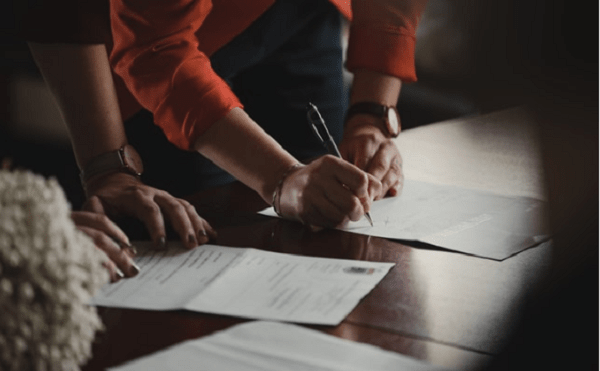
Once you and your spouse have reached the agreement in principle on all of the terms of your divorce, it needs to be formalized. This formal document typically contains between four and twelve pages. Both you and your spouse have to fill in and date the document.  You should make sure that you initial each page in addition to executing the signature page of the document. This does not have to be done by an attorney in order to be official.

Step #2 Making a Motion to the Family Court to Affirm the Divorce Agreement as a binding judgment.

The next step is to have the Family court turn your Divorce Agreement into a binding judgment for you and your spouse.  This is done by submitting a formal request to the court (a “Motion” or a “ בקשה” in Hebrew)  to set a court date. At the time that you submit the motion, you must pay the statutory fees to the court.  

After the court has received the motion it will assign your “case” a docket number and will set a date for the actual hearing. You and your spouse must both appear in order to have your Divorce Agreement affirmed as a binding judgment.

Step #3 The Family Court Hearing

The Family court hearing is a relatively quick and painless proceeding and usually takes less than half an hour. It’s important to note however, that you may be waiting a long time for the case before yours to finish. So allow for at least two hours after that time your case has been scheduled.  

This is what to expect when you get inside the court.

  • The hearing takes place in front of a single judge and there is no jury.

  • The hearing is done “behind closed doors” which means that nobody except the spouses and their legal representation are present. 

  • The judge will make sure that the Divorce Agreement isn’t violating any laws.

  • The judge will ask each of the Parties (i.e. both of the spouses) questions regarding the Divorce Agreement to ensure that they understand what they have signed.

  • The judge may make recommendations for minor amendments to the Divorce Agreement to make sure that points are not ambiguous.  

  • These changes will either be changed directly in the Divorce Agreement and signed to by the Parties or will be made via a printed court record – the hearing “Protocol”.

  • At this point the Divorce Agreement is affirmed by the judge as a binding judgment and the hearing is over.  

If you and your spouse both agree to only have the Rabbinic court handle all aspects of your divorce then you are free to opt out of appearing in front of the Family court, entirely. But whether you are a man or a woman, it is my personal recommendation that you do not skip the Family court.  Although it will nominally cut down on both time and cost, there are a number of factors which I believe may cancel out the savings. 

1) The Rabbinic court may not just “accept” your Divorce Agreement and may try to convince you or your spouse to reconcile – especially in the case of a first marriage and when children are involved. (Yes the Rabbinic court really is paternalistic.)

2) If for whatever reason (usually because you or your attorney didn’t set up the proper mechanisms in the Divorce Agreement) you do get into litigation in the future, you will be litigating in the Rabbinic court rather than the Family court. I have found the outcomes in the Rabbinic court to be less predictable and professional with regards to secondary divorce litigation. (i.e. Divorce Agreement enforcement).

Step #4 Getting the Divorce Agreement affirmed as a binding judgement in the Rabbinic court

The next step is to submit a motion to the Rabbinic court. This is to set a date for the Rabbinic court to affirm the judgment made by the Family court that the Divorce Agreement is binding.  

If you have had the Divorce Agreement confirmed as a judgment by the Family court, then the motion must be submitted together with a certified copy of the Family court’s judgment affirming the Divorce Agreement. 

Here too, at the time that you submit the motion, you must pay the statutory fees to the Rabbinic court.  

After the Rabbinic court has received the motion, it will assign your “case” a court docket number and will set a date for the actual hearing. You and your spouse must both appear in order to have your Divorce Agreement affirmed as a binding judgment for divorce by the Rabbinic court.

Step #5 The Rabbinic Court Hearing

The Rabbinic court is generally a relatively quick and painless proceeding when you already have a Family court affirmed Divorce Agreement as a binding judgment. But if you haven’t been to the Family court first and you submit a motion directly to the Rabbinic court it can take much longer and may even not be affirmed right away. This hearing too, usually takes less than half an hour. Again, you may be waiting a much longer time for the case before yours to finish. So allow for at least three hours after your scheduled time.  

  • The hearing takes place behind closed doors in front of three Rabbinical court judges, “דיינים” in Hebrew. 

  • You and your spouse will each be required to bring a witness who knows you, your father and both his and your Hebrew names and any nicknames. (These will eventually be written into the GET)

  • Just as in the Family court there is no jury. 

  • During the hearing the Rabbinical court judges make sure that the couple really wants to get divorced. This may include asking any number of personal questions. 

  • The judges will verify the identity of each side. This is when your witnesses will be called in.

  • The judges may ask questions regarding the terms of the Divorce Agreement and the members of your immediate family.  

At this point the Judgment from the Family court and/or the Divorce Agreement is affirmed by the Rabbinical court judges as a judgment for divorce, and the hearing is over.

Step #6 The Get Ceremony

The final step of the process is the divorce itself. The GET.  This is sometimes performed directly after the hearing but usually an appointment is made to appear at a later date   for the GET ceremony. This process usually takes a few hours, and involves going through a series of ceremonies as described in the Babylonian Talmud by which the husband grants and the wife accepts the writ of divorce. The ceremony has a number of stages.

  • Someone is appointed to write the writ of divorce (the GET). 

  • Witnesses are provided by the Rabbinic court to witness the giving of the GET by the husband and the accepting of the GET by the wife. (This is a precise procedure that you will be guided through.)

  • There is a recommendation by the Rabbinical court regarding the wife being allowed to physically be with other men and timelines regarding pregnancy (I kid you not).  

  • When the ceremony is over, the Parties each receive a certificate of divorce after paying a statutory fee, and as far as the state of Israel is concerned, the couple is divorced.

The more you know about divorce proceedings in Israel, the better able you will be to get through this time and plan for a better future for yourself and your family.

If you have any questions, please feel free to contact me.

Jay Hait  Israel 077 200-8162  U.S. 201 696-3947  jay.hait@orcheidin.co.il


Fee ebook -What women need to know about divorce in Israel

Choosing a cooktop for Israel

Reading Time: 4 minutes

Which way to go when choosing a cooktop for Israel; gas, electric, ceramic or induction?

Hebrew: ?איך בוחרים כִּירַיִים

Sometimes, when making Aliyah, it actually makes more sense to leave your old small kitchen appliances behind and buy new ones in Israel. Brand availability, smaller kitchens, and limited countertop space all play a role in what will work here. These factors can really influence your choices, so it’s worth doing thorough research—and getting advice from friends—before making a purchase you might later regret.

COOKING METHODS

Symbols for gas, electric, ceramic or induction as they would appear on customer information material

Gas ranges

Gas is the preferred choice for most professional chefs, offering convenient, quick, and instantly responsive heat. In Israel it’s also the most economical option. Cleaning a gas range according to Halacha, before Pesach, is a huge mission, labor intensive and time consuming. Another drawback is that gas is not piped, but supplied in set quantities in steel balloons, so there’s always the risk of forgetting to reorder or miscalculating and running out just as guests arrive. For reference, in our household of four, a 5‑kg gas cylinder lasted roughly three months.

Gas balloons are sometimes stolen (for their copper connections and empty balloon resale value) and in older buildings you might need to keep your gas balloons chained and locked up which means coordinating with the gas company if you have ordered a refill – sitting at home waiting for the gas man to arrive is a nuisance.

Price point: the retail starting price for a four-burner gas range is around 700 NIS while the absolute top-of-the-range Miele five-burner costs in the region of 16,000 NIS.

Electric cooktops

Electric ranges with coiled or solid plates were common when I was growing up abroad. The coiled elements heat up quickly, offering a responsiveness similar to gas, while the solid plates excel at slow, steady cooking.

In Israel, ovens with integrated coiled or solid plates are uncommon; the few I’ve seen are small, countertop models.

Price point: A single-plate electric range starts at around 150 NIS, while a four‑plate range can cost up to 4,500 NIS. If you’re looking for a temporary and inexpensive solution, the basic models do the job. You can also opt for a convenient two‑plate ceramic countertop unit for about 250 NIS.


Glass/ceramic range

We used to call them “glass tops,” but in Israel they’re referred to as “ceramic.” Both terms are accurate, since the heating element sits beneath a layer of ceramic glass. After about 25 years of cooking with gas, I switched to ceramic and have never looked back. It took me a couple of months to adjust to the different heat distribution, but once I got the hang of it, it felt completely natural. The ease of cleaning is a huge advantage—especially at Pesach—and I never have to worry about running out of gas or waiting around for a delivery again. As for power outages, they’re rarely an issue in Israel; most interruptions last only a few minutes, so the electricity‑versus‑gas debate is largely irrelevant.

After switching to a ceramic range, our electricity bill increased by about 70 NIS per month. By comparison, our monthly gas costs used to average around 50 NIS. In other words, the running costs are slightly higher with electricity, but for us the convenience and reliability have more than justified the difference.

Price point: the retail starting price for a four-plate ceramic range is around 800NIS and can reach as much as 12,000NIS for a top-of-the-range Siemens or Miele with five-plates and other appealing features. We paid 2,500NIS for our four-plate, AEG cooktop close to 10 years ago and it has never needed repair.

Induction range

An induction cooktop works by using an electromagnetic coil beneath the cooking surface to generate a rapidly changing magnetic field. This magnetic field passes through the ceramic glass and into the pot or pan placed on top. If the cookware is made of a ferromagnetic material, such as cast iron or certain types of stainless steel, the magnetic field creates tiny electrical currents within the metal. Because metal resists the flow of electricity, these currents generate heat directly inside the cookware itself. As a result, the pot becomes the heat source rather than the cooktop, allowing for extremely fast, efficient, and precise heating. The surface of the cooktop stays relatively cool, warming only from contact with the hot pot, and because induction relies on magnetism, cookware made of aluminum, copper, or glass won’t work unless it has a magnetic base. This means that you might have to replace your pots and pans which could add another 1,500NIS or even more, to the total purchase price.

In most cases, an induction cooktop does not need three-phase power but if you have lots of high powered domestic appliances and a few air conditioners you may require three-phase power in your home which could be an issue in older buildings in Israel.

Price point: A top of the range Siemens induction range retails at over 15,000NIS but the starting price of an induction range is upward of 600 NIS while a mid-range cooktop costs around 3,000 NIS.

Like a ceramic cooktop, an induction model is very easy to clean. It also cooks faster, thanks to the way it heats the pot directly rather than the surface. Another major advantage is safety: shortly after you switch it off, the cooktop becomes cool to the touch, which is especially reassuring if you have small children around

Where can I get my coronavirus vaccination in Israel?

0

Reading Time: 2 minutes

I am eligible for a coronavirus vaccination. Where can I get one?

flu vaccination

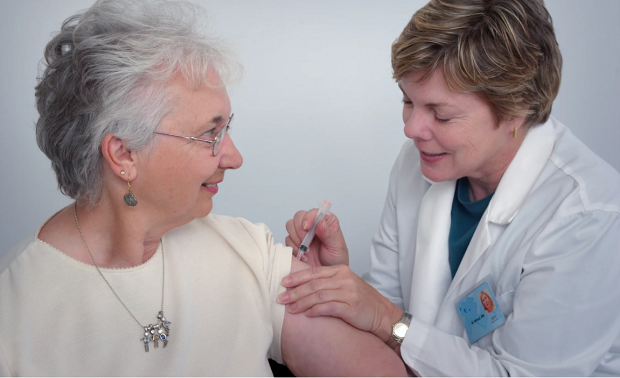
Over 2 million citizens have already been vaccinated with the first dose of the coronavirus vaccine and according to MOH data, over 300,000 people have been vaccinated with the second dose,  As of Sunday, 17.1.2021, HMO members from the age of 45 upwards, can receive the corona vaccine and the  40+ age group are next in line – hopefully by the end of this week.  Just because it has been announced that you are eligible for the vaccine, does not mean you will get an appointment immediately.  There is around a 3 week waiting list.

Who?

We have received a number of emails from non-citizens and even tourists asking if they can get vaccinated in Israel.  At this stage only members of HMO’s are being vaccinated.  If you are an international in Israel and not a member of one of the 4 health funds, discuss this with your health insurer.  We have heard rumors that for a price, health insurers are offering vaccinations – we have not verified this and it could just be fake news.

Certain age-groups and sectors of the population are NOT being vaccinated at this time such as children (under 16 years of age) and recovered patients, due to a lack of information about vaccination among these populations.

Regulations are forever changing, so please consult with the appropriate authorities concerning eligibility.

If you are entitled to a vaccination under the current directive:

  • You could receive an SMS text message, an email or a phone call from your health fund, inviting you to make an appointment.  These messages will be in Hebrew and mostly phone calls will be conducted in the Hebrew language.
  • If you do not receive a notification of this type, take the initiative to contact your health fund or make an appointment via the health fund’s digital platform; their website or their app.

The medical and healthcare system in Israel

Health Fund’s contact information (NOTE: you are required to login with your personal user ID and enter your medical file before you making an appointment)

  • Clalit – by telephone at *2700
  • Maccabi – by telephone at *3555 
  • Leumit – by telephone at 1-700-507-507
  • Meuhedet – by telephone at *3833

Where?

Your HMO may offer you the option to vaccinate at one of their clinics, a local hospital or at a ‘drive-in’ center in your area. At the beginning of the vaccination drive, queues were not long and a 15 minute wait was reasonable.  Today lines are long, expect to wait a couple of hours.

How?

Usually vaccination is by appointment only but there are those that show up at vaccination stations late in the evening without an appointment and take a chance in the hope of receiving a vaccine.  If there are vaccines left over from the day, and in order not to waste them, you may be lucky enough to get one.

We wish you good health.