

Popular varieties and types of locally manufactured cheeses in Israel — a handy cheese guide featuring Hebrew names and transliterations to help you navigate supermarket shelves, deli counters, and Israeli recipes.
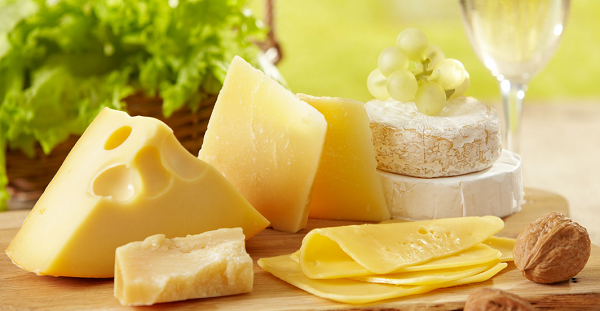
Israel is well known for its soft white cheeses and wide variety of dairy products. From inexpensive everyday staples to premium artisanal varieties, supermarket shelves offer an impressive selection of both locally produced and imported cheeses. In recent years, fromageries — specialized cheese shops — have sprung up across the country, from Sarona Market to Mahane Yehuda Market and beyond.
Soft cheeses in Israel are made from cow’s, goat’s, and sheep’s milk. Goat’s- and sheep’s-milk cheeses are known for their strong, distinctive flavor, while cow’s-milk cheeses tend to be milder and are produced year-round. Goat’s- and sheep’s-milk cheeses, however, are generally seasonal and more widely available during specific times of the year.
It is a Jewish tradition to eat dairy products on Shavuot (The Festival of Weeks) so we are sharing some cheesy info about local varieties and types of cheese that every Israeli shopper should know and can use in their recipes.
Brinza Cheese – Gvinat Brinza – גבינת ברינזה
Brinza — not “Breezer”! — is a soft, salty white cheese made from cow’s milk that is commonly used in both cooking and salads. With an average fat content of around 15%, Brinza is soft and spreadable when fresh but becomes firmer and more crumbly as it ages. It is usually stored in brine, which helps maintain its moisture and distinctive tangy flavor. Expect to pay approximately 90–100 shekels per kilogram.
Bulgarian Cheese – Gvinat Bulgarit – גבינת בולגרית
Canaan Cheese – Gvinat Kna’an – גבינת כנען
Canaan cheese is a white cheese with a 5% fat content. A salt-free cheese. Great for baking and even in cheese-cakes. Expect to pay around 20-30 shekels for 500g.
Cottage Cheese – Gvinat Kotteg’ – גבינת קוטג
Emek Cheese – Gvinat Emek – גבינת עמק
Blue Cheese Varieties – Gvinot Kcholot- גבינות כחולות
Israeli blue cheese varieties are sold under a range of names, with each local dairy producing its own version of a Roquefort-style cheese. Popular examples include Galil Rokfor, Roq-Kfar, Bar-Kfar, and Kachol Lavan. Typically made from sheep’s or goat’s milk, these cheeses are known for their distinctive aroma and strong, salty flavor.
Blue cheese pairs particularly well with thick-crusted country-style bread, grapes, apples, and walnuts. Many people enjoy it with sweet dessert wines, while others prefer it alongside a glass of Cabernet Sauvignon. It can also be added to creamy salad dressings for a richer, sharper taste. If the pungent smell does not put you off, you’ll discover a bold and flavorful cheese with plenty of character. Expect to pay between 100 and 140 shekels per kilogram for locally produced blue cheeses.
Labaneh – לבנה
Soft-white, Creamed Cheese – Gvina Levana – גבינה לבנה
White cream cheese is produced by all the major Israeli dairies and is available in fat contents starting from 3% and upward. Usually sold in 250-gram tubs, it can also be purchased in larger 500- and 750-gram containers, which are especially useful for baking traditional Shavuot cheesecakes and other dairy desserts. Mild and creamy in flavor, white cream cheese can often be substituted in recipes that call for sour cream or plain yogurt.
Premium varieties such as Symphonia and Napoleon typically have a higher fat content and are sold in a variety of flavors including garlic, onion, and dill. These richer spreads are similar in style and texture to Philadelphia cream cheese popular in the United States.
- Learn new Hebrew words for dairy products with English and transliterations.
- Our favorite recipes for the holidays
Tsfatit Cheese – Gvinat Tsfatit – גבינת צפתית
Tzfatit cheese is a semi-hard, salty white cheese known for its slightly rubbery texture. First produced in 1840 from sheep’s milk by the HaMeiri dairy in Tzfat, which gave the cheese its name — it is still made there today by descendants of the original cheesemakers.
Traditionally produced from sheep’s milk, Tzfatit cheese is now also made from cow’s and goat’s milk. Its mild yet salty flavor makes it extremely versatile in Israeli cooking. It can be used in lasagna, pashtidot (Israeli-style crustless quiches), börekas, or almost any recipe that calls for white cheese. It is also delicious sliced into sandwiches, especially when paired with tapenade and sun-dried tomatoes. Expect to pay around 80 shekels per kilogram.
Whatever your choice: from creamy white cheeses to sharp blue varieties, Israel’s cheese selection offers something for every palate. Alongside their flavor and versatility, many cheeses also provide valuable nutrients including protein, calcium, zinc, phosphorus, magnesium, vitamin A, vitamin B2 (riboflavin), and vitamin B12.
Last Laugh
What type of cheese hides a horse?
Mascarpone.
