To ease your first steps in Israel, and in order to improve absorption services, it is possible for new immigrants (olim) to register for the health fund of their choice upon arrival at Ben Gurion airport. You can also register at a post office and can also change your health fund if you wish.
Registering for a Health Fund (Kupat Holim) in Israel
Hebrew: רישום לקופת חולים בישראל
Registering for a Health Fund upon your arrival in Israel
All new immigrants (Heb. Olim) receive a voucher at the airport along with their Teudat Oleh, entitling them to six months free health insurance. Once you are employed, Health Insurance is taxed on your income (up to 4.8%). The employer’s portion is collected by the National Insurance Institute (Bituach Leumi), and passed on to the health insurance fund of the individual’s choice.
Health Fund registration services at Ben Gurion Airport
New immigrants are eligible for health insurance from the date of receipt of new immigrant status. As of the 7th of December, 2010, upon arrival at the airport with new immigrant status, and receipt of documentation from an absorption counselor, you can register at the health fund of your choosing. When registering you must inform the absorption counselor of your choice of health fund (it is recommended to check the services provided by each fund in advance of your Aliyah).
We suggest that you access the Health Fund’s website and research their benefits before you arrive in Israel. Ask friends or relatives, living in Israel, in and consult with them before deciding on a health fund.
Note that when registering for a health fund at the airport, you do not have to pay a registration fee.
Other ways to register for a Health Fund
You can register for a health fund, on-line, via the fund’s website. Please note that not all health funds have this facility on their site yet.
Moving to Israel or making Aliyah. What is Aliyah?
Hebrew: מהי עלייה לארץ ישראל
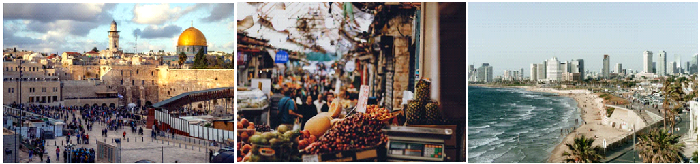
When you make Aliyah you will get to experience the spirituality of Jerusalem, the tastes and smells of the markets and the hustle and bustle of Tel Aviv
What is Aliyah? The word Aliyah literally means to “go up”. It also commonly refers to the process of immigration to Eretz Yisrael – The promised land of Israel.
The word “Aliyah” is also used in reference to Jewish prayer services, where a man is called and “goes up” to read and bless a portion of the Jewish law in the synagogue. We are not going to be discussing that aspect of Aliyah.
If you are reading this article, you are probably considering making Aliyah, moving or relocating to Israel, have just made aliyah to Israel, planning a visit, a pilot trip or are just interested in the culture and Israeli lifestyle.
Aliyah is a long-term process and it is often used in conjunction with the Hebrew word “Klitah” absorption and acculturation. A successful Aliyah means that you have successfully been absorbed, and integrated into Israeli society and life-style. The Ministry of Aliyah and Integration (Heb: Misrad Haklitah) is the government body responsible for overseeing Aliyah in Israel.
When families decide to make Aliyah there is a lot to think about; housing, their children’s education, employment, healthcare, lifestyle changes and more. You can find guidance and information on all these topics under the ‘Aliyah & Relocation‘ section of this website as well as under ‘Lifestyle‘.
When you move to Israel, make Aliyah or relocate for work or study purposes, you will have to learn Hebrew. Your Klitah, integration and absorption will be so much easier when you can communicate with the locals. We’ve got Hebrew learning covered too. You can jump in right now and learn some really useful Hebrew terms
How to make Aliyah
The first step to making Aliyah to Israel is contacting the Jewish Agency, the Israel Embassy in your country, Nefesh B’Nefesh organization in the USA or UK, or anyone of the other Aliyah organizations or Jewish Federations in your home country and they will guide you and put you in touch with the right people.
If you’d like to connect with other like-minded English speakers who have made the big move, we invite you to join our Facebook groups: Anglo-List and Tel Aviv Anglos, where you are welcome to ask questions and can expect to get loads of advice.
Your journey only begins when you land in Israel. Your Aliyah will be filled with immense challenges and stressful times. There are many facets to life here and you will need to make adjustments to your lifestyle and expectations but time is on your side. One day you will wake up and say to yourself “I feel at peace with myself. I am finally home”.
Zivneurim, established in September 2000 by a group of former navy commandos in memory of their comrade Ziv Levy (O.B.M), who fell in the line of duty, operates today throughout Israel – from the Jordan Valley in the north to Yerocham in the south. We offer a unique year long educational course using marine activities to prevent youth at risk from dropping out of school.
The Need
Recent years have shown a steady increase in the number of young people dropping out the education system. The transition from elementary to middle school often comes with an emotional-educational breakdown. That in conjunction with the characteristics of the teen years and without a supportive family front, can lead to the child dropping out of school.
For teens who have just immigrated the situation is more complex: Many cultural differences, learning Hebrew and dealing with a whole new social environment – can increase the child’s risk of dropping out of school.
The implications of youth without an educational framework are clear and painful: the rise in the level of violence, the level of crime, and especially their future as adults.
Zivneurim offers a unique and different solution to for dealing with this problem. Through a connection with the sea and the development of small craft skills, we seek to impart values and life skills to these children, helping them to fully utilize their abilities in other spheres of their lives.
Zivneurim targets junior-high school students aged 12 – 16, who are on the verge of dropping out. The groups are heterogeneous with regards to age, length of time in Israel, socio-economic background and religious affiliation.
Statistics show:
In children born in Israel versus children born abroad, it was found out that the rate of dropout among children born abroad was 5.5% versus 4% among children born in Israel.
The dropout rate of boys is higher than that of girls.
Some of them suffer from functional difficulties and learning disorders and their parents are unable to support them emotionally and financially. Many of them fail to fit in socially and struggle to keep up academically. Often they have no faith in their potential to change this reality.
Our Model
The Sea: The marine environment enables the teens practice team work, deal with uncertainty, perseverance and acquire self esteem through challenge and success.
The Social Facilitator: former commandos/ sailors who has strong backgrounds in education. For the youth, the facilitator serves as an anchor, a significant, stable figure that provides a sense of security.
The Group: The group activity demands commitment & creates a feeling of belonging.
How participants are chosen
The program serves groups of 15-20 youth at risk, each in different municipal areas. The participants are first screened by the school. They selects those that are at risk of dropping out. Following this, the participants are invited to one-on-one interview with the Educational coordinator and social facilitator who determine the participant’s adequacy for the program according to defined criteria. In addition we invite the teens’ parents to a presentation about the program since they are going to be part of it as well.
All participants must study at the same school (there are exceptional cases). Each group meets once or twice a week after school with the social facilitator and they travel to the nearest marine center. Activities include trying out and working with various small craft: boogie boards, wind and wave surf board, kayaks, sailboats, yachts and more. During the year, two major events are held for all the Zivneurim students in Israel: a challenge event and a summer event at the end of the school year.
Evaluation and Assessment
We put lots of effort to measure our impact. Through pre- and post-questionnaires, completed by the participants, the facilitator and the teaching staff of the school analyze the effectiveness of the program.
Over 93% of Zivneurim students continue to study within the education system! All students report that our activity is the most significant activity that helped them face difficulties in school.
We invite you to visit one of our marine centers to see our activities!
Israel weather has a typical Mediterranean climate with hot dry summers from mid-May to mid-September. Israel has cold and rainy winters. Light isolated showers, together with moderate and comfortable temperatures, can be expected in October. November can be cold and during December and January, one can expect consecutive rainy days. Snow in the mountainous northern regions of Israel are and in Jerusalem are not unusual. April is spring. Spring and autumn are short. The peak summer season, June – August, brings high temperatures with no rainfall. You can expect sunshine in Israel for about 8-9 months in the year.
Sunrise in Israel can be as early as 5:00am in the mid summer and around 6:30am in mid winter. Sunset in the summer can be as late as 8:00pm and in the winter, it will be dark at around 5:00pm.
Rainfall varies considerably in the northern and southern parts of the country. Almost no rain falls in Eilat, while Nahariya and Rosh Hanikra in the far north and Jerusalem, in the center, have the most rainfall in the country.
Snow
Snow falls regularly in Jerusalem and the high peaks of the Hermon in the Golan – the northern most part of the country. Snow in the Golan will stay on the ground for the entire winter. The melting snow in the Golan flows down the Dan River system into the Kinneret (Sea of Galilee) and then small tributaries take it down to the Dead Sea. Haifa may, on a rare occasion have a light snow storm at night. The snow usually melts by morning
Hail & Thunder
You can expect lightening and thunderstorms in the winter. Hail storms are not uncommon, and sometimes heavy hail, mistaken by small children as snow, carpets the ground.
Sea Temperature
The Mediterranean coastal sea temperatures are as low as 15 Centigrade and can reach 30 Centigrade in the mid-summer.
The Dead Sea and Eilat, on the Red Sea have similar sea temperatures which vary between 20 and 30 in the winter and summer months.
The Sea of Galilee (Kinneret) has sea temperatures of between 15 and 30 degrees in the winter and summer
Humidity
Israel is hot and humid. Summer temperatures can reach up to between 30 – 38 Centigrade, and sometimes more. Humidity can vary between 20% in the southern most parts, around Eilat, to about 85% in the Rosh Hanikra region.
Heat Waves
Israel has approximately 50 days in the year when heatwaves prevail. The specific conditions that accompany these heatwaves; dust storms and light rains are referred to as a ‘Sharav’ in Hebrew or ‘Hamsin’ in Arabic.
In June 1942, Kibbutz Tirat Tzvi in the Beit She’an Valley, which lies 722 feet below sea level, recorded the highest temperature ever officially measured in Asia: 129º Fahrenheit or 53.88º Celsius
Program of events – Haifa’s Holiday of Holidays and Festival of Festivals 2017
Hebrew: חג החגים חיפה
This year, 2017, Haifa celebrates the 24th Holiday of Holidays Festival. The festival aims to cultivate and advance tolerance and mutual respect through culture and art. This year the Holiday of Holidays Festival (sometimes called the Festival of Festivals or in Hebrew Chag HaChagim) spans 3 weekends. It is always celebrated in December. A new and different theme is chosen each year.
We’re happy to share the program of events with you translated from Hebrew to English. Have fun and see you there!
EVENT
DATE
TIMES
Antiques Fair
Popular with visitors, the antiques fair is an integral part of the Festival
8th, 9th, 15th, 16th, 22nd & 23rd.12.17
Bet Hageffen
From 10:00 a.m.
Family Stage
Circus action
15th & 17th.12.17
11:00
Hen Margalit
16.12.17
11:00
Shambuki show
16.12.17
13:15
Christmas Parade
16.12.17
14:30
Red Riding Hood – DAVAI
23.12.17
12:00
Music & rythms
23.12.17
13:00
Naima
23.12.17
15:00
Tours
Food tasting in the Wadi
13th, 14th,15th, 21st & 22nd.12.17
9:00, 10:00, 11:30, 12:30, 14:00
Haifa and the holiday lights
15.12.17
09:00
Special Events
Self Collecting (tips for starting a collection)
14.12.17
Alkarma 19:00
MFA Exhibition
15.12.17
Shizef School 9:00
Dabka Party
16.12.17
14:00
At the Galilees Pave
16.12.17
14:00
Holiday Lights
17th, 18th, 19th, 20th.12.17
17:00 City Mall Outlet
Be Kind
20.12.17
Beit Hageffen 18:00
Ori Meir
20.12.17
20:00
Less than 1000 art
20.12.17
Sarah 7 Gallery 20:30
The Right Cup
20.12.17
Alkarma 21:00
Liturgical Music (ticket sales www.barak-tickets.co.il)
No. 7
“On Love and Sin” – Phoenix Ensemble
14.12.17
20:30 Studio Club
No. 8
The Israel Vocal Ensemble
16.12.17
13:00 Greek Orthodox Church
No. 9
Violin & Piano Recital
16.12.17
20:00 Rappaport/Auditorium
No. 10
The Meggido Choir
23.12.17
11:00 St. Johns Church
No. 11
Barrocade Ensemble
23.12.17
13:00 Greek Orthodox Church
No. 12
Piano Recital
23.12.17
20:00 Rappaport/Auditorium
Shows
Golza
15.12.17
21:30 Beit HaGeffen
Shanti Baba Ensemble
16.12.17
11:00 & 13:30 Beit HaGeffen
Elias Subi
16.12.07
11:00 & 13:30 Lower Wadi
Beats contemporary circus
16.12.17
11:00 Beit HaGeffen
Harel Shahal & the Ottomans
16.12.17
11:50 & 14:20
Carmel Sol Orchestra
16.12.17
12:00 & 13:00 Haifa Museums Education Center
Holy Lindy Land – Swing Dancing
16.12.17
12:00 Beit Ha Geffen
Albi Trio
16.12.17
12:40 & 15:10
Duo Quanum Percussions
23.12.17
11:00
Farat Rajar Rock Band
23.12.17
11:50
The Djamchid Sisters
23.12.17
12:00 Haifa Museums Education Center
One Man Party
23.12.17
12:30
The Sounds of Marrakech
23.12.17
12:40
Exodus Trip
23.12.17
12:40 Lower Wadi
Carmela Modern Dance
23.12.07
13:00 Haifa Museums Education Center
Workshops
Haifa and the Holiday Lights Outdoor Painting Workshop – From the Studio for Urban Space
Top 10 National Parks, Nature Reserves & the Israel National Trail
Hebrew: פארקים וגנים לאומיים
Ein Advat National Park (Image credit: Unsplash)
Israel boasts some wonderful national parks. The KKL – Keren Kayemet LeYisrael or JNF – The Jewish National Fund who develop and preserve the national parks ensure that they preserve the environment and preserve our natural and cultural heritage.
KKL-JNF have a very economical membership card called the MATMON. It’s a yearly pass which gives you free entry to about 60 national parks and nature reserves for as many times you wish to enter for a period of one year.
KKL-JNF also offer multi-site tickets valid for a two week period. This is an ideal solution for tourists visiting Israel for a limited time. The mutli-site tickets cost between 80 NIS – 100 NIS.
Foreign tourists purchasing the Israel Travel Pass (a public transport card) also receive free entrance to some of Israel’s national parks.
1. The Hermon National Park (Banyas)
From the foot of Mt. Hermon (Har Hermon), the Banyas spring rushes with great force. A basalt canyon hiking trail leads to the largest waterfall in Israel alongside the remains of an ancient city. You can also walk along the river, visit an old flour mill and watch tourists being baptized.
2. The Yehudiya Forest Nature Reserve
In the heart of the Golan Heights, there are magnificent hiking trails running along rivers, natural pools and waterfalls. There are short family trains and more difficult all day hikes. At the end of the trail you will reach the Hexagonal Pools named after the shape of the hexagonal basalt columns that make up its walls. This geological formation was created by the slow cooling of layers of lava flows over a long period. When the lava cooled it was split into polygonal shapes due to its contraction.
3. The Zippori National Park
Zippori a.k.a Sepphoris is a village and an archeological site located in the central Galilee region of Israel. The site holds a rich and diverse historical and architectural legacy that includes Hellenistic, Jewish, Roman, Byzantine, Islamic, Crusader, Arabic and Ottoman influences. Remains of a synagogue dated to the first half of the fifth century were discovered on the northern side of town.
Hundreds of fragments belonging to frescoes from the Roman period in Zippori have been discovered. The fragments contain figurative images, floral patterns and geometric motifs, shed light on life in Zippori which was an important urban center for the Jews of the Galilee in early times.
4. Caesarea National Park
This ancient port city was considered, in its time, as one of the most modern ports in the world. Caesarea boasts a magnificent beach as well.
A 3,500 seat theater remains from Roman times and live concerts of Israel’s best artists and performers are held here regularly. The theater structure is impressive and stands at the southern edge of the national park. People from the all walks of life came here to enjoy dramas and comedies. The shape of the theater is semi-circlular. There are also underground rooms and dressing compartments for the performers.
5. City of David
Stroll on the walls of The City of David overlooking Biblical Jerusalem or brave the deep, underground water tunnels to the ancient spring. The Shiloah Pool was the major water drawing source in biblical times. The Herodian Road was the ancient thoroughfare that led pilgrims north to the Temple.
Recently a “Beka” weight from the First Temple period was discovered in the Emek Tzurim sifting project in Jerusalem. The weight, which was found in the archaeological soil originating from the Western Wall foundations, north of the City of David, features an inscription in ancient Hebrew script and was used to weigh the half-shekel brought to the Temple.
The Ein Gedi Nature Reserve is one of the most beautiful places in Israel. En Gedi, near the Dead Sea, is the biggest oasis in Israel. It has four springs and waterfalls and flowing brooks at the foot of the cliffs, home to ibexes and rock hyraxesa and a diversity of other fauna and flora.
7. Masada National Park
Masada National Park is a mountain top fortress overlooking the Dead Sea. Masada was the site of a three year siege by Roman soldiers, pivotal in Jewish history and which led to the mass suicide of its Jewish fugitives. Watch our one minute videos of favorite attractions in Israel. UNESCO has declared Masada National Park a World Heritage Site.
8. Advat National Park
Ein Advat is a canyon in the Negev Desert near Kibbutz Sde Boker. Archaeological evidence shows that Ein Avdat was inhabited by Nabateans and Catholic monks. Numerous springs at the southern opening of the canyon empty into deep pools in a series of waterfalls. The water emerges from the rock layers.
This old Nabatean town was on the ancient incense and spice route from south Arabia to the Mediterranean.
9. Ramon Park
Breathtaking views from the Ramon Crater (Maktesh) and geological site in the Negev Desert, about 85km from Beer Sheva. Ramon Crater is not an impact crater from a meteor nor a volcanic crater formed by a volcanic eruption, but rather is the world’s largest “erosion cirque”. The Bio Ramon Information Center displays and explains the unique fauna and flora of the surrounding desert.
10. Coral Beach Eilat
The coral reef at Eilat’s Coral Beach nature reserve is a snorkeler’s paradise offering a fantastic glimpse of the coral reef of Eilat. It covers 1.2 kilometers of shore, and is the northernmost shallow water coral reef in the world.
And, we cannot omit the Israel National Trail
The Israel National Trail (INT) is one of the only trails of its kind in the world. The 920 kilometer trail from the north to the south of the country, is an amazing way to see Israel. The trail transverses forests, mountain ranges, urban areas and deserts before ending at the southernmost point on the Red Sea. Along the way it passes Arab & Jewish villages, Roman relics, Crusader ruins and Druze and Christian holy sites. The trail can be done in stages, a few days at a time, or more challenging to hike the whole trail in one go.
Activities and outings for Israel’s special needs community.
Hebrew: טיולים וסיורים לאנשים עם צרכים מיוחדים
Emek HaShalom
Have you ever thought about the difficulties of taking a child or a wheelchair bound friend for a walk in nature? Have you ever described a flower to someone who can’t see? How does one explain the sound of flowing water to the hearing impaired? Or how do you explain a change in seasons to the mentally challenged?
Emek HaShalom – just outside Yokneam (in Northern Israel – 30 minutes from Haifa) has wonderful trails and hikes specially designed for those with special needs. Under the auspices of LOTEM – a nonprofit organization which caters to the special needs community. Visits are arranged via schools, community centers and other organizations and associations.
Visitors to Emek HaShalom are always welcome. The gates remain unlocked and thousands of hikers stroll through the area every year. The all inclusive trail in Nachal HaShofet has been visited by more than five million people over the past five years. There are no entrance fees and it is a lovely spot to walk or picnic, especially if you have a baby carriage, wheelchair, cane or any other special needs.
On road 70 take the turn off to Yokneam HaMoshava.
Drive straight for 1.3 Km until you see a “no-entrance” sign in front of you.
Turn right. You will see Kibbutz HaZorea on your left side.
Continue for 1km till you reach the Nachal HaShofet parking lot – on your left side.
Leave your car there and walk along the stream, for about 2km in a circular trail.
LOTEM have also developed a number of wheelchair accessible tours in Jerusalem and its environs.
One of their popular tours is a tour of the Jewish Quarter which includes a visit to Mt. Zion, David’s Tomb, The Cardo, the City Walls and the Western Wall. The tour can also be combined with a visit to various museums and the Herodian Quarter.
For more information call 054-6512653
The Lotem Mitzvah Program
The Lotem Mitzvah Program encourages children of Bar/Bat Mitzvah age (12 and 13) to help children less fortunate than themselves enjoy the many wonders nature has to offer. For further information speak to the folks at Lotem.
Victims of sexual abuse in Israel can turn to TAIR.
Hebrew: קורבנות הטרדה מינית
One of every three women and one of every seven men are victims of sexual abuse.
The Tair Rape Crisis Centre (RCC) has been providing assistance and support for victims of assault and sexual harassment in the Coastal Plain area – “HaShfela” (from Ashkelon in the south to Ness Tziona in the north) since 1998. The organization was founded as a response to the need for social services for victims of abuse and rape. We assist women and men to work through the trauma and injury of abuse and the ensuing effects on the victim and their family.
The Centre also works within the community to raise awareness and reduce the incidence of sexual violence in our society by providing immediate, non judgmental and anonymous support to victims. Through lectures and seminars we reach diverse audiences in the region such as youth, social workers, educators, policemen, lawyers, doctors, counselors and more.
Tair Rape Crisis Centre is the youngest of 10 Rape Crisis Centers (RCC) throughout the country, and is a member of the Association of Rape Crisis Centers in Israel.
Tair Rape Crisis Centre works in three main areas:
1. Support and Assistance for Victims
a) 24/7 Hot Line (1202)
The hot-line is staffed by volunteers trained to give first response in a crisis. This assistance includes support, acceptance, information, and assistance to the victim in the Hebrew, English and Russian languages. Our most basic tenet is the empowerment of the victim as any attack denies one of the sense of control over one’s self and life. This response to this loss of control helps to give victims the strength and support to choose one’s own path to healing. We support and assist, step by step, as she works through and ultimately chooses her path to healing.
Our hot-line is also open to family, friends, acquaintances and relatives of victims, searching for information, support and counseling. All callers are afforded complete confidentiality. The Tair RCC hot-line volunteers do not require callers to identify themselves – callers can maintain complete anonymity.
b) Accompanying Victims
Our volunteers support and accompany victims to police, hospital, lawyers and courts. We assist victims throughout the entire process – from making the complaint, supporting them through investigations, evidence collection, medical care and the legal process, and ensuring victims know and exercise their rights within the law. All these are very difficult, and often intrusive, humiliating and awkward experiences. We stand by the victim through the entire process – Our guiding line and motto is “You Are Not Alone” in the full meaning of the term.
c) Support Groups
At Tair RCC we maintain Support Groups for incest victims. The groups are adapted to the victims’ age, type of damage, and stage of therapy. Each group is conducted by top professional clinical psychologists, who are experienced in group therapy and receive intensive supervision during the entire procedure.
For support: Call our 24 hour hot line: 1202 (Or 08-9496020 from cellular phones)
2. Community – Education and Information
Tair Rape Crisis Centre runs workshops in the community to raise awareness and to help reduce sexual violence. Workshops are held for teachers and students in schools as well as non-formal educational settings. Lectures and seminars are held for law enforcement, lawyers, hospital staff, counselors and social workers, and seminars are offered to company employees and management.
3. Lobbying and Advocacy
Tair Rape Crisis Centre works extensively to improve the treatment given by the state to victims of sexual assault – by working to change policy in health, welfare, education and law systems as well as by strengthening the collaboration with Israeli and worldwide organizations.
Tair has grown tremendously in the past year – both in staff members and in number of volunteers. In addition, there is a steady increase in activities. In order to ensure Tair’s future activities for helping victims of sexual attacks, continuous and intensive fundraising work is being done. We are very proud of the Center’s success, however there are still some goals we are hoping to achieve, and some dreams we are waiting to fulfill.
Our many supporters in Israel and abroad enable us to carry out various programs for victims of sexual violence, and we invite you to become one of them! Be part of the important mission we are leading.
Tair is just one of the many Rape Crisis Centers in Israel.
Local Centers are located in the following cities (North to South):
1. Kiryat Shmona
2. Haifa
3. Ra’anana
4. Tel Aviv
5. Jerusalem
6. Rehovot (Tair Center)
7. Be’er Sheva (Maslan)
The national hotline emergency number 1202
When you call this number will be connected to your nearest Rape Crisis Center in Israel.
(for example – if you call from Netanya you will reach the Center in Ra’anana)
In addition there are 3 national Centers:
8. For Arab women (in Nazareth)
9. For religious women – Datiot – (in Jerusalem)
10. For men (in Tel-Aviv) – 1203 emergency hotline