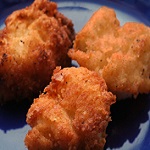
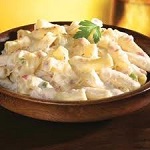
2 easy Shavuot recipes; pasta with 3 cheese sauce and cheese scones – a tea-time treat.
Before you start making these recipes and searching for imported cheese, we suggest you familiarize yourself with the local Israeli cheeses that can easily be substituted in these recipes.
Pasta with 3 cheese sauce
Ingredients
500 g pasta (penne or similar) cooked according to instructions 1/2 C grated Parmesan cheese
Sauce
5 tblsp butter salt and white pepper to taste 1 tsp sugar 3 processed cheese wedges 100 g grated Roquefort cheese a few rosemary leaves (optional) 1 1/2 C milk
Directions
In a large pot, over a low heat, melt butter, add salt, sugar, pepper, the processed and the Roquefort cheese, rosemary and milk.
Pour the cheese sauce over the cooked and drained pasta and sti
r well until all the pasta is coated with cheese sauce. Transfer into a serving bowl and sprinkle with grated Parmesan.
Cheese Scones
Scones are a traditional British sweet tea-time treat. Americans refer to them as biscuits. If you like, you can bake your scones with raisins, currants or even cranberries. My favorite way is to eat a plain scone with a thick layer of whipped cream and lashings of mixed berry jam. This recipe, with the addition of a tangy yellow cheese like cheddar, is a savory one and cheese scones make an enjoyable accompaniment to a brunch or any savory meal – this makes them perfect for Shavuot.
Ingredients
500 g self raising flour 15 ml baking powder 3 eggs 1 cup oil 1 cup milk salt, pepper and cayenne pepper to taste 2 1/2 C of grated yellow cheese (cheddar is preferable) 1 1/2 C of grated Mozzarella cheese
Directions
Mix all ingredients with a wooden spoon.
Drop into greased muffin pans just over half full and bake at 220 C for about 10 minutes.
Sprinkle a little grated cheese on top and put back in the oven for just a minute so that the cheese melts.
There is much debate over the origins of cheesecake; some say it dates back to ancient Greece and others to ancient Rome (approximately 200 BC). An English cookbook – Forme of Cury, from 1390 boasts a cheesecake recipe too.
Some countries have their own traditions when it comes to baking and flavoring the cheesecake
Amarula liqueur is sometimes added to a South African cheesecake
Australians tend to favor an unbaked cheesecake flavored with fruits like passion fruit, lemon and raspberry, while lychee and mango are favored in Asian cheesecakes.
The traditional base in Britain is crushed biscuits. These cakes are often refrigerated rather than baked. You might find them flavored with coffee, tea or a nip of Irish cream liqueur.
In the USA, baked cheesecakes are preferred. New Yorkers like their cheesecakes with sour cream while the traditional Philadelphia cheesecake has a much lighter texture. Some recipes use buttermilk which result in a firmer texture.
German cheesecakes usually have a dough base.
Honey and ricotta are common in Italian cheesecake recipes.
Jamie Oliver’s Cheesecake
Cheese and cherries (Israel cherry season is May & June) are a classic combination but you can use other berries as well. There is nothing nicer than the rich red fruit dripping down the sides of the cheese cake creating a pool of sauce in your plate.
Base
150g unsalted butter, melted, plus extra for greasing
250g plain biscuits, crushed
115g caster sugar
3 tablespoons cornflour
Filling
900g full-fat cream cheese, at room temperature
2 large eggs
115ml cream
1 vanilla pod, scored lengthways and seeds removed, or ½ teaspoon vanilla extract
zest of 1 lemon and 1 orange
Cherry compote topping
400g stoned cherries
3 heaped tablespoons caster sugar
optional: a swig of port or whisky
icing sugar, for dusting
Preheat the oven to 180ºC. Grease and line the bottom and sides of a 24cm springform cake tin. Mix the biscuits and butter in a bowl, press into the base of the prepared tin and cook for 10 minutes. Then remove from the oven and allow to cool. Turn the oven up to 200ºC. Combine the sugar and cornflour in a bowl. Add the cream cheese and beat, ideally with an electric whisk, until creamy. Add the eggs and beat well. Gradually add the cream, beating until smooth, then beat in the vanilla seeds or extract and lemon and orange zest. Scrape the mixture on to the biscuit base, and gently shake it to level out the surface. Put the cheesecake in the centre of the oven and bake for 40 to 45 minutes until the top is golden brown and the filling has set around the edges. (A piece of foil over the top will stop it browning too much.) Let it cool at room temperature and serve after 2 or 3 hours, or, for a slightly firmer texture, put it in the fridge until it’s nice and cold. Before serving, put the cherries in a pan, sprinkle over the sugar and add a splash of water. Put on a low to medium heat and simmer gently for 10 minutes. If you’ve got some port or whisky handy, feel free to add some. When the compote has reduced down it may be a little dry, so add a splash of water to loosen it. Remove from the heat and let it cool down, then serve spooned over the cheesecake with a dusting of icing sugar.
Mrs. Beeton’s Cheesecake
The competition, during Shavuot, for the best cheesecake is rife. Is it Aunt Millie’s recipe on my mother’s side or Bobba Sarah’s recipe, on my father’s side, who used to prepare the cake with the cheese she made herself from her best dairy cow in the “old-country”? What would Shavuot family lunch be like without this discussion? No collection of cheesecake recipes however, would be complete without a recipe from the grand dame herself…
Isabella Mary Beeton (1836 – 1865), universally known as Mrs. Beeton, was the English author of Mrs Beeton’s Book of Household Management. She is commonly known as one of the first and best cookery writers and aspiring chefs follow her sometimes complicated recipes with absolute precision.
Base
75g butter
150g fine white breadcrumbs, dried
50g caster sugar
1 1/2 tsp ground cinnamon
Filling
3 eggs, separated
100g caster
375g full fat soft cheese
grated rind and juice of 1 lemon
125ml soured cream
icing sugar for dusting
Method
Set oven at 180°C. Make the base. Melt the butter in a frying pan and stir in the breadcrumbs.
Cook over gentle heat, stirring until crumbs are golden. Remove from heat; stir in sugar and cinnamon.
Press the crumbs over the base of a loose-bottomed 18cm cake tin.
Beat the egg yolks in a mixing bowl until liquid. Add the sugar to egg yolks, beating until creamy.
Rub the cheese through a sieve into bowl then work in lightly. Add lemon rind and juice to the mixture with soured cream.
In clean, grease free bowl, whisk the egg whites to soft peak. Stir 30ml into cheese mixture, then fold in the rest lightly.
Turn the mixture gently on prepared base in the cake tin.
Bake for 45 mins then cover loosely with foil and bake for further 15 mins.
Cool in the tin.
Serve dusted with icing sugar.
Serves 10 people.
Classic Cheesecake
This is a simple recipe that is absolutely delicious. You can enlarge the recipe by adding another 250g cheese, 100ml sugar, another egg, one more tablespoon of cornflour and another 50 ml of soured cream. As long as you keep to these proportions, your cheesecake will be successful.
Crust
2/3 packet of plain biscuits, processed into fine crumbs
150 g melted butter or margarine
Cheese filling
750 g creamed, white cheese
300 ml sugar
3 eggs
3 tblsp cornflour
200 ml soured cream
1 tblsp lemon juice
Directions
Combine biscuit crumbs and melted butter, press into the base and the sides of a greased baking dish.
In a large bowl combine the cheese, sugar, and cream. Mix by hand with a wooden spoon adding one egg at a time.
Mix the cornflour with a few drops of milk to make a smooth paste and then add to mixture.
Add lemon juice.
Pour mixture on top of biscuit base.
Bake at 180 C for 20 minutes. Turn the oven off and bake for a further 45 – 60 minutes or until the cake is set.
Chef’s tips
Adding 1/2 cup of desiccated coconut to the biscuit base adds an extra dimension to the flavor
Strawberry Cheesecake
Unfortunately, the long Strawberry season in Israel is usually over by Shavuot, but they are in season in the Southern Hemisphere. Frozen strawberries are a sad replacement.
Crust
250 ml biscuit crumbs
125 g ground almonds, optional
10 ml powdered sugar
75 ml melted butter / margarine
Filling
250 g strawberries, washed and hulled
50 ml milk
100 ml powdered sugar
250 ml cottage cheese
2 eggs separated
few drops of vanilla
15 ml gelatine
250 ml water
pinch of salt
125 ml whipped cream
Directions
Mix all ingredients for the crust and press onto the base of a greased 23 cm pie dish.
Slice strawberries and puree in blender with milk and 25 ml powdered sugar.
Beat together cottage cheese, 75 ml powdered sugar, egg yolks and vanilla.
Soften gelatine in water and dissolve over low heat.
Beat into cheese mixture together with the puree.
Whisk egg whites stiffly with a pinch of salt and fold in together with cream. Pour into chilled crust and return to fridge until set.
Chef’s tips
Garnish with a few sliced strawberries, some whipped cream and a few mint leaves.
Lactose Free Cheesecake
If you are lactose intolerant, Shavuot is a very difficult time. Our friend Shmuel S. certainly understands the difficulties and so he sent us his lactose free cheesecake recipe.
Ingredients
2 containers of Toffuti (soya) cream cheese
1 container of Toffuti non-dairy, sour cream
2 eggs beaten
1 tbsp freshly squeezed lemon juice
1 tsp vanilla essence
3/4 cup sugar
1 Graham cracker (or similar) pie crust (see Graham cracker recipe below)
Directions
Preheat your oven to 160 C
Mix the cream cheese, sour cream, lemon juice, vanilla and sugar together in a bowl. Add small quantities of the beaten egg to the mixture and between each addition mix well.
Once all the ingredients are well mixed, place the mixture in saucepan. Cook over a very low heat until the mixture thickens. You need to make sure that the eggs are well incorporated before you start heating. You do not want the eggs to scramble.
Pour the mixture into the pie crust and bake for half-an-hour
Once the cake has baked and is properly cooled, you can add a topping of your choice; strawberry, cherry pie filling or chocolate are all delicious
Chill in the refrigerator until you are ready to serve.
Graham Crackers
1 cup of wholewheat flor
1.5 cups plain white flour
1/2 cup of brown sugar
1/2 tsp of salt
1 tsp of cinamon
1 tsp baking powder
1 cup of cold unsalted butter, cubed (remember if you are making a lactose free cheesecake, you need to use a parev or non-dairy margarine.
1/4 cup honey
1/4 cup water
Directions
In a bowl of a stand mixer add both types of flour, sugar, salt, cinnamon and baking powder. Stir to combine. Rub in cubes of butter/margarine until the mixture is crumbly. Add honey and water gradually and mix until the dough can be gathered into a ball.
Shape the dough into a flat disk. Roll between two pieces of parchment paper until 1/4 inch thick. Cut into required shapes or sizes and place on baking sheet.
Bake at 160 C for about 15 minutes.
Chef’s Tip
If you are using this recipe to make a pie crust, roll out your dough so that it will fit in you pie dish and the bake. Only add the cheese filling once the crust has baked and cooled.
What is Baking Blind?
Have you heard the term ‘Baking Blind’? What does it mean?
Baking blind (sometimes called pre-baking) is the process of baking a pie crust or other pastry without the filling. Blind baking a pie crust is necessary when it will be filled with an unbaked filling (such as with pudding or cream pies), in which case the crust must be fully baked.
How to…
Once you have rolled the pastry, and placed it in the baking tin, prick the base of the pastry with a fork in a few places then, line the tart tin with baking parchment and then fill with ceramic baking beans or dried pulses. The holes and weight of the beans prevent the pastry from rising. Bake!
While on the subject of food, you’ll enjoy these too…
It’s traditional to eat dairy products on Shavuot. From the Eastern European kitchen; blintzes and a ‘milchik’ kugel with cream. Tzatziki, cheese platters and cheese cakes are also popular.
Julia Child’s Authentic Recipe for Leek & Potato Soup
Julia Child was an American chef, author and television personality who spent much of her life living in France. She is recognized for bringing French cuisine to the American public with her debut cookbook, Mastering the Art of French Cooking. The author of many successful cookbooks, Julia was also a TV personality. In her honor the yellow Julia Child Rose, was named after her. Her portrait appears on the US Postal Service “Celebrity Chefs Forever” stamp series.
Ingredients
3 cups sliced leeks, white and tender green parts
3 cups peeled and roughly chopped baking potatoes, like russets
6 cups water
11/2 teaspoons salt
1/2 cup heavy cream
1/2 cup creme fraiche or sour cream
1/3 cup minced chives or parsley
Directions
In a large heavy saucepan, bring the leeks, potatoes, water, and salt to the boil over high heat. Cover partially, reduce heat, and simmer for 20 to 30 minutes until the vegetables are tender. Correct the seasoning, to taste, and puree (today with a handheld immersion blender, or in batches in a food processor). Whisk in the cream and reheat before serving. Top each serving with a dollop of creme fraiche and sprinkling of fresh chives.
Rachel Ray favors a “quick and easy” cooking style. She teaches many simple recipes that she says can be completed in 30 minutes or less. Since 1999 she has authored close to 30 cookbooks.
Ingredients
1 tablespoon vegetable or olive oil, 1 turn of the pan in a slow stream
2 tablespoons butter
3 tablespoons flour
1 1/2 cups whole milk
3 cups shredded white cheddar cheese
1/2 teaspoon nutmeg, ground or freshly grated
1/4 teaspoon ground cayenne pepper, a couple pinches
Salt
1/2kg elbow macaroni, cooked for 8 minutes or to al-dente, with a little bite to it
Directions
Heat a medium, deep skillet over medium heat. Add oil and butter. When butter melts into the oil, add flour and combine. Gently cook, whisking flour and butter together, until smooth and flour has had a chance to cook, about 3 minutes. Slowly add milk while continuing to whisk. Gently bring milk to a bubble while stirring frequently. Allow the milk to thicken a bit, then stir in 2 cups of shredded cheddar cheese a handful at a time. Season sauce with nutmeg and cayenne. Taste and add a little salt, if you like. Add cooked pasta to sauce and coat completely by turning over and over in the cheese sauce. Transfer to a baking dish and top with remaining cheese. Place baking dish under a hot broiler and brown the cheddar cheese on top.
Jamie Oliver’s Cheesecake
TED talks, 4 restaurants, 22 cookbooks, 30 cooking TV shows and 5 children; Poppy Honey Rosie, Daisy Boo Pamela, Petal Blossom Rainbow, Buddy Bear Maurice, and River Rocket
Ingredients
150g unsalted butter, melted, plus extra for greasing
250g plain biscuits, crushed
115g caster sugar
3 tablespoons cornflour
Filling
900g full-fat cream cheese, at room temperature
2 large eggs
115ml cream
1 vanilla pod, scored length ways and seeds removed, or ½ teaspoon vanilla extract
zest of 1 lemon
zest of 1 orange
Cherry Compote Topping
400g stoned cherries
3 heaped tablespoons caster sugar
optional: a swig of port or whisky
icing sugar, for dusting
Directions
Preheat the oven to 180ºC. Grease and line the bottom and sides of a 24cm springform cake tin. Mix the biscuits and butter in a bowl, press into the base of the prepared tin and cook for 10 minutes. Then remove from the oven and allow to cool. Turn the oven up to 200ºC. Combine the sugar and cornflour in a bowl. Add the cream cheese and beat, ideally with an electric whisk, until creamy. Add the eggs and beat well. Gradually add the cream, beating until smooth, then beat in the vanilla seeds or extract and lemon and orange zest. Scrape the mixture on to the biscuit base, and gently shake it to level out the surface. Put the cheesecake in the centre of the oven and bake for 40 to 45 minutes until the top is golden brown and the filling has set around the edges. (A piece of foil over the top will stop it browning too much.) Let it cool at room temperature and serve after 2 or 3 hours, or, for a slightly firmer texture, put it in the fridge until it’s nice and cold. Before serving, put the cherries in a pan, sprinkle over the sugar and add a splash of water. Put on a low to medium heat and simmer gently for 10 minutes. If you’ve got some port or whisky handy, feel free to add some. When the compote has reduced down it may be a little dry, so add a splash of water to loosen it. Remove from the heat and let it cool down, then serve spooned over the cheesecake with a dusting of icing sugar.
The cuisine of the Middle-East includes plenty of fresh produce, dried pulses, olives, olive oil, yogurt, fresh parsley, mint, lamb, chicken and fish. The cuisine makes use of lots of spices such as sumac, cumin, allspice, cinnamon and cayenne pepper and all are used in abundance. Other dominant flavors in Middle-Easter cuisine include lemon juice, tahini and flower-flavored waters. We have selected a few recipes where yoghurt, mint and olive oil are widely used:
Shakshuka: Tomato based, vegetables and fried eggs
Originally a Tunisian dish, shakshuka has become popular all over the Middle East. You will find it on the menu at most restro-cafes here in Israel. The original recipe calls for hot green-peppers, but you will also find zucchini, eggplant and potatoes as extra ingredients. Salty whitecheese like Feta, adds an extra dimension to the dish.
The base of shakshuka is a very well seasoned, tomato sauce. Some chefs will cook their tomatoes for hours until the sauce is thick and all the flavors have developed. For busy cooks, you may not want to spend more than half an hour prepping this dish so if you can get your hands on a ready-to-go tomato sauce (with onions, garlic, basil etc.), then all you need to do is spice it up the way you like it before you add the eggs.
Chef’s Tip
You can use Bulgarian cheese, Roquefort or feta cheese.
It is customary to eat shakshukah on Saturday mornings so serve with chunks of fresh challah bread.
For a slightly different twist, slice and fry some Vienna sausages, one per person, and add it to the shakshuka before you add the eggs.
Cacık (ja-jik) is a dish of seasoned, diluted yogurt, eaten throughout Turkey and the former Ottoman countries. In Greece a similar, much thicker yogurt dish is called tzatziki which is also similar to tarator in the Balkan cuisine. Cacik is served cold in very small bowls usually as a side dish or with ice cubes.
Ingredients
500ml white natural yoghurt
1- 2 cloves or garlic, crushed
a few sprigs of fresh mint, chopped finely
1 large cucumber, peeled and chopped
2 tblsp olive oil
salt and pepper
Mix all the ingredients together in a large bowl. Adjust flavors if necessary.
There is a Lebanese version of this dish which is called Em-Shaat. Served for Shavuot, these cauliflower fritters, makes a light and nice entrée. Deep-fried foods are traditionally eaten on Hanukah so, you might want to serve this as an addition to traditional potato latkes.
Ingredients
1 large cauliflower cut into florets
75g plain flour
2 eggs
juice of one lemon
125 Gruyere or Cheddar cheese, grated
1/4 tsp nutmeg
pinch of chili powder (optional)
1 garlic clove, crushed (optional)
oil for deep frying
salt
Directions
Boil the cauliflower in lightly salted water for five minutes or until just tender.
Beat the flour with the eggs and lemon juice until well blended. Add the cheese and nutmeg, chili powder and garlic. Leave for 30 minutes.
Separate the florets into bite-size pieces and Add them to the batter mixture
Heat the oil until hot but not smoking. Drop in tablespoons of the mixture and deep fry until browned, turning once. Drain on kitchen paper and serve hot.
Chef’s Tips
It is very important not to overcook the cauliflower. It will become waterlogged and your fritters will turn into a soggy mess.
In Israel, Tal Ha’emek cheese is a perfect substitute for Gruyere
The New Immigrants Guide to Registering as an Independent Worker – An Atzmai
By: Howard Glick
Howard Glick made aliyah from London, England and lives on a quiet yishuv in northern Israel with his children.. During his search for a job, in Israel, he was offered a small amount of work as an independent worker. This prompted him to do a thorough investigation of the rules, regulations and ramifications of being an independent worker in Israel. He shares that information with us.
In the UK I would invoice for my work and declare my earning to the tax authorities in my annual tax return. This is not the case in Israel. Here you must declare your expected income and pay a specified amount to Bituach Leumi (ביטוח לאומי) each month based on that declaration.
To work as an independent in Israel you must be registered as Atzmai– עצמעי. Having done much research I would consider the process to be fairly straightforward, but as with anything in Israel, it involves 3 separate offices. I was told by many people I would need the services of an accountant, but do I?
Note, you can be registered as Atzmai and be an employee of a company.
There are two types of Atzmai
1. An Osek Patur (עוסק פטור) has declared earnings of less than NIS 79,482 (as of 1/2015) in any business year and is not required to charge Ma’am (מע’מ) / VAT. An Osek Patur may not reclaim Ma’am on business purchases. You may only issue receipts on payment, you do not invoice for work. If you exceed the NIS NIS 79,482 throughout the business year you must request to change your status to Osek Morshe the following month. As an Osek Patur you are required to pay Bituach Leumi contributions once a month (initially based on your estimated income) and submit a tax return to Mas Hachnasa at the end of each year. Note, you can’t go back to being Ma’am / VAT exempt for 2 years following a change in your status.
However certain professions, including Accountants, Doctors and Lawyers are unable to register as Osek Patur and must be Osek Morshe.
2. An Osek Morshe (עוסק מורשה) has declared earnings of more than NIS 79,482 (as of 1/2013) in any business year and is required to charge Ma’am (מע’מ) / VAT. An Osek Morshe is entitled to reclaim Ma’am (מע’מ) on business purchases. You may issue an invoice.
A separate business bank account is not required. The business year in Israel is from 1 January to 31 December.
Once you have decided whether you are an Osek Patur or an Osek Morshe you will need to go to your local Ma’am office. Here you are required to open a file /Tik (תיק) with youTeudat Zehut (תעודת זהות) after which you are issued a certificate showing your Atzmai status. You may also need to take your checkbook with you.
Note, if you have a joint bank account you will both need to be present and both with your Teudat Zehut.
It is time to buy a Pinkas Kabalot (פנקסקבלות) / receipt book and a stamp with your name and business number (this will be your ID number) from a stationery store.
Mas Hachnasa – Income Tax
You will need to find the section for Oved Atzmai. The Mas Hachnasa will ask to see your certificate from Ma’am and complete the necessary forms. Once registered you are required to complete a tax return each year (you may opt to have an accountant assist with this). If necessary, an account book can be purchased from a stationery store. In the first 12 months of aliyah olim are exempt from income tax on income up to approximately NIS 105,000. The exemption is calculated on a points-based system and it reduces on a sliding scale up to 3.5 years from the date of aliyah.
You may also want to speak to an accountant about deductible expenses, especially if you work from home.
Once a year you will be required to file a tax return. Tax forms are usually sent out in February of the following tax year and you will have until 30 April to submit these forms.
Bituach Leumi – National Insurance (Social Security)
Finally, download and complete the form 6101 from the Bituach Leumi to open a Tik (this is for payment of National Insurance contributions). You may have to provide previous pay slips. Also required is confirmation from your bank showing ownership of your bank account. The form can be mailed, faxed or given in person at your local Bituach Leumi office.
Bituach Leumi will take between 6.72 – 11.23% for Bituach Leumi / National Insurance contributions and between 3.10 – 5.00% for Mas Briut (מס בריאות) / Health Insurance contributions. Olim are exempt from Bituach Leumi for a period of 12 months, unless income exceeds the set minimum. Otherwise you are required to pay a minimum of NIS 167.00 (as of 1/2015) per month to Bituach Leumi regardless of whether you are working or not (a womanwho is married to an insured person and who does not work outside her home is exempt). Contributions will be assessed annually based your tax return.
De-registration
In order to de-register from these statuses, you must complete a form for Ma’am and inform Bituach Leumi.
This information is to be used as a guide only and for the most up-to-date information and regulations about being an Atzmai, the services of a professional should be sought.
Israeli and Jewish customs, etiquette and behavior maybe a little different to what you are used to. Don’t take offense if a man does not shake a woman’s hand – there is good reason for it.
The Basic Israeli Style of Communication
There is hardly a topic of discussion that is off limits. Israeli and Jewish customs, etiquette and behavior are probably different to what your are used to – take a few moments to understand why. Israelis are known to be direct and to the point. They will tell you exactly how they feel and what they think. Often foreigners feel they are rude and aggressive. Here is an analogy; a native Israeli is called a sabra. A sabra is the fruit of the prickly pear – rough and sharp on the outside, but sweet and pleasant on the inside.
A Haredi – Ultra-Orthodox Jewish man in the streets of Jerusalem, typically wearing a dark suit and hat
Israelis tend to speak quickly and loudly even in confined spaces. This does not mean that they are yelling or annoyed.
Maintain eye contact when you are in a discussion with someone.
Topics of Discussion
Discussing your salary, mortgage payments or overdraft with a total stranger is not uncommon or off limits and it is often openly discussed. It is highly likely though that the amount under discussion, is not exactly true.
Unlike in some conservative English speaking countries conversation with a stranger at the bus stop or on the bus or the train is quite common. There is hardly a topic that is off limits; you may be scolded about your behavior or you may even be given some parental advice.
The fruit and vegetable market (shuk) is crowded and everyone is rushing around and even more so on Friday afternoons prior to the Sabbath and the weekend. You will probably experience some pushing and shoving. It is not considered rude. If you stand by and let everyone through, you will stand and wait the entire day. Saying “excuse me, please” does not always work either.
Jewish and Hebrew Greetings. What does Shalom mean?
Shalom is the Hebrew word for ‘Hello’. It is also used to say goodbye. It also means peace.
Shalom + the person’s name, is a nice salutation to use in business letter writing where “Dear” is not really appropriate.
According to Jewish law it is forbidden for any Jewish man (i.e a boy over the age of thirteen) to touch a woman – except his wife. Similarly, it is forbidden for any woman to touch a man other than her own husband. This law is mostly practiced in religious households only. If you have just met a religious person and are unsure of their level of observance, wait a moment. If it is okay, the man or woman will extend their hand.
In the secular community you can greet a close friend by touching their arm or shoulder lightly and kissing them on both cheeks. It is not uncommon for men to greet other men in this way.
Religious Clothing Traditions
Different Jewish groups have different clothing customs and standards. You can identify an Ultra-Orthodox Jewish man quite easily. He is likely to be wearing a dark suit and a head covering (a hat or yarmulke (Heb:kippah) – skullcap). Religiously observant women also keep their heads covered.
Understanding Hand Gestures, Body Language & Non-verbal Communication
You hail a bus at the bus stop by standing and facing the bus and pointing your index finger down toward the road.
With your fingers open and hand pointing upwards and twisting your palm at the wrist, back-and-forth, a few times, you are actually asking “what do you think you are you doing?” or in Hebrew – “Ma yeish?”
With your hands and fingers pointing upwards, keep your fingers closed and coming together to form a cone shape and then move your arm up and down from your elbow. This gesture tells someone to be patient. In Hebrew – “Savlanut!”
As in many cultures, pointing your middle finger, is an obscene gesture.
Rules of the Road & Israeli Driving Habits
Israelis are always busy and rushing around. The roads are crowded and drivers are often impatient especially during the hot summer months. Israeli drivers will hoot, shout and make hand gestures. They will overtake if you are going too slow and will also overtake in inappropriate places, where you least expect it, if they can get away with it (like on the shoulders – completely illegal of course).
Driving in some ultra-orthodox suburbs on the Jewish Sabbath (Friday evening sunset to Saturday sunset) is frowned upon and the roads my be closed and blocked off to traffic.
Yom Kippur, the Day of Atonement is not a joyous festival, it is a fast day and is considered a day of mourning. For the most part, in Israel, out of respect, people do not drive on the roads at all unless there is some kind of medical emergency. Ambulances are allowed on the roads, medical staff who are on hospital duty and taxis are also allowed on the roads but have to display a special sign in the windscreen of their vehicle. On this day, young children, who are not obligated to attend prayer services can be found playing in the streets riding bicycles, scooters, skateboards and roller-blades.
Israeli Time
Israelis are very relaxed with time in social settings. At a wedding or similar type of function, showing up half an hour after the time specified on the invitation, is perfectly acceptable. In fact, being late is almost expected. The actual wedding ceremony usually takes place an hour after the arrival time indicated on the invitation.
In business or job interviews punctuality is expected. Call if you are going to be late.
When both parents are working in full time positions, household chores and responsibilities should be shared.
Eating Habits & Food in Israel
When you are invited to an Israeli home for a meal, you are likely to be confronted with a mountain of traditional food. After the meal, you hosts may serve a variety of roasted nuts, salted sunflower, pumpkin and other seeds. It is not considered bad manners to crack these between your teeth and then spit out the shells into an available receptacle. You will be surprised how many nuts and seeds an Israeli family can consume after a meal. In Hebrew these snacks are called ‘pitzuchim’ – פיצוחים
Gift Giving Customs in Israel
When invited to someone’s home for a meal, you could arrive with a hostess gift of some kind. It could be a small gesture like flowers, cake or chocolates. You might want to consider easing the load on the hosts by offering to prepare part of the meal; a salad or desert.
If you are invited for a meal on one of the main Jewish religious festivals and High Holidays, it is customary to bring a substantial gift. Your hosts may even ask you to prepare one of the main dishes – this is common and it’s of great help to your hosts. Make sure you know how many guests there will be and make a quantity that is sufficient for all the guests.
When you are invited to a friend’s wedding, and decide to gift money, it is considered appropriate to cover the cost of your plate plus a bit extra. A minimum of 250-300 shekels per plate is acceptable. Of course there is no limit to the size of the gift you wish to give.
If you are attending a morning wedding (usually only Friday morning), it is acceptable to give slightly less money than for an evening event.
Wedding registries in Israel are almost unheard of.
If you are invited to an engagement party (still fairly common in the Anglo community) or Henna Ceremony (a Moroccan custom, kind of like a bridal shower held a few days before the wedding attended by both men and women) a gift of a household item is common. At Henna ceremonies it is traditional for family members to give gifts of money and jewelry.
Each Hebrew letter has a numerical value. The word “Chai” or Life, has a numerical value of 18. When giving a money gift it is also traditional and significant to give multiples of 18. So a symbolic gift could be 180 shekels (10 x 18) rather than rounded off at 200.
If you are invited to a Bar- or Bat-Mitzvah, 250 shekels (or more) from a close friend is considered reasonable. Relatives will give more. When a classmate celebrates his Barmitzvah, at age 13, it is acceptable to give a gift of around 200 shekels. For a girl and classmate, celebrating her Batmitzvah at age 12, you could give a gift 150 shekels or more.
You will also find that in the more affluent cities and towns in Israel, it is common to give money gifts larger than the amounts listed here.
Of course these rules are not law – they are just meant to guide you . If you prefer to give something other than money consider purchasing a gift from a department store where the gift can be exchanged. Exchanging an inappropriate gift is not considered bad manners. Give what you can and it will be appreciated.
If a friend asks you what kind of gift you would like, consider suggesting that they make a donation to a worthy cause instead. It’s an ideal opportunity to donate to Israel’s needy or hungry, youth at risk, the holocaust survivors and many other worthy causes.
A gift that touched me deeply was that of a client who planted a tree, in a JNF forest, in memory of my deceased mother.
Smoking, Drinking, Drugs & Gambling Laws in Israel
Smoking in most public placed is banned. There are separate smoking and non-smoking areas in most restaurants. The legal age for purchasing cigarettes is 18.
The legal age for purchasing and consuming alcohol is also set at 18.
There are no casinos in Israel. There is a general ban on gambling in Israel with two exceptions; sports betting and the national lottery (Mifal HaPayis)
Tipping Guide – Who do you tip and how much?
There are no hard and fast rules for tipping. Tipping is at your own discretion; give what you can if you can, but here are a few guidelines.
A 10 – 15 per cent tip for the waiter or server is usual at restaurants in Israel. Check your bill – some restaurants include a service charge in the bill and this could also be 10% or 15%. Some restaurants allow you to add the tip to your credit card. While this is convenient, like in many countries that offer this, the tip might go into the coffers of the management rather than to the waiters and servers.
Tipping a taxi driver is not expected. Your taxi fare should be determined by a metered rate or pre-agreed before commencing the journey..
It is acceptable to tip the person who washes your hair at the hair salon 5 or 10 shekels unless it is the owner him/herself.
If you are having your groceries delivered, even-though you are paying for the delivery, it is acceptable to give the delivery person a tip – 5-10 shekels is our suggestion. Accessibility to your home and size of delivery would influence the size of the tip.
Take-away food delivery people are also tipped. Give what you feel is appropriate. Here 5-10 NIS is also acceptable
No need to tip the tradesman’s assistant; the plumber, the electrician etc., but do offer someone who is working in your home something to drink especially in hot weather. Offering a light snack; a fruit, a cookie or similar is also appreciated especially if the tradesman needs to spend a few hours in your home.
Tipping hotel staff and tour guides – use your own discretion in these circumstances.
Appliance or furniture delivery – no need to tip these guys unless they have done something extra special for you. Appliance and furniture stores usually charge around 200 shekels for delivery of large items which is added to your invoice upon purchase.
Packers – moving in or moving out, a 100 shekel tip per person would be a generous tip for your Aliyah or relocation shipment or container. Unloading could take a few hours so make sure you have plenty of liquid refreshments available and a light snack to offer them.
Bottom line – in any situation, if you feel the service you have received is worthy of a tip, then feel free to do so.
Contributed by an olah who wished to remain anonymous.
I wonder if G-d is in the food business on the side. I know he is busy with important things like global warming, the global economic crisis and all other things global, but how is it that all the Jewish festivals revolve around food? I think G-d is a major shareholder in the food industry. I never noticed this when i was still living abroad (chutz la’aretz) but after making Aliyah, and moving to Israel, I saw how much food gets eaten on the chagim (festivals).
On Rosh Hashanah we eat honey cake. You can buy it from as little as 5 shekels on the street corner. If you did not eat tons of it during the chag you can always eat it again when you break your fast on Yom Kippur. Come to think of it, how many chickens lost their lives to perform the ‘slichot’ ritual.
The etrog (citron) does not go to waste either, it makes a wonderful preserve after Sukkot.
Have you every thought about how many chocolates and sweets get handed out to children on Simchat Torah?
As soon as that is over, towards the end of October, jam doughnuts make their appearance. By the time Hanukah actually comes along you cannot bare to look at another jam doughnut so you are forced to survive the week on potato latkes.
January the 1st brings out an array of nuts and dried fruits. Each year more and more exotic varieties appear. By the time Tu B’shvat comes along we have already spent a couple of hundred shekels on fruit and nuts. A moment on the lips and a life-time on the hips!
The very next day, we get into the spirit of Purim and ‘oznei hamman‘ appear at every bakery and street corner – poppy seed, dates, nuts, chocolate, halva and crème-de-leche. Yummy!
As soon as Purim is over, we start the countdown to Pesach begins and as we all know Pesach is a major food affair. Not only do we have to eat special food, but we also have to buy special food to make the special food we have to eat. We also have to buy special utensils to cook the special food we had to buy to make the special food we have to eat. To lighten the load on our hostess we bring pots of food to the Seder meal. The 20 different dishes she prepared could never be enough.
The Pesach holiday is over and we spent our entire salary on food. We feel great – overweight but great! We start walking the very next day; need to work off all that matzah.
Lo-and-behold that very evening there are adverts on TV for cheeses, yogurts and blintzes. Shavuot is only a few weeks away. TV commercials tell us that if we buy 3kg of smooth white cheese, we’ll get a liter of chocolate milk for free. “Well!” I say to myself, “I need 3 liters of chocolate milk, so I can get that all for free if I buy 9kg of white cheese”. Makes sense – no?
We ate Brie and Camembert, Emmental and imported Cheddar, Roquefort and Philadelphia and a fair amount of Cottage too. We ate yogurt in every flavor, and generously grated parmesan on everything. We ate cheesecake for breakfast, lunch and supper, and an extra slice or two in between. The lactose intolerant had no choice and could only eat salad. Aah shame – it’s such a pity really.
Shavuot is finally over.
Wait a minute, I almost forgot about Yom Haatzmaut! Meat, meat and more meat. Sad to think how many cows gave up their lives to the noble calling of being a “good steak” and how many little lambs go to the slaughter so that we can have a decent kebab? Perhaps next year I’ll try a veggie burger.
Today I went to the supermarket to buy a few things; there are no more chagim until September so I had a hard time deciding what to buy.
Shopping for food & produce in an Israeli Supermarket.
Hebrew: רשתות סופרים בישראל
Grocery shopping, supermarket shopping – we’ve done it thousands of times but there are a few things every newcomer needs to know about supermarket shopping in Israel.
You may ask “What can be so different about supermarket shopping in Israel?”
It’s all pretty much the same; poke, pick and pay but there are some differences you ought to prepare for.
Large supermarket chains
Some of the large supermarket chains are Shufersal, Mega, Rami Levi, Yayin Bitan, Osher Ad and Victory – these supermarkets are all kosher but others like Tiv Taam and Stop Market, MyMarket and Rosman’s are not kosher.
There are plenty of supermarkets that cater specifically to the Russian community and mostly their fresh produce is not kosher although they stock kosher pre-packed goods.
Arab owned supermarkets are also not kosher but they too, stock some kosher pre-packed goods.
Supermarket branches
Within a supermarket chain, you will find different types of stores; there is the suburban mini-market or express store, larger suburban supermarkets and also the hyper-stores which are usually located in industrial areas or on the outskirts of a city or town.
Prices vary between stores of the same chain – the mini-markets/express stores are the most expensive and the hyper-stores are the cheapest.
Supermarket house-brands
Some large supermarket chains market their own house-brand. There are some savings to be had here but there are also differences in produce quality.
Some of the large supermarket chains like Shufersal and Rami Levy, have a fantastic and convenient delivery service. For between 15-30 shekels you can have your groceries delivered right to your front door.
At the supermarket checkout, your groceries will be sorted into perishable items that require refrigeration and non-perishables, and they will be crated accordingly.
Supermarkets generally deliver on a 4 hourly cycle with the first delivery leaving around midday. Although tipping the delivery person is not mandatory, consider giving a small tip to show your appreciation.
Shufersal, Mega and Rami Levi have websites that offer on-line shopping options. This is a wonderful solution for hardworking families. It takes a while for English speakers to navigate these sites but once you save your basic list online it becomes easier. It’s a great way to learn new Hebrew words and their spellings.
Must-know Shopping Tips for Israel
Lots of stores offer club-cards; some are free, others are not. Some are combined with credit cards. Check the small print before you sign up for any of them.
Be prepared for shoppers who will try anything, or give any excuse, to jump the queue at the check-out till.
The definition of the “express queue” varies from supermarket to supermarket – 4 cartons of milk and 8 yogurts may be considered as 2 items rather than 12.
Self-service check-outs are becoming more popular. Shufersal has them. Osher Ad has a digital services, the shopper scans each item and special checkouts, determine that all items are accounted for. Once that is done, your bill is calculated and payment is made.
You can buy groceries by installment at the big supermarkets. At Rosh Hashanah and Pesach you can generally get between 6-10 interest-free payments.



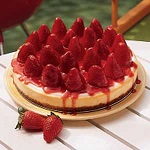
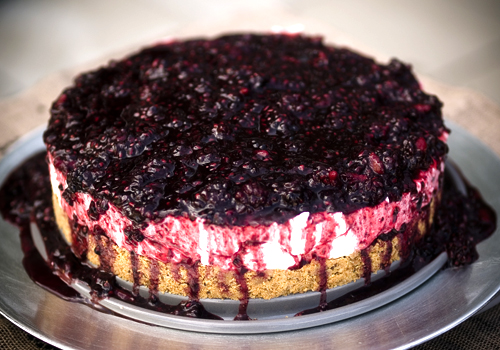 Cheese and cherries (Israel cherry season is May & June) are a classic combination but you can use other berries as well. There is nothing nicer than the rich red fruit dripping down the sides of the cheese cake creating a pool of sauce in your plate.
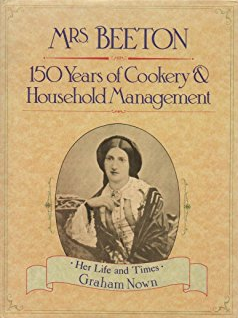 The competition, during Shavuot, for the best cheesecake is rife. Is it Aunt Millie’s recipe on my mother’s side or Bobba Sarah’s recipe, on my father’s side, who used to prepare the cake with the cheese she made herself from her best dairy cow in the “old-country”? What would Shavuot family lunch be like without this discussion? No collection of cheesecake recipes however, would be complete without a recipe from the grand dame herself…
 This is a simple recipe that is absolutely delicious. You can enlarge the recipe by adding another 250g cheese, 100ml sugar, another egg, one more tablespoon of cornflour and another 50 ml of soured cream. As long as you keep to these proportions, your cheesecake will be successful.
 Unfortunately, the long Strawberry season in Israel is usually over by Shavuot, but they are in season in the Southern Hemisphere. Frozen strawberries are a sad replacement.


 Cacik: Yogurt & Cucumber Salad
 Cacik: Yogurt & Cucumber Salad