21 C
Jerusalem
Wednesday, May 13, 2026
Sample Page
Home Blog Page 70

Jerusalem Winner Marathon 2022 – The Talia Trust

Reading Time: 2 minutes

Jerusalem Winner Marathon 2022 & The Talia Trust for Children

The 2022 Jerusalem Winner Marathon is taking place on Friday, March 25, 2022.  This year the Freemasons in cooperation with Anglo-List are supporting the Talia Trust – a truly worthy cause.

jerusalem winner marathon talia trust

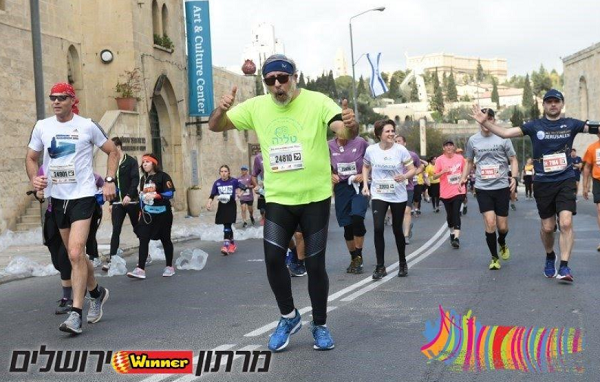
Freemasons in Israel support the Talia Trust.  Shlomo Rappaport running in the 2018 Jerusalem Winner 

We would like to make an appeal to all the positive Anglos looking at this site to contribute to the Talia Trust for Children. The Talia Trust supports school-aged children from disadvantaged homes who are in regular education and who have specific learning difficulties and/or ADHD.

The Talia Trust for Children, in memory of Talia Hyman, established by fellow Anglo Olim – Marilyn and Maurice Hyman, is a non-profit organization, registered in Israel, #580443554.  Contributions are tax deductible according to section 46 of the income tax law.

  • The Talia Trust funding pays for educational testing for middle and high school children when their parents cannot afford to do this.
  • These test results aid teachers in guiding those students how to study for exams, through acquiring learning strategies appropriate to each student’s specific difficulties.
  • These results also allow students to take exams under special conditions, suited to their needs.
  • In return, the children volunteer their time in various community benefit programs.
  • The Talia Trust assists children, whose parents do not have the means to do so, in regular primary schools, to learn study tools that build self-confidence to succeed in education.
  • The Talia Trust aims to increase public awareness about the difficulties facing young people with psoriasis and psoriatic arthritis.

The Freemasons of Mount Carmel Lodge No. 44 (Haifa) and other Lodges (who are part of the Grand Lodge of the State of Israel) participate in the marathon and support The Talia Trust and have been doing so for a number of years with direct financial contributions.  

“Your support will make our running super special for us, and together we can make a real difference. Whatever you can give even if it is a small contribution is greatly appreciated and valued and encourages others to contribute also. So, if you can’t be there at least donate some money!! As much as you can afford, no-one can ask for more than that but please GIVE!!


Purim costume ideas

0

Reading Time: 3 minutes

(Cheap) Purim costume ideas.

Getting your small child to dress up for Purim might not be as easy as you think.  Small children who are struggling with identity issues now have do deal with parents insisting that they dress up in some strange shiny outfit for a few hours. This can be torturous for them and can result in lots of tears.  Purim is meant to be fun but it can also be a stressful day.

My 2 year old son, back in the day, was willing to wear his denim dungarees but cried and threw a tantrum when we tried to attach a few plastic tools in an attempt to complete his ‘handyman’ outfit.  In the end, he stayed home.

Planning the Purim outfit

There are many things to take into consideration when planning a perfect Purim for your child.

1. What will the weather be like on Purim?

Since my Aliyah I can only remember the sun shining twice on Purim; once on February 28th, 1991 which coincided with the end of the Gulf War and all of Israel were on the streets celebrating another time was during an unseasonal hamsin when the winter temperature soared up into the high twenties.

A Hula dancer outfit may be a cheap costume to put together; a couple of coconut shells and a grass skirt, but it certainly isn’t Purim weather, friendly.

2. Transport to school

Getting your child to school on Purim, presents it’s own set of problems. How will my child manage those butterfly wings on the bus? The Friendly Ghost outfit (a large white sheet) can easily get pulled and torn by an over-energetic 8 year old?


First time in the Israeli school system? On dress-up day schools usually commence at 9:00am instead of 8:00am (they finish earlier too).  Need a vacation day? Your employer is most likely to be okay with you coming into the office a little later on dress-up day.  Check the company’s policy.


3. Costume comfort

Make sure to do a full dress rehearsal at home, including makeup before the day so that any snags can be sorted ahead of time.

Check the seams, zippers, buttons, ribbons and every aspect of the costume for loose threads that can be dangerous, small decorations that could present a choking hazard or fabric that might irritate the skin after a few hours.  Face paints and Purim makeup can cause skin irritation too.

Before you buy, check that the Purim costume has an Israel Standards Approval mark (Hebrew: Tav Teken), a European CE mark an American ANSI or similar safety seal.

Run out of Purim costume ideas?

So you’ve gone the low budget route for years; Purim costumes made from a cardboard box, the plaid shirt and jeans cowboy outfit, the long white dress that doubles as a brides outfit, a princess outfit, a Queen Esther costume or a fairy outfit.  Your teen is probably very politically correct and is not willing to dress up as a homeless person, a geisha or in blackface, so what is an alternative? Try an inflatable costume!

purim costume ideas

Some might see the inflatable sumo wrestler or ballerina as body shaming but there are a wide range of inflatable costumes that can be quite fun.  There is PacMan, Minions, unicorns, assorted dinosaurs, sharks, pandas and other creatures as well as a selection of superheroes; the Incredible Hulk, Superman, Godzilla, Ninja Turtles and more.

Where to buy inflatable Purim costumes?

The ‘Stock’ chain has stocks of inflatable Purim costumes or you can order online via www.funidealia.co.il – a website offering one week delivery. Prices of inflatable costumes start at 149 Shekels and go all the way up to many hundreds of shekels – the average price is around 250 Shekels.

For our readers in the USA, Walmart has an inflatable dinosaur costume for $18.  If you are planning a trip to Israel before Purim, your relatives will appreciate you loading one of these into your luggage.

AliExpress has the biggest range of inflatable costumes and prices start at about $12.

Remember if you are buying an inflatable costume you will need to purchase the battery operated air pump as well – about $10.

Whatever you choose to dress up in, have a fabulous Purim.

Israel Holidays 2019

0

Reading Time: 3 minutes

Israel religious holidays & festivals for 2019.

Jewish, Christian, Muslim, Druze & Bahai Festivals

 israel-holidays-2019

israel-holidays-2019

Jewish Holidays & Festivals 2019

Please note that Jewish holidays begin at sundown on the evening before the date specified.

In the Diaspora the festivals of Passover, Shavuot & Sukkot have one extra day added at the end. 

Tu B’shvat:  January 21

Purim:  21 March

Passover:  April 20 – April 27

Holocaust Remembrance Day (Yom HaShoah): May 2

Israel Memorial Day (Yom HaZikaron): May 8

Israel Independence Day (Yom HaAtzmaut): May 9

Festival of Counting the Omer (Lag B’Omer): May 23

Jerusalem Day: June 2

Feat of Weeks (Shavuot): –  June 9 – June 10

Fast of the 9th of Av (Tisha B’Av): August 11

New Year (Rosh HaShanah): September 30 – October 1

Day of Atonement (Yom Kippur):  October 9th

Yom HaAliyah: November 5th

Sukkot:  October 15 – October 15

Shemini Atzeret & Simchat Torah:  October 21 – October 22

Festival of Lights (Hanukkah): December 23 – December 30

Find our more about the Jewish festivals


israel-holidays-2019

Christian Holidays & Festivals 2019


Ash Wednesday – 6 March

Palm Sunday – 14 April

Good Friday-  19 April

Easter Sunday – 21 April

Easter Monday: 22 April

Ascension Day – 30 May

Pentecost – 9 June

Christmas- 25 December


israel-holidays-2019 muslim symbol

Muslim Holidays and Festivals 2019


Ramadan: June 5

Eid-Ul-Fitr: 5 June

Eid-Ul-Adha: –  12 August

Hijri New Year: 31 August

Ashura: 9 September

Milad un Nabi: – 9 November


israel-holidays-2019 druze religious symbol

Druze Holidays &  Festivals 2019


Druze celebrate Eid El Fitr, and Eid El-Adha (see Muslim festivals)


israel-holidays-2019 bahai symbol

Bahai Holidays & Festivals 2019


Naw-Ruz (Baha’i New Year) — 21 March

Festival of Ridvan — 21 April

Declaration of the Bab — 23 May

Ascension of the Baha’u’llah — 29 May

Martyrdom of the Bab– 9 July

Birth of the Bab– 1 November

Birth of Baha’u’llah– 2 November

Ascension of ‘Abdu’l-Baha – 28 November

19 days of fasting: 2 -20 March


Learn Holiday Words & Phrases

Hebrew, English & Transliterations

English Transliteration Hebrew
Fast Tzom צום
Holiday or festival Chag חג
Festival eve Erev chag ערב חג
Intermediate days of a festival Chol ha’mo’ed חול המואד
New month Rosh ho’desh ראש חודש
New year Shana hadasha שנה חדשה

Shabbat, festival and holiday greetings   

Shabbat candle lighting times

Happy Sabbath

Shabbat shalom

שבת שלום
Happy holidays Chag sameach חג שמח
Happy new year Shana tova שנה טובה
Have an easy fast Tzom kal צום קל
May you be inscribed Chatima tova חתימה טובה
Have a good week Shavua tov שבוע טוב


Learn Hebrew fast with our free transliterated word sheets: days of the week, months of the year and lots of other topics

Join in the fun at the annual Holiday of Holidays Festival in Haifa

Now that you know when the festivals and holidays are, our resources can help you plan your next vacation in Israel

Fun facts & Israel info…

{module [396]}


Israel Holidays 2020

0
Reading Time: 3 minutes

Israel religious holidays & festivals for 2020.

Jewish, Christian, Muslim, Druze & Bahai Festivals

Did you know that there are more than 4,200 recognized religions in the world?  Judaism, Christianity, Islam, Druze and Bahai are the five main religious groups in Israel.  Here is a list of the religious holidays for 2020 for these religious groups.

israel-holidays-2019

Jewish Holidays & Festivals 2020

Please note that Jewish holidays and festivals begin at sundown on the evening before the date specified.

In the Diaspora the festivals of Passover, Shavuot & Sukkot have one extra day added at the end. 

  Tu B’shvat:  February 10

Fast of Esther: March 9

Purim:  March 10

Passover:  April 8 – April 15

Holocaust Remembrance Day (Yom HaShoah): April 21

Israel Memorial Day (Yom HaZikaron): April 28

Israel Independence Day (Yom HaAtzmaut): April 29

Festival of Counting up to the Omer (Lag B’Omer): May 12

Jerusalem Day: May 22

Feat of Weeks (Shavuot): –  May 28

Fast of the 9th of Av (Tisha B’Av): July 29

New Year (Rosh HaShanah): September 18

Day of Atonement (Yom Kippur):  September 27

Yom HaAliyah: November 5th

Sukkot:  October 2

Shemini Atzeret & Simchat Torah:  October 10

Festival of Lights (Hanukkah): December 11

Find our more about the Jewish festivals

israel-holidays-2019

Christian Holidays & Festivals 2020

  Ash Wednesday – February 26*

Good Friday-  April 10

Easter Sunday – April 12

Easter Monday: April 13

Ascension Day – May 21

Pentecost – May 31

Christmas- December 25

*FYI – Ash Wednesday marks the beginning of Lent and is always 46 days before Easter Sunday


israel-holidays-2019 muslim symbol

Islam Holidays and Festivals 2020


Ramadan: April 26**

Eid-Ul-Fitr: May 24

Eid-Ul-Adha: –  July 31

Hijri New Year: August 20

Ashura: August 30

Milad un Nabi: – 30 October

**Ramadan is the ninth month of the Islamic calendar, it is a month of fasting, prayer, reflection and community


israel-holidays-2019 druze religious symbol

Druze Holidays &  Festivals 2020

  Druze celebrate Eid El Fitr, and Eid El-Adha (see Muslim festivals)


israel-holidays-2019 bahai symbol

Bahai Holidays & Festivals 2019


Naw-Ruz (Baha’i New Year) — March 20

Festival of Ridvan — May 23***

Ascension of the Baha’u’llah –May 28

Martyrdom of the Bab– July 10

Birth of the Bab– November 19

Birth of Baha’u’llah– November 12

Ascension of ‘Abdu’l-Baha – November 27

19 days of fasting:March 19

***Riḍván is a twelve-day festival commemorating Baháʼu’lláh’s declaration that he was a Manifestation of God

Learn holiday and festival words & phrases with Hebrew, English & transliterations

English Transliteration Hebrew
Fast Tzom צום
Holiday or festival Chag חג
Festival eve Erev chag ערב חג
Intermediate days of a festival Chol ha’mo’ed חול המואד
New month Rosh ho’desh ראש חודש
New year Shana hadasha שנה חדשה


Shabbat, festival and holiday greetings 

Happy Sabbath Shabbat shalom שבת שלום
Happy holidays Chag sameach חג שמח
Happy new year Shana tova שנה טובה
Have an easy fast Tzom kal צום קל
May you be inscribed Chatima tova חתימה טובה
Have a good week Shavua tov שבוע טוב


Weekly Torah Portion: Parshat Hashavua Vayekhel

0

Reading Time: 6 minutes

Parshat Hashavua Vayekhel

Contributed by Rav Nissim Mordechai Makor

parshat hashavua vayekhel rav nissim mordechai makorParshat Vayekhel in a nutshell.  Moses gathers the Jews and relays to them all the details regarding the construction of the Tabernacle and its vessels. The actual construction is described. This portion repeats many of the details described in the portion of Terumah, wherein G‑d instructed Moses how the Tabernacle and its vessels were to be constructed.


“On six days, work may be done, but the seventh day shall be holy for you.”  (Shemot 35:2)

The Dubno Magid tells a parable.  A poor man named Yosef once knocked on the door of a wealthy man, Moshe, to ask for charity.  When Moshe opens the door, Yosef describes his difficult situation in detail and mentions that he traveled a long distance from his hometown.  Moshe gets excited and says, “You’re from that town?  I grew up there, but I haven’t been there for many years!  Please tell me all about the people who are living there.”  Yosef responds that he has many people that he needs to see to try to collect sedakah, so Moshe tells him, “How much do you normally collect in a day?  I will give you that entire amount if you stay here with me for a while and answer my questions.”  Yosef agrees.

After he comes in and sits down, he says, “I just traveled a long distance, and I’m very hungry.  I can’t answer any questions until I get something to eat.”  So Moshe brings him a lavish meal.  After the meal, Moshe is ready to talk, but Yosef says, “Now I’m very tired.  Let me sleep a little and then we can talk.”  Moshe gets upset and says, “I gave you all that money so that you can spend some time with me to tell me about my hometown, not so that you can eat and sleep!”

All week long, Hashem is waiting for us to come closer to him through prayer and Torah learning.  But we say, “I don’t have time.  I need to go to work to support my family.” So Hashem says, “Ok, I will give you Shabbat, a day where you will not have to work, and I will take care of all of your needs so that you can spend more time with me.”  And what do we do?  We enjoy elaborate meals, and then we say, “What a rough week I had.  I’m wiped out.”  And then we proceed to sleep away the rest of the day.

Candle lighting times for Parshat Hashavua Vayekhel

Parsha Index

Shabbat is such a wonderful day.  All of our work obligations are put aside, and we can enjoy the day.  But we should make the most of our time to get closer to Hashem and spend some time with Him.  Let’s take a little more time to think about the words of our prayers and connect with Hashem.  Let’s dedicate just a little more time to learn some Torah, a little halachah or parashah, or anything else.  It will add so much enjoyment to our day, and bring us closer to our Creator.

Based on Likutey Halakhot, Hilkhot Birkhot Reiyah 4:1

“Moses gathered the entire Israelite community and said to them, ‘These are the matters that God has commanded to do them. You may do work during the six weekdays, but Saturday must be kept holy as a Shabbat of tranquility to God. Whoever does any work on [Shabbat] will be put to death. Do not ignite any fire on Shabbat, wherever you live.’” Exodus 35:1–3

“This [gathering] took place the day after Yom Kippur. Moshe Rabbeinu (Moses) did not gather the people by hand, but by speaking to them.” Rashi

A number of commentators (Ramban, Or HaChaim HaKodesh, Kli Yakar) point out that the significance of when this gathering took place is the element of peace that was involved. Yom Kippur, after people made amends with friends, neighbors and family; after Hashem (God) forgave the Jews for the sin of the golden calf, and the spirit of the Torah revelation was renewed. This was—and must be—the state of mind and the state of affairs that has to be in effect for the Mishkan, Hashem’s home, to be built.

The necessity of peace is not just a technical factor that allows a physical structure to be erected nor is it a matter of “making nice” with one another so that there is no open animosity in our house of worship. Peace is the source of holiness. The Holy Land is holy because it is the site of Yerushalayim (Jerusalem) and the Beit HaMikdash, both of which are named “Shalom” (see Genesis 14:18 and Psalms 76:3).

The most sacred place in Eretz Yisrael, in Yerushalayim, in the Beit HaMikdash is the kadosh hakadoshim (Holy of Holies). Its holiness was accessible but once a year—on Yom Kippur. Only the kohen gadol (high priest) was permitted to enter and he was allowed to do so only because of the fast of Yom Kippur. Peace is achieved by “fasting.”

“Fasting” is not just about going without food for a period of time. Fasting means controlling the desire to have and to consume. The raging beast within may want many things: pleasure, control, revenge, territory. Hashem may not want a person to have any of that. “On that very day [of Yom Kippur] afflict your souls”—humble your heart so that it will attach its will to God (cf. Leviticus 16:29, 23:27; 3 Zohar 68b). If one can subjugate her will to God’s, she can get along peacefully with others. This is especially so in regard to the desire to own things.

In case you haven’t noticed, there is a lot of confusion in the world. In particular, there is this notion that by talking peace can be achieved. Rebbe Nachman teaches that the opposite is the case: As a result of peace it is possible for people to talk with one another. Certainly people can hurl words at others in an attempt to threaten or manipulate them into “making peace,” but dialogue to bring another member of the human race closer to truth can only take place if those conversing are already at peace (Likutey Moharan I, #27).

Moshe Rabbeinu demonstrated this lesson when he assembled the Jewish people. He did not “gather them by hand,” by force. He used words because there was a great degree of peace among the Jews following Yom Kippur and following the resolution of their financial litigation (see Kli Yakar).

As great as our peace may be, as powerful as the holiness of the Mishkan/Beit HaMikdash may be, warned Moshe Rabbeinu, we must be aware that there is a higher degree of peace, an even more powerful holiness, the holiness of Shabbat. To partake of that holiness we have to observe Shabbat by refraining from melakhah (loosely translated as “work”). Adam ate of the forbidden fruit due to a lack of inner peace. Therefore he was cursed “by the sweat of your brow you will eat” (Genesis 3:19).

On Shabbat we refrain from all melakhah. We have to work on ourselves so as to be at peace with the situation at hand, whatever it may be, and allow God to resolve whatever needs to be resolved.* The peace we (ought to) feel is so great we sing Shalom Aleikhem (which is based on Shabbat 119b):

Peace to you, ministering angels, messengers of the Exalted One, the King Who reigns over kings, the Holy One, blessed is He.
Come in peace, angels of peace, messengers of the Exalted One, the King Who reigns over kings, the Holy One, blessed is He.
Bless me with peace, angels of peace, messengers of the Exalted One, the King Who reigns over kings, the Holy One, blessed is He.
Go in peace, angels of peace, messengers of the Exalted One, the King Who reigns over kings, the Holy One, blessed is He.

The peace is so great, not only do we eat, but we are enjoined to feast! To help keep things in perspective it’s good to remember (and repeat!) Reb Shlomo Karliner’s short prayer: Hashem! You gave us challah** for Shabbat You gave us fish for Shabbat Now give us Shabbat for Shabbat!

Guidance and Protection

“Caring for a baby and protecting him involves supervising him. He might want to put small things into his mouth or climb onto dangerous places. There are all kinds of things that he might do to harm himself and the parents have to force him to stop against his wishes.”

Children look up to their parents for supervision and guidance. The same way children look up to their parents, we should look up to Hashem for guidance and protection. (Norman D. Levy Based on Rabbi Miller’s teachings with permission from Simchas Hachaim Yeshiva Gedola Bais Israel)

Candle lighting times for Parshat Hashavua Vayekhel

Parsha Index

Pearls of Life

The Pearls of Life point out a tremendous Torah concept which we learn from the sin of the Golden Calf teaching us the following. Even though every person through his lifetime has their ups and downs even if Heaven forbid one commits a sin first and foremost they should not give up. That person must acknowledge what they did wrong and use the wonderful chesed [kindness] of repentance to put them back on their feet and grow from their mistakes. This means that the essence and core of success both in regard to a person’s spirituality and materialism is in how much a person acknowledges that everything come from Hashem may His name be blessed. The Master of the World acts with a person the way the person acts with him, i.e., if a person feels that they are capable of taking care of their own needs without the Master of the World’s help then the Master of the World says fine, you want to do things on your own I will grant your request. The person will realize the hard way; that without Heavenly intervention he cannot be successful in any endeavor whatsoever. However, a person who comes to the Master of the Universe acknowledging and truly believing where they success comes from, then they will have the Heavenly intervention needed to succeed.

Adapted from the lessons of Rabbi Menachem Lerner by Yeshiva Pirchei Shoshanim.

Compiled and edited by Rav Nissim Makor

Tahareinu – Women’s Health

0

Reading Time: 3 minutes

Tahareinu – Women’s health & fertility hotline.

tahareinuMost families keep important phone numbers easily accessible on their refrigerator door, bulletin board or speed dial.  Hatzola, the fire department, poison control and Bubby. But there’s another number that is fast being added to the list in homes across the globe.  Tahareinu – the hotline that ‘Frum’ families have come to depend on for troubleshooting the problems that no one else can help with.

When a couple encounters difficulties with women’s health and its impact on Taharas Hamishpacha, infertility or intimacy dysfunction, the stress, worry and fear of the unknown can consume them.  The sense of stigma and isolation they feel when dealing with matters that are not usually discussed openly only compounds the difficulty, affecting every aspect of their daily living.

Since many doctors are not aware of the halachic implications of these problems, they often dismiss them as non-medical conditions; leaving couples at a loss, with no obvious way forward.  Rabbonim are often limited in the advice they can offer as there is no easy way for them to stay on top of medical advances.

Tahareinu is here to change that.

Founded by Rabbi Yitzchok and Chaya Melber eight years ago, Tahareinu has helped tens of thousands of families internationally, providing access to the most innovative treatment options in all fields of women’s health and fertility.  The organization has received high acclaim from Rabbonim and Gedolei Yisroel, as well as from renowned medical specialists worldwide for the impact it is making.  In the words of Harav Shmuel Kamenetsky, “Countless individuals are helped on a daily basis, many of them families who found no other means of assistance… this is literally a cause of Hatzalas Nefashos.”

Tahareinu operates an international hotline, manned by a team of over fifty volunteers who undergo thorough and comprehensive training, enabling them to offer up-to-date medical advice with discretion and sensitivity.  The training spans thirty classroom hours, followed by sixty plus hours of field work with continued education given by medical experts every six to eight weeks.  Tahareinu employs case managers who meet with couples in person for the more complex cases, helping them navigate their way from diagnosis through to successful treatment.

Tahareinu invests in imparting updated medical information to Rabbonim/Rebbetzens, doctors, social workers, therapists, chassan/kallah teachers and anyone who may be in a position to help couples in these sensitive areas.  Seminars are held in Israel, Europe and across North America several times a year.

Tahareinu’s senior team regularly attend international medical conferences, keeping their finger on the pulse of innovation and development in medications, medical procedures and treatment options.  They have established personal connections with specialists in every field of gynecology and reproductive health; allowing for a strong collaboration ensuring a higher level of service for the couples they refer.  This requires constant effort to stay informed and connect with service providers around the world.

Tahareinu is working to expand its services in response to the increasing demand.  They hope to open local offices in various cities in Europe and North America, allowing for case management on a local level.  Tahareinu’s research team are working towards a comprehensive international database, enabling specialist referrals to be made in cities across the globe.

Efforts are being made to create a stronger awareness, empowering couples with the knowledge that they are not alone in their struggles and that there are options for moving forward.  Just knowing that there is an address to turn to, where guidance is offered and effective solutions are found, can be enough to restore peace of mind and return a sense of serenity to the home.

Contact Tahareinu

Hotline number in Israel: 07-222-42424

MyVisit Appointment App for Israel

Reading Time: 2 minutes

Appointment making with public offices made easy with the myVisit Appointment App.

A revolutionary must-have appointment app now available in Israel – myVisit, for iPhone and Android.

myvisit israel appointment app 2 min

Absolutely delighted to have come across the myVisit appointment app and discover that it caters to the appointment needs for some public offices in Israel as well. Various government offices require you to make an appointment ahead of time and this app makes it easy. Municipal offices, water companies and insurance companies are also integrated into the app.

Downloading the myVisit app

  1. Download the app onto your mobile phone either from the iPhone Play Store or from Google Play and follow the sign in procedure.
  2. Once you have downloaded the app, fill in your personal details as requested and your mobile telephone number.
  3. An identification sign-in code will be sent to your mobile phone.
  4. Select “Plan a visit” from the menu toolbar
  5. Select the relevant office and then follow their instructions accordingly

How to register on the myVisit website?

  1. Registration on their website is equally user friendly.
  2. All you need to do is visit www.myvisit.com (in English)
  3. Enter your mobile number
  4. Confirm that you are human and not a robot
  5. A sign in code will be sent to your mobile via SMS
  6. Enter the sign in code
  7. Set up the appointment as per the instructions


Make an appointment online for Bituach Leumi, Misrad HaPnim & The Ministry of Aliyah and Integration

You can make appointment online via myVisit appointment app for

Water Authorities

You can also make an appointment online via myVisit appointment app for these water authorities; Beer Sheva, Hadera, Tamar, Shikma, Ashkelon, Avivim, Lod, Yavne, Kiryat Gat, Noam, Reket (Tiberias), Ramat Gan, Maayanot HaHof, Maayanot HaDarom, Ziv, Neve Midbar, Ein Afek and Ein Netafim

Municipalities & Regional Councils

You can also make appointments for these municipalities and regional councils: Ramat Gan, Lod, Emek Hefer, Modiin, Pardes Hannah – Karkur, Gadera, Ashdod, Midot, Beer Sheva, Ashkelon,  Holon, Beit Shemesh, Yehud, Haifa, Maaleh Adumim, Kfar Saba, Kiryat Gat, Afula, Sderot and Rishon Le Zion.

You can also make an appointment for the Phoenix insurance company via the myVisit appointment app.

In fact, there are 64 public offices in Israel that are affiliated to the myVisit App.

Israel Cellphone Cheapest Call Plans

0

Reading Time: 3 minutes

Special offer! Israel cellphone cheapest call plans.

Which Israel cellphone companies are offering cheap call plans?  Which call plans are good value for money?

mobile phone

Golan Telecom Packages

The Golan Telecom 40GB – All Included Plan for NIS99 per month!

In Israel

  • Calls
  • SMS to mobile only/MMS
  • Internet surfing up to 40GB
  • Calls to 56 countries up to 500 minutes per month
  • My International Number
  • 100 call minutes per month to Jordan, Palestinian networks

Countries included abroad:

  • Incoming and outgoing Calls from abroad to Israel for the first 30 days* from activation – 100 minutes of calls
  • Internet surfing up to 6GB for the first 30 days* from activating the 2GB surfing
  • Text messages to Israel, and receiving texts abroad
  • Abroad uses for up to 45 days in a calendar year

Golan Telecom 100GB – All Included for NIS39 per month!

  • Calls in Israel
  • SMS to mobile only/MMS
  • Surfing up to 100GB
  • MMS: 0.02 ₪
  • 240 minutes to 56 countries
  • The promotion conditions (price and services) are limited in time 39 (VAT included) is for 24 first months after that the price will be 98 NIS (VAT included) per month.
  • Does not include premium numbers

Golan Telecom – 60 GB – All included for NIS37 per month and 2nd-6th line for NIS29 per month!

  • Calls in Israel
  • SMS to mobile only/MMS
  • Surfing up to 60GB
  • 50 minutes to 56 countries
  • Plan with no time limit!


Cellcom Packages

Cellcom 100GB call plan – NIS69.90 per month!

  • Local calls and SMS
  • 100GB internet
  • 500 minutes call time abroad

Cellcom 50GB call plan – NIS59.90 per month!

  • Local calls and SMS
  • 50GB internet
  • 500 minutes call time abroad

Cellcom 30GB call plan – NIS49.90 per month!

  • Local calls and SMS
  • 30GB internet
  • 500 minutes call time abroad

Please refer to Cellcom website for latest package details and conditions.  No English website.


012 Mobile Packages

 012 Mobile – NIS 39.90 per month!

  • 5,000 minutes talktime
  • 5,000 SMS
  • 60GB internet
  • Free SIM
  • 350 minutes calls abroad

 012 Mobile – NIS 29.90 per month!

  • 5,000 minutes talktime
  • 5,000 SMS
  • 50GB internet
  • Free SIM
  • 50 minutes calls abroad

Please refer to 012 website for latest package details and conditions.  Hebrew only website.


Pelephone Packages

Pelephone – NIS 69.90 per month!

  • 3,000 minutes talk-time
  • 3,000 local SMS
  • 100GB internet
  • Unlimited surfing on 8 different social media (including YouTube) + 5 cyber tools
  • Free SIM

Pelephone – NIS 59.90 per month!

  • 3,000 minutes talk-time
  • 3,000 local SMS
  • 100GB internet
  • Unlimited surfing on 7 different social media (not including YouTube) + 2 cyber tools
  • Free SIM

Pelephone – NIS 49.90 per month!

  • 3,000 minutes talk-time
  • 3,000 local SMS
  • 50GB internet
  • 2 cyber tools
  • Free SIM

Please refer to Pelephone website for latest package details and conditions.  Hebrew only website.


Hot Mobile Packages

Hot Mobile – NIS 39 per month!

  • 3,000 minutes talk-time
  • 3,000 local SMS
  • 100GB internet
  • 300 minutes calls abroad – 35 countries

Hot Mobile – NIS 49 per month!

  • 3,000 minutes talk-time
  • 3,000 local SMS
  • 100GB internet
  • 300 minutes calls abroad – 35 countries
  • 2GB internet abroad – 23 countries

Hot Mobile – NIS 49 per month!

  • 3,000 minutes talk-time
  • 3,000 local SMS
  • 100GB internet
  • 300 minutes calls abroad – 35 countries
  • Next TV app

Hot Mobile – NIS 59 per month!

  • 3,000 minutes talk-time
  • 3,000 local SMS
  • 100GB internet
  • 300 minutes calls abroad – 35 countries
  • 2GB internet abroad – 23 countries

Please see Hot Mobile website for latest package details and conditions,


Partner Mobile Packages

Partner – NIS 59.90 per month!

  • 5,000 minutes talktime
  • 5,000 local SMS
  • 40GB internet
  • 350 minutes calls abroad – 42 countries
  • Cybergaurd
  • Unlimited Facebook, Whatsapp, Instagram & Waze access

Partner – NIS 69.90 per month!

  • 5,000 minutes talktime
  • 5,000 local SMS
  • 70GB internet
  • 350 minutes calls abroad – 42 countries
  • MyBox cloud services
  • Unlimited Facebook, Whatsapp, Instagram & Waze access

Partner – NIS 79.90 per month!

  • 5,000 minutes talktime
  • 5,000 local SMS
  • 100GB internet
  • 350 minutes calls abroad – 42 countries
  • Cyberguard
  • Unlimited YouTube, Facebook, Whatsapp, Instagram & Waze access

Please see Partner website for latest package details and conditions.


Rami Levy Mobile Packages

Rami Levy – NIS 28.90 per month!

  • 7,500 minutes talk-time/2,000 calls – whichever comes first
  • 7,500 local SMS
  • 40GB internet
  • First 12 months – NIS 19.90 per month

Rami Levy – Kosher 49.90 per month!

  • 7,500 minutes talk-time/2,000 calls – whichever comes first
  • First 12 months – NIS 9.90 per month

Please see Rami Levi website for latest package details and conditions. Hebrew only.

Water Level of Lake Kinneret – The Sea of Galilee

Reading Time: 2 minutes

Current water levels of Lake Kinneret.

Since December 2019 the water level of the Kinneret has risen by 1.04 meters.

water level of lake kinneret tiberias
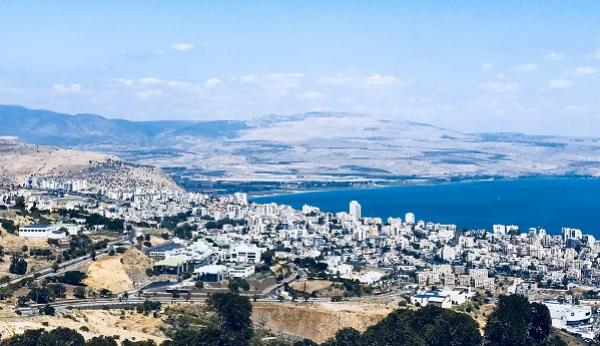
View of Lake Kinneret from Tiberias (Image credit: Unsplash)

Highest water levels

As a result of  the 2020 heavy winter rains, the water level of the Kinneret is now at its highest since 2004.

The Israel Water Authority explained that the Upper Red Line shows when the Kinneret is at its maximum capacity and at that point the flood gates of the Degania Dam are opened.  Today, it was reported that if the water level of the Kinneret rises by another 70cm, the flood gates will be opened.

All we need is for the water level to rise by another 1.2m for the Kinneret to be filled to capacity.

Lowest water levels

The lower red line is 213m below sea level and it is at this level that damage to the ecology begins to take place and the water quality begins to decline.

The historical lowest water level – 214.87m below sea level – is a level below the pipes so pumping water into the National Water Carrier is impossible.

And what about the Dead Sea?

The Dead Sea level drops at a rate of about 1.10 meters per year and the reasons for this are:

  1. The Syrians constructed dozens of reservoirs that capture the water of the Yarmuk River and prevent them from flowing to the Dead Sea
  2. The Jordanians built a dam at the top of the Yarmuk and reservoirs that capture almost all the water that remains of the Yarmuk.
  3. In Israel the Degania Dam was built, which prevents most of the water from the Sea of Galilee from flowing through the Jordan River into the Dead Sea

Add to this the fact that in this area rainfall amounts decrease each year due to regional climatic changes, which creates a situation where the level of the Dead Sea drops at an alarming rate, since the rate of water evaporating from the Dead Sea is much greater than the amounts of water entering it.

Arnona – Israel’s residential regional council property tax

0
Reading Time: < 1 minute

What is Arnona? How much Arnona are you paying? 

Hebrew: ארנונה

Arnona is your municipal or regional council property tax.  It is usually paid bi-monthly.  It is with these funds that your municipality or regional council provides services to its residents; refuse removal, sewerage, street lights, road maintenance and other general, public services.

The Arnona is charged annually and the rate is set from 1 January – 31 December.

Arnona is levied in different ways and there are different rates for residential, commercial, non-profit, religious sites, hotels etc.

Rates of residential Arnona vary drastically from city to city and town to town. Jerusalem, Ramat Gan and Haifa residents pay the highest rates of Arnona in the country.  Arnona in Bnei Brak is more expensive than Arnona in Herzliya and Bat Yam.

For example; Haifa’im are paying anywhere between 40 NIS – 110 NIS per square meter for residential Arnona depending on the zone (of which there are 4), while in Bet Shean there is a flat rate which is 43 NIS per square meter. The average rate for Arnona in Tel Aviv is 50 NIS per square meter.

How to pay your arnona online