16 C
Jerusalem
Tuesday, May 26, 2026
Sample Page
Home Blog Page 4

Israel Covid Rules & Isolation Updates.

Reading Time: 4 minutes

The Corona Cabinet meets to review the situation.

A rapid antigen test – Unsplash

24/1/22

Following a meeting of the Corona Cabinet yesterday, the following recommendations have been made:

  • To scrap the Green Pass for vaccinated individuals – the Omicron variant’s transmissibility and ability to infect vaccinated people makes the pass largely irrelevant.
  • Maintain the Green Pass and antigen testing for high-risk individuals
  • Discussions to continue regarding isolation, testing and face masks
  • Reporting daily updates and recommendations to the public

21/1/22

  • Prime Minister Naftali Bennet announces: No more isolation for pupils exposed to corona. Schools will continue to operate fully. Each pupil must be tested twice per week and this will help to bring the current wave to an end.
  • From Thursday next week all pupils, up to 18 years of age, will receive, free of charge, 6 home-tests. Parents will be required fill out an accompanying form.
  • The fear is that parents will refuse to perform the tests and will send their sick children to school.
  • Nitzan Horowitz – Minister of Health – says, yes, it is easier to close schools down completely, provide unemployment benefits for many and send everyone home to sit in front of screens but we have to learn to live with corona.

18/1/22

According to the Ministry of Health, 85% of positive cases cease to be contagious after the 5th day. Hence, new isolation regulations have been approved – now 5 days for the vaccinated population as follows:

Over 60’s

  • PCR testing within 72 hours of exposure
  • 5 days of isolation
  • Isolation ends following 2 negative home tests on the 4th and 5th day. Should the results be positive, you are required to continue isolating and testing yourself daily until 2 negative test results are in hand.

Under 60’s

  • Home testing within 72 hours of exposure
  • If the home test is positive an further medically supervised antigen test is required
  • Isolation period – 5 days
  • Isolation ends following 2 negative home tests on the 4th and 5th day. Should the results be positive, you are required to continue isolating and testing yourself daily until 2 negative test results are in hand.

17/1/22

The Israel Health Ministry is considering shortening current COVID quarantine for vaccinated Israelis, from 10 to 5 days.

The Health Ministry’s Central Virology Laboratory is in the process of completing research and a final decision is expected within days – possibly as early as Wednesday or Thursday.  

If the experts’ findings support such a step, the MOH may shorten quarantine for confirmed COVID carriers to five days, as is the new practice in other countries around the world.

We’ll keep you updated. In the meantime, the MOH reports the following:

  • New cases yesterday: 33,662
  • Active cases: 253,103
  • Seriously ill: 446
  • 1st vaccination: 6,671,981
  • 2nd vaccination: 6,020,277
  • 3rd vaccination: 4,397,100
  • 4th vaccination: 537,419
  • Positivity rate: 11.75%

12/01/22

Over 40,000 newly cases of the Coronavirus were diagnosed yesterday. Israel’s healthcare system is being stretched to its limits. In response to that Prime Minister Naftali Bennett urges members of the public who are asymptomatic, to stay away from PCR testing stations.

  • New cases yesterday: 41,154
  • Active cases: 194,523
  • Seriously ill: 253
  • 1st vaccination: 6,642,790
  • 2nd vaccination: 5,980,991
  • 3rd vaccination: 4,350,113
  • 4th vaccination: 413,576
  • Positivity rate: 10.97%

Also announced:

  • Isolation to be shortened from 10 to 7 days in asymptomatic cases.
  • The corona cabinet decides on a 4 days subsidy to be paid to the self-employed as well as salaried employees while they are in isolation.
  • Over 62,000 pupils have been diagnosed with Corona and hundreds of thousands are in isolation. Parents have called for a closure of schools but the official response is that some 2 million pupils are still attending school and these numbers therefore, do not warrant a full closure of the school system. Some schools have made independent decisions to switch over to remote learning.
  • Yesterday, the rail line to Ben Gurion International Airport re-opened. Today however, Israel Rail announced many of their train drivers are ill or in isolation and adjustments to train services and schedules on some lines, will be made accordingly.

6/01/22

A rapid increase in infections, long queues and long waiting times at testing stations encouraged the Ministry of Health to pursue alternatives.

A record number of 12,000 new cases of the Coronavirus were diagnosed on Wednesday and the MOH warns that this record will be broken within a few days.

PCR Testing

PCR testing is the most accurate form of testing for Covid but the MOH has decided that only the 60+ age group and those at risk, vaccinated or not, will qualify for PCR testing. A positive PCR test means going into isolation for 10 days. A doctor must approve the release, but a 2nd test is not required.

Who falls into the ‘at-risk’ category? This is yet to be decided and announced.

Rapid Antigen Testing

If you have been vaccinated or have recovered from Covid and have been exposed to a confirmed Covid patient you can now take a rapid home test. This means that you can now be officially diagnosed with a home test. Previously the rapid test had to be performed under medical supervision.

If your test is positive you must go into isolation for 10 days. Home testing numbers and diagnoses will not be included in the official Covid database. If you have been vaccinated or recovered and diagnosed with Covid via a home test, and wish your illness to be officially recognized, you will have to undergo a supervised test.

Who’s paying?

Vaccinated or unvaccinated – home testing is at your own expense but it saves you time and aggravation.

Supervised testing is free. Also, the unvaccinated who have been exposed to a confirmed Covid patient, can take a supervised test for free.

Even if your test result is negative, the unvaccinated will have to isolate for 7 days. If the result is positive a 10 day isolation period is required. After that period, you can be released from isolation with a doctor’s approval and without having to take an additional test.

If you are already in isolation

For the unvaccinated: you are supposed to take a second PCR test on the seventh day after exposure in order to leave isolation. But as of Friday when the new directives come into effect, you will need to take a second test – a supervised rapid antigen test.

Stocks of rapid antigen test kits at pharmacies are selling fast.

At school

Some schools have been carrying out rapid antigen testing. The Ministry of Education has instructed schools to stop testing until further notice.

What next?

Will this new system of testing and isolation be effective? Probably not as 50% of positive cases are missed with the rapid antigen test.

Currently, 129 people are seriously ill in local hospitals reflecting a 50% increase over last week.


Instructional Videos – Household Utilities

0
Reading Time: < 1 minute

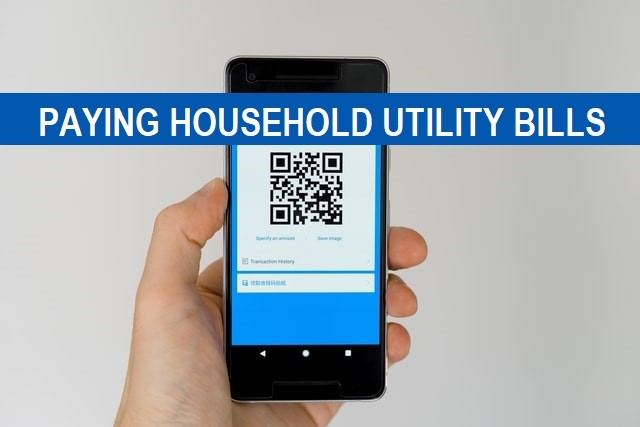
How to pay your household utility bills online.

It’s now easier than ever to pay your utility bills online. Follow these step-by-step instructions and get the job done easily and effectively.

4th jab for over-sixties

0
Reading Time: 2 minutes

The latest directives for Omicron. Over-sixties to get a booster-booster shot.

Announced Sunday night, the Ministry of Health has officially recommended a 4th dose of the Covid-19 vaccine for all people over the age of 60, in Israel.

The MOH also urges all who are still unvaccinated, against Covid-19, to get vaccinated, and those who have not gotten their second or third doses to get their jab now.

coronavirus quick read

The MOH also urges parents not to delay and get their children, over the age 5, vaccinated as soon as possible. Achieving immunity in children takes more time.

Omicron, presents much milder symptoms but the infection rate is much higher – numbers double within days. Israel could reach a peak of 50,000 new cases within a very short while.

Queues at testing stations are long and a review of who will require a test and who will be required to self-isolate is being addressed.

Corona in Israel – Sunday, 2 January 2022

4,208 new cases

33,909 active cases

114 in serious condition

6,573,948 people have received their 1st vaccination

5,927,857 people have received their 2nd vaccination

4,259,939 people have received their 3rd vaccination

8,244 deaths since the onset of Covid-19

In the last 7 days

753,462 tests have been carried out

26,869 tested positive

4.57% average positivity rate

2 deaths

According to the MOH Covid-19 dashboard, Maale Adumin, tops the red-list, with a 9.6% positivity rate and 275.6 cases per 10,000 people.

Israelis don’t drink too much tea!

0
Reading Time: 3 minutes

International Tea Day is observed on December 15th in many countries in the East, in Africa and here in Israel too.

Time to enjoy a cuppa of your favourite brew – Image: Unsplash

Tea is one of the world’s most widely consumed aromatic beverages, with strong and growing global demand. The industry is valued at approximately $38.8 billion worldwide, with annual consumption reaching around seven billion kilograms.

It is the second most consumed beverage in the world, after water. Coffee ranks third, followed by orange juice and beer, with soft drinks in sixth place—over 1.7 billion servings of Coca-Cola are consumed each day.

People in India, the UK, and China drink roughly four times more tea than Israelis. In Israel, consumption is relatively low—about 200 cups per person per year.

By contrast, Turkey leads global per-capita consumption, with an average of about 3.16 kg of tea per person annually.

Turkey produces around one-fifth of the world’s tea supply. While tea originated in China, India stands alongside it as a global powerhouse of production.

Types of teas


With so many varieties available, it may come as a surprise that there are actually only five true types of tea. Even the most exotic, flavored, or unusual blends are all derived from these five fundamental categories.

  1. Black
  2. Green
  3. White
  4. Oolong
  5. Pu’er

What is a tea and what is a tisane?

Anything else among the many common tea flavors we consume, is a herbal or plant infusion. Amongst connoisseurs and foodies, these are called “tisanes”.

Some of the most popular teas and tisanes

  1. Darjeeling: Derivative of Black Tea with a light, nutty taste and a floral smell
  2. English Breakfast: Has a rich and hearty flavor and is enjoyed with milk and sugar (In Israel you’ll hear this referred to as ‘Tay Angli’)
  3. Matcha: Derivative of Green Tea, which is high in antioxidants and nutrients
  4. Chai: A milky, sugary, and spicy beverage originating from India and now popular in Israel
  5. Earl Grey: Made mostly with Black tea, Earl Grey has smoky, fragrant, and citrus tones
  6. Jasmine: Has a delicate aroma and a refreshing flavor
  7. Chamomile: Is known for its soothing properties
  8. Oolong: Falls between Green and Black Tea and is one of the top five true teas
  9. Yerba Mate: Includes high levels of caffeine and is often used as an alternative to coffee
  10. Rooibos: Originating from the South African Red-Bush tree, is light in flavor, with many health benefits
  11. Pu’er: Has earthy, mellow, and balanced undertones and has become popular over the last few years
  12. Lapsang Souchong: A black tea with a smoky aftertaste
  13. Mint: A favorite in Israel, helps to soothe upset stomachs
  14. Sencha: Most famous in Japan for its bitter taste

Tea in Israel

Wissotzky Tea (Hebrew: תה ויסוצקי‎) is one of the oldest tea companies in the world and is the leading tea distributor in Israel. Founded in 1849 in Moscow it became the largest tea firm in the Russian Empire and by the early 20th century, it was the largest tea manufacturer in the world.

Wissotzky’s sell around 55 different blends of teas and infusions and your can purchase some of their signature blends via their website or enjoy a cuppa at their Tea House in Tel Aviv.

World price of tea

As of November 2021, the world wholesale price of tea was $2.48/kg (or 7.70 NIS/kg). This is a far cry from the retail price. There is between 30g-40g of tea in a 20-tea-bag-box that retails for around 17NIS on Israel’s supermarket shelves which translates to 175NIS/kg.

How to make the perfect cup of tea?

So you think you make the best cup of tea on the planet? How do you do it? Do you use a tea-pot no matter what, or do you make your cuppa in the cup? Do you use loose tea leaves or only tea-bags? Do you care if the tea-bag has a string and a tag, or not? Do you drink your tea with milk or black; with lemon, with sugar or some other way? Does Israeli tea compare to your favourite brand from the old country; Lipton’s, Twining’s, Five Roses, Joko, Yorkshire, PG Tips, Ahmed, Barry’s Irish and others? Do you store your tea in a wooden tea-box, in a tea-tin in a bottle or just in the supermarket package?

As you can see, tea drinking is not as simple as it seems. It’s an art and steeped (no pun intended) in culture and tradition. However you enjoy it, now’s the time for a tea-break, but before you go, please tell us (in the comments section below) what your favourites are – blend and brand and where you’re buying them.

Another way to pay your Israel household utility bills

0
Reading Time: 2 minutes

Options and instructions for paying your bi-monthly Israel utility bills on your smartphone.

If you are having trouble paying your utility bills via your local municipal or regional council call center through their automated phone system or directly with one of their customer service reps, there are other payment options too.

Here are a few of the ways to pay

  1. You can stand in line at the post-office.
  2. You can pay utilities directly via the CityPay website. You can follow our English instructions here – water bill and your arnona bill
  3. You can pay via the municipality or regional council website but mostly these instructions are in Hebrew.

There is another option…

You can pay your household bills via your smartphone.

Have you noticed that your utility bills; arnona, water and electricity now incorporate a QR code?

If you do not have a QR scanning app installed on your phone, download one of the many free versions from your app store.

Once you have downloaded the app, open it and scan the QR code.

Once scanned, a website URL will appear, click on it and you will be directed to the CityPay portal where you can complete your payment.

Fill in these required fields

  1. Client number (usually your ID)
  2. The invoice clearance number is automatically detected (מספר מסלקה)
  3. Confirm that you agree to the terms of service via the tick box
  4. Then click on הצג סכום button (Show Amount)
  5. Click on the המשך button to continue or on the חזרה button to return to the previous screen.
  6. You’ll then be directed to fill in your details: name – שם, telephone – טלפון, email – כתובת אמייל
  7. In the field thereafter, fill in your physical address – כתובת
  8. Select payment terms: regular – רגיל or credit – קרדיט
  9. Then click on המשך – Continue
  10. You will then be directed to the credit card payment portal where you are required to fill in your credit card number, expiration date details, CVV and the ID of the cardholder.
  11. Once authorization is received and payment is confirmed you should receive a receipt directly to your inbox.

A little confused? For extra guidance, watch these easy-to-follow instructional videos.

There is one final option; you can sign up for a direct bi-monthly bank debit (stop order) and the bill amount will automatically be deducted from your bank account. This is a great solution for people who tend to forget to pay their bills on the due-date thereby accumulating unnecessary late fees.

Learn Hebrew: Words of the Year

Reading Time: < 1 minute

Each year, from thousands of public nominations, the Academy of the Hebrew Language selects one standout word that captures the spirit of the times. Shaped by current events, cultural shifts, and everyday conversations, this chosen word reflects not only how we speak, but how we think and feel. More than just a linguistic highlight, it offers a snapshot of the year in a single, powerful expression—revealing what resonated most across society.

2024

Hostages – khatufim – חטופים

2023

The Academy did not offer an official word of the year due to the intense national shock.

2022

Sinkhole – bolan – בולען

Selected following a year featuring several high-profile sinkholes in Israel.

2021

Lunacy – tirlul – טירלול

Nine words stood out but “lunacy” won the vote. Second place went to hisun – חיסון – vaccine. Next in place was tashnit – תשנית – mutation followed with dahaf – דחף, or booster. Other nominations included; aklim (climate), medaliyat zahav (gold medal), pkakim (traffic jams), shigra (routine) and shinuy (change)

2020

Throat swab – matosh – מטוש

Reflecting the Covid-19 pandemic

WEBINAR: Everything you need to know about shipping to Israel for Aliyah

0
Reading Time: < 1 minute

Everything you need to know about shipping to Israel with Neil Kummer, CEO Kef International Shipping

Planning or making Aliyah soon?

Olim and returning residents are invited to join Neil Kummer, CEO of Kef International on Sunday, December 12th, 2021 for answers to all your Aliyah shipping questions.

  • Essential information about sending a lift to Israel
  • Shipping options
  • Timing the shipment
  • Shipping costs
  • Tips and suggestions
  • Watch out for…
  • Open Q&A session

For over 3 decades, Neil Kummer, Senior Aliyah Shipping Advisor and CEO of Kef International Shipping, has helped and guided thousands of Olim and returning residents with their Aliyah and relocation shipping requirements. Now he can help you too…

Join him on Sunday, December 12th, 2021 for an in-depth look at Aliyah and Israel relocation shipping.

  • 12:00 pm EST
  • 17:00 pm UK
  • 19:00 pm Israel
  • 19:00 pm Johannesburg

7 Southern African countries now on Israel’s barred list

0
Reading Time: < 1 minute

Travel to and from 7 Southern African countries now barred.

Seven countries in Southern Africa were placed on Israel’s latest red list of barred countries for travel on Thursday night. The countries are; South Africa, Lesotho, Botswana, Zimbabwe, Mozambique, Namibia and Eswatini (Swaziland).

israel travel ban covid

Israelis returning from these countries will be required to isolate in a ‘corona hotel’ for one week and will be released after receiving two negative PCR test results.

Those who refuse to be tested will require a two-week stay in a corona hotel.

Nardis Advisors Webinar: Retiring in Israel – What you need to know!

0
Reading Time: < 1 minute

March 21, 2023 webinar: Retiring in Israel 2023 – What you need to know!

PAST EVENT: REGISTRATION CLOSED


Attention all Olim Hadashim!

Are you retired or planning Aliyah as a retiree?

Join this webinar presented by Norman Chait and learn about:

  • Taxation
  • Retirement income planning
  • Lifestyle considerations
  • General tips about the market

Norman Chait, Managing Principal of Nardis Advisors, will give a brief overview of the current markets, and the impact of rising interest rates on your daily lives.

Monday, March 21st, 2023

  • 19.00 Israel time
  • 12 pm EST

Zoom details will be sent upon registration.


PAST EVENT: REGISTRATION CLOSED

Navigating the Holidays After Divorce

Reading Time: 6 minutes

Is navigating the holidays after divorce an unsurmountable challenge?

By: Adv. Jay Hait

Navigating the holidays after divorce, especially if it’s the first holiday, really emphasizes how much your life has changed. You used to anticipate your children’s happy faces sitting around the seder table, or illuminated by the glow of the Hanukkah menorah. Now you’re wondering how to keep them from being streaked with tears.  

Holidays are a time for families. Celebration. Bright smiles. Gathering for a festive meal. Sharing stories and laughter that create lasting bonds. The family is all together, secure, safe, enveloped in love.

But parents (and their kids) going through divorce, will very often experience sadness, loss and a sense of failure, instead. Everyone is facing emotional challenges and the parents have to deal with legal challenges as well. This new reality can be quite overwhelming. So here are some legal and emotional tips for navigating the holidays after divorce.

Legal Challenges

A divorce agreement has to be reached between two people who are ending their marriage. Either the court decides the major issues or the couple reaches a comprehensive divorce agreement on their own. If they make the latter choice they can get help from a mediator or their attorneys to work out the details. Then they bring the signed agreement to the court to be finalized. 

In my experience, people more readily adhere to agreements they’ve come to on their own because the details they’ve worked out are more stable and equitable. They are less likely to enter into future litigation with the accompanying legal and emotional costs. Agreements lower the cost of the divorce and lessen the emotional damage to the children. Where the kids will live and when they will spend time with each parent can be negotiated, taking into account everyone’s needs and what’s best for the kids.

So, instead of the uncertainty of navigating the holidays after a divorce, everyone can just anticipate the fun side of the particular holiday. Both the children and the parents  know who they’ll be with and how they’ll celebrate.

jay hait law offices
Contact Adv. Jay Hait for an appointment

Working Out the Holiday Schedule 

Being apart from your kids for the first time can be devastating. Yakov, who works in high tech in Tel Aviv, remembers his first Pesach away from his kids. “I went to a friend’s for the seder and all I could think of was my kids sitting around the table without me,” he says. “I think it was the lowest point in my life.”

Of course it’s not one size fits all when negotiating holidays. Nevertheless it’s helpful to look at some of the common ways other parents divide and share these times. 

Alternate holidays every other year. One parent can take the first year and the other the next – alternating each year. This way you won’t miss a holiday with your kids more than one year in a row.

Split each holiday in half every year. One parent takes the kids for the first half of the week-long holidays like Succot and Pesach and the other parent the second half.

Assign fixed holidays. Each parent could celebrate the same holidays every year with the kids if they agree on which are more important to each of them.

Birthdays and Summer Vacation Schedules

Having a schedule can be very stabilizing. Esther manages a marketing department and works from home. “My kids’ made a chart for the fridge with a year’s worth of scheduled visits. It gives them a sense of personal autonomy. They are able to make plans according to when they’ll be at their dad’s and when they’ll be with me.”

Share your children’s birthdays. You can each make a party celebrating the child’s birthday. Or if the child is with one parent on their actual birthday the other could drop by to say a quick hello.

Divide summer vacation. This is something you can work out according to each of your work commitments and schedules.You could alternate taking trips with the kids every year or split each summer in half. 

You can use any combination of these examples to divide and share birthdays and summer vacations. If you’ve been able to establish a report you can renegotiate any adjustments you may have to make in the future if either of your circumstances or schedules change. 

The important thing is to create arrangements that allow your children to enjoy quality time with each of you. Look at it as an opportunity: by being proactive and exercising these choices, you can create new and meaningful traditions for you and your family. 

Emotional Challenges

The late Dr. Wayne Dyer wrote in his book, No More Holiday Blues, “If you allow yourself to indulge in self-pity or fantasies of how your holidays ought to (or used to) be and then permit yourself to become depressed, you’ll be defeating yourself and bringing on the holiday letdown.”

Have an honest discussion with your kids

It’s important to acknowledge the sadness surrounding the change in circumstances in order to get through any holiday after divorce. Yours and your kids’. Talking about how different things are helps to validate everyone’s feelings and gives you all a chance to process them together. No one gets criticized and everyone feels heard. 

But how far should one go so as not to disappoint their kids? Should a divorced parent share their own feelings about the holidays? Should they be giving them extra presents or taking time off work to spend more time with the kids? Should they be giving into their ex’s demands about changes in scheduling in order to relieve tension?

For answers I turned to Dr. Mike Gropper, a prominent, American-trained clinical social worker and psychologist. He has over 35 years experience helping families through the challenges of divorce. 

Dr, Gropper explained, “There is nothing wrong with telling your kids you’re having a hard time with the holiday. It validates what they may be feeling also, and gives you an opportunity to say to them, ‘What about you?’”

“You have to know your kids. Be attentive to their feelings. Give them more time and attention. They need it.” The Doctor said that one should be flexible concerning the other parent’s demands or requests that violate the terms of the divorce agreement. “Keep the focus on what is best for the child.”

Dr. Gropper and I both feel that newly divorced parents need to cut themselves some slack. “Knowing what to do is not always clear and can be difficult,” he says. “Get some guidance from friends and family whom you trust. There is much to learn about your child after a divorce,” he added. I always advise my legal clients to consult with a therapist if they feel the need and Dr. Gropper is an excellent resource.

Start planning before the holiday

Divorced parents often have extended family to rely on during the holidays to help bring a festive feel with meals and parties and presents. Celebrate together as much as you can. But also try to carve out some special time with you and your kids together. Sit down together and choose some fun activities you’ll all enjoy.

  • A day-long road trip including hiking and a picnic.
  • Making a BBQ together with other families. 
  • Planning a new and different holiday meal together. Choosing a menu, shopping for ingredients, and making a video of the whole experience. 
  • Finding a film you can watch together
jay hait law offices
Contact Adv. Jay Hait for an appointment

Navigating the holidays after divorce

So, while navigating the holidays after divorce may seem to be an insurmountable challenge, it can turn out to be the best thing to happen to your relationship with your kids. Plan the schedule ahead. Have honest discussions where everyone can be vulnerable and feel safe. Start new family holiday traditions. Find ways to form a stronger bond and make great new memories. 

Download: Complimentary e-books by Adv. Jay Hait

Free ebook -What women need to know about divorce in Israel
womens divorce ebook download