11.5 C
Jerusalem
Wednesday, April 22, 2026
Sample Page
Home Blog Page 159

Israel Education: Elementary, Middle & High School.

0
Reading Time: 7 minutes

An overview of elementary, middle-school & high-school in Israel.

ministry of education


Misrad HaChinuch

The Ministry of Education (Misrad HaChinuch) is responsible for determining and implementing education policies and for overseeing state, state religious and independent education systems.

Types of schools in Israel

Schools in Israel are divided into four types:

  1. State schools – The majority of Israeli children attend these
  2. State-religious – catering to the religious sector
  3. Haredi (ultra orthodox) schools – these schools act independently but must adhere to the curriculum determined by the Ministry of Education in order to receive funding
  4. Arab schools – offer a curriculum that emphasizes Arab history, religion and culture

The academic year

In Israel the school’s academic year begins on 1 September.  The academic year comes to an end on 30th June in elementary schools and middle schools and high schools end their academic year on 20th June.

Primary School or Elementary School

Primary or elementary school is from grades one through to grade six; approximately ages 6-12.

A ‘moadonit’ is an after school program that children can attend and it also includes a meal.  There is an additional fee for this.  This can also be referred to as a “tzaharon”. This gives working parents a professionally supervised solution for the care of their young children in the afternoons.

Junior High or Middle School

Grades seven, eight, and nine; approximately ages 12-15

High School or Secondary School

Grades ten through twelve; approximately ages 15-18.  There are three main types of secondary schools:  

  1. Academic high schools that prepare students to take the national matriculation examination in order  to enter university
  2. Vocational high schools
  3. Agricultural high schools

School subjects are studied in modules and a student requires at least 21 modules to get a ‘bagrut’ – Israel matriculation certificate.  If your child was unable to pass the minimum number of modules in order to get their bagrut certificate, they are given two opportunities to repeat those the subjects later on in the year – this is referred to as “Mo-ed Bet” (the second opportunity) and “Mo-ed Gimmel” (the third opportunity).  If they are still unsuccessful then they will have to complete their bagrut at a private college in their own time and at their own expense.

School uniforms in Israel

Most schools in Israel have a basic school uniform.  The uniform is much more casual than the uniforms worn in the U.K., South Africa and Australia.

  • The summer uniform in most state schools consists of a T-shirt and pants for both boys and girls.  The shirts can be any of the colors as stipulated by the school. Usually there is a wide range. Each school l has its own emblem. An iron-on transfer is applied to the T-shirt.  The transfers are available from any of the stores that specialize in school uniforms. Generally the cost of the shirt includes the transfer.  The store will charge you around 10 shekels for a transfer if you have not purchased the T-shirt from them. Generally shorts, pants and trousers are black or blue.   Each school has its own special uniform requirement for physical training (chinuch gufani) – generally a yellow, blue or white T-shirt.  All school-children are required to have a white shirt – ‘chultza levana’ – for assemblies, ceremonies and other special events.
  • The winter uniform is generally a sweatshirt, training pants or jeans.  Some schools are flexible when it comes to winter jackets and coats, others insist on a zippered sweatshirt with the school emblem.  Hoodies are allowed. Each school has a winter version of the uniform for physical training.  Again a white sweatshirt is required for assemblies, ceremonies and other special events.
  • State religious and Haredi schools have their own dress-codes too where the dress code usually includes a plain white buttoned-shirt and black trousers for boys and a cotton, buttoned-shirt and black skirt for girls.

Most schools encourage the individuality of students and have their own level of leniency with regard to the uniform. High schools are more lenient than elementary schools however, certain items of clothing like mid-riff tops and mini skirts.  High school boys in state schools are allowed to have beards

The Classroom

For many reasons, not all classrooms are heated efficiently in the winter and your child may have to keep his jacket or coat on for much of the day.   We suggest that you sew a name tag in each of your child’s shirts or jackets.  Although uniforms are not very expensive in comparison to school uniforms abroad, it is very frustrating when an item gets lost.

Psycho-didactic evaluation

Children with learning issues are encouraged to take a psycho-didactic evaluation – an ‘ivchun’. The results of the evaluation will determine whether certain allowances – ‘hakalot’ – need to be made in the students favor during an exam; overlooking spelling mistakes, giving extra time, use of a calculator, oral exams etc.  There are also ‘hakalot’ for oleh children as well.

A Prefect System

Unlike schools that are or were part of the British Commonwealth; the United Kingdom, South Africa, Zimbabwe and Australia there is no prefect system in Israeli schools whatsoever. 

Sports

Again, unlike in the U.K., South Africa and Australia, except for a couple of hours a week of compulsory Physical Training, there is no competitive sports within the state schools.  No football teams, athletics, swimming etc. – so there are no swimming galas or sports days.  Any sporting or extra curricular activity is at the parent’s own expense.

School Awards

“Prize Giving” for academic achievement is not common in Israeli schools and the system of the “Colors” awards does not exist.

Home Schooling

Yes, home-schooling is possible in Israel and there is a growing trend in Israel to home school children.

In 2009 the Ministry of Education released guidelines for receiving permission to homeschool.

You need permission from the Ministry of Education for each child you wish to home-school. 

Attitudes

What is the attitude of the principal and the teachers?  Are they supportive and encouraging, dogmatic or demanding?  Check out discipline issues – Israel schools can be lax in this regard. 

Are there other English speaking children in the school or in the class?  Will there be extra help for your child, a special class or tutor? 

What about private, extra lessons? Expect to pay between 75 – 150 shekels for a private lesson.

The bottom-line (Heb: tachlis) is that you cannot assume anything about the school.  Whether it be a religious school or a secular one, it may or may not be a perfect fit for your child.  That is something that you have to determine and solve on your own. There is no right or wrong answer to any of the issues raised here.

There are a number of English forums and message boards in Israel, become a member prior to your Aliyah – start with Facebook.  Ask questions, get opinions, read and research.  Whatever your final decision, we hope the school experience will be a positive one for you and your child.  

Should I make Aliyah while my child is in high-school or should I wait?
Many families with teenage children, considering Aliyah, are confronted with a difficult decision; to make Aliyah while their child is still in high-school or wait a few years until they have completed their studies. There are so many variables and there is no perfect answer or magic solution. These are some things you might want to consider.

  • Does your child have any prior knowledge of Hebrew?
  • Has he/she visited Israel prior to immigration – with family or on summer camps or other programs?
  • Does he/she already have any childhood friends or family who live in Israel?
  • Does he/she generally adjust well to a new or stressful situation?
  • Is he/she motivated to make a success of their studies?

Even if the answer to all these questions is YES, it is still not guaranteed that they will not have problems adjusting at school. Like any child rearing issue, so much depends on the attitude of the parents especially towards the Aliyah and the education process.

Matters for consideration

  • What are your child’s expectations?
  • What preparations have been made, research carried out and discussions held, by the family, prior to Aliyah?
  • Will your child have to repeat a year or part of the year?
  • Does it all come down to the child’s personality, preferences and dreams?
  • Will all the children in the same family respond in a similar way?
  • Are you planning on living in a predominantly English speaking community?
  • Are you going to be living in a secular, religious or ultra-religious community?
  • Will your child be attending a religious school, where studying Hebrew is “cool” and is a large part of the curriculum?
  • For whatever reason, will English be the only language spoken at home?
  • Is one of the parents a Hebrew speaker?
  • Does your child want to make Aliyah as much as you do?

Knowing the Hebrew language is the first step towards integration.   Having a tutor, attending Hebrew-school or a Jewish day school and developing some language skills prior to Aliyah, helps tremendously. On the other hand, if you decide to make Aliyah when your child has finished high-school, there is no guarantee that he/she will come with you, and your child’s desire to remain behind, could in effect, split the entire family. 

Your child will be required to serve in the Israel Defense Forces. The earlier you make Aliyah, the easier it is for the child to make good friends.  High-school children socialize in groups.  They may serve in the same army unit, travel together during a gap-year and even develop professional dealings with each other at a later stage. Whatever you do, your attitude as parents is critical. The transition has to be made gently and slowly, giving the teen as much support and confidence as possible and at the same time, keeping control over the process.

International Schools in Israel

Find our more about international schools in Israel for students who prefer not to follow the general Israeli school system…

Aimee’s Experience

My son had a tough time.  I was recently divorced and I decided to make a fresh start.  I left Canada and made Aliyah.  Evan was 15 when we arrived.  He had just completed the 9th grade in Toronto.  He went to a municipal school in Haifa – one with a good reputation and with lots of other immigrant children.  From day one it was traumatic.  He had to repeat the 9th grade and he was angry about that.  Worst of all he did not integrate with the other children.  At the end of the academic year, we moved (re-zoned) so that he could attend a semi-private school in Haifa.  He made friends there but struggled to keep up academically.  He had a block about speaking Hebrew.  After a lot of deliberation, I sent him to the International School where he was a boarder.  It was easier for him as the curriculum was in English and he made friends too. After half a year or so, he stopped going to class altogether.  He came back home and never went to school again.  He is nearly finished the army and now I am faced with the prospect of sending him to a private college to get his bagrut.  As a single mother the expense of his education has been enormous.  If I could do it over again, I would have waited until he had finished school before making Aliyah.

Useful Contact Information

The Ministry of Education
Tel: 02-560 2222
Tel: 1-800-250-025
2 Rechov Devorah, Jerusalem
info@education.gov.il
Matriculation Department
Tel: 02-5602489
29 Rechov Shivtei Yisrael, Jerusalem
Open line for students
Tel: 1-800-222-003
Teen to Teen
An online magazine, including chat rooms and advice for teens that have moved to Israel – www.ttt.org.il
Elem – Association for at Risk Youth
www.elem.org.il
Tel:  03-7686666
Al Sam – Anti Drug Use Organization
www.alsam.org.il
Tel: 1-700-505-055

Emergency numbers and resources for children

Emotional Crisis Hotline

1201 (ERAN)

Family Violence

1-800-220-000

Listening Ear for Children

03-620-4999

Rape Crisis Center & Sexual Abuse

1202 – Women / 1203 – Men

Student Hotline

1-800-222-003

Israel Assoc. for Child Protection

1-800-223-966 (ELI)

Hummous, Pita & Felafel – Israel’s National Food

Reading Time: 6 minutes

Traditional Israeli Food – Is there such a thing?

On the Hummous, Felafel & Pita Trail

Hummous

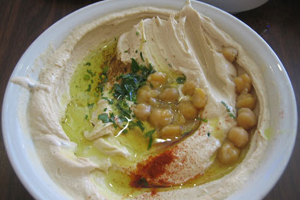
hummous2Hummous, hamos, houmous, hommos, hommus, hummos, or hummus is a dip or a spread made from cooked, mashed chickpeas blended with tahini paste, olive oil, lemon juice, salt and garlic. Sometimes it is rich and creamy, sometimes thick and chunky, whichever way, it is a taste sensation.  Almost every cuisine of the Mediterranean countries and the Levant lays claim to hummus.

Eaten for breakfast, lunch and supper, as a snack, an appetizer, a main dish or when you are entertaining.  You can be served hummus during an Israeli breakfast at your hotel, at a celebration, a wedding, a Bar/Bat Mitzvah or even at a circumcision.  Hummus can be eaten standing up or sitting down; it can be eaten in a pita, off a fork, off a spoon or licked off a knife.  It is served at the neighborhood kiosk, food stall, in eateries and fancy restaurants.  You get tens of varieties of hummus– Hummus Asli (genuine hummus), Hummus Abu Gosh (made famous in the village of Abu Gosh outside Jerusalem), Hummus with Tahina (tahini paste, lemons, garlic and olive oil) Hummus with Matbucha (roasted peppers), Hummus with Ful (fava beans), Hummus Levanoni (a taste of the Lebanon), Hummus and chickpeas (served with mashed hot, chickpeas), Hummus with pine-nuts, Hummus with fried mushrooms, Hummus with roasted  eggplant, original Hummus, Grandma’s hummus or Hummus like it once was, Hummus and tomato, Hummus with pickles or just plain old Hummus.

If you’re lucky enough to watch hummus being plated in a eatery it will definitely add to the gastronomic experience.  From a huge bowl, containing a mountain of hummus, enough to feed an army, the chef takes a pestle, dips it in and scoops the hummus onto a serving bowl.  He has been scooping for years and has perfected the art. With lightening speed, he drops the hummus, from the pestle, into the middle of a plate.  With expert dexterity, he will spin the plate in one hand, manipulate the pestle and form a perfect circle of hummus around the edge of the plate.  From another equally huge bowl, he takes another pestle and dips it into tahina (tahina is made from sesame seed paste – tahini, lemon, garlic and olive oil) then he expertly drops the tahina into the center of the hummus, forming a small peak. He sets the plate down, picks up a bottle of the darkest, thickest, richest and most aromatic olive oil that his grandmother, in the village, probably made last week.  He holds the bottle of olive oil at shoulder height and drizzles the oil around the tahina.  From another bowl, he takes chopped parsley and sprinkles it over the plate of hummus.  Finally a sprinkle of paprika – and walla (Hebrew slang) – a perfect plate of hummus is ready to be served with freshly baked pita 

The chef repeats this process hundreds of times a day. For around 25 Shekels ($7), you can experience this wonderful delicacy.  In most establishments, the hummus will be served together with a plate of assorted vegetables; pickled cucumbers, raw onion, tomato, pickled carrots, bitter olives, pickled eggplant  – “hammutzim’ and pita bread.  A cup of Turkish coffee (Kafe Sha’chor) infused with cardamom, rounds of this nourishing and simple meal.

When Israelis say in Hebrew “Bo le nagev k’tzat hummus” it literally means lets go out and “wipe a bit of hummus”

To eat hummus like a true Israeli you will break off small pieces of pita, dip it into the hummus and then eat it, eventually wiping the plate clean.  Although good manners in some circles, but not the authentic way, you can scoop the hummus onto a fork and then spread it on the pita.   Eating hummus this way you will identify your as a newcomer or tourist in Israel.

The Pita Bread

making druze pitaNow this brings us to the pita: an amazing journey of flour, yeast and water combined with heat to form a type of unleavened bread.  There is Pita Aslit (note this name appears frequently in Israeli cuisine), Pita Druzit (Druze pita), Lafa, Grandma’s Pita (the same one that made the olive oil in the village) or Toast (toasted pita often with garlic).  

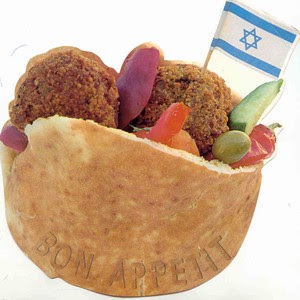
Pita is flat-bread; the dough is rolled into small circles and traditionally baked in a Taboon – a clay oven heated by fire.  The pita is baked for a few minutes and during the baking process a pocket is formed.  This pocket becomes a useful receptacle for all kinds of fillings including the all time favorite – falafelPita Aslit, has a slightly different texture, it is more chewy dough and has a coarser texture.  Pita Druzit is a very large, thin bread.  A mildly fermented dough, it is excellent for wraps or broken into flat-bread crisps.  Traditionally the dough is stretched over a large, soft, round, floured surface (often a cushion) and then placed on a heated metal surface, that resembles an inverted wok, for a couple of minutes. The resulting delicacy is ultra-thin, crispy bread.  The Druze pita is eaten with hummus or Labaneh (sour goat’s milk cheese).  It is also a convenient wrapping for other fillings. Lafa is a flat-bread that originates in Iraq. It is of medium thickness, slightly chewy, doesn’t tear easily, and is mostly used to wrap shawarma (a grilled meat dish traditionally made from lamb).  Regular pita, is sold in packs of 5 or 10.  You can buy it in the supermarket, the corner grocery, the shuk and bakeries.  It is easy to gobble down 2 fresh pita with your hummus.  Hate to bring this up, but do remember that each pita has the equivalent caloric value of 3 slices of bread.

Preparing the Falafel

felafelPita is the pocket of bread that falafel [recipe] is traditionally served in.  Falafel are small, round, fried balls of coarsely ground chickpeas and/or fava beans. Parsley, onion, and spices like cumin and coriander are added.  Sesame seeds, for a delicious nutty flavor, are sometimes added just before frying. 

The famous falafel, Israel’s fast-food, is mostly eaten on the go. Bought at falafel stands, competition is rife.  You will find establishments with names like “The King of Falafel”, “The Falafel King”, “The King of Kings of Falafel”, “The Golden Falafel”, “Famous Falafel”, “Dream Falafel”, “The Best in the Country” and somewhere there must be a “Grandma’s Falafel”  – and they are all fighting for first place.  Falafel balls are deep-fried while you wait.  You may be offered a complimentary falafel ball to taste while you wait. When your falafel is ready, you will be asked which fillings you want.  The choice is wide; Israeli salad (finely chopped tomatoes and cucumbers with a dressing of lemon juice and a little olive oil), pickled cabbage, hummus and tahina of course, pickled cucumbers, a piquant tomato puree with onions and maybe chilies (harissa or schug) and sliced tomatoes.  You will be allowed to eat freely from a variety of other salads on display.  Black and green olives, fried eggplant, pickled or fried cauliflower, slices of fried pita seasoned with zaatar (the biblical hyssop and sesame seeds), chopped garlic and even sometimes French fries.  You can buy a half  portion – it’s called a “hetzi mana”, or a full portion “mana” – a whole pita.  Falafel costs around  US$6.00 for a full portion and around US$4.00 for a half a portion.

Top Tips for Eating Out

  • You may be surprised to know that not all eating establishments in Israel are Kosher.  If this is important to you, make sure you ask to see the kashrut certification (te’u’dat kash’rut).
  • Oriental or Middle Eastern restaurants in Israel,  often have numerous spelling and translating errors on their menus.  Don’t be put off by this. This seeming lack of professionalism in western cultures is not an issue here, and it certainly does not affect the flavor of the food.   You should just chuckle when you see things like; “middel eestin”, “been sop” or “vegetables salat” on the menu.
  • Hummus with Ful is generally served for breakfast.  You may risk a bit of stomach discomfort if you eat Ful late in the afternoon after it has been left standing for a few hours.
  • As tempting as it may be to stuff  your falafel with as much free salads your eyes and appetite dictates, be careful.  It is a known fact that the pita will break apart under immense strain and you can be sure that its contents will leak out and stain your new silk blouse.
  • Fabric tablecloths are not mandatory in Middle Eastern restaurants – they will be substituted with sheets of paper. 

Eating at Kosher Restaurants in Raanana

0

Reading Time: 3 minutes

Eating Kosher in Raanana – Restaurants, Cafes, Pubs & Eateries

Hebrew: מסעדות ומקומות לאכול ברעננה

Kosher fast food options vary depending on the city. In Israel, there are many fast food chains including McDonald’s (not all are kosher). Then there’s the ultimate fast food of falafel and schwarma. Of course Jerusalem has the most Kosher restaurants and of the 3 main cities, Haifa has the least. In Raanana there is a wide selection of Kosher restaurants to meet the needs of  large frum and observant community.

Eating Kosher in Raanana
The ingredients of a kosher pizza will never include pepperoni, salami or any type of sausage.  (Image credit: Unsplash)

The Jewish dietary laws (Kashrut) dictate that dairy based foods cannot be cooked or served together with meat based foods – so a pepperoni pizza is out. It also dictates that utensils used to prepare food have to be kept separate too – you cannot fry the burger in the same pan that you made a cheese omelette, for example. In most cases restaurants will only serve a dairy menu or a meat menu.

Pork and shellfish cannot be served.

The kitchens in Kosher restaurants have to be under constant Rabbinical supervision. The venue must be closed on the Sabbath and also on Jewish religious holidays and festivals. Many Kosher eateries prefer to remain closed during the festival of Passover (Pesach) where special dietary laws govern the festival,

Kosher Restaurants in Raanana

The Luzzatto Italian Meat Kitchen

You’ll find the Luzzatto Italian Meat Kitchen on Ahuza Street (no. 77) – a Mehadrin Kosher restaurant that offers starters, salads, scrumptious pasta, meat dishes and more. Luzzatto has a business lunch- and a dinner-menu. They have a to ‘die-for’ desserts and while their cocktail menu is rather limited, there are enough to choose from to make your meal that much more enjoyable.

Mehadrin

The Felafel Shop

The Felafel Shop on Ahuza Street, one of Raanana’s main shopping districts, does an interesting twist on a regular falafel.  They also offer a Mexican falafel and a Mediterranean falafel.  Chili and sweetcorn sauce is added to the Mexican falafel.  Pesto, goats cheese and eggplant are the extras in the Mediterranean falafel.

The Hummus Bar

The Hummus Bar is our favorite place to eat hummus in Raanana.  Located on Ahuza Street, their hummus is fresh and made daily.  On a sunny day you can sit outside and enjoy a bit of ‘people-watching’

Borochov 88

Here the emphasis is on good food, quality ingredients, excellent coffee and desserts.  Their set breakfasts are very popular and their Shakshuka is very tasty.  Their salads are really nice and the Haloumi salad met all our expectations.  Salad portions are large.

There is a branch on Ahuza Street too.

Makom BeLev (not Kosher)

Makom BeLev means ‘a place in my heart.  This restaurant on Pardes Meshutaf Street is the place to go if you are celebrating a special occasion; for an office lunch or just looking for a good meal  with the children.

Leora has been going there for years. She says “We love the food.  No matter what we choose, the reasonably priced buffet or from the a-la-carte menu, we are always satisfied. I often do lunch there with my girl-friends and we usually order soups and freshly baked, home-made breads.  The gardens are really pretty and it is so restful to sit in a quiet corner in the shade of the trees.  In the winter we sit inside the stone cottage which is warm and cozy.  Their portions are large, their deserts are delicious and it’s good value for money”

Not a restaurant foodie? Make these yourself

Eating out in Tel Aviv

Reading Time: 2 minutes

Restaurants, Cafes, Pubs & Eateries in Tel Aviv

Judy is a veteran “Tel-Avivnik” she is a travel writer and a foodie – she shares her favorite eating places in the city.

Current Covid-19 health regulations require you to present the Green Pass before entering a restaurant.

Eggs Benedict to die for at Benedict (branches across the country)

Max Brenner

  1. Branch: 45 Rothschild Avenue
  2. Branch: Sarona Market
  3. HaNamal (The Port)

Pure bliss – all you have to do is love chocolate.  Hand-made chocolates, waffles, hot chocolate in various flavors, omelets, pizza and other delicious coffee-shop meals.  Book online!

Ice Berg

Ibn Gvirol 24

“Low-tech ice cream” is how Ice Berg describes their product.  Ice creams with interesting flavor combinations:  wild berries and tarragon, mandarin orange and basil and silky chocolate and also fluffy, fruity flavored sorbets. 

Bariba

At the Port (North)

Food that is good for you: fish, salad bar and vegetarian.  Good soups, wonderful fresh salmon and delicious desserts. Kosher too.

Shaul’s Inn

11 Eliashiv (Yemenite quarter), near Nachalat Benyamin

After wondering through Nachalat Benyamin Craft-Market on Tuesdays and Fridays, take in a delicious meal at Shaul’s Inn. Soups, lamb, shishlik and more – all prepared in the traditional Yemenite way.

Benedict

  1. Rotschild 29
  2. Sarona Market

Open 24/7, Benedict is well known for the 12 different breakfasts. Of course you have to try their signature Eggs Benedict as well the  blueberry pancakes, freshly baked bread, bagels and fresh juices. Be prepared to wait for a table.

Molly Bloom’s

2 Mendele St. (near the American Embassy and the close to the beach)

Traditional Irish Pub in the middle of Tel-Aviv. Choose from fish & chips, pies, sandwiches and around 20 different types of beer.  Molly Bloom’s also screens most major rugby, soccer and basketball matches live on TV.

More of Judy’s favorite places

Betty Ford on Nachalat Benyamin – Steakhouse
Moses on Rothschild Blvd. – Burgers in a variety of styles


Kupat Holim Clalit Automated Answering Machine

Reading Time: 2 minutes

Hebrew English Translation: The Automated Answering Machine at Kupat Holim Clalit.

telephone

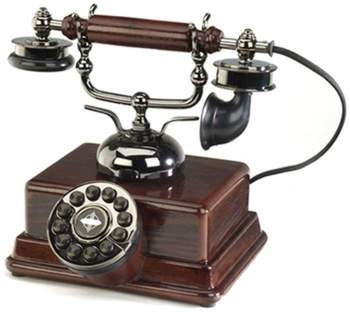
What are they saying?  What does it mean? It is so annoying – I don’t understand!

Please note: This translation is provided for your convenience and is not the service provider’s official translation.

Clalit’s Quick Dial Telephone Number:  *2700

General Telephone Number: 1 222 2700

Welcome to Clalit Health Services

For Hebrew – press 1

For Arabic – press 2

For Russian – press 3

For English – press 4

To join – press *7

For information on dental care– press *8


For an appointment – press 1

Hold on for a customer service representative

Accounts and finances – press 2

Accounts and payment methods – press 1

Enter your identity number and then press #

Hold the line for a customer service representative

Submitting complaints – press 2

Hold the line for a customer service representative

Various charges – press 3

Hold the line for a customer service representative

Supplementary services – press 3

                To join – press 1

                                Hold the line for a customer service representative

                Refunds – press 2

                                Hold the line for a customer service representative

                Membership cards – press 3

                                Hold the line for a customer service representative

                Customer service representative – press 4

                                Hold the line for a customer service representative

                Payments – press 5

                                Hold the line for a customer service representative

                Surgery, nursing services and confirmations – press 6

                                Hold the line for a customer service representative

 Clinics – press 4

                Eligibility, explanations and membership cards – press 3

                Pharmacies and emergencies – press 4

                General information – press 5

 Nurses station – press 5

                Centers, emergencies and general information – press 1

                Pregnancies – press 2

                For the nurse – press 3

 Overseas insurance – press 6

                Hold the line for a customer service representative

Internet support – press 7

Enter your identity number and then press #

Hold the line for a customer service representative

Aesthetics – press 8

Aesthetics and supplementary health services – press 1

Nutrition – press 2

To repeat the menu – press *1

To get back to the main menu – press *7


Your friends used these resources…

Kupat Holim Leumit Automated Answering Machine

Reading Time: < 1 minute

Kupat Holim Leumit

English Translation of Kupat Holim Leumit’s Automated Answering Machine

Calling Kupat Holim Leumit

What are they saying?  What does it mean? It is so annoying – I don’t understand!

Please note: This translation is provided for your convenience and is not the service provider’s official translation.

Kupat Holim Leumit contact details

  1. Quick Dial Telephone Number:  *507
  2. General Telephone Number: 1 700 507 507

The simplest of all…

-Welcome to Kupat Holim Leumit

-Please have your identity number on hand

-Please hold for a customer service representative


Contact Kupat Holim Meuhedet: Automated Answering Service

Reading Time: < 1 minute

Hebrew English Translation: The Automated Answering Service at Kupat Holim Meuhedet

What are they saying?  What does it mean? It is so annoying – I don’t understand!

Calling Kupat Holim Leumit

Please note: This translation is provided for your convenience and is not the service provider’s official translation.

Kupat Holim Meuhedet quick dial telephone number:  *3833

Welcome to Kupat Holim Meuhedet

For information on our new dental clinics – press 7

For new information – press 1

For a customer service representative – press 2

For Hebrew – press 1

For Russian – press 2

For English – press 3

For a customer service representative or make an appointment – press 1

For ultrasound, echo-cardiogram and Tipat Halav – press 2

For insurance – press 3

For the emergency call center – press 9

For Arabic – press 4

Contact Hevrat HaHashmal – Israel Electric Company: Automated Answering Machine

0
Reading Time: 3 minutes

The Automated Answering Service at Chevrat HaHashmal – The Israel Electric Company.

What are they saying?  What does it mean? It is so annoying – I don’t understand! Use this Hebrew to English translation of the automated answering service of the Israel Electric Company.

Calling the Israel Electric Corporation can be frustrating if you do not understand Hebrew and cannot get past the automated answering machine.

We’ve provided an English translation that should help you with this task.  Note this is not the service provider’s official translation.

Welcome to 103 – Hevrat HaHashmal (The Israel Electric Company)

Please hold the line (there is a long pause – you have not been disconnected).  

We are verifying your address.  This call is coming from… (property address and details)

To confirm – press 1

To change – press 2

PUNCH IN YOUR CONTRACT NUMBER AND THEN PRESS # 

IF YOU DO NOT HAVE ONE – PRESS *

PUNCH IN YOUR TELEPHONE NUMBER AND THEN PRESS #

IF YOU DO NOT HAVE ONE – PRESS *

YOU WILL BE TRANSFERRED TO A CUSTOMER SERVICE REPRESENTATIVE

To report a problem – press 1

FOR A POWER FAILURE IN YOUR HOME – PRESS 1

YOU ARE BEING TRANSFERRED TO A CUSTOMER SERVICE REPRESENTATIVE 

FOR A POWER FAILURE IN YOUR BUILDING OR AREA– PRESS 2

PLEASE PUNCH IN YOUR TELEPHONE NUMBER AND AREA CODE AND THEN – PRESS*

YOU ARE BEING TRANSFERRED TO A CUSTOMER SERVICE REPRESENTATIVE

OTHER – PRESS 3

For credit card payments – press 2

ACCORDING TO OUR RECORDS YOU HAVE AN OUTSTANDING BALANCE OF XXXXXX SHEKELS

TO CONFIRM – PRESS 1

PUNCH IN CREDIT CARD NUMBER AND – PRESS #

TO CONFIRM – PRESS 1

CHANGE – PRESS 2

Punch in identity number of card holder and – press # 

CONFIRM – PRESS 1

CHANGE – PRESS 2

VALIDITY DATE OF CREDIT CARD – MONTH (2 DIGITS) AND YEAR (2 DIGITS) – THEN PRESS #

TELEPHONE NUMBER OF CARD HOLDER INCLUDING AREA CODE – THEN PRESS #

CONFIRM – PRESS 1

CHANGE – PRESS 2

WE ARE CHECKING DETAILS WITH YOUR CREDIT CARD COMPANY.  YOUR  ACCOUNT HAS BEEN APPROVED.   YOUR TRANSACTION NUMBER IS XXXXXXX

TO REPLAY THE TRANSACTION NUMBER – PRESS 1

FOR A COPY OF YOUR RECEIPT – PRESS 2

SHOULD YOU WISH TO PAY ANOTHER ELECTRICITY BILL – PRESS 3

(PAYMENT REQUIREMENT, AS ABOVE, WILL BE REQUESTED)           

IF THE AMOUNT YOU ARE PAYING DIFFERS TO THE ONE ON YOUR ACCOUNT – PRESS * AND YOU WILL BE  TRANSFERRED TO A CUSTOMER SERVICE REPRESENTATIVE.

For account information and bank debit orders – press 4

IF THE PAYMENT DATE HAS PASSED YOU WILL BE TRANSFERRED TO CREDIT CARD PAYMENTS

FOR BANK DEBIT ORDERS – PRESS 2

PLEASE HOLD FOR A CUSTOMER SERVICE REPRESENTATIVE (YOU WILL RECEIVE THE BANK DEBIT ORDER FORM BY EMAIL)

AUTOMATIC PAYMENTS ON YOUR CREDIT CARD UP TO 10,000 SHEKELS – PRESS 3

ENTER YOUR CREDIT CARD NUMBER THEN PRESS #

CONFIRM – PRESS 1

CHANGE – PRESS 2

ENTER YOUR CREDIT CARD DETAILS – PRESS # (PAYMENT REQUIREMENT WILL BE REPEATED)

To join our mailing list – press 5

FOR INFORMATION, ADVERTISING AND PROMOTIONAL MATERIAL ON ALL ASPECTS OF ELECTRICITY – PRESS 1

FOR UPGRADES – PRESS 2

PLEASE NOTE: FOR MORE INFORMATION PLEASE VISIT OUR WEBSITE AT WWW.ISRAEL-ELECTRIC.CO.IL

Other – press 9
For a customer services representative – press 9
To get back to the main menu – press 0


The Israel Electric Company has simplified the payment process.  Watch our instructional video for details on paying your electricity bill online.

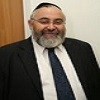
Rabbi Tzvi Wainstein

0

Reading Time: < 1 minute

Meet Rabbi Tzvi (Hilton) Wainstein

This page is dedicated to the memory of our school friend – Saul Neutel z”l

hilton2Rabbi Tzvi (Hilton) Wainstein made aliyah from Johannesburg, South Africa in 1979 upon completion of his high-school studies at King David High School, Victory Park.  He studied at the Ohr Sameach Seminary and then at Netzach Yisrael under the “modern Talmudic genius” of  Harav Gustman z”l, a senior Rabbinic leader originally from Vilna.  Under Harav Shternbuch, Rabbi Wainstein received his rabbinical ordination and then a teacher’s diploma and B.Ed.  Rabbi Wainstein also participated in editing 11 volumes of Artscroll Gemarah.  Rabbi Wainstein now prepares advanced students for “Semichah” (Rabbinical ordination), and is a senior lecturer and head of recruiting for a post high school program called “Derech”.

His vision:  I would like to see the Jewish values of new immigrants, their sense of belonging and Jewish identities growing stronger here in Israel.

Hillel Israel – Jewish Life on Campus

Reading Time: < 1 minute

Jewish life on an Israeli campus starts with Hillel

Contributed by Hillel.org

Hillel is the largest Jewish student organization in the world.  It builds connections with emerging adults at more than 550 colleges and universities around the world, and inspires them to direct their own path.  During their formative college years, students are challenged to explore, experience, and create vibrant Jewish lives.

More Jewish students live in Israel than in any other country in the world. Many young Israelis speak Hebrew and follow the Jewish calendar, many perceive Jewish tradition as irrelevant to their lives. Hillel Israel offers a diverse array of activities that connect Israelis to a different kind of Judaism, and has tripled its reach in the past decade.

Hillel Israel’s experience proves that the best way to involve Israeli young adults is to create thought-provoking opportunities that they can share with other young Jews from around the world.

With seven centers across the country, Hillel Israel serves more than 2,700 students annually.


Hillel Israel

Hillel Israel operates in seven campuses across Israel:

  1. Hebrew University of Jerusalem
  2. Tel Aviv University
  3. Ben Gurion University of the Negev
  4. Haifa University
  5. Technion–Israel Institute of Technology
  6. Tel Hai College in the upper Galilee
  7. Sapir Academic College in Sderot

Hillel Israel is the Israeli constituency of Hillel International, the world’s largest global Jewish student organization. Hillel Israel engages over 20,000 Israeli students each year in meaningful Jewish experiences and partners with over 100 organizations in Israel and abroad.

Contact:

Hillel Israel Ltd. (CC)
Edgar M. Bronfman Hillel Israel Center
Joseph Meyerhoff Building
The Hebrew University of Jerusalem
Mt. Scopus, Jerusalem, 91905 Israel