19.3 C
Jerusalem
Saturday, June 20, 2026
Sample Page
Home Blog Page 133

Induction Day in the I.D.F.

Reading Time: 3 minutes

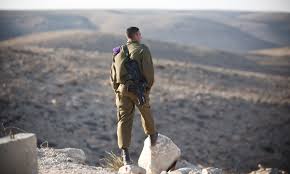
Serving in the Israeli Defense Forces – The I.D.F. – Induction Day

Hebrew: שירות צבאי – צה”ל

lone soldier

Time to do your compulsory national service and enlist in the Israel Defense Forces or I.D.F.  This is what you can expect:

Traveling Abroad Before Induction

Should you wish to travel abroad before your induction, you may do so without special permission and authorization from the army.  You cannot be out of the country for more than 3 months and you have to be back in Israel at least 3 days before your induction date.

On Induction Day

On the day of  your induction you will be required present yourself at a given location and time.  From this location, you will be taken, by bus to the induction center – known as Bakum in Hebrew or בקו”ם – at Tel Hashomer, near Tel Aviv.  Bakum is a massive army base.  Here,  you will be given your army identification card and tag (Hoger), your uniforms, get your inoculations, your kitbag and a selection of other items.  But before all this happens…

A short movie will be screened which explains the procedures and outlines the day’s schedule.

You will be given a page of stickers with your identification details.  Each time you report to a distribution station, you will present one of these stickers.  The data will be captured in the computer.  If you do not present the sticker, the system cannot record the information and it will assume that you have not completed the required step.  You will have to repeat the process until all your data has been captured correctly.

The Stations

  1. At the very first station you visit you will be given a cash advance on your monthly salary/stipend.
  2. At the next station, you will be photographed for your military ID. X-rays of  your teeth will be taken and will  be and you will have your fingerprints taken.
  3. The next step will be to verify that all your personal information is correct.  You will also be asked to give the name of a person who you authorize to take care of your affairs should anything happen to you and/or your next of kin.
  4. At the next station you will be given 3 inoculations.
  5. Following this you will be given a Teudat Choger – תעודת חוגר – your army identification card.  If you have been categorized as a lone solider – a chayal boded – חייל בודד, you will be given a Teudat Chayal Boded – lone soldier card or תעודת חייל בודד – which confirms this status.

Getting your Uniform

Once you have completed all of the above, you will be given your army uniform.

There are four different types of uniforms which are used in the various branches of the IDF

  1. Service dress – Madei Aleph – מדי אלף or the  “Class A” uniform; your everyday uniform, worn by enlisted soldiers.
  2. Field dress – Madei Bet –  מדי ב – or the  “Class B” uniform; worn into combat, for training and work on base.
  3. Officers / Ceremonial dress – Madei Sharad מדי שרד – a ceremonial uniform worn by officers or during special events or ceremonies.
  4. The are also several Dress uniforms and also a Mess dress.

Each corps in the Israel Defense Forces has a different color beret and identifying insignia worn by the soldiers, independent of rank and position. When not on your head, the beret is placed beneath the left epaulette of the service uniform (Madei aleph).  IDF soldiers wear berets on their heads only on formal occasions.

Good luck.  Be safe!

Anglo-List on Arutz 7

Reading Time: 3 minutes

Anglo-list on Arutz7 –  A New Approach to Aliyah: Aliyah Coaching

Now you can get a coach to guide and help you through your Aliyah and relocation.

5/9/2013, 1:37 PM

A7 Radio’s “ALIYAH FEVER!” with Avraham Venismach & Rav Michael Cohen

Just as you would get the help of a coach to guide you through a business or personal issue, now you can get a coach to guide and help you through your Aliyah and relocation.  Aliyah Coaching is a unique coaching and mentoring program initiated and developed by the Anglo-List.com and TUT Communications & Results.  The program is designed to give you the tools you need to ensure your success in Israel on all levels. On-line coaching prior to your Aliyah, instructional videos, worksheets and exercises are all part of this program.  Coaching continues when you are in Israel with individual and group coaching sessions.

The Anglo-list.com was founded in 2009 by Suzanne Suckerman, originally from Johannesburg she made Aliyah in 1989 and  has been living in Haifa ever since. The Anglo-list is an Aliyah and Israel lifestyle website.  Its mission is to provide the English speaking community with very practical information needed to integrate successfully into Israeli society. New immigrants, international students, contract workers use the site. before and after their relocation, Learning Hebrew, translations of important documents, practical tips and suggestions, Aliyah information, general services and tourist information are just some of the many features of the website.  As a free service, you can advertise job opportunities and sell your second-hand stuff in the classified section.  The Business Directory connects the Anglo community with English speaking, oleh friendly, professional service providers around the country. The Anglo-list also has a professional networking group and a well established and large Facebook community.

Maayan Zweig, Israeli born, spent some of her childhood years in South Africa.  She then came back to serve in the I.D.F and made a new life for herself in Israel. Maayan lives 4 km from Gaza in an agricultural settlement.  She believes that we have a responsibility to realize the dreams of our grandparents – the pioneers of this country.   She is a senior marketing consultant, lecturer, trainer and mentor with TUT Communications – Israel’s leading coaching company. Maayan will develop a  tailor-made program that will help you reach your goals and realize your dreams in Israel.  You will be coached in all aspects of business development and strategies, employment, getting clients, making contacts, creating financial stability, family management etc. Maayan will do anything in her power to help you establish yourselves here in Israel.

It is so sad to see a new immigrant loose heart and hope, and it is even sadder if they are forced to or choose to leave the country.  It was in this spirit of community that the Anglo-list.com and TUT developed this idea and program.  With determination you can create success anywhere, but it is the most amazing feeling to create success in Israel.

Now, the Aliyah Coaching project has been taken one step further.  Misrad Haklitah – The Ministry of Absorption has approved the program and have appointed TUT Communications as their official business and training representatives.  This means that under certain conditions, new immigrants may qualify and receive some training hours for free.  This is an incredible opportunity!

The Jewish Agency and your Aliyah organization will still be taking care of the initial Aliyah process and arrangements but further down the line, Aliyah Coaching will give you the tools for a successful Aliyah.  Participating in the Aliyah Coaching program could be the most important decision of your life. For more information about the.

Contact the Anglo-List for more information

Patient’s Rights Act in Israel

Reading Time: 5 minutes

Patient’s Bill of Rights Act in Israel.  Do you know your medical care rights?

PATPatient's Rights Act Israel

The Patient’s Right Act in Israwl was passed in 1996.  Every person who requests medical care or who is in receipt of medical care, and to protect his dignity and privacy in Israel, has the following rights:

The right to medical care

  1. Every person in need of medical care is entitled to receive it in accordance with all laws and regulations and the conditions and arrangements  at any given time in the Israeli health care system.
  2. In a medical emergency, a person is entitled to receive emergency medical care unconditionally.
  3. No medical facility or clinician shall discriminate between patients on grounds of religion, race, sex, nationality, country of birth, or other such grounds.
  4. A patient shell be entitled to proper medical care, having regard both to its professionalism and quality, and to the personal relations incorporated in it.
  5. A patient is entitled to be informed of the identity and position of every person treating him.
  6. The Director-General shall issue directions as to the way clinicians and every worker in a medical facility shall be identified.
  7. The patient is entitled to obtain, at his own initiative, a second opinion as to his medical care; the clinician and the medical facility shall give the patient all the assistance he requires to fulfill this right.
  8. Should a patient have transferred from one clinician facility to another, he shall be entitled, at his request, to the cooperation of ensure proper continuity of care.
  9. A patient hospitalized in a medical facility is entitled to receive visitors at the times, and according to the arrangements, determined by the facility director.
  10. The clinician, all those working under his direction, and all other workers in the medical facility, shall maintain the dignity and privacy of the patient at all stages of his treatment.  The facility director shall issue directions for maintaining the dignity and privacy of patients in his facility.
  11. Should a clinician or a medical facility be requested to give medical treatment to a person in circumstances indicating, a medical emergency or grave danger, the clinician shall examine and treat the person to the best of his ability.
  12. Should the clinician or medical facility be unable to provide treatment to the patient, they shall, to the best of their ability, refer him to a place where he can receive appropriate treatment.
  13. The facility director shall make appropriate arrangements for the implementation of the provisions of this clause.
  14. All patients applying to an Emergency Dept. are entitled to medical examination by a physician.
  15. Should the examining physician find that the patient requires urgent medical treatment, he shall give the patient that treatment; however, if the patient requires treatment that cannot be given at that place, the Emergency Dept. physician shall refer the patient to an appropriate medical facility, and shall ensure, to the best of his ability, that the patient is transferred to that facility.
  16. The director of a medical facility containing an Emergency Dept. shall make appropriate arrangements for the implementation of the provisions of this Clause.

Informed Consent to Medical Care

No medical care shall be given unless and until the patient has given his informed consent to it, in accordance with the provisions of this chapter. In order to obtain informed consent, the clinician shall supply the patient medical information to a reasonable extent, such as to enable the patient to decide whether to agree to the treatment proposed; for this purpose, “medical information” includes:

  1. The diagnosis of the patient’s medical condition and its prognosis;
  2. A description of the essence, course, goal, anticipated benefit, and likelihood of success of the treatment proposed;
  3. The risks entailed in the proposed treatment, including side effects, pain, and discomfort;
  4. The likelihood of success and the risks of alternative forms of treatment, and of non-treatment;
  5. Where the treatment is innovatory, the patient shall be so informed.
    • The clinician shall furnish the medical information to the patient at the earliest possible stage and in a manner that maximizes the ability of the patient to understand the information and to make a free and independent choice.
    • The clinician may withhold medical information from the patient concerning his medical condition if an Ethics Committee has confirmed that giving this information is likely to cause severe harm to the patient’s mental or physical health.

The way in which Informed Consent May Be Given

  • Informed consent may be given verbally, in writing, or demonstrated by the patient’s behavior.
  • Informed consent to one of the treatments enumerated in the Supplement to this Act shall be given by means of a written document, that shall include a summary of the explanation given the patient.
  • Should a patient require one of the treatments enumerated in the Supplement to this Act and be unable to give his informed consent in writing, his shall give his consent before two witnesses, provided that the consent and the evidence of the witnesses be put in writing as soon as possible aft.
  • In a medical emergency, informed consent to one of the treatments enumerated in the Supplement to this Act may be given verbally, provided that the consent be put into writing as soon as possible afterwards.

Medical Care Without Consent

A clinician may give medical treatment that is not one of the treatments enumerated in the Supplement to this Act without the informed consent of the patient, if all the following conditions are met:

  1. The patient’s physical or mental state does not permit obtaining his informed consent;
  2. The clinician has not been made aware that the patient of his legal guardian objects to his receiving medical treatment;
  • It is impossible to obtain the consent of the patient’s representative, should such a representative have been appointed under Clause 16 of this Act, or of the patient’s legal guardian, where the patient is a minor or an incapacitated person.
  • Should the patient be deemed to be in grave danger but reject medical treatment, which in the circumstances must be given soon, the clinician may preform the treatment against the patient’s will, if an Ethics Committee has confirmed that all the following conditions obtain:
    1. The patient has received information as required to make an informed choice;
    2.   The treatment is anticipated to significantly improve the patient’s medical condition;
    3.  There are reasonable grounds to suppose that, after receiving treatment, the patient will give his retroactive consent.
  • In a medical emergency a clinician may give urgent medical treatment without the patient’s informed consent if, because of the emergency circumstances, including the patient’s physical or mental state, it is not possible to obtain his informed consent; a treatment cited in the Supplement to this Act shall be given with the consent of three physicians, unless the emergency circumstances do not permit this.

Appointment of a Patient’s Representative

  • A patient may appoint an official representative who shall have the authority to consent in his place to medical treatment; the power of attorney shall detail the circumstances and conditions in which the representative shall have the authority to consent in place of the patient to medical treatment.
  • The Minister may issue directions as to the manner in which a power of attorney may be given under this Clause.

The law is extensive and in addition includes the following topics

  • Medical Records and Medical Information
  • Investigative Committee
  • Control and Quality Committee
  • Responsibility for the Observance of Patients’ Rights in a Medical Facility
  • Provisions with regard to the Security Forces
  • Amendments and other miscellaneous clauses and information

The Society for Patients Rights

The Society for Patients Rights  in  Israel is a non-profit organization which helps patients and their families claim their health-care rights and obtain necessary services from the health plans, hospitals and other medical facilities.  Their website details all of the above rights of a patient in Israel.  They have an extensive English section.


Medical & Health Resources


{module [394]}

Your National Service in the Israeli defense force.

Reading Time: 5 minutes

Serving in the Israeli Defense Forces – The I.D.F.

Hebrew: שירות צבאי – צה”ל – Israeli defense force

National Service

lone soldier

For the most part new immigrants have no experience with serving in the Israeli defense force (armed forces) unless they served as volunteers.  Stories of how out ancestors escaped conscription in the Russian army at the beginning of the 20th century are common to many Anglo families or your granddad might have been a WWII or Vietnam Vet.  South African men were conscripted for up to 2 years and fought in Angola, but conscription came to an end in 1993.  Most of us have heard stories about the strength and might of the Israeli Defense Forced (I.D.F.) or Tzahal as it is referred to – Tzva HaHagana LeYisrael – צה”ל.  Young adults from the diaspora may have volunteered in the Israeli army for a short period in programs like Mahal or SarEl but your compulsory national service is quite another story, it’s a huge and life-changing event.

How long will I have to serve in the Israeli defense force?

Most Israeli born boys spend 3 years in the armed forces and girls spend 2.

The length and type of your compulsory service is determined by the following factors: your age upon arrival in Israel, your medical profile, your marital status and if you have children.

Immigrant men over the age of 30 are exempt.  Men, between ages 18 – 29  may be required to serve anywhere between 6 months and 36 months, depending on the factors mentioned above.  Between the ages of 24 -29 your may also be eligible for exemption or only reserve duty.  Again, this depends on the aforementioned factors.  Your Aliyah organization and Lishkat Giyus – the conscription office – will help to determine your eligibility.

Unmarried women until the age of 20 are conscripted for 24 months.  Married women in this age group are exempt.  Women over the age of 20, married or not, are also exempt.

Are new immigrants eligible to serve in the IDF?

Yes, new immigrants are eligible for conscription after 12 months of being in Israel.

I am not an immigrant, do I have to serve?

Every permanent resident is required to serve in the IDF, irrespective of the fact that you may hold foreign citizenship.  You will need to clarify the conditions of this issue with the embassy or consulate of your native country.

I have done army service in another country.  Do I still have to serve in the Israeli defense force?

You will be given a reduction in the length of your service in the IDF if you have served in a foreign army.  You will of course, have to provide proof.  All these substantiating documents need to be translated into Hebrew and notarized.

My parents are Israeli citizens. I live abroad.  Am I eligible to serve in the IDF?

Children of Israeli citizens are required to serve in the Israeli army if they return to Israel.  The length and type of service is determined by the factors previously mentioned: age, marital status etc.

How will I be called-up?

You are required to register with the IDF within 6 months of receiving new immigrant status.  This can be done via your local IDF induction center (lishkat giyus – לשכת גיוס.  Once registered, you will receive a call-up notice in the mail.

Deferment

You may apply for a deferment with the draft board and it will be judged on its own merit. There is no guarantee that it will be allowed.

Should you wish to defer your army service to study, you are required to apply for deferment at the beginning of the academic year, no later than September.  Deferment is for one year. You are required to re-apply every year that you are studying.  You may only defer your conscription for a maximum of 4 academic years for engineering students and 3 years for other students.

If you are participating in a pre-academic program – a mechina, you can request a deferment.

Should you discontinue your studies, fail to submit a deferral on time or fail the academic year, you will not be able to defer your service any more.  Other conditions for canceling a deferment also exist and you should investigate this fully with your Aliyah organization or the draft office in your area.

Exemptions

Exemptions from the army are given under certain circumstances.  It could be on the basis of your religious beliefs or health issues etc.  Each case is investigated and you would have to appear before an army board who will make the final decision.

A woman may be exempt if she can prove that she leads a religiously observant lifestyle, is married, pregnant or a mother.

Military Service Options in the IDF

An immigrant, doing the a full 36 month period of service, has the same service options as other Israeli recruits.  Most job opportunities are open to both men and women.  The length and intensity of your basic training will be as designated by that army unit.

Hesder Programs

Yeshiva students who wish to continue their studies, can participate in the various Hesder programs which are combined with military service.  There are Hesder programs across the country.  Yeshivat Har Etzion is one such yeshiva in the settlement of Alon Shvut  in Gush Etzion.  You can reach the yeshiva at Tel. 972-2-9937300 Fax. 972-2-9931298 Email:office at etzion dot org

Will I get a placement in my profession?

There are no guarantees.  If you are placed in your profession you are required to do 5 years of service.

First Steps

1. You will receive an order to report for registration – tzav hityatzvut – often called a tzav rishon.  This document details the date and you are required to present yourself and details of the lishkat giyus – the draft office in your area, that will be assessing you.

2. The IDF will cover your transport costs. Together with this notification you will receive vouchers allowing you to travel, for free, on that specific day, with the bus service.

3. For this first interview, you need to prepare and have, the following support documentation with you:

  • Tzav hityatzvut
  • The original and copies of degrees, diplomas and other certificates of professional qualifications.
  • Teudat zehut – Israel identity card
  • Teudat oleh – Israel immigrant card
  • Your passport, valid and canceled ones, reflecting your visa and arrival dates
  • Your driver’s license.
  • Any documentation you may have that proves you have served in a foreign army
  • Medical certificates
  • Marriage or divorce certification.
  • If you have undergone any didactic evaluations (ivchunim), you will need to bring these with you.  They should be in Hebrew and signed by an accredited psychologist or didactic diagnostician.
  • Details of your health-fund, name and contact details of your physician and specialist physicians.

4. Be prepared to spend the entire day at the draft office.  While you should be able to complete the process in a few hours, there may be some hold-ups, so be prepared.

5. First you will be required to do a series of psychometric tests.  The results of these test will be a factor in determining your suitability for a particular assignment or unit in the IDF.  You may apply, at a later stage, to redo the psychometric tests if your Hebrew is not of a high standard.

6. A thorough medical examination will determine your medical profile which will also go toward determining your suitability for a particular corps or assignment in the IDF.

7.  You will be placed in an army unit based on the results of all these tests, the IDF’s current requirements and a specific request from you. There is no guarantee that you will be placed in a unit of your choice.

Important Tip

While you may bring original documents with you, only hand in photocopies.  Never, ever give anyone your original documents.  This applies in all offices and situations where you are required to present documents.  If you do, you will never see the original document again.

Israel Medical & Healthcare: House-calls & Home Visits

Reading Time: < 1 minute

Home-visits, House-calls & Emergency Medical Services

Hebrew: ביקור בית

home visits

House-calls & Home-visits

As a member of one of the 4 health funds, in Israel, should you require it, a doctor can make home-visit. You are required to pay for this service.  In cases where the visit is found to have been justified, (post operative for example) your health fund will reimburse you- either fully or co-pay.  Check with your health fund what the conditions are exactly, how much they will reimburse you and what your contribution will be.

Emergency Call Centers

In urgent cases at nights, on weekends or during religious holidays, you can call your health fund’s 24/7 call center for instructions.

Bikur Rofeh

Bikur Rofeh is an emergency health service that you can use for medical emergencies. There are 30 branches countrywide.

Bikur Rofeh also provides various ambulatory services for the health funds.

For your Aliyah or Relocation Shipping Container: Measurements of Household Items

Reading Time: 3 minutes

Metric measurements of common household items for your shipping container and your new home in Israel.

Hebrew:  מידות של ריהוט וחפצים ביתיים

Unless your apartment or house has been designed or built according to your specifications, most Israeli apartments and homes will probably have smaller rooms than you are used to.  A comfortable 3-bedroom apartment may only be around 100 m².   An average bedroom is between 8 – 10 m²

Before you pack, you will have to decide if your furniture and household items are appropriate in size for the average Israeli apartment or if you need to downsize.  Check out our floor plan of a typical Israeli apartment.

If your decide to buy new appliances, furniture and linens to ship to Israel, we suggest you reference this list of measurements and dimensions before you make your purchases.  Liaise with the agent  who is coordinating your Aliyah or relocation shipment to determine the required container size.

 Here are those measurements:

dining room table

Dining table for 6

180 x 100

Dining chair seat-size

50 x 50

 couch

 2 seat couch

160 x 90

3 seat couch

220 x 90

 fridge

 Medium sized fridge with top freezer

175 x 80 x 65

 oven

Standard built-in oven

60 x 60

 stove

Stove – 4 burners/ceramic or conduction

60 x 50

dishwasher

12 place setting dish washer

60 x 60

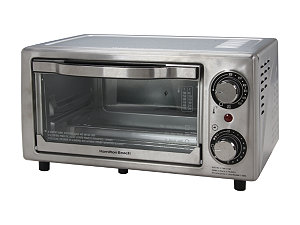
toaster oven

Medium sized toaster oven

50 x 30

microwave

Medium sized microwave

50 x 40

washer

Standard size washing machine

60 x 60

Clothes dryer

60 x 60

single bed

Single bed sizes

70 x 190

80 x 190

mitat noar

Youth bed

120 x 190

double bed

Double bed sizes

140 x 190/200

160 x 190/200

180 x 190/200

Aliyah Tip

It is generally advisable to purchase small electrical appliances in Israel rather than shipping them from your country of origin.  Most warranties are not valid outside the country they were originally purchased in.  Be aware of the main power differences between North America and Israel.  America and Canada use 110, other countries have the same power supply – 220 volts (60 Hz)\

Israel Average Income.

0
Reading Time: 2 minutes

Average Monthly Income in Israel

Hebrew: שכר חודשי ממוצע בישראל

Bituach Leumi (National Insurance Institute) determines the average income of an Israeli, based on various parameters. Some of these parameters are: the number of days worked per month, the number of foreign workers as well as those from the Palestinian Authority, gross monthly income, full-time and part-time workers, unemployment figures etc.

Based on these figures and information, the Israel Central Bureau of Statistics, has determined the Gross and Net incomes (before and after tax and other deductions) for 2012 as follows:

Gross Income in Shekels – 2012
Net Income in Shekels – 2012
3,473 2,033
5,141 4,067
6,930 5,656
8,787 7,306
11,057 9,178
13,726 11,292
16,981 13,690
21,721 16,697
26,627 20,973
And upwards  And upwards
 
Average Income of the Israeli Population by Percentage – 2012
Percentage Income Bracket in Shekels
52% 1,665 – 5,070
21% 5,070 – 8,660
13% 8,660 – 14,070
7% 14,070 – 21,240
5% 21,040 – 40,230
2% 40,230 upwards
 
Average Israeli Salary – June 2019
Average monthly salary 11,400shekels (June 2019)
The average salary in high tech 25,912 (June 2019)
Monthly Income – December 2017
Combined average monthly income per family 20,027 shekels


What does Israel’s Anglo community earn?

Our own internal survey, conducted in November 2014, showed that the respondents, mostly English speakers from the USA, Canada, the UK, South Africa, Australia and New Zealand, living in Israel, have a monthly household shekel income as follows:

Percentage Income in Shekels
5.2 % 30,000+
9.7 % 20,000 – 29,999
32.5 % 10,000 – 19,999
32.4 % 5,000 – 9,999
9.4 % up to 4,999
10.8 % Refused to disclose this information


Celebrating Lag B’Omer in Israel: Tales, Traditions & Tips

Reading Time: 4 minutes

Lag B’Omer tales, traditions and tips.

Hebrew: ל”ג בעומר

What is Lag B’Omer?

Lag B’Omer refers to the thirty-third day of the Counting of the Omer (Sfirat Ha’Omer) and the 18th day of the Hebrew month of Iyar. There is a biblical mandate to count the Omer and it is a mitzvah to count seven complete weeks from the day after Passover (Pesach) night ending with the festival of Shavuot on the fiftieth day. The 49 days of the Omer correspond both to the time between the physical exodus from Egypt and the spiritual liberation of receiving the Torah at Mount Sinai on Shavuot.  It was also the time between the barley harvest and the wheat harvest in ancient Israel.

When Lag B’Omer commences on a Saturday night the Rabbinate ask the public to postpone their bonfires until Sunday night so that the Sabbath will not be desecrated in any way.

lag bomer bonfire min 

How is Lag B’Omer celebrated in Israel?

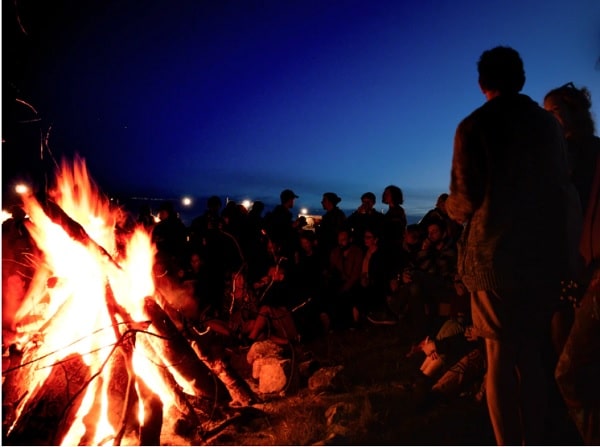
Lag B’Omer is a fun time for school children in Israel. They get together with their classmates, light huge bonfires, roast potatoes in the fire, sing songs and play games.

Teens get together, sometimes on the beach, light their fires and celebrate with a “kum-zits” long into the night. The word ‘kumzits’ is derived from the Yiddish words קום (come) and זיץ (sit).   The word is used to describe an evening gathering that Jews partake in. Everyone sits together, be it on the floor or on chairs, and sing spiritually moving songs.  Older teens incorporate a sleep-over with their ‘kumzits’.  You’ll see them in their sleeping bags scattered on the beaches.

Tens of thousands gather at Har Meron (Mt. Meron) in Northern Israel, near Tzfat.  Here lie the remains of  Rabbi Shimon bar Yochai, a disciple of Rabbi Akivah and his son, Rabbi Elazar b’Rabbi Shimon. It is at Har Meron on Lag B’Omer  where the “Yahrtzeit,” or  the anniversary of the death of this great scholar is commemorated.  Rabbi Shimon bar Yochai lived in the immediate aftermath of the Second Temple. Rabbi Shimon bar Yochai revealed the secrets of kabbalah in the form of the Zohar, a text of Jewish mysticism on this day and this is celebrated too.  It is said that Rabbi Shimon was bathed in light and fire and for this reason Jews light bonfires to commemorate the great fire that surrounded Rabbi Shimon.

Another Lag B’Omer tradition is for  little boys, aged 3, to have their very first hair cut.  In Israel, it is traditional to hold  this ceremony at Har Meron.  Called an ‘opsherenish’ (Yiddish for shearing), it is the point at which a Jewish infant becomes a Jewish boy and it is marked by cutting off his long tresses.  This rite of passage is just as significant to some as a Bar Mitzvah ceremony is when a Jewish boy becomes a Jewish man at age 13.  The 3 year old boy is presented with his first talit katan, the ritual fringes that he will wear from this day on, underneath his shirt, and for the rest of his life.

According to tradition, the ‘opsherenish’, was first practiced by the “Ari” as he is commonly called – the Kabbalistic master Isaac Luria Ashkenazi (1534–1572).

During Sfirat HaOmer, the Counting of the Omer, it is not permitted to cut your hair – shaving is also forbidden.  On Lag B’Omer however, it is permitted. Jewish men who observe this practice will cut their hair and shave their beards.

Celebrations between Pesach and Shavuot are restricted, but on Lag BaOmer they are permitted and so it is a very popular day to have a wedding.

Safe fire lighting practices

Moms & dads please take note…

  • Just before Lag B”omer school children  might wander around the neighborhood scavenging for scraps of wood that they can use in their bonfires. So if you have scraps of wood or garden trimmings, now would be a good time to put them outside for the kids to collect.  Don’t be surprised if you see old shelves, chairs and other bits of furniture in the wood piles.
  • Please remind your children about the dangers of fire and precautions they should follow.
  • Please explain to the children about the dangerous fumes that emanate from wood that has been treated with varnish, paint and other highly flammable products.  These fumes can cause terrible reactions especially in children who suffer with allergies and asthma. Make sure asthmatic children have their inhalers on hand.
  • Make sure there is a responsible adult at your child’s Lag B’Omer celebration.

Suggestions and tips from the Israel Society or the Protection of Nature

  • Make fewer fires. Join up with your friends and other classmates.
  • Make smaller fires and help reduce the smoke pollution
  • Protect the natural wood resources. Don’t cut down our precious trees. Dead or alive trees are part of the natural ecosystem. Use wood from items which are no longer in use. Besides saving trees, modest fires reduce pollution.
  • Choose a safe area for your bonfire that does not increase the risk of a fire spreading out of control.

Tips for building your fire

  • The base of the fire should be in a hole in the ground. Place stones around the fire, to prevent spreading.
  • Don’t burn items from plastic and rubber like bottles and car tires. These increases the level of air pollution and are hazardous to your health.
  • Make sure that at the end of the evening your extinguish the fire properly with lots of water and then cover the area with sand.
  • Clean up! Food scraps, plastic bags and trash cans interfere, damage or destroy the local fauna and flora.

Lag B’Omer trivia

The word “Lag” is not really a word; it’s an acronym and  represents the number 33 in Hebrew.  It is a combination of the Hebrew letters Lamed -ל and Gimel – ג. The numerical equivalent of the Hebrew letter “lamed” is thirty. Similarly, the numerical equivalent of the letter “gimel” is three. Together, they add up to 33!

A tip for your family’s laundry-hanger-upper!

Don’t hang or leave laundry outside to dry on Lag B’Omer.   It will smell of smoke in the morning and have to be rewashed.

Aliyah & Relocation to Israel: The Shipping Container.

Reading Time: 2 minutes

What can you fit in a 20 foot (6 meter) shipping container?

 shipping container

When shipping a container, the cost of shipping is not based on volume, but rather for the whole container, regardless of how much space you use. Weight is not a factor when shipping a container of household goods.

Provided below is an example of the amount of household items it takes to fill up a 20 foot or 6 meter container. This sample is based on a family of six members.


Living Room Furnishings

  • Couch – 3 seats
  • Couch – 2 seats
  • Arm Chair
  • End Table
  • 3 Bookshelves loaded with Books
  • Floor Lamp
  • Table Lamp
  • Large Area Rug

Dining Room Furniture

  • Large Table
  • 6 – 8 Chairs
  • China Cabinet
  • Sideboard
  • Plant Stand

Kitchen Wares & Supplies

  • 15 medium sized boxes
  • 3 large boxes for dishes, pots, pans, etc.

Bedroom Furniture & Accessories

  • 5 Dressers
  • 3 Night Stands
  • 6 Twin Mattress Sets
  • Clothing for 6 people
  • Other Bedroom Items

Bathrooms Accessories

  • Towels and Linens

Miscellaneous Decorative Items

  • Pictures and Mirrors

These articles are useful too…

Haifa Networking Group

Reading Time: < 1 minute


LinkedIn: Haifa Professional Networking Group


Continue to join our Haifa Networking Group on LinkedIn, connect with other professionals in your field, share information

and participate in our discussions >>>