12.6 C
Jerusalem
Sunday, April 19, 2026
Sample Page
Home Blog Page 76

Shabbat Guide – What to expect at a Shabbat dinner.

0
Reading Time: 4 minutes

A Shabbat guide for first time guests – what you can expect at a Shabbat dinner.

Shabbat (Hebrew שבת) is the word that describes the Jewish Sabbath.  Here is our Shabbat guide with some tips as to what you can expect at the Shabbat, Friday evening main meal.  Whether you are at a Shabbat dinner in Brazil, Perth, Rome or Tel Aviv most of the Shabbat customs are the same.  The prayers are identical but Ashkenazi Jews (from Eastern European descent and Sephardi Jews – of Mediterranean and North African descent) may have slightly different customs.

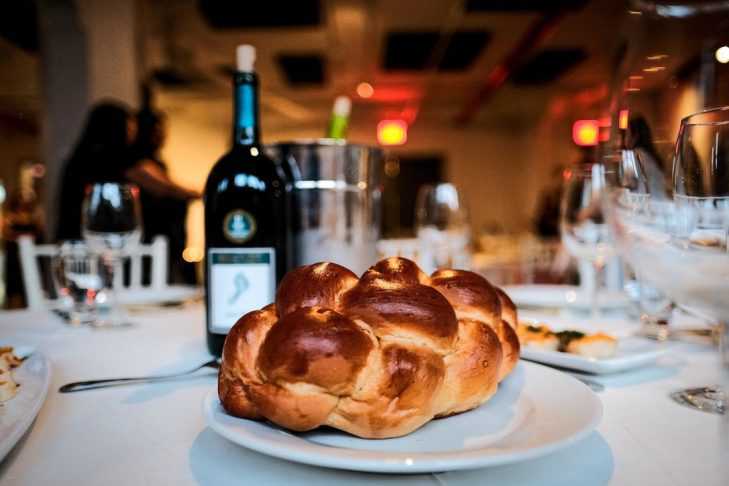
Shabbat guide dinner table

Hooray! You’ve finally been invited to your first Shabbat dinner in Israel.  How exciting, but as a foreigner, and perhaps without Jewish roots, you might be a little anxious.  Our Shabbat guide and tips are designed to help you through what might be an awkward experience.

Shabbat greeting

Jews use the greeting ‘Shabbat Shalom’ when wishing their loved ones a peaceful and restful Sabbath.  Greet your hosts this way.

What to wear on Shabbat?

Shabbat is likened to a bride and a queen.  When you are honoring and meeting the queen, you would wear your finest clothing.  So it is for Shabbat – wear your finest clothes.  Men mostly wear a white shirt and women will don a special outfit. If you are visiting a religious family, modest dress is expected. For more in-depth information, read our article on traditional Jewish clothing habits.

What do we do at a Shabbat dinner?

As we said earlier when you arrive at your hosts greet them with the traditional saying “Shabbat Shalom” – have a peaceful Shabbat. They will respond with the same greeting.  In many English speaking, Ashkenazi homes, they might say “Good Shabbos” this is an anglicized version of the Yiddish express “A gutte Shabbos”. Jewish people have traditional greetings and expressions for different events and occasions.

The Shabbat table

As your hosts gesture you to the dining table, the first thing that you will notice are two lit candles (or maybe even more).  It is customary for a Jewish woman to light at least 2 candles to welcome the Shabbat.  In many homes, an extra candle is often lit to honor each one of the family’s children.  The candles are blessed, prior to sunset, earlier in the evening during a special candle lighting ceremony.

On the table you will also see a Challah, a traditionally braided, sweet, white bread loaf.  While all the traditional Sabbath blessings are being said, the Challah will be covered with a decorative cloth. Once the blessings are complete, your host will break sections of the challah, dipped in salt and distribute them to the guests.

On the table, you will also notice, a bottle of wine.  Not the Beaujolais or Shiraz you might have been hoping for, instead it is a sweet, almost syrupy, red wine.  Grape juice is also popular.  There is a blessing for the wine.

While abroad you might have heard someone say ‘Let’s have a glass of “Mannuschewitz’, They are referring to a glass of sweet, red, Shabbat wine made by this well known manufacturer which is often drunk by those who do not have a head for heavy alcohol.

Shabbat dinner etiquette & prayers

Before the Shabbat dinner is served, the man of the house will lead the group in singing some Sabbath welcoming songs; Shalom Aleichem (English: Peace be onto you) is one and Eshet Chayal (English: Woman of Valor) is another prayer which honors the woman of the house.

You will then be asked to stand (a tradition common in most homes) while the man of the house recites the Kiddush – the blessing over the wine..

After the blessing of the wine it is customary to wash ones hands – a small ceremony where water is poured from a jug and poured one hand over the other.  A blessing for “Nitilat Yadayim” – washing the hands – is said by each person.

From this point it is forbidden to talk for a few minutes.  After you have returned to the the table the master if the house will bless the bread and recite a blessing (Hebrew: bracha) called ‘Hamotzi’. He will then break the bread, sprinkle it with salt and pass it around. It is polite to partake of the bread and thereby be blessed for abundance for the upcoming week.  Once you have eaten the bread you may resume talking.

Shabbat dinner menu

Shabbat is a celebration and the Friday night meal is the most important meal of the week. It is a festive meal and families will enjoy their traditional and favorite foods.

Shabbat food rules

If the family you are visiting observe ‘Kashrut‘; the biblical law which prevents the eating of certain foods and the mixing of dairy and meat based products, you will not be served dairy foods and meat foods during the same meal.  Fruit and vegetables are ‘neutral’ and can be eaten with dairy products or meat products.

At the end of the Sabbath meal, grace after meals will be recited.

Shabbat rules

There are numerous rules for Shabbat – way too many to discuss here.  We suggest you visit a site like www.aish.com or www.chabad.org for detailed information.

Shabbat times

The Jewish Hebrew calendar is based on the lunar cycle.  Shabbat and all Jewish holidays and festivals are observed from sunset to sunset.

Shabbat candles

Shabbat candles must be lit before sunset. It is a desecration of the Shabbat to light candles after sunset. Shabbat candles are lit 18 minutes before sunset.

We hope you found this Shabbat guide useful.

Shabbat shalom!! Have a peaceful, blessed and restful Sabbath.

What is my IP adress? – מה כתובת האי פי שלי

Reading Time: < 1 minute

What is an IP address?

ip address

The internet needs a way to differentiate between different computers, routers, and websites.

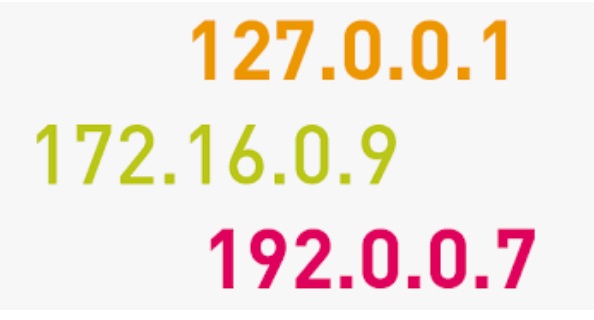
Basically, IP stands for Internet Protocol. An IP address is a unique string of numbers separate by a period sign (.) that identifies each computer and its geolocation using the Internet Protocol to communicate over a network.

If a computer is unable to configure a valid Internet Protocol address, it can’t connect to a network.

What is my computer IP address?

Here’s how to determine the IP address of your computer:

Open the Windows Start menu and right-click ”My Network Places.” Click “Properties” and you see a Network Connections screen. Double-click “Wireless Network Connection” or “Local Area Connection (LAN)” for wired connections. Open the Support tab and click “Details.” Your IP address now appears.

10 best sites to tour during the Israel winter

0
Reading Time: 4 minutes

10 best sites to tour and visit during the Israel winter.

There is a wide choice of tourist attractions and sites to visit during Israel’s cold winter months. Eilat is warm even in the winter months and exploring the surrounding hills during the day is is a hiker’s dream.

In the summer time there is nothing more rewarding than jumping into a cold stream or pool after a day of sightseeing.  The cool waters of the Dan River, Snir River and the Jordan River are welcoming but in winter, hot springs are an appealing alternative. We’ve chose 10 of our favorite sites for winter family outings.

travel israel mt hermon yt

1. Mt. Hermon

Mt. Hermon is the queen of all winter tourist sites. Located in Northern Israel on the Golan Heights on the border of Syria and Lebanon. Aside from its strategic position, Mt. Hermon is the only winter ski resort in Israel. If skiing is not for you, you might enjoy snowboarding instead. You can take lessons and rent equipment. Spending an entire day on the slopes is a must but we suggest you take a couple of days to explore the area.  Dozens of hikes and trails in the area and if you are into mountain biking, this is the place.

It the spring summer months Mt. Hermon is a paradise of greenery and flowers and you can enjoy magnificent panoramic views overlooking the entire region.

Entrance fee – Winter 2021/2022 

  • Child – 34NIS
  • Adult – 39 NIS
  • Cable car – 54 NIS

2. Ein Kedem – Natural hot springs

Ein Kedem is a beautiful natural hot spring. Located near the Dead Sea between Mitzpeh Shalem and the Ein Gedi Nature Reserve. Warm, mineral-rich pools will improve your skin and your mood.

It’s a 9.2km kid-friendly hike. Recommended especially at sunset or when it is cold outside!

3. Nahal Halilim – a stream and cave near Mevasseret Zion

A great family outing and easy hike. Flowers like cyclamens are in abundance during the spring months.  The trail begins in Mevasseret Zion and for your convenience, it is marked in green. Ruins of village dating back the to the period of the 2nd temple can be seen. Ruins from the Byzantine period; a wine press, a mikveh (ritual bath) and a burial cave.

The burial cave is adjacent to the main Halilim cave, which is about midway along the trail.  Over centuries rainwater soaked into the chalk stone and created the cave.  The cave is some 40 meters long. Bring a flashlight to explore the caves.

If you are lucky your might also see foxes, rabbits and deer.

4. Nahal Ayun near Metulla

In the Nahal Ayun – a spectacular 30 meter high waterfall.  The nahal (river) is flanked by an abundance of vegetation and water plants. A short circular trail starts at the lower parking lot.

Opening hours

Sunday – Thursday and Saturday: 16:00 – 08:00 (during summer until 17:00)
Fridays and holiday eves: 15:00 – 8:00 (during summer until 16:00)

5. The vanishing lake in the Ga’aton quarry

The vanishing lake in the Ga’aton quarry is a perfect winter trip for the whole family.  Situated in the Upper Galilee near Kibbutz Kabri, the vanishing lake was created by quarry activity in the area.  A hole was opened which filled with groundwater. The water is very deep and clear and during the winter months the lake is a magical place.

6. Beit Zayit Reservoir

What a surprise!  The Beit Zayit Reservoir is an artificial lake near Moshav Beit Zayit in the Jerusalem hills. It’s a seasonal lake and fills up only in the winter after several days of heavy rainfall.  The  Beit Zayit dam blocks the flow of water in Nahal Soreq and fills the reservoir.  There is a path around the perimeter of the reservoir that curves between the surrounding mountains.  A wonderful place for a picnics and a family hike.  Take note that bathing is not allowed in the lake (not that you’d want to in the winter!!)

7.  The Ramon Crater

In Mitzpe Ramon you will find the largest crater in the world that fits into the geological category called “Makhtesh”.  Makhtesh Ramon or the Ramon Crater was created by erosion and not by impact like most craters.  Views from the cliff of the Negev desert will awe you. If you are lucky you might see an Ibex and other small desert creatures.  Be sure to visit the Ramon Visitor’s Center for an in depth explanation of the fauna and flora of the desert.

8. Mount Bental – Golan Heights

After a visit to Mt. Hermon take a tour of Mt. Bental. The mountain is actually part of an inactive volcano in the northeastern Golan Heights and its peak reaches 1,165 meters above sea level. Magnificent views of Mount Avital and Mount Hermon as well as the ruins of the city of Kuneitra.

9. Hula Valley

About 35,000 cranes arrive in the Hulla Valley during the autumn months, and about 15,000 of them stay for the winter. Watch the cranes feed  and look out onto the lake from a wooden observatory located on a man-made hill.  The Hula Valley, situated between the Golan Heights, the Naftali Mountains and the Lebanon Valley, is about 30 km long and about 7 km wide. Its abundance of water and wildlife draw large crowds.  Hula Lake Park also won international recognition in 2009, when BBC Wildlife declared it one of the most important observation and photography sites in the world.

10. Hamat Gader Park

Hamat Gader Park near the Sea of Galilee (Kinneret) in the Yarmuk River Valley, boasts natural thermo-mineral springs that chase the winter chill away. There are several mineral springs with waters of up to 50º C. After a relaxing afternoon in the pools you can take in the ancient synagogue with stunning mosaics near by. Also watch some 200 crocodiles, alligators and other reptiles that are housed in about forty acres of parkland.

Basic entry fee is 102NIS per person and if you want a massage or any extras spa amenities, you can pay up to 350NIS for the privilege.  Their English website was last updated in 2014.

Netflix In israel

0
Reading Time: 2 minutes

Netflix service in Israel – נטפליקס בישראל

netflixWhat is Netflix?  Netflix is a subscription-based streaming media service which offers online streaming of a library of films and television programs, and it is available in Israel.

Netflix is ​​an application for watching movies and series content. HD quality content can be viewed via devices connected to the Internet such as a computer, tablet, phone, smart TV, game console etc.

Netflix in Israel in Hebrew

Netflix is available to local viewers in Hebrew, with a package price and payment in shekels and translated and dubbed movies and TV shows – as well local Israeli content.

Prices of Netflix packages in Israel as at October 2018

TV: Streaming service for direct viewing via the Internet on smart TVs, cellular phones, tablets and home computers.

Basic package for NIS 29.90 per month (viewable on one device only and not in HD)

A standard package of NIS 39.90 per month (viewable on 2 devices simultaneously with HD)

Premium package at NIS 49.90 per month (up to 4 devices and with ultra HD.

Netflix offers the first month free of charge!

What can you see on Netflix

Netflix offers a wide range of content, including original content. Movies and series are updated every month.

Is there content in Hebrew?

About 75% of the Netflix content in Israel has been translated into Hebrew (or dubbed). Netflix is ​​keen to expand the supply of films and series for viewing in Israel, and has added original Israeli series and children’s dubbed series.

Netflix and translations into other languages?

Each program you select offers you subtitles in a selection of languages.

The Netflix interface

The Netflix user interface is simple and convenient to use and is also offered in Hebrew. A user friendly menu allows fast and easy navigation between main content, categories and personal preferences.

What is a personal area / personal profile in Netflix?

Each member of the family has different viewing habits and therefore you can create your own personal profiles within the interface.  You will receive personalized viewing recommendations and series and programs liked.

You can choose a personal profile picture from a gallery of cool icons and portraits.

How do I join Netflix?

Join NETFLIX via their English website (priced in shekels) 

Visit the City of Acre/Akko in Israel – עכו

Reading Time: 4 minutes

A visitor’s guide to the city of Acre/Akko –  One of Israel’s gems.

Acre (Akko – עכו) is a port city in northwest Israel on the Mediterranean coast.

The Old City of Acre (Akko) in Israel is a quaint place, well known for its well-preserved old city walls. Acre is one of the most ancient cities in the world with archeological findings dating back to the early bronze age (~3,000 BCE) and is also a UNESCO world heritage site. Walk along the ramparts on the Old City walls.  Take in the views and the sound of the waves pounding on the rocks.  In the market you will find culinary treasures, fabulous flavors,  aromas and colors.

Sight seeing and fine restaurants, a cultural festival and its proximity to the Galilee makes it a popular destination for Israelis and tourists from abroad.

Religious life in Akko

Acre is  a mixed city that includes Jews, Muslims, Christians, Druze and Bahais. It is holy to members of the Bahá’í Faith and many Baha’i pilgrims visit ‘Bahjí’  where Bahá’u’lláh’s spent the final years of his life.

Favorite things to do in Akko

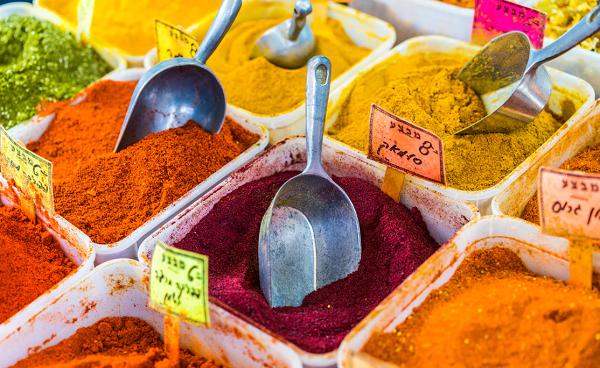
acre akko israel spice market
Spices in the Akko market (Image credit: Unsplash)

1. The Shuk

The Shuk or market in the Old City of Akko is a charming place.  A relatively small market, it offers a wonderful selection of authentic Middle Eastern goods, fresh fish, spices and traditional pastries and desserts like knaffeh (a sweet cheese filled pastry flavored with rose water and pistachio nuts).

2. Best restaurants and dining out in Akko

You can enjoy delicious hummus dishes at various restaurants throughout Acre’s old bazaar. Expect a long queue at Hummus Said (one of the best hummus places in Israel) and remember closing time at Said’s is 2:30pm (yup!). Akko is known for its excellent fish restaurants – try Donné and Abu Cristo restaurants – great locations overlooking the sea. (Uri Buri is closed temporarily – June 2021)

3. Annual events and festivals

Affectionately known as the Acre Festival, the “Festival of Alternative Theater” is held annually, during the intermediate days of the Jewish festival of Sukkot.  The festival is Israel’s biggest theater festival; plays, street performances, bazaars and all sorts of festival activities, take place.

4. The Tunisian Synagogue

A trip to Acre is not complete without a visit to the Tunisian Shul (Synagogue). A 4 story building is covered with mosaics from floor to ceiling. Scenes of ancient Israel, the Twelve Tribes, Jewish symbols and more decorate every surface; walls, floors, ceilings, stairwells and handrails.  Panel after panel of mosaics!  The doors to the main Ark (on the second floor), are made of silver and engraved with text and blessings.  If you have guests from abroad, they’ll love it.  Free entrance but a small donation to the Synagogue is expected.

5. The Marina

Since medieval times Akko harbor was a bustling and strategically located port.  Today it is lined with fishing boats and yachts.  Boat rides are available.

6. The Museum of Underground Prisoners

The Museum of Underground Prisoners traces the history of the Jewish resistance fighters who were imprisoned or executed here. You can tour the prison cells and listen to an account of the prison’s history. Some well-known prisoners were held there; Zeev Jabotinksy and Moshe Dayan. On May 4, 1947, forces broke into the prison and forty-one prisoners were freed.

7. The Templar’s Tunnel

The Templar’s Tunnel extends from the Templars fortress in the west to the city’s port in the east. In the past, it served as a strategic, secret underground escape route that connected the palace to the port. The tunnel was discovered in 1994.

How to get to and around Akko

Akko is about 25km north of Haifa. It’s a comfortable 25 minute car journey on the highway Route 22 from Haifa.   Akko is accessible by train from all over Israel and also by bus from the Lev Hamifratz central bus station.  You can also pick up a sherut – a shared taxi for about $5.  Akko is small and flat and walking is easy.

Akko travel tips

The streets in the Old City of Akko are made up of cobbled stone.  Wear comfortable thick sole shoes that give you adequate support.

Expect rain in December and January.  If you didn’t pack an umbrella, you can easily pick one up in the shuk for about 10 shekels.

If you are planning to visit any of the religious sites, the mosques, churches, synagogues or Bahai holy sites, remember to dress respectfully and modestly. No mini-skirts, short pants or sleeveless shirts.

If you are visiting in the summer months, remember to drink plenty of water.  Tap water in Israel is safe to drink.

Getting to Akko

If you have a car, great! If not, Egged’s 271 and 251 buses stop in Akko (from Haifa Lev Hamifratz).  There is also a sherut from Haifa (Herzl Street).  The Northbound train stops in Akko (final destination – Nahariya)

Oleh community

Akko is not known as an Aliyah destination for English speakers but Nahariya has a growing English speaking community.

Did you know?

Some scenes from the movie Exodus, starring Paul Newman, were filmed in Akko

Worldwide Jewish Population

Reading Time: 4 minutes

The worldwide Jewish population latest figures.

jewish population

The Smallest Jewish Communities

The smallest Jewish communities are Lichtenstein and Bahrain which record 30 and 36 Jews respectively.

Slightly larger, the size of the Jewish community in Indonesia has been given as 65, 100, or 18 at most over the last 50 years.

And then there is Zablon Simintov…

Who is Zablon Simintov?

After a 2,000 year history of Jewish presence, Afghanistan has only one Jew left, 62 year old, Zablon Simintov.  Zablon Simintov is an Afghan carpet trader and restaurateur. He is also the caretaker of the only synagogue in Kabul.

During the 2021 unrest in Kabul and the threat of the Taliban, Simintov decided to leave the the country and join his family in the USA.

Largest Jewish population

The three largest Jewish communities are in Israel the United States of America and France

The last statistics released by the Israel CBS in April 2020, revealed that the worldwide Jewish population at the end of 2018 stood at 14.7 million which is less than the estimated worldwide Jewish population of 15.5 million people before WWII.

  • In 2002, the number of Jews in the world stood at 14.6 million.
  • At September 2021, the number of Jews in the world stood at 15.2 million as reported by the Jewish Agency

Over 7.1 million Jews live in Israel (45% of the total Jews worldwide). In the United States there are  5.7 million Jews. The largest Jewish community in Europe is in France with some 450,000 Jews, 392,00 Jews live in Canada, 292,000 in the United Kingdom, 180,000 in Argentina and 165,000 in Russia.

400,000 people who are not registered as Jews in the population registry are eligible for the Law of Return.

Jewish population distribution by country in 2021 (World Population Review & Jewish Agency)

Population of some countries

Israel  Israel 6,894,000⇑
United States  United States 6,000,000⇑
France  France 446,000⇓
Canada  Canada 393,500⇑
United Kingdom  United Kingdom 292,000⇑
Russia  Russia 150,000⇓
Argentina  Argentina 175,000⇓
Germany  Germany 118,000⇑
Australia  Australia 118,000⇑
Brazil  Brazil 91,500⇓
South Africa  South Africa 52,000⇓
Ukraine  Ukraine 43,000⇓
Hungary  Hungary 47,000⇓
Mexico  Mexico 40,000
Spain  Spain 11,700⇓

Famous Jewish Actors

Harisson Ford, Woody Allen, Barbara Streisand, Natalie Portman, Gal Gadot, Dustin Hoffman, Ben Stiller, Mila Kunis, Sasha Baron Cohen, Mel Brooks, Winona Ryder, Daniel Radcliffe, Seth Rogan, Goldie Hawn, Adam Sandler and Scarlett Johansen to name but a few.

Some Famous Jewish Authors

Sholem Aleichem, Sholem Asch, Isaac Asimov, Anne Frank, Sigmund Freud, Franz Kafka, Ephraim Kishon, Fran Lebowitz, Norman Mailer, Maimonides, Bernard Melamud, Arthur Miller, Amos Oz, Chaim Potok, Marcel Proust, J.D. Salinger, Irwin Shaw, Isaac Bashevis Singer, Leon Uris, Eli Wiesel, Herman Wouk and many, many others

What is the meaning of Jew Crew?

Reading Time: < 1 minute

Do you know what the meaning is of the phrase Jew Crew?

Quite by accident we came across the phrase Jew Crew on Google. There are 9,500,000 search results for this  phrase.  We wanted to know what it means? We’ve researched the topic but we are non the wiser.

Have any ideas what the meaning of Jew Crew is?

What are your thoughts?  Help us understand.

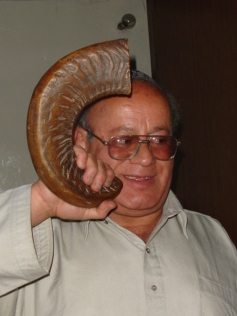
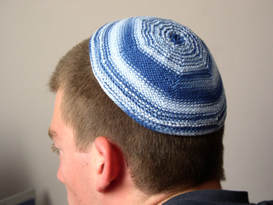
man with kippahIs it a group composed of Jews and their close companions? Or maybe it’s a group of Jewish teenage friends that like to hang out together?

Is it a type of haircut worn by a Jewish man designed to prevent his kippah from falling off?

Is it the flight crew on an El Al Aliyah flight?

Or perhaps its the crew of  a rowing team that competes in the Macabbiah Games (a version of the Olympics held in Israel, open to individuals that are of Jewish heritage)?

Is it a derogatory name for a group of successful Jewish business men?

Is it slang for a black, round-necked sweater worn by Jewish ultra-Orthodox men?

Is it a pickled brisket sandwich served with a sauce of Jerusalem artichokes?

Is Jew Crew a clothing line competing with Banana Republic?

A Jewish baseball team?

Any ideas? Share them with us.

Weekly Torah Portion: Parshat Hashavua Noach

0
Reading Time: 7 minutes

Parshat Hashavuah Noach.

Contributed by: Rav Nissim Mordechai Makor

rav makor 220x220Parshat Hashavua Noach in a nutshell: In this week’s Portion of the Law we learn that Noach tried to convince the people to change their way of life. In a world of violence and corruption Hashem commands Noach to build a large wooden vessel.

“Noach followed in Hashem’s ways” (Noach 6,9). The Sforno explains the meaning of “following in Hashem’s ways” in this manner. “Noach went in the ways of Hashem to be kind to others and rebuked the people of his generation.” If Noach gave the people mussar for one hundred twenty years, why did it have no effect on them?

The answer can be found in the comment of the Sforno on the verse in Bereishis (6,8) which states, “And Noach found favor in the eyes of Hashem.” The Sforno states that although Noach did reprimand the people of his generation, he did not teach them about understanding Hashem and following in His ways. This seems contradictory to the words of the Sforno quoted above, which indicate that Noach did rebuke his fellow man.

The Sforno is teaching us that even though Noach tried to convince the people to change, he based his words and guidance on logic and “doing the right thing.” In order for admonishment to be effective in convincing someone to alter his lifestyle, it must be shown that the way of life being proffered is proper because it is the derech Hashem. Even when one’s mind comprehends “the correct way of life,” if it is not divinely inspired, the influence tends to wane and not have the desired effect.

“Then Hashem said to Noach, ‘Come to the ark, you and your household, for it is you that I have seen to be righteous before Me in this generation’ ” (Noach 7,1). Even though Hashem specifically commanded Noach to go into the ark with his family before the rains actually came, Noach did not enter the ark until the water left him no choice but to seek refuge in the ark. “Noach, and his sons, and his wife, and his sons’ wives with him, went into the ark because of the waters of the flood” (Noach 7,7). It is for this reason that Rashi states, “Noach too, was one of those with little faith; he believed, yet he did not believe (fully) that the flood would come, and he did not enter the Ark until the waters compelled him to” (Rashi 7,7). How did Noach descend from being a man who “did everything that Hashem commanded him” to being included in “one of those with little faith?”

Candle lighting times for Parshat Hashavua Noach

Parsha Index

Rav Yosef of Salant zt”l in his sefer, Be’er Yosef, explains that Noach understood well that Hashem was merciful and compassionate and would not wish to deal harshly with people. This concept is found in Rashi (Bereishis 6,3) who relates that Hashem gave the people of that generation one hundred twenty years to change their ways. Even when they did not choose the option of repentance, Hashem granted them once again an additional seven days to mend their ways.

Based on Noach’s knowledge of Hashem’s merciful ways, he had every reason to believe that the flood may not happen. First of all, the possibility existed that the people would repent from their evil behavior before Hashem brought the rains upon them. Secondly, it was possible as well that Hashem would exercise great kindness and compassion and decide not to bring the flood upon the earth.

With this in mind, it is even more difficult to comprehend why Noach’s actions classify him as one of “little faith.” Even when the rain first fell, Noach had every right to assume that Hashem forgave the people and the rain was not one of a destructive nature, rather a sign of blessing.

However, Noach’s lack of faith must be understood in his not following through on Hashem’s command. Hashem had ordered Noach to go into the ark, days before the rain began falling. Even though it was possible that Hashem would retract His sentence, Noach should not have made any independent decisions contrary to Hashem’s orders.

This is the same “mistake” that Moshe made when he hit the rock instead of speaking to it. Though Moshe had good reason to strike the rock, this action did not conform to Hashem’s command. This is why Hashem said to Moshe “Because you did not believe in Me” (Chukas 20,12).

In stating that Noach “believed, yet he did not believe,” Rashi means that Noach believed that Hashem was compassionate and merciful and because of this did not believe fully that Hashem would actually bring the flood. As a result, Noach failed to carry out Hashem’s exact command and therefore is termed as one of “little faith.”

From the bookshelf

Thousands of seforim fill the shelves of a Beis Medrash. This section is devoted to highlighting seforim and their authors, so that every Jew can derive everlasting pleasure and benefit from the great Torah wisdom contained within them.

The Kehati Mishnayot

Throughout the centuries many commentaries on the Mishna have been produced with the Gemara being the central source for their explanation. Many of these commentaries, however, are only accessible to the Torah scholar.

Reb Pinchas Kehati z”l authored a commentary on the Mishna which makes its comprehension attainable to the layman as well. Although he held no Rabbinical position, his work on the Mishna has become an authoritative work for scholars and novices alike.

Though his commentary allows one to quickly access the simple explanation of the Mishna, Reb Pinchas Kehati himself stated that his work should not be the only reference consulted. Many a time he was heard to say that his commentary was not intended as a substitute for the study of other prominent commentaries, such as the Rav Bartneura or Tosfos Yomtov.

Parshat Noach – Dvar Torah – 5779

G-d warns Noah to escape from the impending destruction:

G-d said to Noah: “The end of all flesh has come before Me, for the earth is filled with robbery… and behold, I am about to destroy them from the earth. Make yourself an ark…” (6:13-14).

What was Noah’s response? “Noah did all that G-d told him to do” (6:22).

He did as he was told, all under G-d’s direction. No less, no more. He built the ark according to the stipulated precise dimensions. Full obedience. But no initiative. Noah did not (following the text and most Midrashim) plea for mercy, as Abraham would for the people of Sodom, and Moses would – on several occasions – for the straying Israelites.

The Midrash (Bereishit Rabbah; Noach 10) points to fundamental difference between Noah and Abraham. It compares them to a king’s two sons, one who was a child, and the other who was already grown up. The king let the adult continue walking in front him, allowing him to use his initiative based on his previous experience of what his father, the king, wanted. The child, however, had to stay with king.

Abraham was the adult: “Be wholehearted; walk before me” (17:1). Noah was the child: “Noah walked with G-d”.

Abraham, in his wholeheartedness, made his own decisions based on his understanding of what G-d wanted. When G-d told him that he planned to destroy Sodom, he approached G-d in protest: “Would You punish the righteous with the wicked?” (18:23). And G-d responded to him, even though He did not change His mind. But Noah, in similar circumstances, kept silent. The promise that the ark would save only him and his family was good enough for him.

Thus Noah was a righteous man in his generation only: in Abraham’s society, he would not have been recognized as a man of distinction (Rashi to 6:9).

The Ohr HaChayim, however, presents a different picture of Noah and his situation, which contrasts with the first explanation.

When G-d told Noah of His plans of destruction, he immediately communicated His plans for him: “I am about to destroy them from the earth, Make yourself an ark…”. The decision was made. No room for negotiations, complaints, or pleas for mercy. In contrast, G-d communicated His intentions to Abraham in less decisive terms: “There is a great outcry from Sodom and Amorah; their sin is very grave. I must go down and see whether their deeds indeed merit destruction…” (18:20-1). That indicated a possible doubt, which Abraham used as cue to protest: “Would You punish the righteous with the wicked?”

Similarly, Moses used the very situation of the Israelites after the spies as his cue to protest. In both cases, he invoked G-d’s recent great involvement with yetziat mitzrayim, the nations’ malicious joy would Israel be destroyed, and the merits and promises made to their ancestors, Abraham, Isaac, and Jacob. And unlike Abraham, Moses was mostly successful.

The Ohr HaChayim’s explanation indicates that as people, we should focus in engaging on projects that have chances of success and not waste energy getting involved in things that are entirely beyond our control. As theologian Reinhold Niebuhr put it:

“G-d, grant me the grace to accept with serenity the things that cannot be changed,

Courage to change the things that should be changed,

And the wisdom to distinguish one from the other”.

Reb Jacob Solomon

Candle lighting times for Parshat Hashavua Noach

Parsha Index

Pearls of life

The Pearls of Life quote the Ohr Chaim HaKodesh explaining the words in the beginning verse; Noach, Noach. This illustrates an imaginary conversation between Moshe and Noach, based on the Devarim Rabbah 11:3. In that conversation Noach claimed to have been greater than Moshe because he was saved during the flood. Moshe retorted that Noach had not been able to save anyone other than himself, whereas he [Moshe] had saved the entire nation and  generation after the sin of the golden calf. The word Ailah accordingly describes the limited value of Noach’s good deeds. They served only his needs so that he could save himself.   The Verse 9:21 says that “He drank some of the wine and became drunk. He uncovered himself in his tent. When a person attains the full understanding, he attains true compassion and understands the importance of extending one’s self in self-sacrifice for others [Likutey Mosharan II, 8:3].  Noach showed his weakness by drinking wine, symbolizing limited da’at [awareness and understanding]. Though he was a great tzaddik [righteous person], Noach did not pray for his fellow man with a readiness for self-sacrifice, as Moshe did for the Jewish nation. Because Noach lacked that full understanding to rectify Adam’s sin and stop the flood, he fell down naked, like Adam [Genesis 2:25], without garments [Likutey Halakhot 1, p. 92-47a]. We learn that to the extent one is willing to go to help others is a measure of a person. Hence, the dedication for helping others is the determining factor in measuring the level of one’s greatness.

Yeshiva Pirchei Shoshanim.

Compiled and edited

As heard from my Torah Masters

Shabbat Shalom

Israel is in which continent?

Reading Time: 2 minutes

Which continent is Israel located on? Europe or Asia?

Europe or Asia? The State of Israel is located in the Middle East on the continent of Asia, nestled to the south-east of the European continent and north-east of the African continent. 

jerusalem
Jerusalem – Israel’s Capital (Image credit: Unsplash)

Israel’s position in relation to the world

Israel lies on the shores of the Mediterranean Sea.  Its location is  considered to be a land bridge between the Mediterranean Sea and the Red Sea, and through it to the Indian Ocean and Pacific Ocean. This location has always made the Land of Israel a powerful attraction to the great powers.

Israel’s borders and neighboring countries.

The 4 countries bordering Israel are: Egypt (south-west), Syria (north), Lebanon (north), Jordan (east) and also the Palestinian territories – the West Bank and the Gaza strip.

The current borders of the State of Israel are a result of both war and diplomatic agreements among Israel, her neighbors, and colonial powers. Only two of Israel’s five land borders are internationally recognized – the other three are disputed. 

Israel’s borders with Egypt and Jordan have been formally recognized and confirmed as part of the peace treaties with those countries. The borders with Syria (The Golan Heights), Lebanon (The Shebaa farms) and the Palestinian territories (declared as the State of Palestine) are still in dispute.

What is the capital of Israel?

The capital of The State of Israel is Jerusalem.  Read more about this ancient city.

What is the current population of the State of Israel?

The current leaders of Israel

MK (Member of the Knesset) Naftali Bennett, head of the ‘Yamina’ party is the incumbent Prime Minister of Israel.  

Chaim Herzog is the incumbent President of the State of Israel

Facts about the land of Israel

Carpet cleaning tips

0

Reading Time: 2 minutes

Professional carpet cleaning tips

By: Uriel Schwartz

carpet cleaning tips

Israel has unique weather conditions that can affect the state of your carpets and upholstery; strong sun in the summer, humidity and lots of dust during a sharav/hamsin.  If not treated properly leather furniture, for example, can dry out and crack. If you have a pet, doggie and kitty odors can penetrate your rugs and furniture and red wine spills in the middle of your family gathering are frustrating to deal with.

We have been in the carpet and upholstery cleaning business for more than 10 years and we have seen it all; blood and food stains, chewing gum, household grime, paint and even grouting.

Here are some of our tips to keep your carpets looking new. You will also protect the fibers from wear and tear and extend your carpet’s lifespan so that your precious oriental rug – passed down through the generations, will keep on looking fresh and clean.

1.Vacuum regularly

Vacuum at least every two weeks. More regular vacuuming will be necessary if you have children and pets. Regular vacuuming keeps your carpets looking clean and also removes embedded dust and soil that can destroy the carpet fibers.

2. Deal with spills quickly

Blot but don’t rub the stain.  Rubbing spreads the stain in the surrounding carpet fibers and makes it more difficult to remove.

3. Remove candle wax with heat

Spilled wax from your Friday night or yomtov candles have caused some of our clients to snip away at the wax and even into the carpet with scissors. This isn’t the way. Take a blunt knife, slide it under the wax and remove as much wax as possible. Then place a few paper towels on top of the remaining wax and using an iron, run the iron over the paper towels The wax should melt into the paper towels.

4. Avoid using excessive water for cleaning stains

When you clean your rug, be very careful not to over-wet it – use as little water as possible. Ensure your house is adequately ventilated so that the carpet can dry properly. Carpets saturated with water can shrink and cause bad odors due to the growth of mold.

5. Use natural cleaning products wherever possible

  • Ice helps with chewing gum
  • Soda water for wine and beer stains
  • Hydrogen peroxide for blood stains
  • Dish washing detergent for chocolates
  • A mixture of vinegar and baking soda is also an effective cleaning product
  • Sprinkling baking soda over your carpet helps remove bad odors too
  • Upholstery cleaning tips

6. Professional carpet cleaning

If these techniques and tips don’t work for you, it could be time to call in a professional carpet and upholstery cleaner.  We suggest a thorough and professional carpet cleaning once a year especially if your carpets are worth a lot of money.

Professional cleaners have specialized equipment, detergents and solvents that will clean your carpets thoroughly.