There are 21 minor parties which include amongst others; The Pensioners Party – The Yisraelim, The Gush Hatanachi – a Christian Jewish party, HaLev Hayudi – opposed to selling arms to countries who commit war crimes and Mishpat Tzedek with Larissa Trembobler-Amir, the wife of Yigal Amir (Itzhak Rabin’s convicted assassin)
Israel elections, 2nd March 2020 – Special polling stations for Coronavirus voters.
It’s almost time to cast our ballots for the 3rd time in the next round of the Israel elections. Amidst the pre-election campaigns the coronavirus has added a whole new angle to the upcoming election.
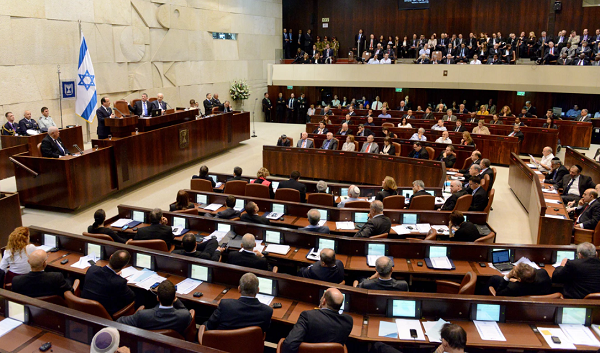
Israel’s Knesset – Image credit: Unsplash
25.02.2020 Israel’s Central Elections Committee is setting up special polling stations for voters who are quarantined due to possible exposure to the new coronavirus.
The Ministry of Health is allowing those under quarantine who are asymptomatic to vote, as long as they wear protective face masks. They must also not use public transportation.
12 to 15 special polling stations will be placed all over Israel to enable these people to vote. These polling stations will be placed in tents in major cities. Voters and polling station staff will be physically separated and all will be required to wear special protective clothing.
Latest coronavirus – COVID-19 Israel stats: More than 260 Israelis, including close to 60 high school students from the Haifa area, are now in quarantine.
19.2.2020 There is talk of the establishment of special polling stations for quarantined voters following their return from China, Singapore, Thailand, Hong Kong and Macau (and any other country that may be added to the list until then). Polling stations are mostly located at schools but are also located in other public places which could be off limits to coronavirus victims who are in quarantine and isolation.
The Central Elections Committee said that if special polling stations will be added for those in isolation, they would not be in the same buildings as other polling stations. There is an idea that they might even be placed in health clinics.
Will the current coronavirus situation affect voter turnout? Will opposing parties use the coronavirus as a weapon to create low voter turnout? We will have to wait and see.
Savory Hamantaschen recipes you’ve probably never thought of!
Who said hamantaschen have to be filled with poppy seeds, nuts, chocolates, dates, jam and halva? Hamantaschen don’t have to be sweet and you don’t only need to eat them as a desert or treat. Try our savory hamentaschen recipes for a Purim twist you’ve probably never thought of.
‘Tasch’ is a Yiddish word for ‘pastry’, and once we understand that we can turn any dough into receptacle for the filling of your choice and for Purim this receptacle should be shaped like a triangle.
If you have the time, you can choose to make your own pastry or dough but we prefer to use ready-made, frozen pastry. Here, in Israel, frozen, no-hassle, parev flaky pastry, regular puff pastry, Turkish puff pastry – Phileas, crispy savory pastry, phyllo, low-cal, gluten free, spelt flour, pizza dough and sweet pastry dough are readily available at your local supermarket. (Do not use sweet pastry dough for savory hamantaschen)
Every culture has a dough-filled dish they are proud of; the Latin-American kitchen has given us empanadas, the French-Canadians gave us the Tourtière, from the UK – Cornish pasty and steak pies, boerekas from the Mediterranean countries, the Middle-East has given us the lahmajun and kubdari from Georgia just to name a few.
So now that we have the concept figured out, we can get back to our Purimtaschen.
Chef’s tip: One very important thing to remember when filling pastry, pies or dough of any kind, you must remove and strain away excess cooking liquid first. Your taschen will turn into a huge sticky, dirty mess that cannot be saved if you do not strain the liquid from the pre-cooked filling first.
Savory meat Hamentaschen fillings…try these!
Here are 15 ideas to fill your taschen. Season your fillings to taste with the herbs and spices of your choice.
1. Your favorite meat-based bolognaise
2. Ground lamb, onions, parsley served with runny tehina
3. Shredded pot-roasted brisket
4. Shredded chicken (great way to use leftovers), leeks and mushrooms
5. Shredded beef, small cubes of potato, turnips and fried onions for a Cornish twist
8. Empanada style – ground beef, onions, olives and raisins
9. Indian curried vegetable samosa style with potatoes, chickpeas, carrots and onions
10. Draw inspiration from Greek Spanakopita using feta or ricotta cheese and wilted spinach. Fried onions also compliment this combination.
11. Salmon (use raw), fried leeks and wilted spinach
12. Butternut and gruyere cheese or Ementhal type cheese (use Tal Ha’emek for a favorite Israeli cheese substitute)
13. Get the kids on board by slicing their favorite sausages onto the ‘tasch’ and then bake as usual. Serve with ketchup of course.
14. Soy mince and chopped mushrooms serve as the base for your vegan pies.
15. Very finely sliced fried zucchini and onions with your favorite herbs
There are 3 ways to make pastry triangles for your savory (hamen)taschen.
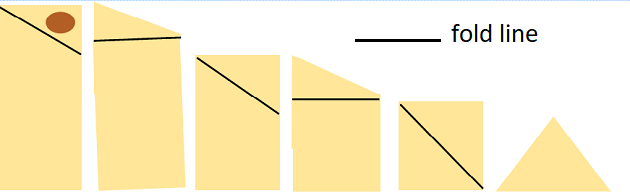
1. Cut long rectangle, place your filling in one of the corners and begin to fold the triangle over and over until you have used up all of the dough. Work on 5 folds per triangle and then seal. This method works well with delicate Phyllo dough.
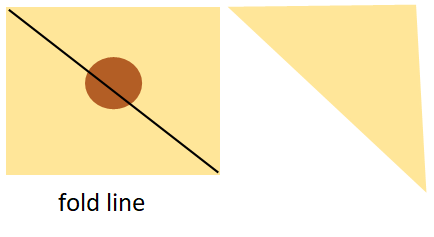
2. Cut a square of dough and place one tablespoon of filling in the center. Pick up one corner and fold it over to the opposite corner. Wet your finger with a bit of water and run it along the edge of the dough to help it stick together. You can also crimp the dough closed with a fork along the edges.
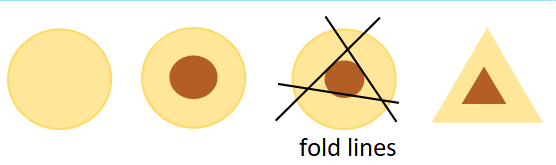
3. For the traditional hamentaschen shape – cut a circle of dough 8 cm – 10cm in diameter (I use a wide-mouthed beer mug as my guide). Place your filling in the center. Fold three sides of the dough over the filling, one at a time, each one overlapping the one next to it. The resulting triangle will have a hole in the center where the filling will peek through.
What not to bring on Aliyah to Israel – 7 suggested items.
There is no end of lists that tell you what you should bring when you make Aliyah or relocate to Israel. From ziploc bags to antiseptic ointments, from blenders to band aids. Depending on where you are coming from, there are no hard and fast rules and everyone you ask will give you a different answer. We asked members of 11,000 member strong, Facebook groupwhich items they suggest not to bring with when making Aliyah and these were some of their tips:-
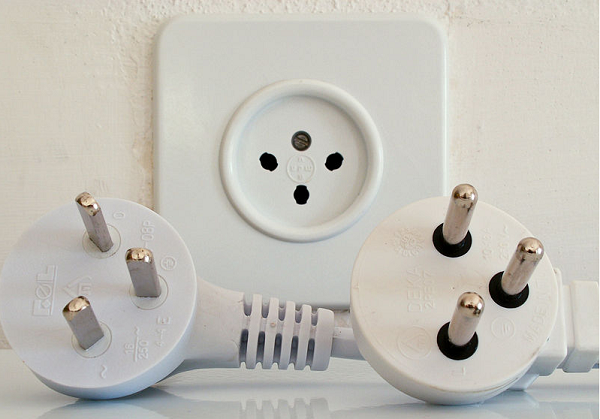
Two type H plugs and one type H socket according to the Israel Standard (ISI) Image credit: fr:Utilisateur:Kiddo.
1. Don’t bring small appliances
Small appliances are cheap enough in Israel. Remember also, that unless specifically stated, warranties for items bought abroad are not valid in Israel. Another point to consider is that not all appliance brands are available in Israel and you may not be able to get yours serviced here.
These electrical appliance brands however, are readily available in Israel
Fridges & Freezers – Sharp, LG, Hitachi, Samsung, Haier, Siemens, Smeg, Westinghouse, AEG, DeLonghi, Scholtes, GE and Whirpool are available here.
Dishwashers – Bosch, Siemens, DeLonghi, Miele, AEG, Whirlpool, Zanussi, Bauknecht are amongst the most popular brands
Ovens – Bosch, AEG, Sauter, Siemens, Electrolux, Zanussi, Constructa, Blomberg and Rosieres are among the international brands that are locally available.
Mixers – Kenwood, Kitchen Aid, Sauter, Bosch, Morphy Richards, Moulinex and La Kitchenette are most popular. Breville and Russell Hobbs are much less popular.
Food Processors – MagiMix is the brand leader, Kenwood, Kitchenette, Moulinex and Philips follow in order of preference. Bring your Ninja if you have one.
Coffee machines – Nespresso and Lavazza are the most popular
Vacuum cleaners – Dyson, Xiaomi, iRobot, Samsung and Electrolux are the favorites and Hoover of course. iRobots have become very popular.
Air conditioners – Tadiran, Electra and Tornado are the most popular brands .
2. Don’t bring baking sheets and roasting pans
Ovens in Israel are smaller and so it was recommended, by an American Olah, not to bring large baking sheets and roasting pans in your Aliyah or relocation shipment.
Only bring enough bed linen for your immediate use but be aware that beds are narrower in Israel and weather conditions are different. Don’t bring synthetic bed linen or synthetic/cotton blends – Israel’s summer months call for the coolness of pure cotton sheets. Don’t bring tablecloths that require starching, ironing and very special care. The price of tablecloths are discounted before Pesach and Rosh Hashanah.
Buy a printer in Israel. A standard home-office inkjet scanner, fax, printer combo can be bought for around 200 shekels. HP, Canon, Brother, Samsung and Xerox are most popular in Israel.
Laptops are not cheap so bring yours, but for a little over 1,000 shekels you can purchase a PC – gamers cost more.
5. Old crockery
Crockery and cutlery are heavily discounted before Pesach. You can buy a 6 place setting pack, for everyday use, for around 100 shekels from the larger supermarkets or for a little more from a store like Ikea. If you bring your silver heirloom cutlery (flatware), remember it takes hours to care for, clean and polish.
6. Silverware
Bring your heirloom candlesticks and other Judaica silver items but as one of our readers pointed out, the elements here can be harsh on silverware. Her silver frames and ornaments got damaged over time from the humidity and salt in her coastal town.
7. Plugs and extension cords
Plugs and extension cords that are not compatible with Israel requirements and sizes. (South Africans – leave the large 3 pin plugs behind but 2 pin plugs are suitable). Electricalsafetyfirst.org says this about Israel’s electrical and plug requirements: – “For Israel there are three associated plug types, C, H and M. Plug type C is the plug which has two round pins (household plugs), plug type H has three pins in a triangular shape and type M has three round pins. Israel operates on a 230V supply voltage and 50Hz.”
New rulings and daily updates. The most up-to-date Israel Ministry of Health guidelines for the Coronavirus.
As at Tuesday, March 17th, 2020 there are 324 confirmed cases of the Covid-19 Coronavirus in Israel. Eleven people have recovered and four are in a serious condition.
The first cases of Coronavirus originated in China with other countries in the Far East following closely behind; Hong Kong, Thailand, Japan, Singapore, South Korea, Taiwan and Macau. Travelers from these and some European were required to self-quarantine for 14 days.
On March 9th, it was announced, with immediate effect, that all travelers entering Israel, from any country barring none are required to self quarantine for 14 days. The situation which is having deep implications on Israel’s and the world’s economy, is being monitored carefully.
26.02.20 Italy now added to the list of ‘self-quarantine’ countries. All non-essential travel to Europe should be avoided. Israelis are also urged to re-consider all non-essential travel abroad.
25.02.20 12 – 15 special polling stations for Monday’s election, will be set up in major cities for Coronavirus quarantined voters.
24.02.20 The effectiveness of a face-mask in protecting from a Coronavirus infection is limited. With extended use, it wears out and gets moist. There is no recommendation to routinely use a face-mask to protection from respiratory illnesses, including the infection caused by the novel Coronavirus, unless a healthcare professional recommends it. People who are showing symptoms or people suspected of a Coronavirus infection or confirmed patients should wear a face-mask (in order to avoid spreading the infection to others), as well as people who have contact or are taking care of suspected or confirmed patients (in order to protect themselves).
23.02.20 New ruling! Do not go directly to your health practitioner or medical center if you have coronavirus symptoms, instead you must contact MADA (Magen David Adom) and they will direct you accordingly.
20.02.20 Do not use hand sanitizers, disinfectant gels and other “anti-corona”, over-the-counter products unless they are specifically registered as a drug with the Israel Ministry of Health. Here is a list of the approved products…
19.02.20 First 2 Israelis get off Coronavirus ship, others to remain until Thursday
18.02.20 Special arrangements for quarantined voters
17.02.20 Any person who visited one of the following locations: China, Hong Kong, Thailand, Japan, Singapore, South Korea or Macau over the last 14 days, and has one of the following symptoms: fever of 38C (100.4F) degrees or higher, cough, trouble breathing, or any other respiratory symptom, should refer to the nearest healthcare clinic or medical center. The quarantine requirement does not apply to travelers who only caught a connecting flight from these locations.
16.02.20 Special prayers against the corona virus at the Kotel, in Jerusalem, today from 4pm – an initiative lead by Rav Shmuel Eliyahu the Chief Rabbi of Zfat.
12.01.20 Call the Kol Habriut Hotline at *5400 for answers to all Coronavirus related questions.
11.02.20 the Ministry of Health reports that up until now, around 140 patients were screened in Israel due to suspected infection with the virus. All results received were negative.
05.05.20 If you have quarantined yourself, you must report it to the MOH by filling our this form (Hebrew)
04.02.20 The Ministry of Health has issued a general sick leave letter for employees in home quarantine
04.02.20 Don’t worry – your online purchase from Aliexpress or other Chinese suppliers, is safe. According to the MOH, there is no risk and as of now, they understand that the Coronavirus cannot be transmitted via parcels or food – there are no reports that the infection can spread this way.
03.02.20 The Ministry of Health has contacted mobile phone companies to send a text message in Hebrew and English to all travelers entering Israel explaining the Ministry of Health’s measures regarding the Coronavirus.
The quarantine period
People who have been exposed to the new coronavirus and who are at risk for coming down with COVID-19 might practice self-quarantine. Health experts recommend that self-quarantine lasts 14 days. Two weeks provides enough time for them to know whether or not they will become ill and be contagious to other people.
Reduce the risk:
Wash your hands regularly with soap and water; before eating, after using the bathroom and after coughing or sneezing
Put your hand over your mouth or nose when coughing or sneezing (and then wash your hands)
If you do not have a tissue, cough or sneeze into your elbow
Refrain from shaking hands
No visiting public places/spaces including parks and leisure parks. Gatherings of more than 5,000 people have now been suspended
Keep away from shopping malls and central shopping districts
Symptoms of the virus – fever, cough or difficulty breathing
FYI – Coronavirus
Coronaviruses are a group of viruses that cause diseases in mammals and birds. In humans, the viruses cause respiratory infections which are typically mild, including the common cold; however, rarer forms such as SARS, MERS and the novel Coronavirus causing the current outbreak can be lethal. In cows and pigs they may cause diarrhea, while in chickens they can cause an upper respiratory disease. There are NO vaccines or antiviral drugs that are approved for prevention or treatment.
Suggestions from the MOH
It is strongly suggested that you seek medical attention if you have a fever or a cough. Keep your mouth and nose covered with a surgical mask or similar. Contact MADA – Magen David Adom for instructions (Emergency numbers)
If you are absent from work according to the quarantine ruling, you will be compensated according to the standard sick-leave upon the presentation of a medical certificate.
If you have no symptoms, you may return to your regular lifestyle on the 15th day.
Wash your hands regularly by using soap and water or a disinfectant. Wash hands especially after coughing and sneezing, and after contact with a patient or his/her environment.
People with chronic health conditions and the elderly are more susceptible
Hebrew holidays calendar & Gregorian calendar converter.
The Hebrew calendar differs from the Gregorian one. The Hebrew calendar has 12 months plus a thirteenth one that is added to the year every few years. This extra month is known as ‘Adar Bet’ (the second month of Adar). This is to compensate for the fact the Hebrew calendar is strictly a lunar calendar. The Gregorian calendar has 365 days and 366 days during a leap year – every four years. In the 3rd, 6th, 8th, 11th, 14th, 17th and 19th year of every Hebrew calendar (a 19-year cycle) another month Adar is added.
The New Rachbalit – the Cable Car between Haifa Mifratz – The Technion – University of Haifa
April 2022 – The new cable car between the Mifratz Transport Terminal (Heb: Merkazit Hamifratz – מרכזית המפרץ) in Haifa, the Technion – Israel Institute of Technology campus and the campus of the University of Haifa has finally opened.
The cable car was designed to alleviate parking and congestion problems in the streets surrounding the two campuses as well as providing quick and easy access, for out-of-towners, to the two campuses.
Cable car carriages on display at Hamifratz Transport Terminal, Haifa
There are 6 stations along the 4.4km route:
Merkazit Mifratz (adjacent to the Cinemall shopping mall)
The carriages are set at a fixed distance and travel on a single cable. Travel speed is around 5m/second (18km/hr). It is planned in such a way that during peak hours, carriages will travel at an interval of 10-15 seconds. The carriages pass through the stations slowly allowing passengers to board or alight the cable car.
It is estimated that 2,400 passengers can be transported during peak hours. In each carriage there is sitting room for 8 and standing room for another 2 passengers.
The cable car will operate within the same framework as other public transport options in Haifa but it will not be operation during Shabbat.
Tickets
The Ministry of Transport confirms that the new cable car is integrated into the public transportation system, and passengers are able to pay for it in any of the ways they currently pay for public transportation, including Rav-Kav cards, monthly passes, and discounted monthly passes for students and via digital transport apps like HopOn Rav Pass.
Haifa also operates a tourist cable car between Bat Galim and Stella Maris
Dr. Moshe Kantor was born on September 8, 1953 in Moscow. He is a prominent public figure, international philanthropist and scientist. He is known worldwide for his fight against antisemitism, racism, neo-Nazism, negationism and intolerance. The prosperity, freedom and security of the Jewish people are his first priorities.
Kantor is particularly involved in Holocaust education and founded and headed the World Holocaust Forum and the European Jewish Fund in 2006.
The European Jewish Fund (EJF), which focuses on promoting Jewish life throughout Europe by supporting educational and leadership programs aimed at reinforcing Jewish identity, culture and traditions, especially by re-connecting people with their rich and vital Jewish heritage.
Moshe Kantor has been the President of the European Jewish Congress (EJC) since 2007. The EJC is the largest secular organization representing the interests of European Jewry. The EJC is one of the most influential international public associations and a large secular organization representing more than 2.5 million of Jews throughout Europe. The EJC is an umbrella organization for 42 national Jewish communities on this continent.
Kantor is actively engaged in promoting tolerance and reconciliation in Europe. In 2008 he founded the European Council of Tolerance and Reconciliation – a non-governmental organization of world renowned individuals famous for their achievements in promoting tolerance
The Kantor Center for the Study of Contemporary European Jewry at Tel Aviv University was named in his honor. It was inaugurated in May 2010 and provides an academic framework for the interdisciplinary research of European Jewry from the end of World War II until the present day.
On the business side of things, Kantor heads the publicly traded Acron Group, one of the leading mineral fertilizer producers and distributors in the world. He purchased the first asset of the Acron Group, a state-owned nitric acid-based fertilizer plant in Russia in 1993.
45 world leaders converge on Jerusalem for the Fifth World Holocaust Forum at Yad Vashem – Thursday, January 23rd, 2020.
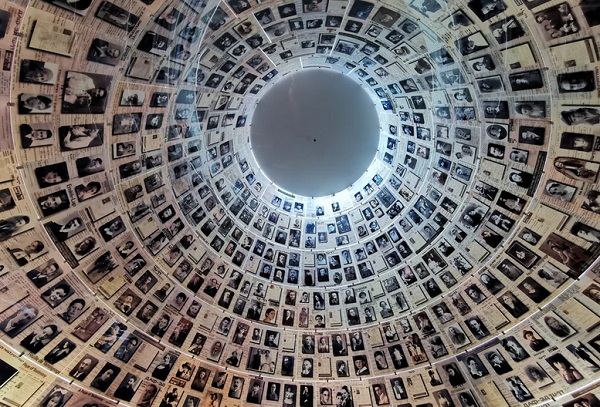
The Fifth World Holocaust Forum at Yad Vashem on Thursday, marks the 75th anniversary of the liberation of Auschwitz-Birkenau. Kings, princes, world leaders and delegations including the King of Belgium, Charles, Prince of Wales, Vladimir Putin – Russian President, US VP-Mike Pence, French President Emmanuel Macron and German President Frank-Walter Steinmeier will be among the many attending the Forum.
The Hall of Names at the Yad Vashem Musuem – Image Credit: Unsplash
The King David Hotel, The Inbal Hotel. The Crowne Plaza and The Mamilla Hotel are just some of the hotels in Jerusalem that will be hosting these leaders, dignitaries and VIPs
On Wednesday and Thursday this week, roads will be closed and traffic rerouted. Expect bottlenecks and long delays.
A dinner at the President Reuven Rivlin’s residence will be held on Wednesday evening. Routes from the city hotels to the President’s residence on Hanasi Street will be closed for short periods of time. Routes leading to Prime Minister Binyamin Netanyahu’s official residence on Balfour Street will also be affected while the convoys pass through.
Major routes will be closed on Thursday morning, as VP Mike Pence arrives and travels to Jerusalem. Roads between the hotels and Yad Vashem, located next to Mount Herzl, will be shut between 11:30 a.m. and 1:30 p.m. as leaders make their way to the ceremony, and are sealed off again at 3 p.m. for approximately an hour. Later in the afternoon, Pence will travel from Yad Vashem to the Western Wall, In the evening he will travel from the Crowne Plaza Hotel to the American Embassy.
On Thursday afternoon, after the ceremony, Putin has planned to travel to Bethlehem to meet with the President of the Palestinian Authority – Mahmoud Abas.
Security on the ground and in the air will be at its tightest.
The World Holocaust Forum Foundation was established in 2005.
The Second Forum in 2006 took place in Kiev. The Third Forum took place in Krakow in 2010. In January 2015, the Fourth International “Let My People Live!” Forum was held in Prague and Terezín (Czech Republic)
This year’s event, the fifth of its kind is entitled: “Remembering the Holocaust: Fighting Antisemitism”
Parking will be forbidden from midnight Tuesday, the 24th of Tevet (the night before Wednesday, the 25th of Tevet/January 22, 2020), until noon on Friday, the 27th of Tevet (January 24, 2020) on the following streets: Agron, Ramban, Jabotinsky, HaNasi, and David HaMelech.
Residents with a parking permit will be able to park for free at the Agron parking lot, the Wolfson Malls parking lot, and the Ahad HaAm parking lot at the corner of Sokolov.
Shuttle buses will operate at the Wolfson and Ahad HaAm parking lots.”