17.1 C
Jerusalem
Saturday, June 13, 2026
Sample Page
Home Blog Page 120

Electricity Rates in Israel.

0
Reading Time: 3 minutes

How much does electricity cost in Israel?

Hebrew:  כמה עולה חשמל בישראל

Hevrat HaHashmal – The Israel Electric Corporation – Heb: חברת החשמל oversees the generation, transmission and distribution of electricity in Israel.

electricity-Rate-

Two different electricity rates, 2 different meters

There are two types of electricity tariffs in Israel;  a flat rate and a variable rate and these rates refer to household/residential electricity rates and not commercial electricity rates.

You can elect the rate you wish to pay your electricity and this is done by contacting the Israel Electric Company (IEC) – Hevrat HaHashmal – by calling 103 from your phone.  Follow the instructions on the automated answering machine and once you have reached a customer service rep, you need to verify the rate you are paying for electricity.

A different meter, measuring your electricity consumption, is required for each different rate.

According to Hevrat HaHashmal most homes are paying a flat rate.  Some of our readers told us that they save around 25 per cent on their bill by opting for the variable rate and operating their appliances during the low rate period.

When you opt for the variable rate, you will be charged according to the following:

Daily, seasonal and weekday electricity rates

Electricity is supplied via three different daily electricity rates and tariffs:  Peak, regular and low

There are seasonal rates: Summer rate, winter rate and a spring and autumn rate

Other rates: Weekday rates, Friday and holiday eve rates and a Shabbat (Friday eve to Saturday eve) and Chag (Jewish festival) rate

Season  Months  Rate Days & Times
 Sunday – Thursday  Friday & Erev Chag  Shabbat & Chag
Summer July – August Peak

High

Low

10:00 – 17:00

07:00 – 10:00 & 17:00 – 21:00

21:00 – 24:00 & 00:00 – 07:00

00:00 – 24:00

00:00 – 24:00

Winter December – February Peak

High

Low

16:00 – 22:00

06:00 – 08:00

00:00 – 06:00, 08:00 – 16:00 & 22:00 – 24:00

16:00 – 20:00

20:00 – 24:00 & 00:00 – 16:00

17:00 – 19:00

19:00 – 21:00

00:00 -17:00 & 21:00 – 24:00

Spring & Autumn March – June

September – November

Peak

High

Low

06:00 – 20:00

20:00 – 22:00

22:00 – 24:00 & 00:00 – 06:00

 —

06:00 – 20:00

20:00 – 24:00 & 00:00 – 06:00

 —

17:00 – 21:00

00:00 – 17:00 & 21:00 – 24:00

Saving Electricity

You need to be pretty disciplined and stick to this table in order to save electricity and it may not always be convenient to do your laundry and operate your dishwasher at 9pm at night (the lowest summer rate) for example – if you opt for the variable rate, a different meter will have to be installed.  Hevrat HaHashmal has certain regulations regarding the installation of the new meter;  you need to pay the price of the meter, installation costs and disconnection fees should you wish to revert back to the flat rate at a later time.  Hevrat HaHashmal have certain restrictions and limitations with the variable rate plan;  you have to commit to the variable rate for a minimum of 2 years and should you revert back to a flat rate, you cannot reapply for the variable rate in the future.

Prepaid Electricity

The third option is prepaid electricity which also requires the installation of a special meter in your home.  This is particularly convenient if you are a landlord and wish to ensure that your  tenant does not leave or abscond without paying their electricity bill.

What are the current electricity rates?

The current electricity rates can be accessed (in Hebrew only) on the Israel Electric Corporation website

Who was Pinhas Rutenberg?

Did you know that Pinhas Rutenberg, a Russian-born Zionist, businessman, and Jewish Nationalist during WWI, was among the founders of the Jewish Legion and of the American Jewish Congress. Through his connections in Palestine, he managed to obtain a concession for production and distribution of electric power and founded the Palestine Electric Company, now the Israel Electric Corporation. Among other things, Rutenberg also participated in establishing the Haganah and also founded Palestine Airways.  Visit the Rutenberg Institute in Haifa to find out more about him.

Hebrew English: Shabbat Words & Phrases

Reading Time: < 1 minute

Learn new Hebrew Words for Shabbat

English, Hebrew & Transliterated Words & Phrases


English Transliteration Hebrew
Sabbath Shabbat שבת
Sabbath evening  Erev Shabbat ערב שבת
Saturday Yom Shabbat יום שבת
Shabbat candles Neyrot Shabbat נירות שבת
Synagogue Beit Knesset בית כנסת
Shabbat braided bread Challah חלה
Wine Ya’yin יין
Torah portion of the week Parshat HaShavua פרשת השבוע
Termination of the Sabbath Havdalah הבדלה
Sabbath end Motzei Shabbat מוצאי שבת


Your friends liked these


From 1-5 (worst to best), how useful was this information?

Israel A1 Visa for Temporary Residents.

Reading Time: 3 minutes

Israel’s A1 Temporary Resident Visa.

Coat of arms of Israel120

The Israeli Ministry of the Interior will issue an A/1 Temporary Resident visa to a person who is eligible for immigration (Aliyah) and has completed the examination process with an aliyah representative (shaliach) of the Jewish Agency, and whose application has been examined and approved by the diplomatic / consular representative at an Israeli mission.

A1 visas are special tourists visas that allow you an opportunity to live in Israel for up to 3 years, at which time you will be required to make Aliyah.  Before the end of the 3 year period, you can apply for a 2 year extension of your A1 visa.  Therefore the absolute maximum period that you can hold an A1 visa is 5 years.

A1 visas suit young people who wish to come to Israel and experience the Israel lifestyle and vibe before committing to immigration.

The Law of Return

The A1 visa will only be granted to a person eligible for aliyah under the Law of Return. In a nutshell, The Law of Return allows the right of every Jew (according to the definition outlined in the law) to immigrate to Israel.

Entitlements: Teudat Zehut & Travel Documents

Holders of an A1 temporary resident visa are entitled to a special Teudat Zehut (Israel identity card) with an Israeli identity number. They are entitled to work in Israel.  They can register with one of the 4 healthcare providers (kupat holim) via Bituach Leumi (Israel National Insurance).  A1 visa holders are entitled to income tax reductions on income earned in Israel.  They are also entitled to reductions on the purchase tax of certain items (aliyah benefits).

Holders of an A1 visa are not entitled to an Israeli travel document.  They are not entitled to vote in Israeli elections. An Ezrach Oleh (an oleh who has Israeli parents) is not eligible for temporary resident status.

There are 2 ways of obtaining an Israeli A1 Temporary Resident Visa;

1.  From abroad, by applying to your local Israel Aliyah Center of The Jewish Agency for Israel

2  From within Israel at Misrad Hapnim (The Ministry of the Interior)

Documents Required for an A1 Visa Application

  1. Birth certificate
  2. Marriage/Divorce/Death Certificate (if you were married to an Israeli citizen) with apostille certification
  3. A passport that is valid for at least six months after the date you are issued your A-1 visa.
  4. Proof of Judaism – this can be a letter from a recognized Rabbi on an official letterhead confirming that either both your parents, or your mother are Jewish.  In the case of a convert you can provide the official conversion document signed by the Beth Din (Jewish Court).
  5. A letter of good standing – this document issued by the police in your country of origin must certify that you have no criminal background.  Apostille certification must be attached to the Letter of Good Standing (Teudat Yosher)

What is an Apostille?

An apostille is an international certification comparable to a notarization in domestic law, and normally supplements a local notarization of a document.

How to apply for a visa

Print and complete the visa application form and submit it in person, together with the required documents to your local Population and Immigration Authority office (Misrad HaPnim)

Is there a service fee?

Yes, currently 170 NIS

  • We recommend checking the up-to-date fees table.
  • You can pay with your credit card at the authority office, or someone else’s credit card if they are with you in person.

Israel Visas

Reading Time: < 1 minute

Israel visa requirements for immigrants, tourists, temporary residents, students, spousal visits and clergy.

visa

Please note that the content of this article is for information purposes only.  The provisions and laws of the State of Israel supersede and take precedence of any information contained herein.

The Israel Ministry of Interior – Misrad HaPnim is responsible for the implementation of laws regulating entry into Israel.

Below are the 8 types of Israeli visas and the application process for obtaining them:

  1. Immigration visa
  2. A1 Temporary resident visa
  3. A2 Student visa
  4. A3 Clergy visa
  5. A4 visa for spouses and children
  6. B/1 Work visa
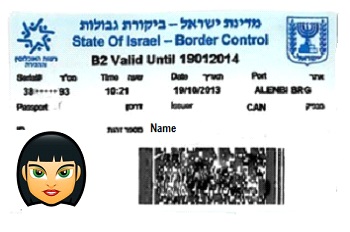
  7. B/2 Visitor’s visa – Visitors to Israel must obtain a visa from one of the Israeli diplomatic missions unless they come from one of the visa exempt countries. All visitors must hold a passport that is valid for 6 months after the date of departure from Israel. Visa exemption does not apply to a laissez passer.
  8. Visa for Kibbutz volunteers

You may find these useful

Price of Fruit & Vegetables in Israel

0

Reading Time: 3 minutes

How to save on the cost of fruit & vegetables in Israel?

Israel fruit and vegetables

Since the onset of the coronavirus the unemployment rate, in Israel, has increased by five-fold, businesses have collapsed around us and many are without income. We have no idea how long the situation will continue and so now more than ever we need to tighten our belts. Price does matter but the good news is that you can take steps and save. If you do your fruit and vegetable shopping in your local supermarket you will find some top quality produce but it is clearly more expensive but if there is a fruit and vegetable market in your town, head there right now.

Did you know that every year Israel exports more than $2 billion dollars of fruit and vegetables and back in the old country we were sometimes treated to succulent Israeli watermelons, bright orange, juicy Jaffa oranges and top quality grapefruit.

Prices are accurate as at July 13tth, 2020

Item Haifa Shuk Rami Levi
Shufersal  Mega/You
Midweek Price
Friday Afternoon Online price per kg 
Vegetables
Bean sprouts  6.00  6.00 5.90 6.90
Beets  5.00  2.00 3.90 4.90  2.90
Mushrooms/punnet  7.00 10 for 2
 14.90 for 2 14.90 for 2
Cabbage (white)  3.80  2.50 3.90 3.90 2.90
Carrots  3.50  4.00 3.90  3.90 2.90
Cauliflower  5.00  5.00 10.60 9.90  9.90
Corn on the cob  6.00  3.50 6.90  7.90 5.90
Cucumbers  3.00  4.00 5.90 5.90 3.90
Eggplant 5.00
 3.00 4.90 7.90 3.90
Lettuce (Iceberg)
7.00  6.00 5.00  6.90 6.90
Onions (white)  2.00  2.80 3.90  3.90  3.90
Parsley  3.00  1.00 3.90  3.90 5.90
Potatoes (white)  2.00  2.00 3.90  3.90 3.90
Sweet potatoes/yams  4.00 8.00
7.90  9.90 7.90
Sweet red bell peppers  7.00  4.00 9.90 14.90 6.90
Tomatoes  6.80  5.00 4.90 5.90 5.90

Fruit
Apples – Starking
 6.50  4.00  9.90 9.90 9.90
Grapes  10.90 12.00  15.90 15.90  22.90
Peaches  7.90  8.90  7.90
Nectarines  8.00  –
Watermelon 10 whole watermelon  1.50 2.90  1.50

Please note that during the Jewish Shmita year, fruit and vegetables are more expensive.  Shmita is a sabbatical year where the land is left to lie fallow and all agricultural activity, including plowing, planting, pruning and harvesting, is forbidden by Jewish law (as commanded in the Torah)

Organic Fruits & Vegetables

The prices of organic fruits and vegetables are much higher.  At the Shufersal for example, organic Starking apples were selling for 19.90 shekels/kg while non-organic were 9.90 shekels/kg

Conclusions based on this trolley (for a family of 4)

  • Friday afternoon shopping at the shuk is about 30 per-cent cheaper than weekday shopping at the shuk.
  • Rami Levi’s prices are comparable to the shuk but the selection is sometimes limited.
  • Shopping for fruit and veg at the major supermarkets is 50 per cent more expensive than shopping at the shuk on a weekday and nearly 100 per cent more expensive than Friday afternoon shopping at the shuk.
  • On this trolley, if you shop at the shuk on Friday afternoons instead of weekdays, you can save around 30 shekels per week which translates to nearly 1,500 shekels per year!
  • On this trolley, if you shop at the shuk on Friday afternoons instead of at the supermarket, you can save around 100 shekels per week which translates to around 5,000 shekels per year.

20 conseils pour un jeûne facile

Reading Time: 2 minutes

20 Conseils Pour Jeûner

Hebreu: טיפים לצום קל

Cette information fut rendue possible grâce au don généreux d’un bienfaiteur anonyme.

fasting empty plate

Recommendations des experts du centre médical Soroka et d’Adina Ben-Aharon, chef diététicien du centre médical Soroka. Merci à Kupat Clalit d’avoir accepté de partager ces informations avec nous.

Avant toute chose

  • Peu importe votre âge, si vous suivez un traitement médical, consultez votre médecin pour savoir si vous pouvez jeûner et obtenir des conseils sur la façon de vous y prendre le jour du jeune.
  • La préparation au jeûne commence deux à trois jours avant le jeûne.
  • Assurez-vous de boire entre 10 et 12 verres de liquide non sucré, en privilégiant l’eau.
  • Afin d’éviter les maux de tête, réduisez graduellement votre consommation de caféine et de théophylline que l’on trouve dans le café, le thé, le coca-cola, le chocolat, le cacao et les boissons diétetiques. Aucune de ces boissons ne doit être consommée la veille du jeûne.
  • Assurez-vous de faire des repas réguliers et équilibrés.

Avant le jeûne

  • La préparation au jeûne commence deux à trois jours avant le jeûne.
  • Assurez-vous de boire entre 10 et 12 verres de liquide non sucré, en privilégiant l’eau.
  • Afin d’éviter les maux de tête, réduisez graduellement votre consommation de caféine et de théophylline que l’on trouve dans le café, le thé, le coca-cola, le chocolat, le cacao et les boissons diétetiques. Aucune de ces boissons ne doit être consommée la veille du jeûne.
  • Assurez-vous de faire des repas réguliers et équilibrés.

La veille du jeûne

  • Évitez les boissons sucrées et les soupes riches en sel susceptibles de provoquer une sensation de soif.
  • Faites des petits repas à intervalles rapprochés. À chaque repas, mangez des glucides complexes tels que du riz, des pommes de terre ou des pâtes, avec une portion de protéines comme des oeufs, du fromage, du poisson ou de la viande, ainsi qu’une portion de légumes.
  • Évitez les aliments riches en gaz tels que les légumes secs, le chou, le chou-fleur et les boissons gazeuses.
  • Même si vous n’avez pas soif, assurez-vous de boire beaucoup d’eau.

Le dernier repas avant le jeûne

  • Ne consommez pas d’alcool.
  • Continuez à éviter les aliments riches en gaz.
  • Afin d’éviter les brûlures d’estomac, un arrière-goût ou une sensation de soif le premier jour, évitez les plats salés, épicés ou trop assaisonnés de même que tout aliment frit ou gras.
  • Pour éviter une sensation de lourdeur d’estomac, de pression abdominale et de fatigue, ne mangez pas trop lors de votre dernier repas – votre jeûne sera plus facile si vous ne bourrez pas votre estomac.

Que servir au dernier repas

  • Du bouillon – Evitez de trop saler.
  • Des glucides complexes: riz, pommes de terre et pâtes.
  • Des protéines: poisson, poulet, dinde, viande rouge, tofu pour les végétariens, oeufs et fromages à pâte molle.
  • Des légumes cuits, peu importe lesquels.
  • Des lipides: huile, avocat, tahina et houmous – mélangés en salade ou servis séparément.
  • Des liquides: eau ou thé.

 Après le jeûne

  • Afin d’éviter une sensation d’inconfort, il est important de ne pas trop manger tout de suite après la fin du jeûne.

Ressources et informations complémentaires

Visiting Mitzpe Ramon & the Negev

Reading Time: 2 minutes

Mitzpe Ramon & Negev Tourist Attractions

Hebrew: טיולים במצפה רמון

When you are touring Israel, approximately half way between Tel Aviv and Eilat, near Beer Sheva, lies Mitzpe Ramon (Hebrew: מִצְפֵּה רָמוֹ   – English: Ramon Lookout) a small town in the Negev desert in Southern Israel. The name Ramon comes from the Arabic word “Ruman” meaning Romans. The town of Mitzpe Ramon is situated on the northern ridge the Ramon Crater.  The small town of Mitzpe Ramon has a population of over 5,000 which includes a small English speaking community.  Mitzpe Ramon is hot and dry in the summer and cold in the winter so best times to visit are in the spring or autumn.  Star gazing at night is a treat.

The Ramon Crater

No visit to the Negev is complete until you have been to the Ramon Crater near Mitzpe Ramon.  This volcanic crater (Hebrew: Maktesh) is 40km long and up to 10km wide in some places and is 500 meters deep.  The crater is surrounded by spectacular views and scenery.

The Mitzpe Ramon Visitor’s Center

While taking in the clean air and magnificent views, it is definitely worth visiting the Mitzpe Ramon Visitor’s Center, situated on the very edge of the Ramon Crater.  Exhibits and explanations about the geography and geology of the area.

The Bio Ramon Complex

A tiny zoo in the middle of the desert!  The Bio Ramon Complex presents a rich collection of desert plants and animals. The outdoor area is a reconstructed desert landscape and demonstrates the relationship between plant environments, the flora and fauna that thrive in them.

Travel Tips

If you visit the Bio Ramon Complex at a quiet time, the curator may given you a private guided tour.  The explanations are sure to keep your kids enthralled for a couple of hours.  No promises for an English speaking guide though.

Use our resources and recommendations to plan your next outing or vacation in Israel

Shopping for Rosh Hashanah in Israel.

0

Reading Time: 3 minutes

How much are you likely to spend this Rosh Hashanah?

A frugal & an expensive menu price comparison

rosh hashanah menuIt seems like every time we go shopping in Israel, food prices have risen.  As at October 2021, the Central Bureau of Statistics (CBS) statistic states that the average monthly wage in Israel is 11,772 shekels.  From a past survey we did, we know that many olim are not earning as much as that.

With the Rosh Hashanah just around the corner, we are faced with an exorbitant food bill this month.  We work long, hard hours and often don’t have the time to stand and prepare traditional foods like our mothers and grandmothers did before us.

Good news, if you are living on a tight budget and looking for a frugal menu, you can cater for erev chag for around 60 shekels per person.

We shopped on the Shufersal website (it’s the most user friendly of all supermarket websites to navigate if you speak Hebrew.  No English option though) – Israel’s largest supermarket chain – to price a simple, yet convenient Rosh Hashanah meal.  Our costs are based on popular brands and items on special offer. This is our suggested menu and this is what we found:

Price

Per kg or per item

Real cost per menu item incl. extra ingredients & seasonings
Starters
Chicken wings for chicken soup + extra ingredients and seasonings 11.90/kg 25.00
Entree
Ready made gefilte fish 11.90/ 6 pieces 11.90
Make your own gefilte fish with fresh carp + extra ingredients and seasonings and ghrain (horseradish) 19.90/kg 35.00
Grilled salmon + extra ingredients and seasonings 74.90 per kg 85.00
Main Course
Roast chicken + extra ingredients and seasonings 18.90 per kg 40.00 (based on 1.5kg)
Roast beef – sinta + extra ingredients and seasonings 99.00 per kg 175.00 (based on 1.5kg)
Side Dishes
Salad (ready pack) + extra ingredients 10.90 20.00
Salad dressing 10.90 10.90
Mixed vegetables – frozen 11.90 11.90
Potatoes 3.90/kg 5.00
Basmati rice/kg 11.90 11.90
Desert
Slab of parev ice-cream 15.00 15.00
Honey cake 10.00 10.00
Extras
Grape juice 15.90 15.90
Fruit juice 5.90 ea 5.90
Honey 15.90 15.90
Apples 9.90/kg 5.90
Challah 10.90 ea 21.80
Simanim
Assorted items – conservative estimate 40.00 40.00
Total cost 562.00 shekels

The luxury shopping cart for 2017 i.e. all the items on our list, would cost, 562 Shekels which is 40 shekels more than 2016

Our frugal menu only includes the cheapest items from the luxury menu.

Item Cost in Shekels
Soup 25.00
Entree 11.90
Main course 40.00
Assorted vegetables and salad 36.90
Desert 25.00
Extras 65.40
Simanim 40.00
Total for this basic shopping cart 244.20

In 2016, taking the cheapest item from each group, the cost of this trolley was 212.00 Shekels

In 2017, taking the cheapest item from each group, the cost of this trolley is 244.20 Shekels

For those of you who are on a tight budget, you can make a  Rosh Hashanah meal for 4, for just over 244 shekels and if you are in a position to splurge, you can spend 550 shekels  or more for 4. This works out at between 60 – 130 shekels per person.

We invite all our creative chefs to share their frugal menu with us.

Whatever you choose, my you have a Chag Sameach, a happy, sweet and healthy year!

5 Best Museums in Jerusalem

0
Reading Time: 4 minutes

Our favorite 5 museums in Jerusalem

When visiting Jerusalem, many people would only associate it as being a city that forms an integral part of ‘The Holy Land.’  As with other cities around the world though, most of Jerusalem’s tourist attractions are steeped in ancient history, together with this  there are an incredible number of museums for visitors and tourists to spend time. Below is a list of just five of our favorite, best and most popular Jerusalem museums that can be enjoyed if you decide to travel Israel.

1. The Tower of David Museum / David’s Citadel

David's Citadel

Located close to the Jaffa Gate entrance to the Old City, this fortress was originally built in medieval times but through the ages many additions have been made.  The outer walls of the Citadel are surrounded by a moat.  The structure commonly referred to as the Tower of David is actually a minaret built by the Turks in the 17th Century.   Spectacular views of Jerusalem – old and new – can be seen from the Citadel.  A spectacular night sound and light show takes place 4 times a week.  Entrance to the museum: 40 shekels per adult.  Entrance to the sound and light show: 55 shekels per adult or the two-in-one combo ticket is 70 shekels.  Tickets can be purchased online.

Address: Jaffa Gate, Jerusalem
Phone: +972-2-622-2313

2. Bloomfield Science Museum

Numerous interactive exhibits, works of art and a host of family-friendly activities make this one of the most visited Jerusalem museums ever. Most activities here are suitable for family members of all ages, which means that you can be sure to find a good few hours’ worth of entertainment here. A family favorite includes the bubble-making display corner in which huge bubbles are produced by chains and sticks.  There are many interactive exhibits demonstrating the laws of physics, technology, electricity, Israeli inventions and so much more. Although entrance  may seem a little steep – 79 shekels per person, it allows you to take part in every activity that is taking place at the museum.  There are also family rates, group rates and other discounted entrance fees.

Address: Museum Row, Jerusalem
Phone: +972-2-654-4888

3. The Museum of Natural History

Situated in a historic, 19th Century structure in Jerusalem’s German Colony neighborhood, this museum also promises to provide hours of non-stop family entertainment. Children and adults alike will be enthralled with the enlarged spider display, the ‘human body’ exhibit will show your child how everything inside the human body looks and operates. The dinosaur exhibit and a taxidermy display are firm favorites. There is also a geology section where numerous precious stones can be seen as well as numerous temporary displays which change on a regular basis. At only 15 shekels per adult and 12 shekels for children, the Museum of Natural History is well worth a visit.

Address: 10 Hamagid St, Jerusalem
Phone: +972-2-563-1116

4. The Israel Museum

This is one of the Jerusalem museums that you could easily spend the entire day visiting, simply because there is so much to see and do. Favorite museum wings include The Shrine of the Book housing the Dead Sea Scrolls.  There is also the Second Temple Model; this  50:1 scale model, covers nearly one acre.  There are many guided tours within the museum and a minimum of 3 participants per tour are required. Aside from the permanent exhibitions, there are around 15 current exhibitions to enjoy as well.  At the end of the day relax and ‘chill’ in the  Billy Rose Art Garden. Ticket price: 50 shekels per adult and 25 shekels for ages 5 to 17.  Other ticket prices available too.  Tickets can be ordered online.

Address: 11 Ruppin Boulevard, Givat Ram
Phone: +972-2-670-8811

5. Yad Vashem

yad vashem museum

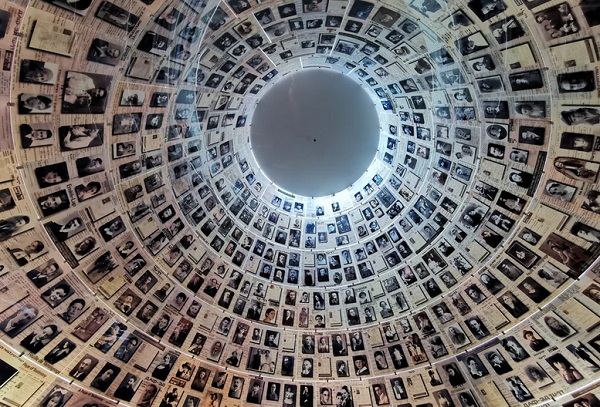
More than a million visitors pass through this museum each year.  The Yad Vashem is a living memorial solely dedicated to the millions of people who endured or were murdered in the Holocaust.  Prepare yourself for a somber experience.  There is an extensive array of personal items, video clips, survivor testimonies, detailed methods of persecution used by the Nazi’s and numerous stories describing the lives of the Jewish people before and during Hitler’s rule.  Over four of the six million Jews murdered by the Nazis and their accomplices, have been recorded in the central database of Shoah victims.  Entrance to the Holocaust History Museum and all its sites is free.

Address: Har Hazikaron
Phone: +972-2-644-3400

Museum tip

There are numerous other museums that can be visited while traveling Israel all of which are guaranteed to keep your family enthralled for hours – some are free during Pesach and Sukkot.

Organ Donation and Transplants

0

Reading Time: 3 minutes

How Organ Donation & Transplant Works in Israel

Hebrew: תרומת והשתלת איברים

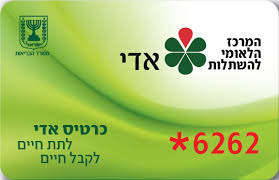
adi logoThe National Transplant Center – “ADI”, established 1994, is an official and the sole body for the registration, allocation, management and coordination of organ donation and transplant in Israel. The Center is a unit within the Ministry of Health. Each organ transplant carried out in Israel – from a live or a deceased donor – requires  individual authorization of the National Transplant Center. The National Transplant Center is regulated by the Organ Transplant Law, 5768 – 2008 (Hebrew document).


How it works

  • Once you have decided and are willing to donate an organ after your death in Israel, you are required to sign a donor card.  This card is your personal testament and eliminates the need for family members to make a decision about your organ donation. 
  • There is one single national waiting list containing the data of the patients awaiting transplant.
  • Any patient who is an Israeli resident, based on the recommendation of his or her physician is entitled to be included in the transplant waiting list.
  • The data of all the patients awaiting transplant in Israel are stored in a computerized data bank at the National Transplant Center. The data are constantly updated and they include various medical details.
  • For each organ, there is a system of allocation criteria, established according to the characteristics required for the match between the donor and the recipient (such as blood type, weight and height) and the characteristics of the organ itself from an immunological point of view (degree of the necessity of tissue match), and according to the probability of providing life quality and of saving life (data such as age, waiting period, blood test results, etc.) These criteria are inbuilt in a computer program, specifically developed for and adjusted to each organ.
  • When a donor whose family has consented to the donation is found in one of the Israeli hospitals, his or her data are transmitted to the National Transplant Center and are fed into the computerized system.
  • The system cross-checks the data of the donor with the data of the waiting patients and locates the patients that are the most suitable for transplant.
  • The organ allocation system is egalitarian and transparent.
  • The Steering Committee of the Transplant Center carries out a periodic control of the allocations and updates the allocation program according to need and to the progress in transplant technology.
  • In case of dilemmas, when two or more patients that are entitled to the same extent to receive the organs have been located by the computer, the National Transplant Center seeks expert advice in order to hold a medical debate and to decide to which patient the organ shall be allocated. If no decision is made at this stage, the Transplant Center holds further consultations with additional, specially appointed experts, who are not connected to or employed by the hospitals in which the transplants are to take place. If necessary, the Head of the Steering Committee and, occasionally, even the General Director of the Ministry of Health shall get involved in the decision-making.
  • Priority on the transplant list is in accordance with the priority program based on the Organ Transplant Law 5768 – 2008, Article 9(b) (4).

Waiting Lists

There are waiting lists for every type of organ transplant and these lists are divided into degrees of emergency of allocation and other criteria.

What if I change my mind?

It is possible to reconsider and cancel your consent at any time. All that has to be done is to notify the National Transplant Center by means of fax or e-mail.

There are very many questions, halachic issues (Jewish law), and topics that need to be addressed before you make a decision to become a donor.  ADI have a very comprehensive website – also in English – where they address every aspect of donation and transplantation.


Contact Info

The National Transplant Center
Noah Mozes St.15 ,67442 Tel-Aviv

Tel.: 1-800-609-610
Fax: 03-6061845
Email: addy at moh.health.gov.il


Note:

You can become an organ donor by signing up on the ADI website: https://www.itc.gov.il/eng/index.html


Medical & Health Resources


{module [394]}