Greece has made it easy for the Israeli tourist who is either vaccinated or recovered and wishes to visit the country.
The regulations as per the Greek Embassy in Israel, are outlined here:
All travelers to Greece, regardless of nationality and way of entering the country,must fill in the electronic form PLF (https://travel.gov.gr/#/),with their contact details at least 24hours prior to their arrival to Greece. A valid PLF form, with a QR code, is considered necessary to enter the country.
All travelers to Greece must meet one of the following prerequisites in order to be allowed entrance to Greece:
1) Have a Vaccination Certificate issued by a public authority which must state in English the following: .
a) name and surname of the traveler,as this is stated in the passport. b) the type of vaccine and c) number of vaccine doses administered as well as the respective dates. Note: The second dose of the vaccine must be administered at least 14 days prior to their arrival.
or
2) Have a negative PCR test performed maximum 72 hours prior to their arrival and the results should be in English (including the full name and passport number).
or
3) Have a Certificate of Recovery from COVID-19 issued by a public authority,valid for two (2) to nine (9) months from the date of illness issued on it, issued by a public authority in accordance with the relevant legislation, by reference laboratories of the country of origin or public or private laboratories in that country, provided that such private laboratories are certified by the competent national certification authority of the country and must state in English the name and surname of the traveler,as this is stated in the passport.
Minors up to 6 years old are exempt from the above.
Things to know before visiting Georgia – a guide for Israelis.
With the easing of travel restrictions, we are all keen to take a well deserved holiday and it’s easy for vaccinated Israelis to visit the country of Georgia.
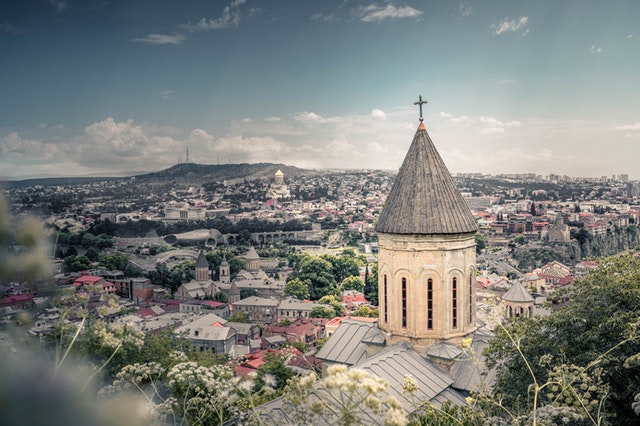
Image credit: Pexels – scenic view of Tbilisi
We had an unexpected opportunity to take a holiday last month. Like most of us, after Covid, and some major life-events, my husband and I needed a break. Eilat does not tick our boxes, we’ve toured NorthIsraelendlessly, explored the alleyways of Jerusalem and Tel Aviv, so naturally our thoughts turned to a destination abroad. Because of the Israeli ban on travel there, visiting our families in South Africa was not an option.
We wanted a place that had minimal Covid-19 red tape and from the list of possibilities at that time, we narrowed it down to Georgia. Unlike tourists from other countries, vaccinated or recovered Israelis only need the Ministry of Health official certification to enter the country (download from RAMZOR APP) and one PCR test within 72 hours prior to departing Georgia. Tourists from other countries need a negative PCR test to enter, a second on the 3rd day of their visit and if necessary another 72 hours prior to departure.
A country-wide lockdown in Georgia had ensured that the number of active cases was low. If we played our cards correctly, and traveled immediately after lockdown, the risk was low. Unlike many Israelis, we were not at all interested in gambling in Batumi so we decided on Tbilisi.
I am usually very thorough when we travel abroad and leave almost nothing to chance, but time was short and so my preparation was limited but let me share what I learned and know.
Flying to Georgia
I hate packaged deals on charter or low cost flights; flight schedules are always inconvenient. Georgian Airlines offered the best deal. Their ticket price includes 23kg of checked luggage, and convenient times. Israir and Arkia also fly to Tbilisi and Batumi but you have to pay for extra luggage. Georgian Airlines suited us best and there was no significant difference in the price. The flight was pleasant and all that was missing from the 2.5 hour trip was a cup of coffee as we had missed our early morning caffeine fix.
Cheap Flights to Georgia From Israel Tel Aviv
Accommodation in Tbilisi
There are lots of small privately owned and boutique hotels in Tbilisi as well as the usual international hotel chains around the Old-Town. We are not fussy about accommodation and these days, mostly choose self-catering for four reasons 1) my husband’s food allergies need to be managed carefully 2) from a budget point of view and and 3) being cooped up in a small hotel room is stressful and the fourth reason, but probably the most important, is minimizing contact with other travelers during Covid. So, with all of this in mind, we opted for an apartment on AirBnB.
My main tip for selecting accommodation on AirBnB is ‘location, location, location’. Even if I have to pay a little more, I make sure that our accommodation is close to a supermarket, tourist sites and public transport options.
Also, I always choose a superhost. Superhosts are experienced hosts who are willing to go the extra mile for their guests, pay careful attention to cleanliness and their premises are inspected regularly.
These criteria lead me to book an apartment of the Left Bank of the Mtkvari River, which runs through Tbilisi. Most of the tourist attractions are on the Right Bank, but our apartment was just on the opposite side.
Our host Kakha (pronounced like the Hebrew word ‘kacha’) was indeed super. His apartment has a magnificent view, was spotless, recently renovated, nicely decorated and fully equipped. Don’t let the exterior of buildings in Tbilisi or the stairwells put you off – like here, more attention is paid to the interior rather than the exterior. In Georgia you have to pay to use the elevator – it’s the equivalent of 5 agorot so it’s no big deal.
Transportation in Tbilisi
Kakha fetched us from the airport (paid separately). Taxis charge around 30 Lari (30 shekels) for the trip into Tbilisi (20-25 minutes). Public transport is dirt-cheap but you need the “Metromoney” transport card like our Rav-Kav. They have ‘Marshrutkas’ – shared taxis exactly like our sherutservice. The Marshrutkas travel on set routes and are also very popular for inter-city, overland travel. Amongst others, you can get to Batumi, Kazbegi, Telavi and Sighnaghi with a Marshrutka.
After not having the exact change one-time, we downloaded the BOLT app (like Gett Taxi) which we connected to our credit card. The minimum fare is 4 lari (4 shekels). BOLT drivers are polite and friendly and we never waited more than a few minutes for a cab. On one trip, our cab driver heard our South African accents, stopped the car, turned off the meter and proceeded to play us one of his favorite songs – Shoshaloza – a South African tribal song that we had grown up with but not heard in years. He had us singing and bopping in the back seat. When the song was over, he put the meter on again and we continued on our journey.
We did not want to inconvenience Kakha in the early hours of the morning, so we used BOLT for the taxi ride back to the airport – 22 lari for that. Regular private taxis are more expensive. We discovered that morning, because of curfew (11pm-5am) we could only order a taxi at 5am.
The underground metro could be improved but why go underground and miss everything above ground.
Walking is easy in Tbilisi, mostly the terrain is flat but when you can no longer put one foot in front of another – BOLT comes to the rescue.
Changing currency – Shekel Lari exchange rate
The Shekel Lari exchange rate fluctuates daily and is approximately 1 to 1 but things are cheaper – 6 shekels for 1kg of cherries in the market instead of 30 NIS and 2 NIS for a beer. No need to buy water – tap water is really good (better than ours). Wine shops will fill a one liter bottle for you for less than 10 lari.
There are exchange bureaus all over and the rate at the airport was comparable to the rate in the city. Most advertise no commission but of course that is built in.
Lari and gel are the same thing – sometimes they use the term ‘lari’ and sometimes ‘gel’. GEL is the abbreviation for GEorgian Lari.
Shopping
Covid-19 hit Georgia hard and lots of small businesses have not survived. Many shops were closed (and restaurants too) and there was very little to buy. The Galleria Mall is just like any other upmarket mall and the Central Mall at the Railway Station (not far from the Dezerter Produce Market) did not have anything to offer the tourist.
The Meidan Bazar has all the usual tourist items and prices to match.
Best internet
After reading many reviews, we went with Magti – 2 NIS for the SIM and 6 NIS for unlimited data for one week. Apparently Magti have the best coverage especially in the outlying country and mountainous regions. Have your passport on hand when you buy the SIM. There are ATMs everywhere and you can use them to top-up if necessary. We used WhatsApp to phone home.
“Tbilisi Loves You” a Free Wi-Fi-network is available and helpful for tourists and in theory, it keeps you connected at no extra cost. I found the service erratic so we bought Magti on the second day. You will be exploring Rustaveli Ave (the Dizengoffof Tbilisi) and there is a large Magti there near the Houses of Parliament and opposite the National Museum. Of course, you can also buy Magti at the airport.
Supermarkets & food shopping
There are neighborhood mini-markets everywhere and if you are familiar with the SPAR chain from abroad, they have that too but, they are just makolets – don’t expect more than basic food items.
The European Carrefour supermarket chain is represented in Georgia and if you are self-catering, you can buy everything there. Closest to the main tourist areas in Tbilisi, there is a huge branch on Vekua St (a 5 minute walk from Baratshvili Street).
Another supermarket worth trying is Fresco (here we bought fresh trout for the equivalent of 15NIS/kg). On average, prices in Tbilisi are one quarter of what we usually pay.
Most supermarket items are not labelled in English so that can be tricky.
There are neighbourhood bakeries all over the place and 1 or 2 lari gets you a basic bread loaf and for a few more you can buy an assortment of khachapuri and lobiani – giant boereka-type pies filled with meat, beans, potatoes or cheese – these are great value for money if you are on a tight budget,
If you wish to buy pre-packed, Georgian spices you can try Ajika and Sveneti Salt. They are similar – Ajika being the spicier of the two and includes red pepper, garlic, coriander, blue fenugreek and dill. Ajika paste is usually served on the side – much like harissa or zhug. Khmeli suneli is another blend to try.
Kosher Food
There are four kosher restaurants in Tbilisi; Mendy’s, Kosher Jerusalem, Le Chaim and the King David. We ate at the King David and took the opportunity to eat meat-based meals here. The food was delicious. Mendy’s (located between the Metekhi Bridge and the Bridge of Peace) was closed and according to a group of teenage, Israeli, yeshiva boys we met outside, they only open by special arrangement – perhaps because of Covid-19. I cannot say what will happen in the peak of the summer holiday season – check before you go. The King David does not accept credit cards so make sure you have cash on hand.
Eating out
The top end of the Metekhi Bridge, is a tourist hub and the “I love Tbilisi” sign in the square, confirms it. There are lots of restaurants and eateries here. For less than 25 lari/person you can eat and drink to your heart’s content. On Jan Shardeni St, just off the main square, hip cafes and trendy bars with live music, cater to tourists and locals alike.
Saarbrucken Square on the left bank of the Dry Bridge is another popular place for al-fresco dining and a cool vibe.
We explored the side streets as well and came across all manner of eateries.
You must try the various types of khachapuri, khinkali, lobio, kharcho, phkali and of course the sweets; churchkhela and tklapi.
Touring the country and places to visit
Tour buses, private taxis and guides are all eager to get your business and most of them are centered around the square or just off Kote Afkhazi St. From the equivalent of 40 shekels you can get a group day tour to Kakheti and the surrounding areas. Tours to Kazbegi, Borjomi, Khevsureti and every other place – all appropriately priced – can be arranged here. Private tours cost more but there are definite advantages to these – guides are more flexible and this is a big deal. We were the only English speakers on a busload of Russian speakers so we really missed out on explanations and details – remember, you get what you pay for.
Our host Kakha offers private overland tours that range in price from around 170 lari – 600 lari for a group of up to 4 people. Send me an email and I’ll be happy to pass his contact details on to you.
The tourist sites we liked best in Tbilisi were the Narikala Fortress, the Botanical Gardens, Rike Park (with all its attractions) Fabrika and the Soviet Automuseum. Of course, the Jewish Museum was interesting too. We really enjoyed wandering the streets and taking in the architecture; classical European, brutalist Soviet structures built to last forever, ultra modern glass and metal, practical block construction (that we are familiar with in Israel), crumbling relics and restored and renovated buildings. The Kakheti wine region and the Sighnaghi City Walls were also memorable.
If you have small children, I recommend a visit to the Soviet automuseum – a little off the beaten track (taxi was about 15 lari with BOLT) but well worth it. The amusement park on Mtatsmanda Hill is a bit dated but your kids will enjoy it. The views are incredible.
Statues and monuments, modern art , sculptures and other quirky pieces are everywhere – even the garbage cans in one of the parks were crafted and stylized wrought iron. Georgians seem content and are proud of their homeland and what they have. Their streets are clean, grassy areas are well tended and every cobbled stone is in place.
The Metekhi church and neighborhood, the clock tower, the flea market on the Dry Bridge, the Royal Baths, the graffiti in the Baratshvili underpass are not to be missed either. There are churches on every corner.
Is Tbilisi safe?
Tbilisi is safe, we never felt threatened in any way. I wouldn’t suggest walking around with your cellphone in your back pocket but unlike other European capitals, we didn’t feel like pickpocketing was an issue.
Getting your PCR Covid-19 test
If your hotel cannot offer you a covid test (around 120NIS – 150NIS), covid tests are advertised at the exchange bureaus. Kakha was a champion in this regard, he took us to his clinic (Medi Prime) and we paid 85 lari each for the test. The clinic emailed us the results by the end of the day.
While Israel comes out of the Delta wave of Covid-19 and mask wearing is no longer mandatory, it is still compulsory to wear a mask in Georgia. Most of our sightseeing was outdoors so like everyone else our masks were under our noses, on our chins and wrapped around our wrists most of the time. I believe there is a small fine if you are caught without one.
Is Georgia worth visiting?
Yes!
Is Georgia a beautiful country? Yes.
Is Georgia safe? Yes.
Does Georgia have a comfortable climate? Yes
Are Georgians welcoming? Yes.
Is English widely spoken? Yes, and Russian too.
Is Georgia easy during Covid-19? Yes
Is Georgian wine good? Yes.
Is Georgian food interesting and tasty? Yes
Is Georgia good value for money? Yes.
Is Georgia recommended for Israelis? Yes
Seven days visiting Georgia was not something we had previously planned on but it was a most enjoyable experience and trip. We are only sorry we did not spend more time there exploring more of the countryside and the Caucasus. We will go back for that someday.
At the onset of the Covid-19 pandemic Prof. Cheryl Zlotnick, The University of Haifa, Prof. Laura Dryjanska, Biola University California and the Anglo-List teamed up for a second time to conduct a study within Israel’s English speaking immigrant community which examined health literacy, resilience and perceived stress. The study was recently published in the Psychology & Health Journal and these are some of the results:
Objective
To examine perceived stress in migrants guided by Bornstein’s Specificity Principle in Acculturation Science (BSPAS) theoretical framework.
Design
Using a cross-sectional study, we recruited English-language migrants (n = 411) living in Israel to respond to an online questionnaire during the COVID-19 pandemic, from 3 April to 16 May 2020.
Main Outcome Measures
The dependent variable comprised the Perceived Stress Scale (PSS) scores, which attained an internal consistency of 0.91 in this sample.
PSS scores were related to lower age (p < 0.0001), being single (p = 0.0095), not possessing high (p = 0.0069) or medium resilience (p = 0.0002), reporting below average SES (p = 0.0196), being “extremely” worried about getting COVID-19 (p < 0.0001), and having high health literacy (p = 0.0007). Additionally, the interaction between health literacy and resilience (p < 0.0001) showed that migrants with high resilience and high health literacy had the lowest perceived stress; and migrants with low resilience and high health literacy had the highest perceived stress.
Conclusions
Interventions are needed to assist migrants during the COVID-19 pandemic. The optimal intervention will aim to address the psychological distress while increasing both health literacy and resilience.
Cheryl Zlotnick, Laura Dryjanska & Suzanne Suckerman (2021) Health literacy, resilience and perceived stress of migrants in Israel during the COVID-19 pandemic, Psychology & Health, DOI: 10.1080/08870446.2021.1921177
As of today, June 29, everyone over 16 leaving Israel will be required to complete a declaration before departure wherein they undertake will not to travel to any of the countries to which entry is prohibited under the regulations governing travel from Israel, or else a declaration that he or she is allowed to travel to one of these countries under the exemptions in the regulations. The countries to which travel is prohibited are Argentina, Brazil, South Africa, India, Mexico, and Russia. People who travel to these countries with an exemption permit will have to enter quarantine on their return to Israel, even if they are vaccinated or have recovered from Covid-19. Travel to a prohibited country contrary to the regulations will be an offense, and will incur a fine of NIS 5,000.
The MOH expects an increase in the number of seriously ill and peaking within the next 10 days.
25% of youth between the ages of 10 – 19 years have received the first dose of the coronavirus vaccine
June 28th
Following a meeting of the corona cabinet on Sunday, it has been decided that aside from mask wearing indoors and in crowded placed, no additional restrictions are to be implemented at this stage.
What will the measure for further restrictions will be based on; number of daily diagnosed cases or the number of seriously ill? A final decision needs to be taken but basing it on the number of seriously ill is the most logical according to the experts.
The strategy is to encourage all those who are not, to get vaccinated. Over 5,000 new vaccinations administered yesterday, most of them youth over the age of 12.
A clear strategy must be implemented for the new academic year and preparations made for dealing with different scenarios
There was a dip in the number of newly diagnosed on Sunday – 114 new cases
44 people are hospitalized with the coronavirus and 23 are in serious condition
After one year as the acting Director of the Ministry of Health – Prof. Hezi Levi, resigned yesterday
June 27th
The corona cabinet is set to meet today to discuss the possible implementation of further restrictions. In the meantime mask wearing is now mandatory in closed spaces and in crowded spaces with the following exceptions:
Children under the age of 7
Those with physical disabilities that prevent them from donning a mask
A person who is working alone in a public space
2 people who work with one another on a permanent basis
Person engaged in sporting activities
Other planned measures:
Testing will also be increased
The planned number of daily vaccinations is set to increase
Clamping down and stricter monitoring at Ben Gurion International Airport
With only a few days left until the end of the school year, no major changes are to take place. Masks are mandatory and efforts will be concentrated on the areas in which there are currently outbreaks.
Israel stats:
Cases diagnosed Saturday: 229
Total active cases: 1,157
Seriously ill: 26
Intubated: 16
June 24th
Following the current outbreak, 30,000 Israelis are supposed to be in isolation. Random checks are being put in place and police will check on those in isolation to ensure compliance . The idea is to implement home visits and phone calls every few days.
If the average number of newly diagnosed daily cases exceeds 100 by the end of this week, mask wearing is closed spaces will again become mandatory.
Mask wearing at Ben Gurion Airport, on flights, in hospitals and medical clinics as well as in geriatric institutions, is compulsory.
900 cases of the covid-19 coronavirus were diagnosed in Israel last month. Approximately half of them are vaccinated.
The Ministry of Health is considering putting the purple ribbon code and green pass regulations back in place.
It has been decided that the opening of Israel to incoming tourists from other countries, will be delayed by one month and it will commence on 1 August instead of 1 July as previously planned.
June 23rd
The latest outbreak of the Indian Coronavirus variant – the Delta virus – in Israel has prompted a number of new measures and recommendations. Here are the latest updates:
Ben Gurion International Airport
Mask wearing is now mandatory at Ben Gurion airport as well as on all flights. (It is also now recommended to wear a mask in all closed spaces)
“I call on all children over the age of 12 be vaccinated”
“If the current outbreak continues to expand, further measures will have to be taken”.
“The corona cabinet is to be reinstated”
The special Coronavirus unemployment benefit – CHALAT – will terminate at the end of June, 2021.
Those under the age of 45 will no longer receive the CHALAT unemployment benefit
Those in the 67+ age group and self-employed will also no longer be entitled to the CHALAT benefit.
Those in the 45+ age group and women who have given birth will continue to receive the benefit
Those in the tourism industry who have returned to work are entitled to the supplementary income benefit from Bituach Leumi
June 21st
Following an outbreak of the coronavirus at two schools in Israel; in Binyamina and in Modiin (all the Indian variant), a special meeting was held and Prime Minister Naftali Bennett has decided that new measures must be taken to control and curb the latest Coronavirus outbreak in Israel and these recommendations have been made:
The Ministry of Health recommends that youth between the ages of 12 – 15 be vaccinated especially if hey have underlying health issues that could put them at risk. It has been noted that 12% of vaccinated youth manifest side-effects after receiving the jab.
Reinstating mask-wearing at summer-camps (keitanot) is also being considered.
Recruit 250 police to monitor and ensure that Israelis, returning from abroad, adhere to isolation regulations
Increase the number of testing stations at Ben Gurion International Airport as it was reported that hundreds of incoming travelers were not being tested because of an overload.
June 15th
As of today it is no longer compulsory to wear a face mask in Israel and in closed spaces (with some exceptions)
There is no need for masks at schools, on public transport, Ben Gurion International Airport, malls and shops. However, it remains compulsory to wear masks on board flights, at hospitals (outpatient clinics and similar) and at retirement and geriatric homes.
DON’T dispose of your masks just yet, keep one in your bag or easily accessible – you never know if you may be asked to don one.
May 24th
In a statement issued Sunday night, May 23rd, Minister of Health, Yuli Edelstein announced that almost all pandemic restrictions will be lifted on June 1st, 2021.
It is already no longer necessary to wear face-masks outdoors and another step towards lifting the pandemic restrictions will come into effect on June 1st and includes lifting the “green pass” vaccination certificate requirement, This means that Israelis, will be able to enter all public amenities regardless of vaccination status.
Capping the numbers on indoor and outdoor gatherings will also be cancelled.
For the time-being, the wearing of a face mask will still remain compulsory in enclosed places. The lifting of masks in closed spaces may possibly be revoked in two weeks time.
The lifting of these restrictions is a direct result of Israel’s successful vaccination campaign which has seen most adults vaccinated. Only 12 new virus cases were reported on Sunday and as of today, Israel only has 500 active coronavirus patients.
Edelstein commented: “The Health Ministry will continue to monitor the situation to prevent an outbreak. Of course, if there is an outbreak, we’ll have to revert [to previous restrictions]. I call on Israel’s citizens not to leave for countries with high morbidity and follow the Health Ministry’s travel advisories. Even while in countries we can fly to, it’s important to maintain social distancing. Upon returning to Israel, there is a duty to pay extra attention to the guidelines. The low morbidity of the disease depends on us.”
We get our news, share ideas and promote business on these platforms. But the dark side of social media in Israel, can come with consequences.
A Case of the Dark Side
Ariella (not her real name) loves the kids she teaches in the private nursery-school in Herzliya where she works. She is attentive, gentle and takes her responsibilities for their well being and safety very seriously. When I took on her case she had received only accolades from the parents, throughout her career.
In recent years the media has been reporting heartbreaking stories about the treatment of children by their teachers and caregivers. Reports often come with video clips which, frankly, are very hard to watch. The videos have exposed things that fill every parent with dread, and fear for their kids’ wellbeing. Most parents survey their kids’ environments by talking to other parents. And they check in with those responsible for their care, until they are satisfied that all is well.
But others have been gripped by an irrational hysteria in their desperation to know what’s going on when they’re not with their children. It has sometimes resulted in parents stalking the caregivers to ‘catch’ them causing harm. This is where the dark side of social media in Israel reared its head towards Ariella.. A photo of her and the kids in her care, wound up on Facebook and resulted in a lawsuit.
Freedom of Speech
In The First Amendment of the American Constitution, freedom of speech includes the inherent right to voice opinions publicly without fear of censorship or punishment from the government. (It includes freedom of religion, freedom of the press and the right to assemble.) We can be very proud that free speech is a fundamental right here in Israel as well. In 2017, The Democracy Index which measures levels of freedom of speech, ranked Israel in 11th place out of 167 countries.
The first amendment that provides protection from the government preventing free speech is not implicated in the actions of the social media companies like Facebook, Twitter, Instagram etc. The Supreme Court in Israel acknowledges that these have become platforms for free speech. They’ve ruled time and again that the First Amendment protects your right to speak your mind there.
At the same time, these are private companies and no one has a “right” to use them. You know those ‘terms and conditions’ you have to agree to before you sign up for any social media account? If you break the rules that you agreed to, the administrators can remove you temporarily or even permanently if they choose. And it’s all legal.
Defamation by Post
Written defamation is called “libel.” It’s a civil offence, rather than a criminal one. The statement in question must be false and harmful to you or your company’s reputation if it is to be called damaging.
A mother of one of Ariella students was very upset by the videos on the news of caregiver mistreatment. She “decided” Ariella was guilty of neglect because she saw her take the kids out to the yard on a hot day. The mother screamed at her, and photographed the children in the yard (which is against the law, by the way). She posted the picture on a Facebook group made up of about 3,500 parents from the area where the school was located. And in the continuation of the original post the mother commented that the nursery-school needs to be closed. The fallout from this post caused serious damage to the reputations of both Ariella and the school she worked at and they wanted retribution. But who was responsible for the dark side of social media in this case?
The Right to Defend Your Good Name and Reputation
On March 17, 1992, the twelfth Knesset passed the Basic Law of Human Dignity and Liberty. “Human rights in Israel are based on recognition of the value of man, the sanctity of his life and the fact that he is free.”
So, while being able to defend your good name in Israel is accepted as a fundamental right, determining who is responsible for defamation isn’t so clear. In Ariella’s case, was it Facebook for allowing the offending post to be published or the mother who published it along with her demands to close the school?
The dark side of social media has left all of us vulnerable to attacks on our personal reputations and businesses. But federal law in the U.S. has determined that you don’t have much of a chance if you want to sue a social media platformfor defamation because these are all private companies who ask that you agree to their policies before signing on. They determine their own definition of free speech by deciding what is slanderous, false, hate speech etc. (Whether or not it is, is for another discussion.)
You can disagree but you have almost no legal recourse if you want to challenge the platform’s decision to leave up a post that is damaging to you. So consequently, if Facebook publishes untrue, negative things about you, said by someone else, you can’t sue them for the damage done to you. But the person who slanders you on the social media platform, is another story.
Who is Responsible?
Ariella and the company that owned the nursery-school she taught in, were able to bring suit against the mother for defamation of character. Some interesting questions came up in the course of this trial as in other social media related defamation trials in the last few years.
Assuming the publisher of the defamatory content is responsible, then who is the publisher? (We’ve already determined that Facebook couldn’t be held legally accountable.)
Is it the page that accepts the post?
The person who originally posts?
If someone shares a defamatory post are they liable?
And if someone likes a slanderous post can they be sued?
If you comment on a slanderous post are you defaming someone?
If it’s an anonymous post does the defamed person have any course of action?
The courts have to apply the existing law to a whole new area and each case breaks new ground. It’s pretty standard now that the person who posts something slanderous is responsible. But until very recently, it was unclear if sharing a defamatory post is considered publishing. That all changed on January 8, 2020, when the Israeli Supreme Court issued a decision in the Nidaily Case. They determined that sharing is indeed like publishing while merely ‘liking’ a defamatory post does not make one libel.
In Ariella’s case the judge determined that the mother’s post and subsequent comments had damaged her good reputation. And in addition the school had suffered. So he appealed to all of them to come to some sort of agreement while he decided the financial extent of the damages. Together they drafted an apology notice for the mother to post on the original Facebook group.
After she posted the apology the mother got some harsh feedback from group members. She felt the pressure to stick by her original accusations and decided to delete the apology. Ariella found out and she immediately notified the court. As a result, the judge brought them all back to address the new developments.
The judge eventually found in favor of the teacher. He concluded that she had suffered from a damaged reputation caused by the original Facebook post and removal of the apology. The mother would have to pay compensation to Ariella for NIS 18,000 plus the NIS 2500 court costs.
What is Defamation?
My family law practice sees more and more cases of spouses and ex-spouses making false accusations about each other online. This has resulted in us taking on a number of suits for defamation (like Ariella’s) not exclusively related to divorce.
Here are some examples of defamation:
Defamation of Character
You have to show that a false statement published about you on social media, has caused you injury. And that the person making it does not have privilege. (In other words if they were immune from a defamation lawsuit.)
Invasion of Privacy
Someone makes a post that embarrasses you with private information or photos of you without your knowledge or consent.
Breach of Contract
One of your employees breaks the rules and regulations of your company’s policy, pertaining to online conduct.
Harassment
Someone repeatedly behaves in a manner that you find intrusive or threatening. This includes intimidation and cyberbullying.
If You’re a Victim of the Dark Side of Social Media
Are you concerned about your reputation? If you only suspect that you are a victim of defamation online, there are a few things you can do.
It’s extremely important that you take screenshots of all the offensive material. Save voice recordings. Copy videos. You can use them as evidence in your case if you eventually decide to bring suit.
Explain in writing, to the offending person, why their post is untrue. Tell them how it harms you and request they remove it.
Report the post to the administrators of the page and/or the social media platform itself. Most have options to request removal of offensive material.
One Final Word
I believe we each have to take responsibility for our online communication. Words hurt and can be extremely damaging. It’s incumbent upon all of us to keep clear of the dark side of social media. We have an opportunity to use this incredible technology for good in the world. We all benefit if we do. As Mishlei (Proverbs)18:21 says, “ Death and life are in the power of the tongue and they that love it shall eat the fruit thereof.
The large travel websites say that the average nightly cost of a vacation in Israel is approximately 350 shekels per person. This figure is more or less accurate when you average out the cost of hotels and other types of guest lodgings – generally cost of hotel accommodation for a summer vacation is much more.
As we come out of corona, a summer vacation is more appealing than ever. Although some hotels are already fully booked for the summer holidays, you can still find accommodation and it’s not too late to make a booking.
Family holidays are often stressful with everyone wanting something else. Plan every detail of your trip before you set out – meals, transport, entrance into attractions and even your daily itinerary. Discuss it with family members so they know what to expect.
For our current price check, we based our research on:
A 7 night summer stay at popular hotel chains, kibbutz hotels, zimmerim and Airbnb
One room: 2 adults basic rate – no meals included
Zimmerim are in close proximity to the main centers and we quoted the cheapest rate
Airbnb, also in close proximity and here we also looked for the cheapest rate
All prices are quoted per night. Some hotels offer a cheaper rate for long stays and if you are a member of a hotel or airline reward club, you can usually look forward to a 10% discount
Prices quoted here were advertised on the official website’s of each hotel chain, zimmerim.co.il and Airbnb and are correct as of May 19th, 2021. We chose the cheapest hotel, zimmer or Airbnb.
It is likely that you could get a package deal on sites like Daka99, Ophir Tours, ISTA, Mona Tours, Diezenhaus, Eshet and others. These sites however, mostly offer fixed accommodation dates.
A peak season flight to Eilat – one way – starts at 170 shekels.
We cannot guarantee any of the prices at the actual time of booking.
Price of accommodation for two adults/per night and no meals included – quoted in Shekels (VAT for Israelis, is not included)
Jerusalem
Eilat
Dead Sea
Kinneret
Tel Aviv
Haifa Area
Dan Panorama
870
1,456
950
829
Leonardo
1,210
800
765
Isrotel
1,230
800
1,300
1,020
Club Hotel
1,410
Prima Hotel
700
1,000
810
580
600
Kibbutz hotels close by
740
1,100
650
Zimmerim close by
590
450
450
300
550
600
Airbnb close by
230
215
242
225
185
200
We noticed that many of the hotels were cheaper now than they were in 2018. The price of zimmerim has gone up – perhaps, because of Covid, people prefer to not to stay in hotels. Airbnb stays are cheaper too and there are some really good special offers for accommodation abroad.
Other destinations you might want to consider
250 shekels per night at the Nakhil Inn in Nuweiba, Sinai
The Park Inn by Radisson in Bucharest comes in at 205 shekels/night
Novotel in Paris is yours for 496 shekels/night
Westin Hotel at Times Square, New York – 650 shekels/night
The Table Bay Hotel on Cape Town’s V&A Waterfront is yours for 720 shekels/night
An apartment, on Airbnb, in Tbilisi can be had for as little as 55 shekels per night.
Your vacation is not just the cost of accommodation, there are other things to consider when planning your budget. You need to factor in food, transport (airfares and land-fares), car rental if necessary, entrance and admissions to attractions, food and incidentals. Don’t forget to budget for what Israelis call “bizboozim” בזבוזים – literally it means spending money with an inference for ‘wasting’. It could be the money you didn’t plan to spend at Sephora or Primark but you just couldn’t resist or the Columbia jacket that was a steal on the end-of-season-sale.
If you are travelling abroad don’t forget to check Covid entry requirements and fill in the declaration of good health – submit it online and print out a hard copy (just in case).
If you are travelling locally make sure that your green pass is valid – it usually has to be updated regularly.
Are you financially prepared for retiring in Israel?
Hebrew: האם אתם מוכנים לגיל הזהב ולגמלאות
A recent study and comparison of various metrics, including average yearly income, personal pension in comparison to their pre-retirement earnings, the average percentage of disposable income put into savings, annual investment rates of return of retirement savings plans and the percentage of individuals who own their own property of the 37 OECD countries and capital cities was done.
Luxembourg, Norway and Switzerland are the three best countries for retiring according to a recent UK study. Retired couples in these 3 countries have between $53,000 – $74,000 annual income. In shekel terms that’s 173,00 – 250,000 per annum, or approximately 15,000 – 20,000 shekels/month, which is quite a substantial amount.
According to this study, Israel sits in 26th place for the countries most prepared for retirement, with Jerusalem coming in 24th when looking at city specific metrics. Jerusalem has a retirement population (individuals 65 or over) of 77,250 and individuals can enjoy a retirement of nearly 16 years.
Some of the results for Israel:
Number of citizens 65+
721,295
Average Retirement Age
67.7
Average Life Expectancy
83.49
Average Length of Retirement
15.79
Average yearly income ($)
43,110.00
Pension % of pre-retirement earnings
57.8
Average annual investment rates of return of retirement savings plans
5.2
% of individuals who own their own property
67.30
Property Price per square meter ($)
5,916.05
Health Grade
88.15
Number of doctors per 1,000 population
3.22
What has been your experience upon retiring in Israel? Did it meet your expectations? Were you ill-prepared? Feel free to share your thoughts with us in the comments section below.
Certain plastic surgical procedures can be performed through your Health Fund and may involve a copay. If deemed medically necessary, your copay could very small. Check rules and regulations with them.
An Advanced Procedures for Ear Anomalies in Newborns
Did you know that about thirty percent of newborns are born with outer ear anomalies that go undetected during pregnancy? Some of these are temporary and resolve as the child gets older, but others need medical intervention – surgical and non-surgical.
A non-surgical solution: In the neo-natal period, approximately the first ten weeks after birth, high levels of maternal hormones are present in the infant’s blood. During this time the ear cartilage is flexible, and the outer ear can be reshaped by placing a custom-made ear mold at the site of the problem. Over several weeks, with adjustments, the mold gradually reshapes the ear. Timing is extremely important since, if the surgeons miss this window of opportunity, surgical correction is the only solution, but only when the child is at least six years old.
Major Public Israeli Hospitals with Advanced Plastic & Reconstructive Surgical Departments
Tel Aviv Sourasky Medical Center
Rambam Health Care Campus, Haifa
Sheba Tel Hashomer Medical Center
Hadassah Medica Center, Jerusalem
Beilinson
Ichilov
If your are looking for private care, you may want to investigate Assuta medical centers or the Herzliyah Medical Center.