17.1 C
Jerusalem
Tuesday, April 21, 2026
Sample Page
Home Blog Page 149

Interview with an Oleh tradesman.

Reading Time: 5 minutes

Starting a Plumbing Business in Israel

Hebrew: הקמת עסק אינסטלציה בישראל

save water israel

Can you please tell us how you got into plumbing in Israel

I am a qualified, master plumber and had been working in my field for about 10 years before I came to Israel at the age of thirty.  I studied abroad,  did my apprenticeship and got my plumbing license in South Africa.    After completing my ulpan I worked for a large construction company so that I could learn about the local materials and plumbing and building standards.

I always wanted to be self-employed.  Working for a contractor on a building site was not my dream.  Conditions were hard and  I had nothing in common with any of my co-workers but I gained valuable experience and learned the local building codes. There is a very basic and short course for plumbers in Israel, hardly comparable to the 3 year course I did abroad.

How did you go about setting up your business?

I had almost zero capital and I had to make my business work with whatever I had. I had all these great marketing ideas and I was anxious to put them into practice. My wife and I were newly-weds, we had no children and so we felt that it was relatively safe to start a business. So with almost nothing except some specialized tools I had brought in my Aliyah shipment and  a lot of enthusiasm, I registered as an Atzmai and opened my business.  My wife knew a bit about accounting and so we did the books together.  I don’t recommend that – get an accountant straight away. If you are considering hiring a worker make sure you take all the extra costs like pension fund, severance pay, national insurance, bonuses, holiday gifts etc. into consideration. Make sure you understand the tax system and get your accountant to explain tax saving opportunities to you. I started off with an Anglo accountant but years later, I moved on and now work with an Israeli, Hebrew speaking accountant.

Did you take any business loans?

Over the years I took out a few small loans from the bank to buy new and better tools.  I took a 2,000 shekel loan out in the early ’90s and bought a fifth-hand truck. Just before my immigrant benefits expired, I bought a new truck and it served me well.  Ironically, even though my truck is the most important tool in my business, it is not fully tax deductible.

There are thousands of plumbers in Israel.  What is unique about the services you offer?

We chose to live in Haifa and as luck would have it, there were no other English speaking plumbers there at all so for starters I could offer this unique service to the local Anglo community.  I knew that I could not rely entirely on Haifa’s small Anglo community and so I continued to learn Hebrew and build and grow Hebrew speaking customer base as well.

Back in South Africa I had been the chief plumber in a commercial complex that included a 50 storey office block, a shopping mall and a hotel as well.  In this position I gained extensive experience in water system design, leak detection, troubleshooting and diagnosis.  This puts me ahead of most of the local plumbers. In comparison, residential plumbing is easy.

How did you market your business in those early days?

I had no business plan and the only market research I did was to count the number of plumbers in my local Yellow Pages – about 300 in 1990. From this I came to the conclusion that plumbing was lucrative and there would surely be enough room for me too.

I kept telling myself that I was the best in my area, if not in all Israel, and that if I did an honest job, customers would just start flooding in.

My marketing efforts were disastrous.  Every idea I had, everything that is common practice abroad and everything I had learned back home, did not work here in Israel.

There was no internet marketing in those days.  I had a listing in the Yellow Pages but for the most part I got new clients based on personal introductions and referrals.  Today, an internet presence is mandatory and fortunately my wife takes care of all of that for me. I get a lot of clients via the internet today.

Is the day-to-day running of your business any different in Israel?

Absolutely!!! I did not realize that every transaction in Israel is negotiable.  I quoted a price and expected the client to agree to it.  I had no idea that clients would haggle, dare to ask  for a discount or tell me how much they thought the job was worth. 

I assumed that debt collecting in Israel was orderly and dignified just as it had been in South Africa.  I expected to send out a statement of account at the end of the month, and then the client would mail me a check without delay.  How wrong I was. I physically had to go knocking on doors to get paid.  Fortunately there are many more payment options today especially with online banking services, smartphones and apps.

My clients trust me completely.  Some of them leave a key for me.  This saves them from taking time off work.  I go in and get on with the job.  You cannot do that in South Africa that’s for sure.

What advice would you give someone who wants to start a plumbing business in Israel?

Set a standard and keep to it. Keep your expenses to an absolute minimum. Invest money in new state-of-the-art tools that will save on labor or improve the services you offer. Negotiate the price of materials and ask for discounts from suppliers.  Take advantage of smartphone technology – use it to get things done quickly and efficiently.

My advice to new immigrants or anyone thinking about starting up; work for someone for a few years to gain insight and experience and make sure you ask lots of questions too.  Learn Hebrew and don’t be afraid to make mistakes.

There are times when I put in a 60 hour work week and there are times when I am fortunate enough to go home in the afternoon for a couple of hours.  I definitely work harder in my own business than I would have in a regular job. Would I do it all again?  I am not sure.  It has been tough at times.

As I get older, I realize that I physically won’t be able to maintain the demands my business makes on me.  I have no idea what I will do then.

Living in Sussya & Hebron Hills

Reading Time: 2 minutes

Living in Sussya and the Hebron Hills

Hebrew: סוסיא הר חברון

By: Yohanna Jaffe

Sussya in the Hebron Hills (Image credit: Wikimedia)

Overview

Sussya (Susya) is a close knit community of around 150 families, located in the Hebron Hills. It is a religious settlement with a unique flavor.  It was built within walking distance of the ancient town of Sussya, which had been developed by Jews who were banished from Jerusalem by the Romans after the 2nd exile. The ancient town thrived until the 9th Century C.E.

Modern Sussya, established in 1982,  is the largest settlement in Har Hevron (Hebron Hills), and contains basic services such as a health clinic and grocery store.

Employment & Industry

Sussya is known locally for its goat dairy products, flour, and honey, which are industries owned and operated by Sussya’s own citizens.   A majority of the residents of Sussya have their roots in education: teachers or school administrators, but there are many other professions represented as well. People live close to the land in Sussya.  It isn’t unusual to find families keeping goats, chickens, and horses near their homes.  

Education

Susya has an elementary and middle school for children in the area, a large boy’s yeshivah, and a smaller Torah school for boys.

Attractions & Tourism

The ancient town of Sussya is a “must see” for tourists from around the world. The large mosaic floor of the ancient synagogue is breathtaking, and the ancient site serves as the location for weddings and other events. 

Tours, re-enactments and demonstrations such as wine making and pottery are conducted during the popular holidays of Sukkot and Passover. 

Sussya has a Field School which hosts groups from all over the country for educational seminars and tours in the area.  The Field School has guest rooms, lecture halls, a large dining hall, amphitheater, and an outdoor swimming pool. 

Sussya has a women’s  walking group that meets every Friday morning in Har Hevron, in the Yatir Forest.

There is a library in Sussya and they are working on enlarging its English section.

If you want to trade the hustle and bustle of city life for quiet farm-style, country living, Sussya could be for you.  The community is warm, welcoming and optimistic for the future.

Video Gallery

Reading Time: < 1 minute

Video Gallery

The Rachbalit – Haifa’s new cable car

2022 – Israel’s 74th Independence Day. Jerusalem light show

7 favorite Hebrew slang words and phrases and their meanings

Paying your municipal property taxes (arnona) online


Paying your household water bill online


Paying household electricity online


Adv. Boaz Gork: Children’s Rights in Israel

Adv. Boaz Gork: Introduction to marriage & divorce in Israel

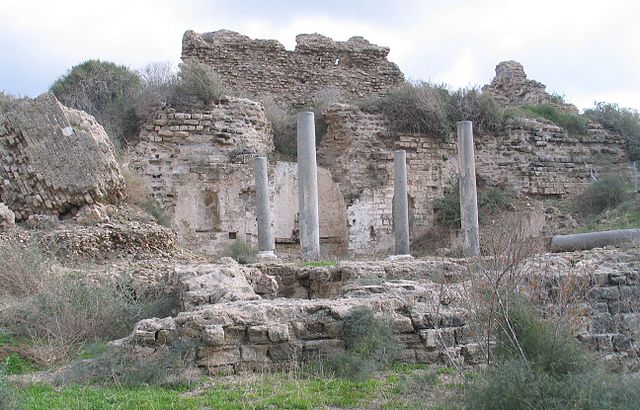
Visit Massada  – Byzantine Church

Mahane Yehuda Market – Jerusalem

Hurshat Tal National Park Camp Site – Northern Israel

Rosh Pina – Northern Israel

Dado Beach – Haifa

The City of Haifa, from 1900 to modern times 

The Dead Sea – The lowest point on earth


Photo Gallery

Reading Time: < 1 minute

Anglo-List photos, memorable events and moments and information videos.

The Anglo-List walks with the visually impaired on the Haifa beachfront


Photo gallery


Video gallery

Camp Sites – Southern Israel

0

Reading Time: 2 minutes

Camping in Israel

Southern Israel’s Best Camp Sites

Hebrew: חניוני לילה – אתרי קמפינג בדרום

Since the onset of the Covid-19 coronavirus epidemic all visits to camp sites run by the Israel Nature and Parks Authority must be coordinated prior to your visit.

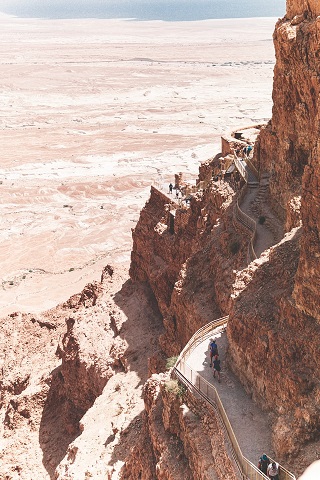
Masad National Park

Masada National Park

The best months to visit Masada National Park are April, May, September and October.

Facilities: Toilets and hot showers, electric outlets, field kitchen including fridge, cooking corner, large barbecues, tables and benchesThe camping fees include the entrance fee to the national park but does not include the cable car.

Location:  The western approach to Masada

Tel: 08-627-6853

Eshkol National Park

Facilities: Extensive lawns, wheelchair accessible, picnic areas and a playground. 

Location: Near Ofakim in the Negev

Tel: 08-998-5110

Mamshit National Park

Facilities: Camping, bungalows & Tukuls

Location: Nabatean city in the Negev – 8km S.E. of Dimona

Tel: 08-655-6478

Hai-Bar Yotvata

ibex hai-bar

Location: The Hai-Bar is situation on the Dead Sea-Eilat (no. 90) road, between kibbutz Yotvata and Samar – 35 km north of Eilat

The camping area is at the entrance to the reserve, for individuals and groups, with prior coordination.

Tel: 08-637-6018

Camp Sites in Central Israel.

Reading Time: 2 minutes

Camping in Israel. Best Camp Sites in Central Israel.

Hebrew: חניוני לילה – אתרי קמפינג במרכז

Yarkon National Park

yarkon2

2.5 acres of shaded grounds, ablutions for disabled, two cooking areas.  Mostly schools, youth movements and organized groups use the campground.

Tel: 03-9030760

En Hemed National Park

Facilities: picnic tables, playground equipment, wheelchair friendly.  Camping for groups of 100 or more. 

Location: Just off the Jerusalem Tel Aviv highway

Tel: 02-5342741 Phone prior to arrival

Ashkelon National Park

Ashkelon National Park – Image Credit: WikiMedia Commons (Bukvoed)

Facilities: Extensive grounds for up to 300 tent, toilets, picnic tables, campfire corners and basic lighting.

Directions: At the main entrance to Ashkelon, drive west toward the sea. At the soldiers recreation village turn left to Ashkelon National Park.

Tel 08-6736444 or 08-6739660

Hof Bet Yanai National Park

Facilities: Camping on the beach in designated areas, showers, toilets, BBQ’s allowed in designated areas only and picnic tables.

Top Tip:  The Alexander Stream runs through the Park and is home to soft-shell turtles.  Keep a look out for them!

Tel: 09-8666230 or 09-8664238

Bet Guvrin National Park

Beit Guvrin National Park – Image Credit: Wikimedia Commons and courtesy of IsraelTourism & Flicker

Facilities:  Camping for groups of over 100 people, by prior arrangement.

Directions: Off the Bet Shemesh-Kiryat Gat road (no. 35) opposite Kibbutz Bet Guvrin.

Tel: 08-6811020 or 08-6812957

Castel National Park

Facilities:  Camping for groups of 100 people by prior arrangement.

Directions: From the Tel Aviv-Jerusalem highway (no. 1) turn south at the Harel junction into  Mevasseret Zion. Pass the local council building turn right onto Ma‘aleh HaCastel St. and proceed to the parking lot. Head up to the site on foot.

Tel: 02-5330476

12 Summer Electricity Saving Tips for the Israeli Household.

Reading Time: 3 minutes

What is the best temperature to set my aircon during the Israel summer?  12 tips for saving electricity.

Hebrew: עצות לחסוך בחשמל בקיץ

These tips are designed to help you choose effective ways to reduce your energy bills. Depending on your local weather conditions (Jerusalem vs. Eilat etc.), the age of your home, past improvements you’ve made and appliances you use will affect your electricity bill.

Whether you spend 3,500 shekels/year or 10,000 shekels/year on your electricity bill,  you can lower your energy bills and do your bit towards saving the environment as well. 

12 smart electricity saving tips

  1. Install a sun boiler and solar panel.  While the initial outlay may seem like a lot, you can rely on our Israeli sunshine to provide you with hot water for about 8-9 months a year.
  2. Nothing is more energy efficient for cooking than your microwave. It uses two-thirds less energy than your stove. We are not suggesting you nuke all your food but use it for quick heating.  Using your oven in the summer, heats up the kitchen.  In open-plan homes, this means the heat will make its way into the living room – not a good thing in the summer.  Choosing a cook-top for Israel…
  3. Surprise! Your dishwasher uses less water than washing dishes by hand. Instead of using the drying cycle, let dishes air-dry to save even more!
  4. An empty fridge warms up faster when the door is open.  Don’t leave the fridge door open for long periods of time.
  5. We all work hard and long hours in Israel, so while using your clothes dryer is an appealing time-saving option, you can save hundreds on your electricity bill by hanging your laundry on the line in summer.
  6. Summer or winter, if you do use your dryer, run full loads and make sure you clean the lint trap after each use.
  7. Peak tariffs and household electricity consumption, in Israel, is  from 5 p.m. to 9 p.m.  If possible run your washing machine and dryers after 9 p.m.
  8. Only run your dishwasher when it is fully loaded.
  9. Dirty air-conditioner filters restrict airflow and can cause the system to run longer, increasing energy use. Check and replace your filters regularly.
  10. Install a ceiling fan, enjoy the breeze and use your air-conditioner less.
  11. When necessary, and if possible, replace old appliances with energy efficient new ones.
  12. Check that doors and windows are properly sealed so that when you are cooling (or heating) your home, the air does not escape.  

Don’t waste!

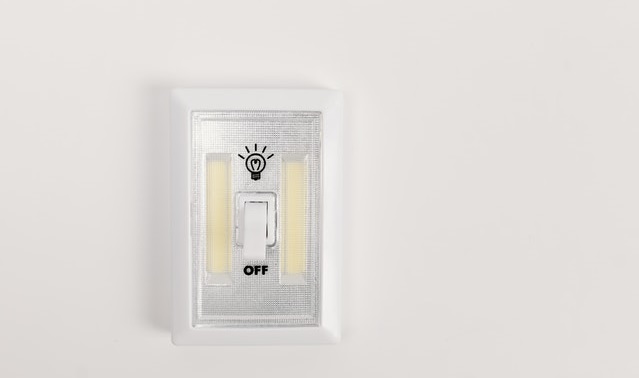
  • Turn off appliances, lights and equipment when not in use and save around 2 percent.
  • Unplug electronic devices and chargers when they aren’t in use.
  • Turn computers and printers off when not in use.  

Safety first

So what is the best temperature to set my aircon during summer?

The best temperature setting when you’re at home? The simple answer – to stay comfortable and be energy efficient it’s recommended to set your air-conditioner to between 24-26ºC when you are home.

Learn these new Hebrew words & phrases with English & transliterations

EnglishTransliterationHebrew
Electrical appliancesMachshirei hashmalמכשירי חשמל
ElectricianHashmala’iחשמלאי
ElectricityHashmalחשמל
Electricity billHeshbon hashmalחשבון החשמל
Electricity consumptionTzrichat hashmalצריכת חשמל
Heat (inf.)Lechamemלחמם
Pay the electricity billShalem et heshbon ha’hashmalשלם את חשבון החשמל
Power failureHafsakat hashmalהפסקת חשמל
Save (inf.)Lachsochלחסוח
SummerKayitzקיץ
Solar boilerDud shemeshדוד שמש
TechnicianTechna’iתכנאי
WinterHorefחורף

Dental Care & Dental Clinics in Israel.

Reading Time: 2 minutes

Israel’s dental care options – Health Fund or private clinics?  Which is best?

Hebrew: טיפול בשיניים –  טיפול פרטי וטיפול מקופות חולים

Dental Care for Adults

Dental care for adults is not included in the Sal HaBriut – the National Health Basket.  Nevertheless all 4 of the health funds operate dental clinics across the country and health fund members can opt for dental care via one of these clinics.  If you have one of the superior health plans, some dental treatments may be discounted.

You can also choose to go with a private dentist if you prefer.  Costs vary and it pays to shop around.  Many will argue that the treatments offered by the health fund clinics are inferior.  Others are of the opinion that these clinics offer comparable services to any privately operated clinic and are very happy with their choices.

Members of supplementary health plans like Maccabi Gold and Sheli, Clalit Zahav and Platinum, Leumit Silver and Gold as well as Meuhedet’s Adif and C, are entitled to certain discounts on some of dental treatments you receive at one of their clinics.  Each clinic has its own price list.

Private dentists and orthodontists will offer you a full range of dental services, and each private clinic has its own price list and discounted services.

 Free Dental Care for Children

As of 1 January 2016, children until the age of 14 are entitled to additional, free, dental care treatment via health fund operated clinics.  A detailed list of treatments can be found on www.call.gov.il (Hebrew)

Some of the health fund operated clinics offer selected treatments to children until the age of 18 for free while other offer them at a reduced rate.

Many private dentists offer selected treatments to children for free as well.

How much does is costs to go privately?

  • The health fund clinics offer you one free annual checkup.  Most private dentists offer this too.  If not, you could otherwise expect to pay around 150 – 200 shekels for a private checkup.
  • We were quoted between 150 – 500 shekels for a filling at a private dentist
  • We were quoted anywhere between 800 – 3,000 shekels for a root canal treatment.
  • A crown – in the region of 2,000 NIS

Private Dental Insurance

You can purchase specialized dental insurance from any of the large independent insurance companies.  These policies may include specialized treatments as well as dental care abroad.

Dental Care Tips

  • Whether your dentist is affiliated to one of the health fund clinics, or you choose to go privately, local dentists have qualified all over the world and standards may differ considerably.  We strongly suggest you get recommendations from family and friends.
  • The Tel Aviv University School of Dental Medicine offers a selection of dental services to the public at heavily reduced rates.  Note that these treatments are being performed by students under the supervision of the Dental School.
  • The Ministry of Health’s dental care database

How to change from one Health-Fund (Kupat Holim) to another.

Reading Time: 2 minutes

Changing Health-Funds (Kupat Holim) to another

Hebrew: ?איך מחליפים קופת חולים

switching health funds

Whether you are not satisfied, or for any reason whatsoever, in Israel you have the right to switch from one health-fund (Kupat Holim) to another, provided you have been a member of your current health-fund for at least one year.

Here is what you need to do

  1. You need to obtain the “Tofes Hodaat Maavar”  – The Notification of Transfer Form – from any branch of the post-office
  2. Fill out the form and hand it in at the post-office.  You will be charged a nominal fee
  3. You can also complete this procedure via the Bituach Leumi website (National Insurance Institute) – the form is in Hebrew only 🙁
  4. Make a request from your current Health Fund that your medical records and information be transferred to the new one. There is no charge for this service.

Note that your rights as a member of a health-fund are not harmed in any way when you transfer funds.  You are entitled to the same identical services in each of the 4 health-funds, as prescribed by the law.

When can I change from one Kupah to another?

You are only entitled to change health-funds at 6 different intervals during the year and you cannot change over more than twice a year.

Dates for Changeover Changeover Effected Date
January 15

March 15

May 15

July 15

September 15

November 15

March 1

May 1

July 1

September 1

November 1

January 1

Basket of Israel’s Health Services – Sal HaBriut.

Reading Time: 2 minutes

The Israel basket of health services – Sal HaBriut

Hebrew: סל הבריאות

basket of health services

The Basket of Health Services, Health Basket,  Sal HaBriut or Sal Sherutei Briut in Hebrew, all refer to a range of essential medical services that the Israel health-funds are obligated, by law, to provide to their members. The Health Basket also includes treatments, medications and equipment.

The Health Basket is defined by law and does not differ from health-fund to health-fund.  The Health Basket is reviewed from time to time and revisions or changes can be made.  When changes are made it could happen that the medication you have been taking for a period of time, is no longer covered in the Health Basket, and it has been replaced with something similar.

Services included in the Health Basket are provided free or at a reduced cost.  In effect, you may be responsible for a percentage of your prescription cost (between 10% – 90%), a doctor’s visit or other examinations or diagnostic procedures.  If a medication or service is not included in the Health Basket, you will have to cover the costs on your own.

The health-funds are obliged to provide the following services as outlined by the Ministry of Health – Misrad HaBriut

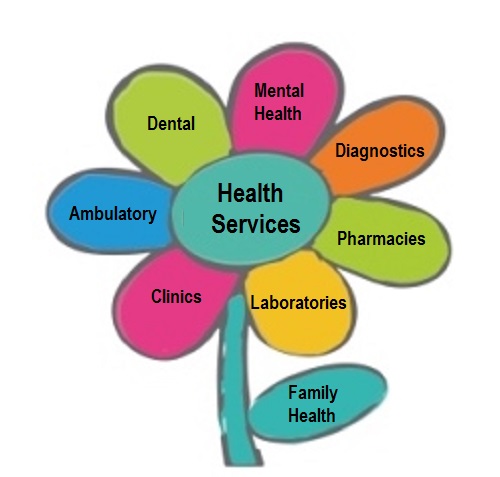
  • Visits to clinics, consultations, diagnosis, treatments from family doctors, specialists and para-medics
  • Prescriptions 
  • Hospitalization and emergency room services
  • Laboratory services either within the health-fund or if necessary through an outside facility. The lab costs may be covered partially or fully.
  • Certain medical equipment
  • Certain diagnostic procedures including x-rays and scans
  • Rehabilitation
  • Paramedical services like physiotherapy, speech therapy and occupational therapy.

Please note: All diagnostic and treatment procedures are provided upon a physician’s referral only.

Need to know if something is in the Health Basket?

Consult with your doctor, contact your Health Fund or the MOH for more detailed information.