19.3 C
Jerusalem
Tuesday, June 9, 2026
Sample Page
Home Blog Page 107

Ammunition, bandage and other confusing Hebrew words

0
Reading Time: 2 minutes

How do you say bandage in Hebrew? Don’t confuse these 4 Hebrew words.

There are plenty of words in Hebrew that confuse absolutely everyone. They either look alike, sound alike or, worst of all, look and sound alike. Here are 4 words that confuse everyone and especially new Hebrew speakers. They are not Homophones but they do sound fairly similar.  Don’t rely on your spell-checker. Watch out for these words and take a moment to learn them and their meanings.

Transliteration Hebrew Meaning
bandage Tachboshet תחבושת Bandage / Dressing
oxide Tachmotzet תחמוצת Oxide
ammunition Tachmoshet תחמושת Ammunition
clown Tachposet תחפושת Fancy dress costume

More like these…

Prime Ministers of Israel

Reading Time: 2 minutes

A list of Prime Ministers of the State of Israel from 1948 until the present.

israel coat of arms

Name Term
David Ben-Gurion
דָּוִד בֶּן-גּוּרִיּוֹן
14 May 1948 – 26 January 1954
Moshe Sharett
משֶׁה שָרֵת
26 January 1954 – 3 November 1955
David Ben-Gurion
דָּוִד בֶּן-גּוּרִיּוֹן
3 November 1955 – 26 June 1963
Levi Eshkol
לֵוִי אֶשְׁכּוֹל
26 June 1963 – 26 February 1969
Yigal Allon
יִגְאָל אַלּוֹן
26 February 1969 – 17 March 1969
Golda Meir
גּוֹלְדָּה מֵאִיר
17 March 1969 – 3 June 1974
Yitzhak Rabin
יִצְחָק רַבִּין
3 June 1974 – 20 June 1977
Menachem Begin
מְנַחֵם בֵּגִין
20 June 1977 – 10 October 1983
Yitzhak Shamir
יִצְחָק שָׁמִיר
10 October 1983 – 13 September 1984
Shimon Peres
שִׁמְעוֹן פֶּרֶס
13 September 1984 – 20 October 1986
Yitzhak Shamir
יִצְחָק שָׁמִיר
20 October 1986 – 13 July 1992
Yitzhak Rabin
יִצְחָק רַבִּין
13 July 1992 – 4 November 1995
Shimon Peres
שִׁמְעוֹן פֶּרֶס
(4 November 1995)
22 November 1995 – 18 June 1996
Benjamin Netanyahu
בִּנְיָמִין נְתַנְיָהוּ
18 June 1996 – 6 July 1999
Ehud Barak
אֵהוּד בָּרָק
6 July 1999 – 7 March 2001
Ariel Sharon
אֲרִיאֵל שָׁרוֹן
7 March 2001
(4 January 2006 14 April 2006
Ehud Olmert
אֵהוּד אוֹלְמֶרט
(4 January 2006)
14 April 2006 – 31 March 2009
Benjamin Netanyahu
בִּנְיָמִין נְתַנְיָהוּ
31 March 2009 – 13 June 2021
Naftali Bennett – נפטלי בנט

Alternate Prime Minister – Yair Lapid

From 13 June 2021 Incumbent

Did you know?

  • David Ben Gurion was born David Green
  • Yigal Allon graduated from the Kadoorie Agricultural High School in 1937 and was one of the founders of Kibbutz Ginosar
  • For a time Golda Meir lived on Kibbutz Merhavia where she worked in the chicken coops
  • Ehud Olmert served as mayor of Jerusalem from 1993 to 2003
  • In his spare time Ehud Barak is a classical pianist with many years of study behind him
  • Naftali Bennett’s parents were Olim from the USA

Presidents of the State of Israel

0
Reading Time: 2 minutes

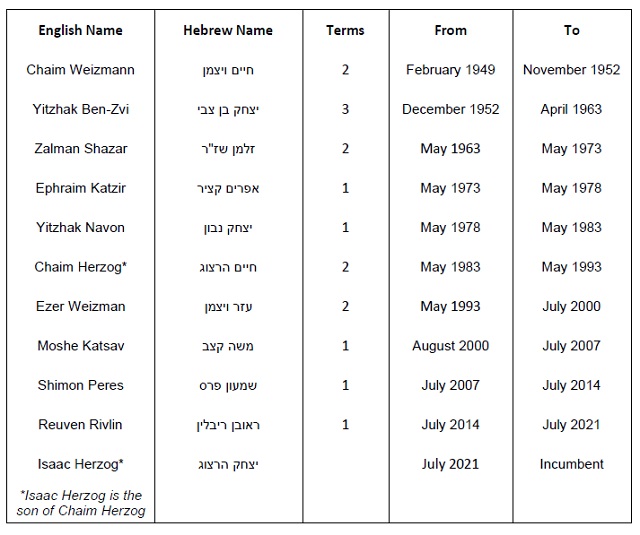
The 11 Presidents of the State of Israel

Incumbent – Isaac Herzog

Isaac “Bougie” Herzog is the 11th president of the state of Israel, and was inaugurated on 7 July 2021. He is the son of Israel’s 6th President, Chaim Herzog.

A lawyer by profession “Bougie” served as the Government Secretary from 1999 and 2001. He was a member of the Knesset from 2003 to 2018. He held several ministerial posts between 2005 and 2011, including serving as Minister of Welfare and Social Services from 2007 to 2011 under Prime Ministers Ehud Olmert and Benjamin Netanyahu.

He served as chairman of the Labor Party and the Zionist Union alliance from 2013 and 2017. He served as the Leader of the Opposition from 2013 to 2018 and was the Labor Party candidate for Prime Minister during the 2015 elections.

Chairmen of the Provisional State Council (1948–1949)

The Declaration of the Establishment of the State of Israel was proclaimed on 14 May 1948 by David Ben-Gurion, the Executive Head of the World Zionist Organization and Chairman of the Jewish Agency for Palestine.

As Chairman of the Provisional State Council, Chaim Weizmann served as the de facto head of state from 1948 – 1949 until his election as President.

NameHebrew NameFromTo
David Ben-Gurionדוד בן-גוריון14 May 194816 May 1948
Chaim Weizmannחיים עזריאל ויצמן 16 May 194817 February 1949

Presidents of Israel (1949–present)

Chaim Weizmann, Zalman Shazar. Chaim Herzog and Ezer Weizmann all served 2 consecutive terms as President. Yitzhak Ben-Zvi, served three consecutive terms.

Bituach Leumi – Israel’s National Insurance Institute

Reading Time: 3 minutes

The National Insurance Institute – HaMosad LeBituach Leumi

Hebrew: המוסד לבי[td_smart_list_end]טוח לאומי

bituach leumi logoThe National Insurance Institute – Bituach Leumi –  is a government office responsible for collecting national insurance contributions and payments in accordance with the provisions of the law and regulations of the State of Israel.

Unemployment, monthly allowance for children up until age 18, disability, pension, maternity benefits, work accidents, burials, income support, righteous gentiles, benefits for demobilized soldiers are just some of the issues they oversee and of course registering your business and  insurance contributions for self-employed business people in Israel.

Branches of Bituach Leumi in the main centers, across the country

Afula 1 Menachem St. P.O.B. 2042, 1828201
Ashdod 14 HaBanim St. 77100
Ashkelon 101 HaNasi St. 73283
Beer Sheva 6 Wolfson St
Bnei Brak 12 Aharonowitz St. 51377
Hadera 7A Hillel Yaffe St. 3820310
Haifa 8 Pal-Yam Blvd
Holon 26 Pinhas Lavon St. 5816201
Jerusalem 4 Shimon Ben Shatach St. 9414704
Karmiel 11 Nesiei Israel Blvd. 2192111
Kfar Saba Weizman 39
Krayot 50 Ahi Eilat St.
Nahariya 62 Weizman St. 22100
Nazareth 3 HaMachzavot St. Industrial Area 16000
Netanya 68 Herzl St. 43239
Petach Tikva 72 Rothschild Blvd. P.O.B 454,4947332
Ramat Gan 15 HaHashmonaim St. P.O.B 10300, 5248284
Ramle 9 Danny Mass St.
Rechovot 64 Remez St. 76449
Rishon LeZion 7 Yisrael Galili
Tel Aviv 17 Yitzhak Sade, 61201
Tiberias 1 Zaki EI Harif St
Yaffo 30 HaTkuma St. P.O.B 8507, 61084

Bituach Leumi Self-Service Stations

An assortment of services are available at the self-services stations, at the main branches, including:

  • Authorizations regarding benefits – Authorizations of payments and entitlements in most issues relating to benefits
  • Authorization regarding insurance contributions – Account information and authorizations for income tax purposes
  • Authorization regarding insurance – Authorizations that delineates work periods and types of work according to NII listings
  • Authorization regarding health insurance – Authorization of membership in health funds
  • Summary of information regarding unemployment benefits
  • Summary of information regarding insurance and collection of contributions
  • Instructions, at the self-service stations, are provided in Hebrew, Arabic and Russian.

Mobile Branch

Bituach Leumi operates a mobile branch which reaches areas where there are no local National Insurance Institute branches and where there is a high demand for service. It provides a wide variety of services: forms and authorizations, replies to inquiries regarding the status of claims/files, payments, submission of claims and documents, etc..

The mobile branch is regularly active at Kuseifa, Ar’ara, Hura and Segev Shalom – Mondays, Wednesdays  08:30-12:30, at the bureau of social services.

________________________________________________________________

________________________________________________________________________


Contact Bituach Leumi

The national telephone number for Bituach Leumi is *6050 

The Department of Public Enquiries is located in Jerusalem and their telephone number is 02-6709070

The Bituach Leumi website is www.btl.gov.il.

Online Services

The National Insurance Institute recently announced a number of services that can be done online via their website and they include filling in forms for:

  1. Application for maternity benefits
  2. Application for unemployment benefits
  3. Application for general disability allowance
  4. Application for work injury claims
  5. Annual tax returns
  6. Updating bank details for the monthly child allowance benefit

Calculating your Bituach Leumi Benefit

The Bituach Leumi website’s online calculators allow you to estimate the sum of the benefit you are entitled to.  A Bituach Leumi Claims Officer will determine the precise and exact amount you are entitled to receive.

Speak English in Israel

0

Reading Time: < 1 minute

Speak English!

Yes, this is Israel, and the official languages are Hebrew and Arabic, but many immigrants look for companies that can speak to them in English and French.

There are an estimated 600,000 English-speaking Olim in Israel who have immigrated from North America, Australia, South Africa and the UK, and they have high expectations of Israeli companies. They take a dim view of mistakes in menus and company literature, and they believe that English should be Israel’s third official language.

Suzanne Suckerman, founder and developer of Anglo-List.com, which promotes English-speaking businesses to expats and Olim, says she has readers who still rely on English information and feel safer with recommendations from other Anglos despite having lived in Israel for more than 40 years!

“Many Olim feel that English should be a required language for all Israeli companies to communicate with their customers. In my experience they are more likely to choose the provider who speaks to them in their own language, even if their product or service costs a little more than the competition.”

Are Anglo Olim different from those of other nationalities? Yes, says Suzanne. “French Olim, and other language speakers that I meet, have different expectations when it comes to learning Hebrew.”

Because everyone wants to feel welcome in Israel, speaking to your customers in their own mother tongue, whether on your telephone answering system or in your marketing campaign. This can make your company a winner with growing numbers of Olim who keep arriving in Israel from France, America and around the world.  Talk to Leadlike about the best way to promote your company to new Olim in their own language.

Instead of Bruchim Habaim, we say Welcome Home!

Aliyah & Living in Ashkelon.

Reading Time: 4 minutes

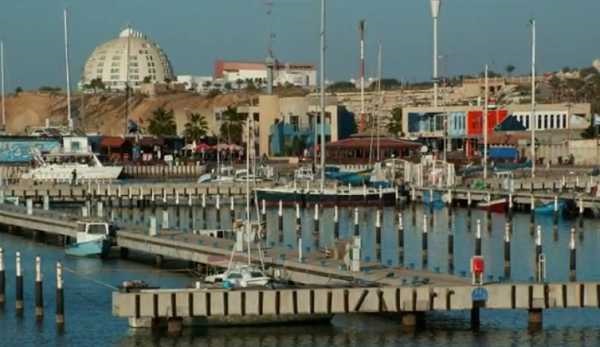
Aliyah & Living in Ashkelon – a growing coastal town.

ashkelon

Ashkelon is a small but growing city on the coast of the Mediterranean Sea. The climate is mild and temperate.  With miles of beaches and golden sand you can enjoy the small town vibe or enjoy  the hustle and bustle of Tel Aviv which is only 50 kilometers to the north.

Ashkelon is centrally located to Tel Aviv, Jerusalem and Be’er Sheva. Public transportation; buses, sheruts (shared taxi) and train services are readily available.  Many Ashkelonians enjoy the peace and tranquility of Ashkelon but choose to work in Tel Aviv and commute daily.

Ashkelon is situated 13 km north of the Gaza Strip.

Renting & Property Prices in Ashkelon

Due to its geographical location and its easy commute to Tel Aviv,  the financial capital of Israel, the city has the potential for increased development and the price of real estate will increase.  A growing English and French speaking community are seeing the potential of Ashkelon both as a residential area and for investment property purposes.

There are a large number of new, as well as second-hand flats and homes, which are quickly being snapped up.  In Ashkelon it is still possible to buy a 3-bedroomed family apartment, with views of the ocean for around 1.5 million shekels.  The price for sea-side property in towns like Netanya and brand new developments in Haifa are much more.  A sea-view apartment in Tel Aviv is out of the reach of most new immigrants.

Billions of shekels are being invested into building 32,000 new dwellings in 7 neighborhoods in Ashkelon.  This project should be completed by 2020 and will turn Ashkelon into Israel’s 6th largest city.  This project will include 2 train stations an industrial area and hi-tech park as well as other public amenities. 

You can expect to pay:

Between 1,800 – 3,500 NIS a month in rental  for a studio, one or two bedroom apartment.

Purchase price for a similar sized apartment is around 550,000-1 million NIS Three to five cost between 2,500 – 5,000 NIS a month for rental.  Expect to pay upward of 900,000 NIS for a similar sized apartment of house.

Of course these prices fluctuate depending on demand, location, new or not so new dwellings, balconies or gardens, parking , elevators and other amenities.

Travel, Tourism & Entertainment

Ashkelon is steeped in history – it was the oldest and largest seaport in Canaan. In the course of its history, it has been ruled by the Ancient Egyptians, the Canaanites, the Philistines, the Assyrians, the Babylonians, the Greeks, the Phoenicians, the Hasmoneans, the Romans, the Persians, the Arabs and the Crusaders, until it was destroyed by the Mamluks in 1270

Historical and archeological sites sites, parks and picnics, hikes and nature walks are all part of what is on offer at the Ashkelon National Park

There is also a sports arena in Ashkelon and international film and music festivals are held each year.

Ashkelon’s Immigrant Community

Immigrants from all over the world live in Ashkelon.  There is an established French speaking community and a fast-growing English speaking community. There are both English and French speaking associations for those who have recently arrived and they offer a wide range of activities. 

The South African Zionist Federation (TELFED) helped establish the Afridar neighborhood and in 1951 the first South African immigrants settled there.  South Americans and Israelis moved in thereafter. 

Learning Hebrew

Learning Hebrew; Ulpan classes (Hebrew learning program – אולפן) are available and are covered by your Aliyah benefits. There are also private Ulpanim (plural of Ulpan) in Ashkelon.

Religious Life in Ashkelon

Religious life in Ashkelon is varied and diverse and is home to both Sephardic and Ashkenazi communities.  There are 3 Ashkenazi shuls popular with the English speaking community

  • Kehilat Netzach Yisrael (Conservative)
  • Central Barnea Synagogue
  • Central Afridar Synagogue

There are currently 7 Mikvot (religious ritual baths) in the city.  There is also a selection of kosher and non-kosher restaurants and supermarkets catering to all levels of observance. 

Primary, Secondary and Tertiary Education

Over 27,000 pupils from pre-school to twelfth grade attend the state and religious schools. There are another 5,500 students attending Ashkelon Academic College.  The College offers degrees in all fields of Engineering as well as B.A. degrees in the Humanities.  There is also a Mechina program (university preparedness – post matriculation program;  Heb – מכינה). Harvard University operated an archeological summer school program in Ashkelon.  

The Ashkelon Municipality tells us that their education goals are: to realize pupil potential and improve attainments, with an emphasis on values; to equip all Ashkelon schools with computer systems capable of advancing science and technology education; to cultivate a rich and creative educational-learning environment in the schools; to develop a wide range of educational initiatives; to enable teachers to improve their professional skills and familiarize themselves with innovative teaching methods; and more.

Healthcare services

The Barzilai Medical Center is one of the two main public hospitals in Israel’s southern region, serving a population of 500,000 in the surrounding areas.  All 4 of Israel’s Health Funds –  Maccabi, Clalit, Meuhedet & Leumit, have branches spread across the city’s neighborhoods.

Jobs & employment opportunities

The northern terminus for the Trans-Israel pipeline, which brings petroleum products from Eilat to an oil terminal at the port is located in this city, and so is the seawater reverse osmosis (SWRO) desalination plant, the largest of its kind in the world. Since 1992, Israel Beer Breweries has been operating in the city, brewing Carlsberg and Tuborg beer for the Israeli market. Intel is located not far from this city, and there are job opportunities for skilled workers and English speakers. Immigrants can also find work at The Barzilai Medical Center and the Ashkelon Academic College.

Local Website for Ashkelonians

The English Speakers of Ashkelon (ESOA) have developed a useful website; events, on-going activities, social services and more can be found on their site.  They also have a Facebook group called ESOA.

Converting your Foreign Driver’s License to an Israeli one.

Reading Time: 3 minutes

A guide to converting your foreign driver’s license an Israeli license.

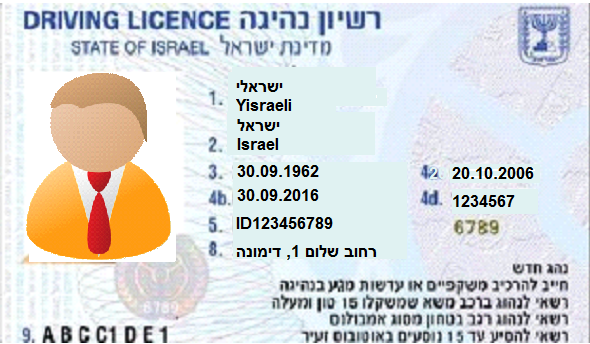
drivers licenseA new immigrant (oleh) has 3 years from the date of his/her Aliyah to to convert their license to an Israeli one. Olim, tourists, temporary residents and an Ezrach Oleh may drive in Israel using a valid foreign license for one year following their arrival.

Requirements

  • You must be in possession of a valid driver’s license issued prior to your Aliyah date
  • You are at least 17 years old  (17 refers to a license for a private motor vehicle – up to 4 tons. Different categories of vehicles have different age requirements)


The Procedure for Getting your Driver’s License

1. Obtain a Tofes Yarok (The Green Form) a.k.a Tofes 18 and with that you will have an eye test The eye test is carried out at an appointed optician approved by the Ministry of Transport.

You will need:

  1. Teudat Zehut or Teudat Zakaut
  2. 50 Shekels
  3. Your glasses or contact lenses, where required
2. Declaration of Health You need to:

  1. Sign the declaration of health (which is part of the tofes yarok)
  2. Get your family physician to sign as well
  3. Keep a copy of the document for your own records.
3. Visit the Licensing Authority (Misrad HaRishui) Before you can arrange driving lessons with an instructor, you need to go to one of the branches of Misrad HaRishui (Vehicle Registry Office); where  they will stamp the Tofes Yarok and thereby confirm that you are fit to take driving lessons.  If you have any chronic health conditions, Misrad HaRishui may require a medical opinion and therefore getting the required confirmation, may be delayed.Take with:

  1. Tofes Yarok
  2. Foreign driver’s license + copy
  3. Your Teudat Zehut, Teudat Zakaut or your Teudat Oleh
 4.  Take lessons There is no set law for a minimum number of lessons to be taken before taking your actual driver’s test.  Most driving instructors however, will insist that you take at least one or two lessons. Budget approximately 125 shekels for a single driving lesson.
 5.  Pay for the driving test The fee for the actual driving test currently stands at 68 shekels.  This must be paid at the Post Office. The fee maybe reviewed from time-to-time.
 6. Taking the test Good luck!

Make sure you have these documents:

  1. Teudat Zehut or Teudat Zakaut
  2. Your foreign driver’s license
  3. A receipt and confirmation of payment for the fee

Note: your driving instructor may charge upwards of 200 shekels for using his vehicle during  the test.  It is not possible to use your own vehicle for the test.

Note: If you take your test on an automatic car, you license will be endorsed and you are then restricted to drive an automatic vehicle.  Taking your license on a manual/stick, allows you to drive both manual and automatic.

You have 2 opportunities to pass the conversion test during the 3 year period.  Should you not pass, you may be required to take the full driving test (theory as well).

 7.  Results You should receive the results within a day or two.  If you pass you will need to go to Misrad HaRishui to get a temporary license issued.
 8.  Paying for your permanent license The cost of a permanent license, valid for two years, is 92 shekels. A license valid for 5 years costs 225 shekels, a ten year license costs 433 shekels.  This can be paid at the Post Office or online on the Ministry of Transport website or by telephone – call *5678
9.  Renewing your driver’s license Anyone over the age of 40 must submit to an eye examination (through a MOT recognized optometrist) before your renewed license is issued.  The cost is 50 shekels.

Driving test tips

  • One of our readers was told by her driving instructor not to wear sunglasses during the driving test.  If you do, the examiner cannot see that you are looking and checking your mirrors and he may fail you.  Good to know!
  • Yigal Machluf, a seasoned driving instructor who works with Olim in the Haifa area, recommends that you start the license conversion procedure at least 6 months before the expiration of your license.  DO NOT wait until the last minute.  You never know how many lessons you will need and delays that may occur.

Getting your Israeli Driver’s License, Driving Lessons & The Test – Survey

Reading Time: 7 minutes

Survey Results – Driving Lessons, Getting an Israeli Driver’s License

survey - finances

For the sake of other new immigrants, or those contemplating Aliyah, we wanted to know more about the process of  getting a driver’s license in Israel.  We asked the community to answer 7 short questions relating to this aspect of Aliyah and relocation.

Respondents were invited to leave their comments at the end of the survey.  Many respondents suggested that the system of obtaining a driver’s license, in Israel, is corrupt, disorganized and in serious need of revision.  We will investigate these issues further in our next survey

Thanks to all of the 478 respondents.

1.  I made Aliyah or relocated from:-

The USA / Canada 68%
The UK18%
Europe4%
Southern Africa7%
Australia / New Zealand3%

There were no respondents from Central or South America, the Former USSR, Asia or Israeli born members.

2.  Please choose one:-

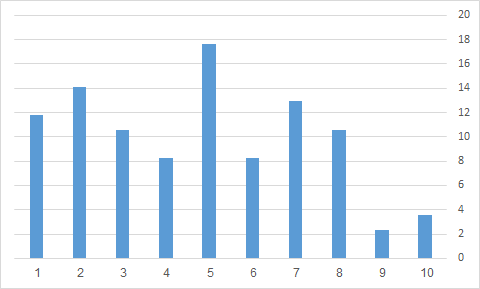
I have a driver’s license from a country abroad and still need to convert it to an Israeli license20%
I have already converted my license and have an Israeli license75%
I am currently driving on an international driver’s license2%
I learned to drive in Israel and have an Israeli driver’s license3%

None of the respondents indicated that they were currently learning to drive for the first time, choose not to drive in Israel, or cannot drive for health or other reasons.

3.  How many lessons did you take in order to get your license?

28 as required by the law for first time drivers of private motor vehicles2.13%
More than 28 lessons3.19%
1 – 5 lessons in order to convert my license60.64%
6 – 10 lessons in order to convert my license3.19%
11 – 15 lessons in order to convert my license5.32%
16 – 20 lessons in order to convert my license2.13%
More than 20 lessons in order to convert my license0 %
Not applicable.  I converted my license many years ago before lessons where required23.4%

4.  How many times have you taken your driving test in Israel?

Once 59.78%
 Twice 7.61%
 Three times 8.7%
 Four times 1.09%
 Five times 1.09%
 More than five times 1.09%
 It was years ago and I did not need to take a test in order to convert my license 5.43%
 Not applicable 15.22%

Some that answered “Not applicable” commented that they had learned to drive abroad

5. How much did you spend on driving lessons in Israel?

Less than 1,000 shekels53.85%
1,001 – 2,000 shekels15.38%
2,001 – 3,000 shekels5.49%
3,001 – 4,500 shekels0%
4,500 – 6,000 shekels2.2%
More than 6,000 shekels0%
Not applicable23.08%

Some that answered “Not applicable” commented that they could no longer remember or that they had not taken any driving lessons in Israel as there was no need at the time.

6. How much have you spent on taking the driving test in Israel?

Respondents were allowed to fill in the amount and comment at the same time.  The answers ranged from 300 to 3,000 shekels.  The majority of answers were in the 1,000 shekel range.  These were some of the responses:-

  • Just the basic fee plus the price to get the license through the post office. A few hundred shekels in total.
  • We were charged 300 NIS each to take the test; the instructor claimed the rate cap of 265 applies only to new licenses not transferring; We suspect she may have paid off the tester. We all passed on the first test.
  • Taking the actual test – 69₪ for the test and 400₪ for use of the instructor’s car. (Took the test in June 2013.)
  • Too much! Highway robbery for 15 minutes of a power-mad guy’s time
  • The cost of the use of (the instructor’s) car+ test x3

7. What improvements can be made to the system of obtaining a driver’s license in Israel?

  • It makes more sense for seasoned drivers to take a defensive driving course, including a few lessons, plus a theory test in their native language, to make sure they understand the laws of the road in Israel compared to where they come from. Having them take a test is silly.
  • Stream line the process and agencies. All exams should be done through Misrad Ha’rishui. you shouldn’t need an appointment just go to the testing site. You should be able to bring your own car, especially if you are licensees from another country. New drivers should have graduated licensing and be able to drive with experienced drivers for practice in addition to mandated driving time with instructors
  • I have no idea…I have heard so many stories about fees, that there is ageism or not. For me, it seems like a mafia run scheme and I have plan to be apart of it. In the States, there are lists of what is needed, set fees, etc…why doesn’t Israel have that?
  • Enable additional offices and additional days of service for converting licenses
  • More streamlined. more regulated by the government, its a very shady business
  • Lower the cost of the lessons and therefore let me take more lessons.
  • The driving instructors and rule about having to take the test in the instructor’s car- this is a racket. They charge whatever they want, using all kinds of scare tactics to get more money out of olim. I understand (maybe) for a new license their excuse that it’s for the tester’s protection, but for an experienced driver it’s a mafia and it is ridiculous. In fact a person should take the test in their own car since that is the car they have to drive on the road.
  • Exchange US license for Israeli license without lessons or tests
  • It should go back to the old way of not having to take lessons if you already have had a license — especially for those who have been driving for many years without incident.
  • The whole system needs to be scrapped. I have been driving safely (never an accident) for 43 years. Why do I have to take lessons and a test? If I had moved to France, I can exchange my license by simply filling out a form and paying the license fee.
  • The test should be longer – I was driving for 3 minutes, which was a joke. Also, there should not have been 3 other learner drivers in the car
  • Instructions how to convert the license in languages other than Hebrew. More available test dates. It was very difficult to get a date for the test and to find a driving instructor that wasn’t trying to rip you off.
  • Allow an automatic conversion within the first year. It is VERY expensive to get a drivers license. I was given no rules of the road book. In fact, my driving instructor whom I met through a NBN fair spent more time on the phone than teaching us how to drive in Israel. And when we complained to her about it , her response was “It was her business and she needed to take care of it”.
  • The English translated theory test was appalling because many questions did not make sense. I missed the three year time slot to change my license and had to pay for lessons where I felt I knew more than the driving instructor. Maybe just have one or two lessons to verify you can drive and NOT the amount a new drivers has to do. Ridiculous! Daylight robbery!
  • Drop the minimum driving lessons and allow the teaches to decide when the individual is ready to take a test based on their skills and abilities – not how much money/lessons they invested
  • Take a few lessons and make sure you ask the teacher to tell you why students often fail. Ask him/her to have you work on those things specifically. My instructor recommended that I not wear sunglasses so that the tester could see where I was looking. He also suggested that I signal for everything (and I think that was a golden suggestion!).
  • I think its a good system, I don’t think it needs improving. The minimum lessons you can have are 2 – a lesson for the instructor to assess you and the lesson before the test. I think its not so bad for a new license in a new country.
  • I quite frankly don’t understand why people in this country even bother getting drivers’ licenses since every driver thinks he is an island to himself and follows his own rules. The consequence is the descent of the roads in to a Hobbesian anarchy of sorts where nothing is wrong so long as you arrive at your destination. Nobody follows any rules. Nobody signals when changing lines or turning or pulling over. Motorcycles and their kin run a mock needlessly endangering themselves and everybody else. People beep and scream incessantly in spite of a supposed law against using one’s horn. Israelis, in short, drive like barbarians. So, my recommendation for improvement? Teach the natives how to drive properly, then worry about us.
  • Currently anyone licensed can drive in Israel as a visitor. After one makes Aliya, having driven for a year or many years in Israel, their license privilege is needlessly revoked. They are forced to take lessons and a test. It is only a money-grubbing scam. Sadly many people like me were ripped off many times over and gave up. If you are unlucky, certain male examiners tend to fail older women and cautious drivers. They are also influenced by prior examiners remarks. Usually, No one will help you when you voice your complaint to the ministry. Some people get lucky. We know of a car dealer, needing to make a car sale, who pulls strings and the driver passes. Most often those who pass the test say their examiner was a woman.
  • I was first time lucky. My wife not. She has failed her 3rd examination. She had driven for 25 years in South Africa with one minor bumper bashing to her name. She has driven to holiday destinations of 600 km, And shared the driving when we drove through the night. She could easily and she did drive a 1000 km when we did long trips. She was also the one who would drive the kids to school and extra murals. But then we get to Israel and she gets totally humiliated by the examiners. I actually am seething like I did when they failed. I tried hard to report this but it just fell on deaf ears. And she is not the only one who had been humiliated…
  • A website that explains Israel road signs in English
  • It seems like the problem is not only for olim – it is an expensive and frustrating process for all Israelis.

Israel’s Disabled Drivers

Vivienne sent us an email and shared her experience:-

“Thanks for the good work. I had no problem with my driving license. I took the requisite 1 lesson, then the test. No problems.

My husband, who is Israeli-born and disabled  had more issues. First Misrad Harishui claimed that his t.z. (teudat zehut) number, which he has had since age 16, was not his. It took a few months to straighten that. Then the international handicapped symbol (the white stick man on a blue background, such as on all handicapped parking parking spaces) is NOT recognized in Israel. One needs the little credit card sign that looks like a nuclear symbol. In spite of having brought a thick dossier from Canada, he was obliged to be re-evaluated, at our expense, by a doctor of their choice. The fellow was rude and unhelpful. All-in-all, it took my husband 9 months – and several parking tickets which were eventually waived – until the paper-work was in order.

It might be prudent to forewarn new Olim.

Such is bureaucracy in Israel. I could write a book about the experience.”

Survey Summary

Two thirds of respondents took less than 5 lessons to convert their license and spend less than 1,000 shekels doing so.  Almost two thirds passed their driving test, first time around.

IDT: Israel daylight saving time – summer & winter

Reading Time: 2 minutes

Israel daylight saving time. Summer & winter time. Updates for 2022.

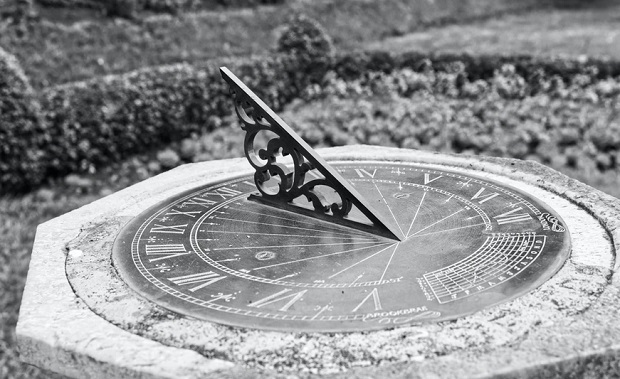
In Israel Daylight (saving) Time (IDT) or Summer Time commences on the Friday before the last Sunday of March when clocks are advanced by one hour.  Daylight saving time comes to an end on the last Sunday of October, when clocks are set back by one hour.  This is known as Winter Time.

israel daylight saving

Until 2013, the exact dates of the Israel daylight saving time period was established annually according to the Jewish calendar and High Festival dates.

How do you say ‘summer time’ and ‘winter time’ in Hebrew and what about summer-time and winter-time?

English

Transliteration

Hebrew

Summer Time

Sha’on Kayitz

שעון קיץ

Winter Time

Sha’on Horef

שעון חורף

Clock

Sha’on

שעון

The summer-time

The winter-time

Tkufat HaKayitz

Tkufat HaHoref

תקופת הקיץ

תקופת החורף

In previous years haggling between the various political parties went on and finally, in 2012 a bill was passed to the effect that from 2013 daylight saving hours would be extended and standardized.  Israel Daylight Saving is now set to begin on the Friday before the last Sunday of March, and ends on the last Sunday of October.

Daylight saving time in Israel begins and ends:

Year

Commencing

Ending

Total Days

2020

March 27

October 25

212

2021

March 26

October 31

219

2022

March 25

October 30

219

2023

March 24

October 29

219

2024

March 29

October 27

212

2025

March 28

October 26

212


There are now between 212 – 219 daylight saving days per year in Israel. 

Some interesting facts about daylight saving time?

  • Thunder Bay in Ontario, Canada was the first location to use DST in 1908. 
  • Germany was the first country to introduce daylight saving time; clocks were advanced by 1 hour on April 30, 1916. The rationale was to minimize the use of artificial lighting in order to save fuel for the war effort during World War I.  The idea was quickly followed by many of the European countries. However, they reverted back to standard time after World War I.  It wasn’t until World War II that daylight saving time made its return in most of Europe and in Israel. 
  • China does not have daylight saving time.  The last time China had daylight saving time, was in March 1991.

Criteria for Blood Donations in Israel.

Reading Time: 2 minutes

Magen David Adom overseeing blood donations in Israel.

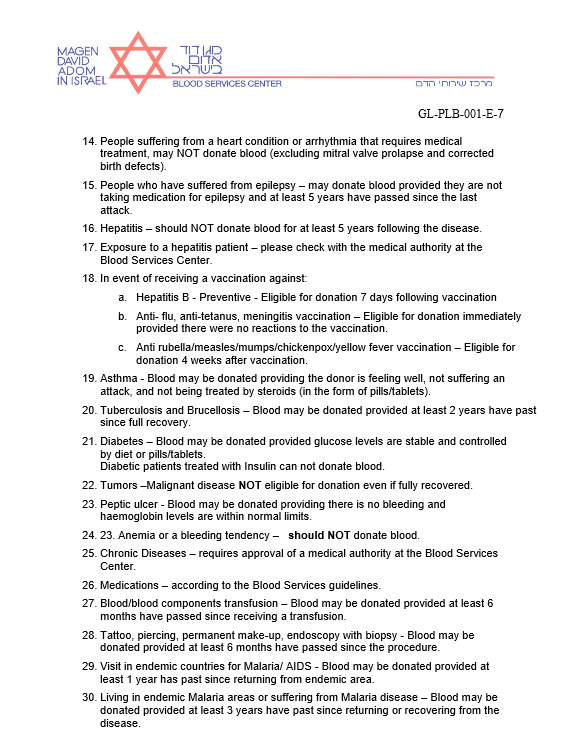
Magen David Adom oversees blood donations in Israel.  There is always a need for blood donors and today would be the best day for you to donate blood.  If you fit the criteria, please consider donating blood at one of the MDA stations across the country.  If you are unable to donate today, you can still do it tomorrow, the next day or any other day in the future.

If you weigh 50kg or more and are at least 17 years of age, in general good health, and meet the general criteria as outlined below, you can become a donor.  Please note that 17 and 18 year old children require parental written consent to donate blood.

Blood donation 1

Blood donation 2

Blood donation 3

Blood Stations

You can donate blood at any of the following stations:-

MDA Stations Address
Haifa 1 Yitzhak Sade
Kiryat Motzkin 75 Hashmonaim
Petach Tikva 30 HaMaccabim
Kfar Saba 51 Tschernikovsky
Herzliya 76 Sokolov
Tel Aviv 2 Alkalyai (Bazel)
Ramat Gan 42 Gilgal
Blood Services at Sheba Medical Center Tel Hashomer
Rishon LeZion 102 Jabotinsky
Holon 1 Harokmim
Rehovot 69 Remez
Jerusalem 7 Hamem-Gimmel
Ashdod 1 Harefua Altalena
Ashkelon 1 Hatchiya

ISRAEL RESIDENTS ONLY: All volunteer blood donors are offered the MDA-Blood-Insurance program, which grants further credit of blood for the donor and his/her immediate family members for one year following the donation. This credit saves donors from needing to bring “replacement-units” in case they need a transfusion during the 12 months following their blood donation.