

Last Updated on April 14, 2026
Celebrate Israel’s Independence Day with a family BBQ and the best beef cuts, fish and vegetarian options.
You may be stuck on sirloin or rib‑eye, but it’s time to branch out and explore other beef cuts that are just as delicious. So which cuts should you consider for your Israeli BBQ this Independence Day?
When it comes to steak, Israeli chefs almost always recommend entrecote, sirloin, and fillet. These three cuts are packed with flavor—but they’re also among the most expensive.
That’s why it’s worth discovering the lesser‑known cuts that grill beautifully and offer great value. Much of the beef sold in Israel is imported from Poland and Argentina, but locally raised Israeli beef is known for its rich flavor and high quality. You won’t find it in supermarkets, though—you’ll need to look for it at a privately owned butcher or a specialty supplier who works directly with local farms.
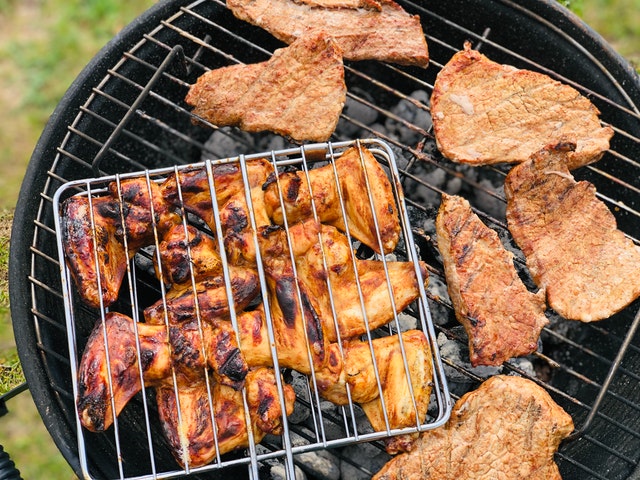
Beef
- Entrecote – (Same name in Hebrew) This cut is similar to a ribeye and is well-marbled, making it flavorful and tender when cooked. The price point is upwards of 130 NIS/kg.
- Ribeye – (Steak Ayin) This cut is from the cow’s rib section and is well-marbled, making it juicy and flavorful when cooked. It can be grilled or smoked for barbecue. A pre-pack of frozen ribeye will cost around 80 NIS for frozen and 120 NIS/kg for fresh. Frozen meats are cheaper than fresh meats but are not comparable in quality.
- Fillet steak – (Fileh Bakar) comes from the cow’s loin. It is prized for its tenderness, juiciness, and mild flavor. The fillet is located beneath the ribs, and because it is not a weight-bearing muscle, it is very tender. Fillet steak may be served with a rich sauce, herbs, or mushrooms. Because it is a premium cut of beef, fillet steak can be expensive, but it is a popular choice for special occasions or as a treat, and Yom HaAtzmaut is the perfect occasion. The queen of beef, you can expect to pay upwards of 180 NIS/kg
- Brisket – (Same in Hebrew) This cut is from the cow’s lower chest and requires hours of slow cooking to become tender. It is popular at barbecues and can be served sliced or shredded. Price point – 80 NIS/kg+
- Short ribs – (Assado) These are cut from the cow’s rib section and have meat on the bone. They are best cooked low and slow to become tender and flavorful. Expect to pay upwards of 70 NIS/kg depending on the quality.
- Flank steak – (Flank or Flanken) From the underbelly, the flank muscle is well-developed with plenty of connective tissue. It is not very juicy but has a strong flavor. Slice it thinly for serving.
- The sheitel comes from the back of the cow. Sheitel has a full flavor and is low in fat. Butchers recommend sheitel that has been aged for at least 14 days. It is also recommended to slice the sheitel into finger-thick steaks. Sheitel is best-eaten medium-rare, brown on the outside and red on the inside. Price Point – 100/kg
- Brazilian Cut – (Spitz Chach) is growing in popularity in Israel. The Spitz Chach is characterized by a thick cap of fat. It is not as popular as sirloin, entrecote, or fillet, but demand is increasing, and its price point is similar to the premium cuts – around 100 NIS/kg
- Denver Steak- (same in Hebrew) is an increasingly popular cut of meat. Denver steaks are relatively tender, with a nice beefy flavor and a good amount of marbling. Denver steaks are great for cooking on the grill. Expect to pay around 120 NIS/kg
- Delmonico Steak (same in Hebrew) is a large, thick steak—up to two inches. Delmonico is a high-quality cut of beef with plenty of marbling and good flavor. Supermarket butchery price is around 100 NIS/kg.
- Top Sirloin – (Avazit), from the back of the thigh is mainly used for preparing minced meat dishes and stews. You should ask the butcher to cut a very thick steak, 4 fingers thick (7 cm) and weighing about 1.4 kg). Once cooked, the steak should rest for 15 minutes. Slice thinly, serve seasoned with olive oil, salt, pepper and lemon zest.
Always cook beef cuts to a safe temperature of at least 145°F (63°C) for medium-rare and above for food safety.
Lamb or Mutton
The best kebabs are made with lamb or mutton, but the lamb price in Israel is outrageously high. There is a way to get around it and take advantage of the great flavor. Fresh lamb price 120 – 180 NIS/kg
For around 30 NIS, you can purchase a small block of lamb fat (Shuman Keves – שומן כבש). Add a small quantity of minced, lamb fat to your raw beef mince and other ingredients, and you’ll get a flavorsome result.
Chicken
Butterflied or spatchcocked chicken, marinated in a sauce of your choice, hot off the grill served with grilled lemons and roasted garlic, is an inviting Yom HaAtzmaut meal. Reminiscent of a medieval feast, there is something satisfying in tearing the freshly grilled chicken off the bone—grilling time 45-60 minutes. Chicken thighs (skin on) need 10-15 minutes on the grill.
Price Point – 24/kg (whole chicken)
Price Point – 28/kg (thighs)
Fish
Basted with fresh lemon juice, olive oil, garlic, salmon, and whole fish like Denise, Amnon, and Bass are delicious on the barbecue.
Price Point – 120 NIS/kg (Fresh Salmon)
Price Point – 60 NIS/kg (Denise)
Price Point – 50 NIS/kg (Amnon)
Price Point – 125 NIS/kg (Bass)
Look for special offers wherever you can. Israelis consume thousands of tons of meat, poultry, and fish over the Yom HaAtzmaut weekend, buy in advance or else expect shortages.
Smoked Foods
Smoked meats are popular, and while not barbecued, meats prepared in a smoker truly hit the sweet spot. Less-expensive, tougher cuts are better suited to the low and slow smoking process. Fat and connective tissues break down into tender morsels. Thinner cuts are not well-suited to being smoked and will be tough and dry. A smoked chicken, served cold with a slaw and potato salad, is a delightful summer meal. You can smoke fish too – thicker, fattier fish like salmon and tuna, smoke well.
Vegetarian
Try our vegetarian black-bean burger. Price Point – 20/2 large patties.
Chag Atzmaut Sameach!
