26 C
Jerusalem
Monday, June 8, 2026
Sample Page
Home Blog Page 96

2017 ALIYAH LIFE SATISFACTION SURVEY RESULTS

0
Reading Time: 4 minutes

Life Satisfaction and English Speaking Olim – Aliyah Survey 2017

A research project between The University of Haifa and the Anglo-List . – Cheryl Zlotnick, RN DrPH, Laura Dryjanska, PhD & Suzanne Suckerman

A detailed survey comprising of 50 questions on various aspects of Aliyah and life satisfaction in Israel, was published on the Anglo-List and the participation of olim was requested.  The survey was promoted via the website and via social media.  The data was gathered, analyzed and prepared.  The paper has since been published.

Zlotnick C, Dryjanska L, & Suckerman S. (2020).  The Association Between Acculturation Variables and Life Satisfaction Among Israeli Immigrants from Four English-Speaking Countries. Journal of Happiness Studies, 21(4):1437-1444.  DOI: 1007/s10902-019-00137-3 

The preliminary findings were made available and included origin, age and gender demographics as follows:

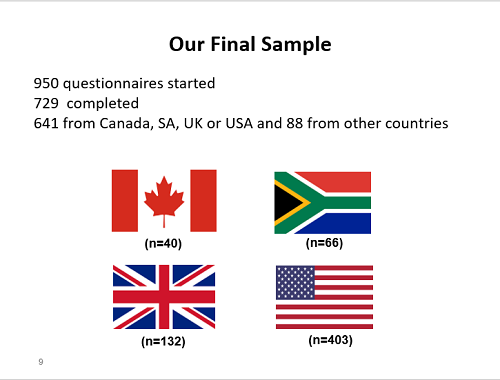
Country of Origin

Age Demographic

  • 25% between the ages of 18 – 39
  • 53% between the ages of 40 – 64
  • 22% were 65 or older

Gender Demographic

  • 74% of respondents were women
  • 26% of respondents were men

In the survey respondents were asked a number of questions on different aspects of life satisfaction including and amongst others:

  • Ranking their Hebrew abilities in various situations
  • Life expectations
  • Self identity and Jewish identity

Further analysis continued and then, on December 18th, 2017, some of the findings were presented to the public in the form of a panel discussion at The University of Haifa, Campus HaNamal, with expert discussants, representatives of Aliyah offices and members of the general public.

Prof. Cheryl Zlotnick, RN DrPH, from The University of Haifa, supervised the research and her presentation for the evening, is published below.  Dr. Laura Dryjanska, who is now an Assistant Professor at Biola University and residing in the USA, participated via Skype.

life satisfaction slide 1


Slide 2life satisfaction slide 2


Slide 3

life satisfaction slide 3


Slide 4

life satisfaction slide 4


Slide 5

life satisfaction slide 5


Slide 6

life satisfaction slide 6


Slide 7

life satisfaction slide 7


Slide 8

life satisfaction slide 8


Slide 9

life satisfaction slide 9


Slide 10

life satisfaction slide 10

Legend:

Black text – almost no difference between countries

Red text – differences between countries


Slide 11

life satisfaction slide 11


Slide 12

life satisfaction slide 12


Slide 13

life satisfaction slide 13


Slide 14

life satisfactgion slide 14


Slide 15

life satisfaction slide 15

Use this Aliyah and relocation guide to manage your new life in Israel


Preliminary Results

aliyah survey results 2017

aliyah survey results 2017

aliyah survey results 2017

 aliyah survey results 2017


Photographs from the presentation

Aliyah survey evening
 From left to right: Prof. Cheryl Zlotnick – University of Haifa, Suzanne Suckerman – Anglo-List, Dr. Adina Schwartz – Nefesh B’Nefesh, Dorron Kline – Telfed, Yanina Musnikow – AACI and Skyped in from the USA, Dr. Laura Dryjanska – Biola University

Members of the audience included: Aliyah volunteer – Gershom Lichtenberg, Yisrael Kohn -Project Manager Jerusalem Olim Department, Elisheva Ackerson -Project Manager Ramat Gan Olim Department, Tzippi Openehimer – Project Manager, Nefesh B’Nefesh Go North, the Lever brothers on an Aliyah pilot trip from South Africa, members of the Oleh community from Haifa and the North – vatikim and new olim from different countries.


Israel General Power of Attorney

Reading Time: 2 minutes

The Israel General Power of Attorney

Hebrew:  (Yipoy Koach)יפוי כח

Power of AttorneyA power of attorney is a document that you sign, authorizing another person – mostly your Israeli lawyer to take legal action, on your behalf.  The Israeli Bar Association rules, an Israeli lawyer may not take any action on behalf of a client, without a properly authorized power of attorney (POA).  There is a standard POA form and it is widely used by Israeli lawyers.

When do I need a Power of Attorney?

  1. You will need a POA when you require a lawyer to represent you in court, before Israeli government and public offices, municipalities and more.
  2. For real estate transactions. The seller signs this type of POA, thereby giving his/her lawyer to transfer the real estate rights to the buyer.
  3. To  represent another person when handling money, bank accounts, investments, buy property, mortgage, sell etc. This is called a General Power of Attorney.
  4. A statutory health power of attorney form –  is relevant for people, who are living in Israel, or who visit Israel and want to appoint a healthcare agent, if they are unable to make healthcare decisions.  It is important to execute this through an Israeli lawyer, as the statutory form must be used.

A POA in Israel must be in Hebrew.  So if you are a new immigrant ask your lawyer to explain the document to you.  They will not provide a full translation (unless you pay for it) but they will give a brief explanation.

An example of a POA form in Hebrew

יפוי-כח

אני הח”מ ____________ ת.ז. ______________ ממנה בזה את מר _______

ת.ז .____________ לעשות ולפעול בשמי ובמקומי בכל הפעולות בהקשר לעניין: _______________________________________

 1.

2.

3.

4.

  שם_______________________

טלפון  _____________________

חתימה וחותמת ________________

תאריך_____________________


Our translation:

General Power of Attorney

I the undersigned ________________________

Identity Number________________________

Hereby appoint ________________________

Identity Number ________________________

to act on my behalf on all matters concerning:

1. ________________________

2. ________________________

3. ________________________

4. ________________________

Lawyer’s name ________________________

Telephone number ________________________

Signature and official stamp ________________________

Date ________________________

Disclaimer: Please note that this is for information purposes only and this POA example should not be used in place of an official document drawn up by a legal professional.  We urge you to consult with an attorney before signing a POA.

Counting up to the Omer from Pesach to Shavuot.

0

Reading Time: 3 minutes

Counting 49 days up to the Omer from Pesach to Shavuot.

Hebrew: ספירת העומר

 counting the omer

The Omer is counted every evening after nightfall, from the second night of the Jewish festival of Passover till the night before Shavuot. There are 49 days of the Omer.  The Omer signifies our preparation for the receiving of the Torah on the holiday of Shavuot. After Bnei Yisrael left Egypt they were in no condition to receive the Torah, and so 49 days, until Shavuot, were given so that they could cleanse themselves and prepare themselves to receive the Torah.  For this reason, we count up to the Omer and do not countdown.

Blessing for Counting the Omer

בָּרוּךְ אַתָּה יְיָ אֱלֹהֵינוּ מֶלֶךְ הָעוֹלָם, אֲשֶׁר קִדְּשָׁנוּ בְּמִצְוֹתָיו וְצִוָּנוּ עַל סְפִירַת הָעֹמֶר.

Baruch Atah Adonai Eloheinu Melech HaOlam Asher Kideshanu B’Mitzvotav Vetzivanu Al Sfirat HaOmer

Blessed are You, Lord our God, King of the Universe, who has sanctified us with His commandments, and commanded us concerning the counting of the Omer.

The Laws of Sefirat Haomer

1) Sefirat haomer should be recited standing. Hazal found an allusion to this halachah from the pasuk, “From when your sickle begins on the grain, begin to count…” The word, “kamah” (grain) may be read, “komah,” implying an erect position. In any event, one who counted sitting has fulfilled his obligation and does not need to count again. Therefore, an elderly or sick individual who has difficulty standing may count sitting (even “lechatehilah”), as is the case regarding other misvot which are to be recited standing (hallel, milah, etc.).

2) The mitzvah is for each individual Jew to count himself, as the pasuk about sefirat haomer is written in plural form, suggesting that all members of the Jewish people must count the omer. Nevertheless, one can fulfill his obligation through the counting of another if both parties had in mind that the single counting should fulfill the obligation of the listener.

3) The counting is to be done at night. Ideally, it should be done after nightfall, approximately eighteen minutes after sundown. However, a congregation which concluded “Arbit” services immediately after sundown but before nightfall, a period about which we are unsure if it is night or day, and there is a legitimate concern that members of the community will forget to count later, they may count then with a bracha. However, under no circumstances may they count the omer before sundown, even on Erev Shabbat after services if the sun has not set.

4) One who forgets to count the omer at night but remembers the following day and counts then without a bracha may continue counting throughout the rest of the omer with a bracha. However, if the individual failed to count a complete day, he may no longer continue counting with a bracha for the Torah requires that the counting be complete. The same applies to one who counted incorrectly and did not correct his mistake throughout the entire day. He, too, may no longer count with a bracha.

5) One who is in doubt whether or not he counted on a given night, and knows that he did not count during the following day, he may continue counting the next night with a bracha since we have a double doubt. Since there are some views that this mitzvah is Biblical even today in the absence of the Bet Hamikdash, we may rely on the double doubt and continue counting with a bracha.

6) When who realizes during twilight (between sundown and nightfall) that he did not count the previous night or that entire day, should count immediately without a bracha and should then wait until after nightfall and count with a bracha.

7) One who counted the days but did not properly count the weeks may continue counting with a bracha.

8) One who is unsure of the day to count and has no way of clarifying what day it is in the omer should not count, as a doubtful counting is not considered a counting at all. If, however, he counted without a bracha and discovered on the following day that he was correct, he may continue counting with a bracha.

Based on the Aram Soba

Omer App

Omer Counter & Assistant by Chabad is an App available on the Google PlayStore and iPhone AppStore for counting the Omer.  It keeps track of the days you have counted, sends an alert when it is time to count, coaches you and teaches you the Omer blessings in Hebrew and English.

Yom Ha’Atzmaut Celebrations 2017

0

Reading Time: 5 minutes

Yom Ha’Atzmaut 2017 – What’s Happening in Israel?

69th Independence Day Celebrations in the Main Centers

Official Ceremonies, Free Concerts, Picnic Spots, Free Museums, IDF Bases, Fly-overs…

Activities for Monday 1st May & Tuesday 2nd May, 2017

Official Ceremonies & Free Concerts

Please note:  The schedules and artists listed here may actually change or differ on the evening especially where an artist is scheduled to perform at multiple locations. Only the main attractions are included in this list.

This list is being updated daily as soon as the information comes in.

Afula

  • Peer Tassi
  • Adir Getz
  • Daniel Yafe
  • Maor Edri

Arad

List of performing artists not yet published.

Ariel

Sarit Hadad

Ashdod

  • Miri Masika
  • Static
  • Ben-El
  • Eden Ben Zaken

Ashkelon

  • Rotem Cohen
  • Lior Narkis

Beer Sheva

  • Eliad
  • Amir Benyun

Bet Shemesh

  • Mosh Ben-Ari
  • Regev Hod
  • Oshry Abergil
  • Katrix
  • Doron Biton

Eilat

On the Promenade near the Mall

  • •Near the Bridge – a stage for local groups
  • •Folk dancing near the Bridge

Givatayim

  • Dag HaNachash
  • Dudu Tasa
  • Izkis
  • Etti Biton

Haifa

  • Eyal Golan
  • Balkan Beat Box
  • Doctor Casper
  • Hatikvah 6
  • Ethnix
  • Natan Goshen
  • Lee Biran
  • Avior Malseh
  • Peer Tassi

Herzliyah

  • Peer Tassi
  • Harel Skaat
  • Mosh Ben-Ari

Hod Hasharon

  • Kobi Afelelo
  • Avraham Tal
  • HaDag HaNachash

Holon

  • Hanni Nachmias
  • Subliminal
  • Uzi Fuchs
  • Shimi Tavori
  • Shiri Maimon
  • Skuzzi

Jerusalem

Mount Herzl – Official Celebration (By invitation only)

  • 19:45 – Yizkor, Speaker of the Knesset, Candle lighting ceremony, Flag raising ceremony, Various dance troupes and IDF Choirs, Fireworks display. The ceremony will be televised on local TV channels.

Kotel HaMaravi (Western Wall)

•8:00pm Prayers and partying

Street parties and happenings all around Jerusalem.  Also appearing are:

  • The Revivo Project
  • Arik Sinai
  • Idan Amadi
  • Alma Zohar
  • Kobi Peretz

Karmiel

+

Kfar Saba

  • Balkan Beat Box
  • Dani Sanderson
  • Ido B & Tzuki
  • Talisman
  • Peer Tassi
  • Zion Golan
  • Regev Hod

Kfar Shmariyahu

  • Dani Sanderson

Kiryat Bialik

  • Moshe Peretz
  • Dudu Aharon
  • Noa Kirel

Kiryat Ono

  • Revivo Project
  • Eve and Lir

Maale Adumim

+

Modiin, Maccabim, Reut

  • Tippex
  • Mosh Ben Ari

Netanya

  • Daniel Moreshet
  • Yarden Jarufi
  • Shaked Komemi
  • Keren Peles
  • Anna RF
  • Ma Kashur and others

Petach Tikva

  • Eden Ben Zaken
  • Omer Adam
  • Itai Levi
  • Moran Mazoz
  • Adi Cohen

Raanana

  • Roni Duani
  • Botner and Yaldei HaHutz
  • Strong Black Coffee
  • Doron Biton
  • Hatikvah 6

Ramleh

  • Shani Yitzhari
  • Matan Cohen
  • Louis Eli
  • Golan Avraham
  • Gilat Yifrach

Rehovot

  • Shiri Maimon
  • Skuzzy
  • Doron Biton
  • Dikla
  • Shlomit Aharon
  • Shimon Levi

Rishon LeZion

  • Avri Lider
  • Margol
  • Micki Gavrielov
  • Miri Maseka
  • Nadav Gadge
  • Static and Ben-El
  • Hatikvah 6
  • HaDag HaNachash
  • Skuzzy

Ramat Gan

  • Muki
  • Jeremy Kaplan
  • HaDag HaNachash
  • Kobi Aflelo
  • Monica Sex
  • Maor Cohen
  • Harek Skaat
  • Efrat Gosh

Ramat HaSharon

  • Keren Peles
  • Rami Fortis
  • Assaf Amdurski
  • Ethnix
  • Ronni Dalumi

Rosh HaAyin

  • Ethnix
  • Doron Biton
  • Oren Chen
  • Zion Golan
  • Uziah Tzadok
  • Itzik Dadia

Shoham

  • Avraham Tal
  • Izzy

Tel Aviv

  • Dudu Tassa
  • Ori Banai
  • Elena Avital
  • Avri Lider
  • Shimon Buskila

Tivon

+

Tzfat

+

Yavne

+

More fun activities for Tuesday 2nd, 2017

Cultural Activities

The Ministry of Culture & Sport as well as The Society for the Preservation of Heritage sites sponsor entrance to a selection of museums, heritage sites and visitor centers across Israel

Please call before you go – book, verify opening hours, guided tours and other details

Southern Israel

  • Yad LaIsha HaLochemet in Nitzanim – Tel: 08-6727895
  • The Open Museum in Negba  – Tel:  050-55605540
  • From Holocaust to Revival Museum in Yad Mordechai  – Tel: 08-6720599 , 052-3923104
  • The Water and Security Museum in Nir Am  – Tel: 050-5709042
  • Mitzpe Gvulot – Kibbutz Gvulot  – Tel: 054-7919000
  • Ben Gurion’s Desert Home (Sde Boker) – Tel: 08-6560469
  • Maoz across from Gaza in Kibbutz Saad – Tel:052-3726644
  • The Joe Alon Center for Bedouin Culture at Kibbutz Lahav  – Tel: 08-9913322
  • The Revivim Museum named for Yosef Weitz – Tel:  08-6562570 \ 08-656263
  • Metzudat Yoav, The Givati Museum – Tel:  08-6611316
  • B’erot BaNegev Visitors’ Center – Kibbutz Alumim – Tel: 08-9937300

Jerusalem Area

  • The Old Yishuv Court Museum – Tel: 02-6276319, 052-4002478
  • Ammunition Hill Memorial Site – Tel: 02-5829392/3
  • The Yellin House – in Motza – Tel: 052-4257345
  • The Gush Etzion Visitors’ Center – Tel: 02-9935160
  • The Tower of David Museum – Tel: 02-626533
  • The Underground Prisoners Museum in Jerusalem – Tel: 02-6233166
  • The Shai Agnon House – Tel: 02-6716498
  • The Bank of Israel Visitor’s Center – advance booking required – Tel: 02-6552828,0 2-6552520, 02-6552718
  • Alone on the Walls of Jerusalem – Tel: 02-6265906
  • Menachem Begin Heritage Center –  Tel: 02-5652020 02-5652011
  • Yad LaShiryon at Latrun – Tel: 08-9784321

Tel Aviv and the Center

  • Independence Hall – Tel: 03-5106426,  03-5173942
  • The Israeli Museum at the Rabin Center – advance booking required – Tel:.*4585
  • Ben-Gurion House – 03-5221010
  • The Jabotinsky Museum – Tel: 03-5287320
  • The Joseph Bau House – Tel: 054-4301499
  • Rokach House – for more info: – Tel: 03-5168042
  • IDF Historical Collection Museum – Tel: 03-5172913 , 03-5161346
  • The Etzel Museum – Tel: 03-525-3307
  • The Hagana Museum –  Tel: 03-560862
  • The Lechi Museum – Tel: 03-6820288
  • The Etzel 1948 Museum – Tel: 03-5177180 , 03-5172044
  • The Nachum Gutman Museum of Art – Tel: 03-5161970
  • The Hosmasa Museum – Holon – Tel: 03-5050425
  • The Mikveh Israel Visitors Center – advance booking required – Tel:  03-5030489
  • The Rishon L’Tzion Museum – Tel: 03-9598862,  03-9598890
  • The Eran Shamir Moshava Museum in Mazkeret Batya – Tel:08-9349525
  • Ayalon Institute, Rehovot Tel: 08-9406552
  • Weizmann House, Rehovot – Tel: 08-9343230

Northern Israel

  • The Sliqim at Kfar Giladi – Tel:  052-2512915
  • HaShomer House Museum – Tel:  04-6941565
  • Tel Hai Courtyard – Tel: 04-6951333
  • The Birya Fortress – Tel:  04-6922433
  • The Restored Pioneer Village at Rosh Pinah – Tel:  04-6936913
  • The Kinneret Courtyard – Tel:  04-6709117
  • Naharayim Experience in Gesher – Tel:  04-6752685
  • The Palmach Cave – Tel: 04-9898946 ,052-4471109
  • The Historic Nahalal Police Station – Tel:  04-6415073
  • The Nahalal “Sliq” – Tel: 052-3347194
  • The Pioneer Settlers Museum – Kibbutz Yifat Tel:  04-6548974
  • HaReut Museum – Tel:   04-6432810
  • The Chaim Shturman House – at Kibbutz Ein Harud – Tel: 04-6486337 |  04-6486328
  • Beit HaMeiri, Tsfat – Tel:  04-6921939
  • The Tower and Stockade Museum at Hanita – Tel: 04-9859677
  • The Jezreel Valley Train Museum – Kfar Yehoshua – Tel:  04-9534226
  • Clandestine Immigration Boat Tour, Atlit – Tel:  04-9841980
  • The Goara Museum of the Hagana – Tel:  04-9597402
  • The Treasures in the Walls Museum, Akko. – Tel:  04-9911004
  • The Underground Prisoners Museum, Akko – Tel: 04-9911375
  • The Fisher House, Kiryat Ata – Tel:  04-8440207
  • The Museum of the First Aliyah in Zichron – Tel:  04-6294777
  • The Hannah Senesh House, Kibbutz Sdot Yam – Tel:  04-6364366   052-8795366
  • The Gdudim House Museum – Tel: 09-8822212
  • The Khan Museum, Hadera – Tel: 04-6322330 , 04-6324562
  • The Haifa City Museum – Tel: 04-9115888  
  • The Herman Struk Museum – Tel: 04-6359962 
  • The National Maritime Museum – Tel: 04-853662 

Also

  • The Israel Museum
  • The Open Museum in Omer
  • The Open Museum in Tefen
  • The Open Museum in Tel-Hai
  • Ramat HaNadiv in Zichron Yaakov

Israel Defense Force – IDF

Every year the Israel Defense Force allows members of the public access to some of the army, navy or air-force bases.  The bases listed below will be open on Thursday from 9 am – 2 pm

Navy Base

  • Ashdod – together with the Ashdod Port

Army Bases

Northern Command

  • Beit Hillel, Elika and Maalot

Central Command

  • Hativa Merhavit – Shomrom & in the Beka
  • Kiryat Arba, ‘Um Tzefa’, Karmi Tzur, Alfei Menashe, Givat Hatachmoshet (Jerusalem), Ariel & Shaked

Southern Command

  • Machaneh Natan
  • Matzadot Natan
  • Matzadot Yoav
  • Rahan and Sderot Bases

Air Force

Israel Ground Forces – Infantry

  • Latrun

Air-Force jets will also be a flying over the following cities and towns (from 10:40 am)

Beer Sheva, Yerucham, Dimona, Arad, Kiryat Gat, Jerusalem, Beit Shean, Afula, Nazareth, Tiberias, Katzrin, Tzfat, Carmiel, Nahariya, Haifa, Cesearea, Netanya, TelAviv, Ashdod, Ashkelon, Sderot, Netivot, Ofakim and Hatezerim.

Camping this long-weekend? 

Seasoned campers share their top tips…

Best Israel travel tips and hacks

Reading Time: 3 minutes

21 of the best Israel travel tips & hacks you need to know about

EIN GEDI

Spring and autumn holidays (Pesach and Sukkot) in Israel are by far the best times to travel and tour the country but for many of us summer is the time we take our family vacay. Since Covid, holiday time is more precious than ever. We have an real urge to experience the thrill of extreme sports or even attempt a simple hike.  Wherever you go, even abroad, and whatever you do, remember – safety first.  Each season and activity has its own unique risks.

Here are some valuable travel-safe tips

  1. In the last minute rush before a trip or outing, we sometimes forget this one, but before you set out, make sure your mobile phone is fully charged.
  2. Make sure you have the telephone numbers of family members, support services, contact details of your hotel or other key people you might need to contact in case of an emergency, entered into your phone.
  3. Ensure that other people know your destination and the expected duration of your trip.
  4. For local trips, turn on your smartphone’s GPS tracking system – this way your location can be determined by emergency services.
  5. If you are traveling in a group, keep only one mobile phone on at a time.  If the battery runs out, you have other phones to rely on.
  6. Make sure you have a printed map with you as well so that you do not need to rely on mobile phone reception to determine your location or destination.
  7. Make sure you have enough water for the day – 3 liters per person is recommended.
  8. Refrain from drinking fizzy drinks and drinks that contain caffeine.  Fizzy drinks do not hydrate you sufficiently and caffeine causes dehydration.
  9. Don’t walk with your water bottle or other kit in your hands. Use a light-weight, well designed back-pack/day-pack for your kit and keep your stuff in it.  You want to have both hands free in case you need to balance yourself, reach out for some kind of support (a branch, a rock or even a railing).
  10. Resist the temptation of taking selfies at the wrong time they could momentarily distract you from being fully aware of your surroundings.
  11. Know the weather forecast before you head out.  Weather presents its own set of unique challenges. A sharav (heatwave and dust storm), rain and flash floods can present many dangers.
  12. Dress appropriately to suit the weather conditions and have the right clothing in your back-pack.  Make sure your shoes suit the terrain, are comfortable, fit well and give you the best support should an emergency arise.
  13. A head-torch is an inexpensive piece of must-have outdoor equipment.  LED torches are very bright and emit a good quality white light which could play a massive part in ensuring you are found.
  14. Dental floss is small and light but extremely handy and strong and it can allow you to repair pretty much anything that is ripped or torn.
  15. First aid needn’t be a heavy weight.  Pack band aid plasters, antiseptic towelettes, a gauze roll, and a few aspirin in a plastic prescription bottle.

Bonus Tips

  1. Take good nourishing snacks and super-foods like dates and nuts, with you.
  2. Have some cash and credit cards on you.  Even in the most unlikely of places you might need them.
  3. Keep a whistle in your back-pack – this is an easy to carry, noise-making communication device
  4. If you have a multi-tool, take it with you.
  5. Sunscreen is a must – you can get sunburn in cloudy weather; Vaseline petroleum jelly helps chafing and bug repellent is handy too.

And now, tip #21

When you’re hiking, cycling or doing any sporting activity, always follow the signs and instructions. Any time of the year, those signs and markers are there to keep you safe. Do not swim if a lifeguard is not on duty.

Pesach tidbits – Lessons from the Haggadah.

0

Reading Time: 4 minutes

Lessons we learn for Pesach from the Haggadah

tzvi FreemanThis website embraces all religions and all philosophies. We do not identify ourselves with any particular stream of Judaism – all are welcome.  Each person on his own journey of discovery…

On the Chabad website we come across some interesting ideas and thoughts that may interest you and we are sharing them in an abbreviated form.

These Haggadah tidbits were written by Tzvi Freedman.

Bio: Over the past 40 years, Tzvi Freeman has run a public Seder almost every year, at various Chabad Houses and Pesach resorts.  Rabbi Freeman is a senior editor at Chabad.org, and author of several books, including two volumes (third one on its way) of Bringing Heaven Down to Earth.

1. The Exodus & the Messianic Era

…all the days since that first mass escape are really one long exodus. Every day, whatever we are doing, wherever we are doing it, is another step in leaving our personal exile, and the exile of the whole world. It’s just that leaving Egypt was the first leap forward, and ever since then, we’re running on that impetus.

All human freedom began with the Exodus.

2.  The Four Children + Another One

We know about ‘The Wise Child’, ‘The Chilled-out Child’ (a term Rabbi Freeman uses), ‘The Simple Child’ and ‘The Inquisitive Child’.  Who/what is the ‘5th Child’?

The 5th child is the one who didn’t turn up on Seder night. Probably not his fault. He might not even know it’s Passover. If he would, and if he knew how much we would like to see him, good chance he would be real eager to come.

There was a generation not long ago that was the wise child. They had learned much Torah and knew how to ask questions. Then there was a generation that learned Torah, but wanted out—the generation of the chilled-out child.

Next came a generation that learned only for the bar mitzvah, and could ask only simple questions. Then a generation that didn’t even know that there was a question to ask.

And now, the fifth child. The child who doesn’t even know that he or she is a Jew.

This Seder is for the fifth child as well. Because if we’re inspired enough by this Seder, we’ll make sure that the fifth child will be at the next one.

3. Slaves of Pharaoh

If you’re identifying with this story, that may be because it sums up the human condition. We’re all slaves of Pharaoh.

We’re enslaved by our positions in life, by our everyday tasks, and just by having physical bodies. That’s our Egypt.

We feel that way because we don’t really belong where we are. Because we’re all G‑d’s children. Within each one of us breathes a spark of the divine.

So, here’s this divine spark sent to earth on a mission to heal and transform the world, and instead it’s sitting in some cubicle creating dumb ads to convince people to buy stuff they don’t need. Or some other form of building storehouses for Pharaoh.

There’s a key difference, however. In Egypt, we could only wait for G‑d to take us out from there with miracles and wonders. In our case, G‑d is also waiting for us to do some miracles and wonders.

That’s why He gave us a Torah: to show us how to make miracles. To take the mud of a mundane world and transform it into the building bricks of a beautiful world.

We do our miracle, and He does the rest.

4. Redemption

Why does no one else have a story about their people being miraculously redeemed from slavery?

It seems it never occurred anywhere else. And it’s not something you can make up and convince people it happened to them.

Meaning that with these miracles and wonders, the Creator was bringing something new into His universe: the idea of human freedom—that we really have no limits.

The Exodus was the beginning of the flattening of the Egyptian pyramid. It meant that even the guy at the bottom of society can talk with the Ultimate Boss of All Things, and his cry will be heard.

5.  The Plagues

It seems these rabbis understood the plagues as a sort of detox program for Egypt. People’s behaviors, words and thoughts leave negative energy in the environment. The plagues of blood, lice, etc., were the effects of that negativity being released. That bad energy wasn’t letting us leave. But once it was cleaned up, we could get released too…

6.  The Most Important thing at a Seder

Q. What is the most important thing to have at a Seder?

A. A Jew

Why?

The matzah didn’t leave Egypt. Neither did the wine or the bitter herbs. The lamb isn’t even here. The Jew is the only thing here that’s real. The Jew actually left Egypt…

7. Liberation in Every Generation

The Egyptians ruled over our bodies and our spirits. When we left Egypt, our spirits were eternally liberated. Whatever others may inflict upon us, we retain the power at any moment to connect to the Infinite and be free…

Preparing the kitchen for Pesach

0

Reading Time: 2 minutes

Preparing sinks and countertops

Before Pesach, thoroughly clean the sink, countertops, and kitchen tables from any possible Chametz residue. Since we usually don’t place hot food on these surfaces, which are not porous, thoroughly cleaning them would be sufficient. Following the Sephardi opinion of Rabbi Ovadia Yosef z”l, pouring boiling water on them is recommended as an extra precaution.

Preparing the kitchen for Pesach: Invisible chametz

Expressed here is the mainstream Sephardic tradition. Many other rabbis, Ashkenazi and some Sephardic, hold different views. Consult your community rabbi.

oven cleaningPreparing sinks and counter-tops

The sink, counter-tops and kitchen-tables should be thoroughly cleaned before Pesah from any possible Chamets residue. Since we usually don’t place hot food on these surfaces, and these surfaces are not porous, cleaning them thoroughly would be sufficient. Still, following Rabbi Ovadia Yosef z”l opinion, it is recommended to pour boiling water on them as an extra precaution.

Cleaning tables

A regular dining table, wood or glass, should just be just thoroughly cleaned. It is customary to cover it with a new tablecloth for Pesach.

Cleaning the dishwasher

Before Pesach, the dishwasher should be thoroughly clean of any visible food’s residue. Then run it on an empty cycle with detergent and without dishes. Thus, the dishwasher becomes ready for Pesach use. Some Rabbis recommends replacing the dishwasher’s racks or to use some type of added base to cover the racks.

The Oven

The oven should not be used for 24 hours. Thoroughly clean it before Pescah to remove any possible Chametz residue. Then

1. if it is a self-cleaning oven, one self-clean cycle will be enough to make it Pesach ready.

2. if it is not a self-cleaning oven, after it has been thoroughly cleaned, run the oven on the highest temperature-setting for about an hour, including the racks. Then the oven is Kosher for Pesach.

Cleaning the Microwave

Thoroughly clean the microwave before Pesach to remove any possible Chametz residue. Then, take a bowl of water with some detergent or soap in it and let it boil inside the microwave for a few minutes, until the microwave walls are filled with steam. If the microwave walls are porous this vapor would expel all absorbed Chametz residues, rendering the microwave Kosher for Pesach (If they are not, then the walls will not reabsorb any Chametz anyway). If you can’t do this and you need to use a year-round microwave during Pesach, you should cover the food in a container, Ziploc or any other airtight microwavable cover.

Cleaning the Ninja

How do you clean your Ninja grill for Pesach?  Please let us know in the comments section below.

Easiest way to sell Chametz online.

0

Reading Time: 2 minutes

This year more than ever, selling you chametz online is the easiest solution. Here’s how it’s done.

sell chametz

Leading halachic authorities have ruled that online authorizations are acceptable for the purpose of selling chametz and with Jewish communities in worldwide lockdown, physically removing chametz from the home and selling it this year is a little more complicated.

The Chief Rabbinate of Israel offers an online service for the sale of chametz.  Access the Israel government services website portal here and follow the instructions.  The form is in Hebrew but here is a translation of the required fields which you can fill out in English.

Reading from right to left (all those marked with an asterisk are compulsory fields and must be filled in)

Field 1 – Surname*

Field 2 – First name*

Field 3 – Email address*

Field 4 – Telephone number

Field 5 – Country*

Field 6 – City*

Field 7 – Street*

Field 8 – Number*

Field 9 – Apartment number

Field 10 – Area code

Field 11 – If you have chametz for sale at any location other than the address listed, please provide details in the comment box


Everything you need to make the upcoming Pesach holiday a memorable festival…


You can also sell your chametz via Chabad – use their interactive form to easily and quickly sell your leavened food, no matter where you are in the world.

Once you have completed to process of selling the chametz, the chametz must be put in closed and marked places until after Passover.

Pesach Chicken, Mushrooms & Olives

0

Reading Time: 2 minutes

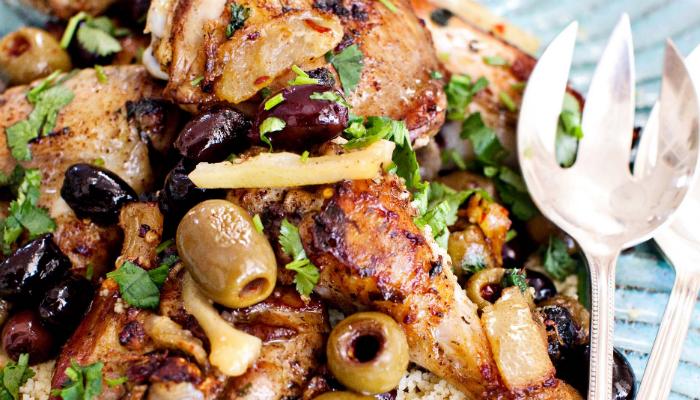
Slow Cooked Chicken with Mushrooms, Olives & Baby Potatoes


Tired of the same-old, same-old recipes your mother and grandmother made year after year for Pesach?  Cooking enthusiasts and foodies might have seen this one on Facebook.  Distinctly similar to a traditional Moroccan recipe (without the mushrooms), the flavors in this recipe were distinct; the herbs, salty olives and slight acidity from the tomatoes were full bodied and well rounded with the wine.

Moroccan chicken with olives

Image credit: Splendid Table

Did you know that Israelis eat approximately 65kg of chicken per person/year – that’s the highest per capita in the OECD? Now let’s get cracking with the cooking.

Ingredients

  • 1 chicken cut up into portions
  • Little potato flour (1/4 cup) for sifting over chicken
  • 1 tblsp chicken soup powder
  • Little oil for frying
  • 2 onions roughly chopped
  • 1 large red pepper chopped
  • 3 sticks of celery finely sliced
  • 1 tsp crushed fresh garlic
  • 400 g mushrooms
  • 1 cup dry white wine
  • 1 cup Fresh chicken stock or one cube in 1 cup boiling water
  • 1 Teaspoon dried Rosemary
  • 1 Tblsp dried Oregano
  • 1 bay leaf
  • 12 olives in brine (optional) (pips removed, drained and cut in half)
  • 2 Tblsp tomato paste or 1 cup ripe chopped tomatoes
  • 18 baby potatoes

Directions

  1. Dust chicken pieces with potato flour and chicken stock spice
  2. Fry chicken over medium to high heat until golden brown, remove chicken and place into ovenproof dish or crockpot covered.
  3. To the same pot in which you fried the chicken, add a little more oil and fry onions, peppers, celery and garlic.
  4. After about five minutes, add the mushrooms and continue to fry until the moisture starts to evaporate from the mushrooms de-glazing all the lovely flavors and brown bits off the bottom of the pot.
  5. Add the wine and bring to the boil so that the alcohol boils out.
  6. After five minutes of boiling and stirring add the chicken stock and stir
  7. Add oregano, rosemary, bay leaf and olives and give it a good stir.
  8. Remove from heat and add tomato paste or 1 cup ripe red chopped tomatoes.
  9. Stir well and pour sauce and vegetables over the chicken with potatoes in the crockpot. If you don’t have a Pesach crockpot, then place into an aluminum dish or ovenproof dish, add potatoes, and cover.
  10. Bake for 1 hour at 180ºC then remove the cover and bake for another 30 mins until sauce thickens and chicken turns golden brown OR Place into crockpot and cook on high for 2 hours then reduce to low for another hour.

Chef’s Tips

  • 12 olives in this dish are almost too few to notice, add more and use both green and black salty olives
  • Serve with wedges of lemon


Pesach Resources


{module [421]}

Chocolate Marquis Batons for Pesach

0

Reading Time: 2 minutes

Kasher LePesach Recipes

Chocolate Marquis Batons


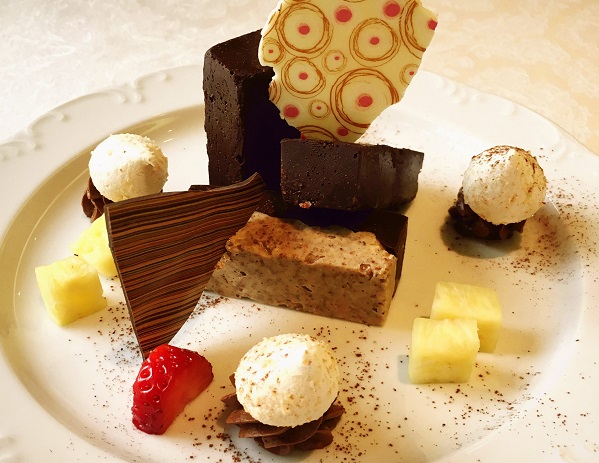
With Pesach around the corner, one of our members shared a delicious recipe from Chef Nir Elkayam, the executive chef at Jerusalem’s luxury hotel, the Inbal.  This recipe proves that ‘Kosher for Passover” can still be synonymous with tasty. The Passover food challenge is creating appealing and ‘normal’ dishes despite the heavy restrictions on ingredients that Kosher for Passover products mandate.

Below is the recipe for Chocolate Marquis Batons

Chocolate Batons Inbal Jerusalem Hotel

Image credit: Inbal Hotel

Chocolate Marquis Batons

Ingredients:

3 Eggs

50 g. Granulated Sugar

500 g. Bittersweet Chocolate, Chopped

400 g. Rich’s Cream—for whipping

150 g. Rich’s Cream—to replace milk

Method of Preparation

  • Preheat oven to 150 degrees Celsius
  • Lightly whip the eggs and sugar
  • Heat the Rich’s Cream until it reaches a boil.
  • Add the chocolate and mix until melted and homogeneous
  • Pour the chocolate blend into the whipped eggs and lightly mix until well blended
  • Pour mixture into a silicone mold in the shape of batons (or any other mold you like)
  • Place into the oven for about 15 minutes
  • Chill the chocolate in the silicone mold in the freezer for a minimum of  2 hours, and until ready to serve

Chocolate Pecan Batons (Dairy)

Ingredients:

500 g. Salted Pecans, Minced

400 g. Melted White Chocolate

100 g. Melted Cocoa Butter

130 g. Milk (Rich’s Cream—to replace milk)

130 g. Water

10 g. Instant Coffee Powder

8 Egg Yolks

100 g. Granulated Sugar

650 g. Bittersweet Chocolate

Method of Preparation:

  • Mix the nuts, white chocolate, cocoa butter until mixture is uniform
  • Pour the mixture in silicone molds, filling only half way to the top
  • Cool the silicone mold with the mixture in the freezer
  • Prepare a crème anglaise with the milk, water, instant coffee, yolks, and sugar
  • Pour the crème anglaise over the chocolate and mix
  • Pour the mixture into the remaining area of the silicone mold and return to the freezer until ready to serve.


More mouthwatering recipes to follow…