20.4 C
Jerusalem
Tuesday, June 9, 2026
Sample Page
Home Blog Page 104

Suggested Pesach Menus

Reading Time: 3 minutes

Pesach on a budget! Planning your Pesach Menu for Seder Night

salmon

Each year after Purim – and often even before – everyone (OK, usually the women…) switches to panic mode regarding preparations for the upcoming Pesach holiday. It’s not as if it’s the first time it’s happened! Each year it comes around and the same panic and tension permeate every Jewish home around the world.

One major aspect of pre-Pesach panic is meal-planning and the high costs involved. Just preparing items for the Seder – wine/grape juice, matzot (not even talking about hand Shmura matzot), and various Seder plate items – is an additional expense, and then we have to deal with the holiday meals, usually involving a larger number of guests than on a regular Shabbat.

While catering may be the way to go to make things easier for the Pesach host and hostess (more on that below), here are a couple of suggested menus for those do-it-yourselfers among you, or those who are carefully trying to balance their Aliyah budget, two menus for 6-8 people, one for carnivores, the other for vegetarians, each under 500 NIS.

Meat Meal

Chicken soup with kneidelach Using chicken wings, a few aromatic vegetables and instant kneidel mixture, this course should cost around 40 shekels
Fresh carrot salad with pineapple & raisins Canned pineapple pieces are much cheaper than fresh. The estimated cost of this salad is 15 shekels
Green salad with dressing 10 shekels for the green salad. Ready made salad dressing 10 shekels or make your own vinaigrette for less than 5 shekels
Whole roast chicken 50 shekels for a 2kg fowl. Just before the Chag, some large supermarket chains discount whole chickens to 10 shekels/kg.  If you can hold out till then, your cost here could be half.
Cooked broccoli or cauliflower
The current market price of cauliflower is around 5 shekels/kg and broccoli is in the region of 10
Roasted or pan-fried potatoes & onions or potato kugel The price of potatoes usually goes up before Pesach. Never going beyond 5 shekels per kg, these dishes will cost between 10 and 15 shekels
Baked apples or apple cobbler Pink Lady are the tastiest but are more expensive.  Dark green Granny Smiths give an excellent result at half the price.
Brownies Brownies, whether for Pesach or not, can be a bit pricey to make especially if you use real top-quality chocolate instead of cocoa and selected nuts. Use good ingredients for a great result.  Brownies can cost anywhere between 20 – 40 shekels for a suitable quantity to make on your own. You can buy very tasty KLP brownies in the supermarket, made by one of the large Israeli food companies. Pour over melted chocolate and your guests will think they are home-made.
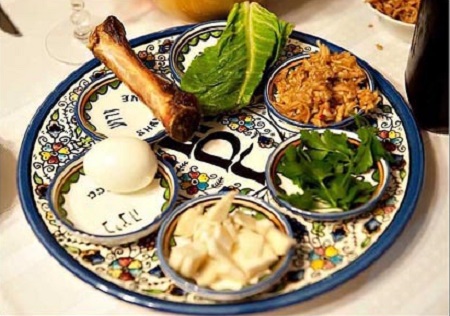
Chef’s Tip:  Hard-boiled eggs are part of the Seder Plate.  Eggs are inexpensive and an excellent source of protein. A bowl of hard-boiled egg and salt water, before the soup is economical, filling and in keeping with Jewish tradition.

Vegetarian Meal

Vegetable or orange soup.
A huge pot of vegetable soup is filling as well as delicious.  40 shekels for this course, and you’ll have left-over for the next day as well.
Fresh carrot salad with pineapple & raisins As in the first menu
Green salad with dressing As in the first menu too
Broiled salmon or baked/steamed sea bass (lavrak) or other fish Splurge here for good quality fish.  Fresh is always best.  Fresh salmon is around 90 shekels/kg but frozen is less.
Cooked broccoli or cauliflower As in the first menu
Roasted or pan-fried potatoes & onions or potato kugel As in the first menu
Baked apples or apple cobbler As in the first menu
Brownies As in the first menu

Kosher for Passover food items are available in supermarkets even before Rosh Chodesh Nissan so plan early, plan wisely and save money.

Money saving tip: The earlier you buy your meat and fish, the lower the prices, as they automatically go up closer to the holiday. The same is true for fresh fruit and vegetables, even in the shuk.
Communal Pesach Seders in Israel.

0
Reading Time: 2 minutes

Communal Seders in Israel – Pesach 2017

seder plate

No need to be alone this Pesach! Benjy Singer of IsraelK is very kindly putting together a list of communal seders for Erev Pesach on Monday 10th, April.

We’ll be adding to the list as the updates come in.

Communal Seders in Jerusalem

  1. Chabbad in Bakaa
  2. No Oleh Left Alone for Seder Night
  3. Yiboneh

See the full list and details here….

Communal Seders in Tel Aviv

  1. The White City Seder (Why is Tel Aviv is fondly known as the White City?)
  2. White City Young Jews
  3. iTV young professionals Seder

See the full list and details here…

Communal Seders in Haifa

To be announced

Chabbad Seders

To find a Chabbad Seder in your area click on this link…

Holot

On Thursday, April 6 (a few days before the first day of Passover, also known as “Sedar night”) we will celebrate Passover, which is the Jewish Festival of Freedom, at the “Holot” detention center.
The purpose of this event is to become familiar with the detention center and the detainees, through an eventful and interesting evening.
The event is a call to close the detention center and to release the asylum seekers. While correlating with Passover and the meaning of freedom and liberty in Israel.
The course of the event will be as followed:
Gathering at the lot outside of the detention center – 15:30.
Joint reading of an alternative “Hagadah”, in partnership with “Rabbis for Human Rights” – 16:00.
Dialogue circles and African drum circles – 16:30
Speeches – 17:30
The evening will conclude with an uplifting concert.
We would love to see you!
You are welcome to contact us on our Facebook page and spread the good word.
Happy Passover
www.facebook.com/haroshbachol

Household Painting and Polishing Tips

0
Reading Time: 3 minutes

Pesach Preparations – Painting, Polishing and Priming

Contributed by: Hylton Sher – H.L. Painting


As the spring approaches, many of us are actively planning or working on painting our homes. Just in time for Pesach, our friends at H.L. Painting, professional painting contractors with over 33 years of experience in Israel, have put together a list of household painting and cleaning tips.

Do-it-yourself?

When it comes to Pesach preparations, we need to do thorough and intensive cleaning of upholstery and carpets, maybe deep steam cleaning of appliances to make them kasher for Pesach, we may have to get rid of winter mould or paint and refresh our homes.  If we have the time, we can do some of it ourselves but getting a professional to do the job will be faster and will ensure better results for the long-term.

Estimates & Price Quotes

  1. Our very first suggestion is to get price estimates well in advance.  You need adequate time to compare, decide and of course actually have the work done in time for the Chag.
  2. Don’t get more than three estimates. You can get totally confused by the costing techniques used in different businesses. We cannot stress enough how important it is to get a written quote. When discussing your requirements, make absolutely sure that the contractor writes down all the information and your specifications so that when you receive the estimates, you are comparing ‘apples to apples’ and not ‘apples to oranges’.
  3. Never employ a contractor who hasn’t given you a written professional estimate no matter how attractive his price may be in comparison. You don’t know what you are getting, work-wise, material-wise, time-wise or anything else. The contractor must retain a copy and you must be given the original. That way there can almost never be a discrepancy between what you requested and what you received.

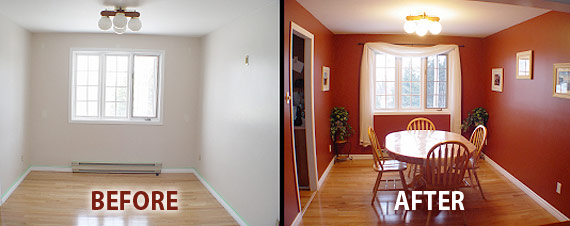
house painter before after

Painting Preparation Tips

If you decide to paint your home you need to consult with an expert first.  A reputable paint shop or your contractor will advise you. Give them some indication about the scope of the job; whether you intend to paint interiors or exteriors: just walls, or ceilings as well, perhaps the carpentry and woodwork; cupboards, shelves, doors and frames. Your contractor or paint advisor can help you make decisions about quantities,  paint quality, special paint techniques and finishes, they can give colour advice, and suggest equipment and materials like rollers, brushes or paint sponges, tools for filling holes and cracks and other necessary items. Think seriously about your requirements. It’s easy to get confused. There is a myriad of ‘stuff’ available and you don’t want to spend your hard-earned cash on wrong or unnecessary purchases.

Choosing Paints for your Home

  • When it comes to paint, don’t buy cheap!!  In the long run, cheap paints will produce poor results.  Instead of applying two coats of top quality paint, you will find you need to do a third coat in order to get a good finish (more paint, more time, more money).
  • Generally speaking, Policid, which is a white synthetic lime wash is used on ceilings as it helps to reflect light downwards into the room itself, which creates a greater feeling of spaciousness.
  • Some people prefer to paint walls and ceilings the same colour. Make sure the colour you choose is not too dark as this tends to create a ‘cave’ with a closed-in effect.
  • New technology paints make cleaning easier without damaging the finish. Eco-friendly paints and non-toxic paints are popular for nurseries and children’s rooms. If mould is a problem (common in Israel homes), discuss this with your contractor so he can offer you a long-term solution.
  • Use good Acrylic paint for walls and select colours which compliment your furnishings, artwork, floor tiles light sources etc. Alternatively, if you are looking for bold colour effects, you may require more than two coats of paint to get even coverage and the desired effect. 
  • Paints that have special finishes are quite popular these days but they have to be applied in a very specific way.  A experienced and professional contractor is likely to produce a better and  more resilient result.

Avoid the Mess & Keep it Clean!

We have much cleaning to before Pesach and having to deal with paint mess is just added stress.

Make sure you buy covering materials for floors, furniture etc. There is nothing worse than finding spots of paint all over floors, furniture and any other surfaces which were not intended to be painted in the first place.

Remember, a good contractor will clean up before he leaves.

Wishing you a Chag Pesach Kasher VeSameach!


{module [421]}


Learn new Hebrew words that sound the same: שבט – שבת

Reading Time: < 1 minute

Learn New Hebrew Words

שבט – שבת

tribe shevet

Let’s learn 4 new Hebrew words that sound the same, examine their meanings and understand how they are used.

שבת & שבט

Hebrew Transliteration Meaning Example
שֵׁבֶט Shayvet Tribe or group In scouts (Tzofim) my son is in Shayvet Dekel
שְׁבָט Shevat 5th month in the Hebrew calendar In the Jewish calendar, the month of Shevat falls in January or February in the Gregorian calendar.
שַׁבָּת Shabbat 7th day of the week.  Shabbat commences on Friday evening before sunset and ends on Saturday night after sunset. You are invited on Friday night for Shabbat dinner.
שָׁבַת Shavat To strike something or someone The man fell after the strike of the sword

We think you’ll like these too

Renovating in Israel

0
Reading Time: 4 minutes

A 10 Step Plan to Renovating in Israel.

Contributed by: Shira Dromi

 renovating house in israel

Olim! Your rent subsidy is coming to an end. It’s now time to buy your first home in Israel and take advantage of the low mortgage interest rate that is part of your Aliyah benefit. The Israeli property market is new to you and as a first time buyer you might be conflicted; is it better to buy a new dwelling or is it better to re-model and renovate an existing one?  

New olim, prefer to renovate and upgrade an existing dwelling to suite their lifestyle and needs. Renovation is a very complex process, especially if you decide to manage it yourself. The renovation process requires decision making on such matters as selecting professionals to carry out the work, picking the right materials, the color scheme, etc. During renovation you will need to consult with different professionals: the engineer who should approve breaking down walls, an electrician regarding changing the electrical system, a plumber about changing the water system, an air conditioning technician about a/c unit placement, the carpenter about the carpentry and the designer about suitable materials for the kitchen, furniture, flooring, furnishings and more.

Where do you start? It is important to know that like any complex process, there must be clear working stages outlined and detailed planning of each stage.

Stage 1 – Introductory Meeting

An initial non-obligatory meeting with  you, the client in your home. Your architech or designer must have a thorough understanding or your needs, desires, and expectations. Your lifestyle and habits; entertaining, sleeping arrangements, storage, work requirements etc. must be clearly understood even the smallest details.

Stage 2 – Measuring the House or Apartment

An authorized professional is sent to measure the house or apartment and obtain accurate measurements of the structure before planning begins. The existing floor plan must be documented because it is the foundation upon which the planning will be based. Recording all existing measurements saves the client time and most importantly, prevents costly mistakes.


{module [426]}


Stage 3 – Interior & Exterior Design of the Dwelling

The designer will make several “inspiration boards” to show the client the kind of mood and atmosphere they are aiming to create, and to show the materials and colors they intend to use, both inside and outside, as required.  It is customary to give up to three alternatives. Together, you will examine, modify, add, and subtract details in order to create the final plan which will become a set of detailed plans.

Stage 4 – Building Construction Work

If the renovation work requires breaking down walls, it is important to bring in a construction engineer. The construction engineer will inspect the structure, go over the plans and finally approve them. It is best to do this in the early stages of the renovation.

Stage 5 – Choosing Building & Design Materials

This is the fun part! Together with the designer you will pick the kitchen, flooring, tiles, bathroom fixtures, light fixtures, etc. Listen to your designer’s suggestions, go for quality items wherever possible. If you already have items picked out, let you designer know so that they can prepare the quote accordingly.

Stage 6 – Detailed Planning and Work Plans

The detailed planning phase starts after the client is certain and has signed on the final sketch.  The designer or architect converts the selected sketch into a set of work plans. The set includes: demolition, construction, electricity, lighting, plumbing, air conditioning, ceilings, carpentry work, bathrooms, flooring, tiling, window and door specifications, and more. These work plans are very detailed and include special instructions for execution, materials, and dimensions of what the client has purchased such as sanitary, flooring tile sizes, and more. This set of plans will be used by the contractor and is an important document that helps prevent mistakes.

Stage 7 – Building Materials List

The work plans will be made into a building materials list by the designer in order for the contractor to give his price estimation. Just like the set of plans, the building materials list details all the required work according to topic: Demolition, construction, electricity, lighting, plumbing, air conditioning, ceilings, and so on. The contractor will write the cost next to each item. This way the client can fully understand how much each item will cost. 

Stage 8 – Selecting a Contractor

It is important to bring at least three contractors to see the house or apartment for renovation. We recommend bringing only authorized, licensed contractors. Most likely a licensed contractor will not disappear in the middle of the project, and will be responsible for his work. It is important to see the renovations done by the contractor and speak to some of his customers before deciding.

Each contractor will receive a detailed set of work plans and quantities list, which he will return to the customer with detailed pricing. This enables the client to compare prices between the different professionals and choose the most suitable contractor for the job.

We recommend signing a contract with the selected contractor, to set the price and time frame of the project.

Stage 9 – Project Supervision & Monitoring

It is important to have for the work to be supervised. The designer will come regularly to ensure the work is being carried out according to plan. Supervision must be done before critical points of the execution: Demolition, building, electricity, plumbing etc. If have sufficient budget, consider hiring a construction inspector/site manager who will come daily and ensure that the work is being done according to the plans, building laws, codes and standards.

The last supervised meeting will be done with both the contractor and the client present. This is to ensure that the work is complete, and meets the client’s satisfaction.

Stage 10 – The End of Renovation

Hallelujah! The work is done and you can start enjoying your new home! Get comfortable and show your family and friends your beautiful home. Renovating is a challenge but renovating when you are a new immigrant is even more challenging.  The good news is that after surviving the renovations, you’ll have a newly designed, comfortable home and sanctuary in Israel, allowing you to forge ahead with other aspects of your Aliyah.


Your friends found these useful


{module [393]}

Egg Production in Israel – Consumer Report.

0
Reading Time: 6 minutes


Egg-sasperating! To eat or not to eat?  Commercial Egg Production in Israel.

egg productionThe Israel Channel 10 Television program ‘Osot Heshbon’ – עושות חשבון reported results of their investigation of commercial egg productions and sales in Israel, on Sunday, 20th March, 2016   We are providing a general English translation of the main points made in the program, for those whose missed the broadcast.

At its outset, the program raises some of the points that are to be covered:

  • What to look out for?
  • Different types of eggs
  • Nutritional value
  • Ministry of Health regulations and suggestions
  • Salmonella
  • Price

Did you know that the average person in Israel eats 240 eggs per year. This figure does not include eggs that are incorporated into other foods during baking and cooking for example; in cakes, batters, quiches etc.

The Nutritional Value of Eggs.  How healthy are they?

Two clinical dieticians were interviewed and these were the points they raised:-

  1. Despite conflicting reports and opinions over the years, eggs contain cholesterol. Is this good or bad?  Know that cholesterol can lead to heart disease. Do you want to take the risk?
  2. Eating hard boiled eggs is preferable from a nutritional point of view as no extra calories or fats are added in the cooking process.
  3. To get the best nutritional value from an egg, you must eat both the egg white and the egg yolk

Salmonella & Bacteria in Eggs

A chicken coop (Hebrew: Lul) is contaminated with bacteria.  Whatever bacteria are present in the Lul are passed through onto and into the egg.

Most eggs in Israel are infected with Salmonella.

Salmonella causes gastro-intestinal problems like stomach aches, nausea, diarrhea etc. and in some cases even death.

Eggs are being injected with anti-biotics and this is not being reported to Israeli consumers.  Clopidol is an organic compound that is used in veterinary medicine.  This compound kills some of the bacteria in eggs however Clopidol also affects the balance of good and bad bacteria that are present in the human body.

(Anglo-list comment: The Mayo Clinic reports that signs and symptoms of salmonella infection generally last four to seven days, although it may take several months for your bowels to return to normal.)

In the Chicken Coop

The chicken coop needs to be sterile! The reporter visited a commercial chicken coop in Israel, the egg farmer commented that a typical chicken coop is not clean, hygienic or sterile.  Chicken excrement is abundant and not removed or cleaned on a regular basis.  There are other undesirable organic materials and muck present in a Lul; roaming cats, mice, dead chickens, dirty feathers and all the bacteria that comes with that.  He went on to explain that newly laid eggs are not always cleared on a daily basis.  He also commented that there is no official standardization and no inspections are carried out by the authorities.

The lifespan of an egg-laying chicken is between 4 to 5 months after which they chickens are destroyed.

Chickens are crammed into cages and as there are no inspections, egg farmers do whatever they please.

Egg Health Regulations

Did you know that The Israel Ministry of Health – MOH (Heb: Misrad Habriut) forbids the washing of eggs? Egg shells are not perfectly formed, there are small cracks and holes, the shells are porous too. By washing an egg, Salmonella bacteria and water penetrate the egg shell.  The inside of the egg shell provides a perfect breeding ground for Salmonella and bacteria.

Even-though the MOH forbids the washing of eggs, it takes place before the eggs are collected by the wholesale distributors.  The egg farmers do’nt know what happens once the eggs have left the coop and if they do know, they are not acknowledging it.

Some Luls justify washing the eggs; they say that the shell is comprised of 2 layers and bacterial penetration is minimized. Again it was emphasized that as there is no inspection, regulations are ignored.

Glicksman – one of the largest egg distributors in Israel, was contacted by the program, they refused to allow the film-crew to visit their premises and film their warehouses.

Chai Meshek (חי משק) is a non-profit organization that is trying to regulate egg production.  Without government involvement, they are struggling to do so.

Egg Collection

  1. The eggs are laid
  2. The wholesale distributors collect the eggs from the Luls twice a week. 
  3. It then takes the wholesaler a few days to pack and distribute the eggs to the retail outlets.

In other words, we, the consumer, are not buying freshly laid eggs.

Imported Eggs

Israel imports eggs from other countries.  Eggs are also brought into Israel from the Palestinian Authority (P.A.).  Again it is emphasized that their is no standardization, regulation or inspection.  There is no egg regulation in the P.A. and this combined with the Israel M.O.H.’s minimal standards makes for a dangerous situation.  Some eggs from the P.A. are confiscated if they are discovered but  most are not discovered.   The P.A. forges egg labels and the average consumer cannot tell the different from an egg produced in Israel and one that comes from the P.A. 

It is not always clear where the eggs are coming from.  Labeling information appearing on the egg shells is vague.  The country of origin is often abbreviated (we saw this in January with the egg recall from the Ukraine were eggs were labeled UA).

Eggs from Turkey for example, are label TR.  Do you want to eat a Turkish egg? Think on this. Turkey had a recent outbreak of bird flu.  Turkey is a large country.  Chicken coops are scattered across the country.  Wholesalers do not collect eggs on a daily basis. It takes time for the eggs to be packed, loaded into trucks and then onto boats and shipped to Israel.  The date on the eggs – is that the date the egg was laid or is that the date the egg arrived in Israel?  This is true for eggs imported from other countries as well.

Egg Prices in Israel & Other Countries

Egg production is a highly profitable business.  There is a large difference in the price of regular eggs vs. free-range vs. organic.

  • The price of a regular egg in Israel is 1 shekel
  • In the USA a regular egg sells for 60 agorot
  • In Holland a regular egg sells for 80 agorot
  • In the Czech Republic, an eggs sells for the equivalent of 49 agorot

What is a regular egg, a free-range, organic or other specialized egg?

  1. A regular egg is an egg laid by a caged chicken in a chicken coop
  2. A free range egg is an egg laid by a chicken that is allowed to roam in a chicken coop and maybe has a bit of a yard to roam in too (don’t be fooled by the green-fields and smiling chickens on the egg boxes)
  3. An organic egg is an egg that has not been given any antibiotics
  4. Specialized eggs with Omega 3 – these chickens are fed with Omega 3 enriched feed.

Retail prices of free-range, organic and specialized eggs are more than twice the price of regular eggs.

  • As we mentioned, the retail price of a regular egg in Israel is 1 shekel
  • Free range eggs – 24 shekels for 12 or 2 shekels each
  • Organic eggs – 30 shekels for 12 or 2.5 shekels each
  • Omega 3 eggs are not readily available.  They retail at 13 shekels for 6

Is this price justified?  Our egg farmer tells us that it costs only 20 agorot more to produce an organic egg. Why sell an egg as a regular egg when you can call it a free-range egg and get a better price? Again, a lack of supervision and inspection allows egg farmers to do whatever they want.

Nutritional Value of regular eggs, free-range, organic and other eggs

Are there any differences in the health benefits or nutritional value of regular, free-range, organic or other eggs? No! In-fact there is a higher risk of Salmonella in organic eggs as they are not given any anti-biotics.  Iron and calcium levels in all eggs are identical.

Egg Hygiene

Chai Meshek makes the following recommendations:

  1. Do not eat fried eggs.  Fried eggs are dangerous if the internal temperature of the egg is less than 60º C as bacteria are not killed.
  2. Do not eat soft boiled eggs for the same reason
  3. Hard boiled eggs are the safest
  4. Do not eat an egg if the shell is covered with feces
  5. Do not eat an egg if the shell is cracked
  6. Do not put the egg carton in the fridge. If eggs are infected with Salmonella it means the cartons are also infected with Salmonella.
  7. Do not break an egg on the edge of a bowl or other kitchen implement that you may use to beat the egg
  8. Wear gloves when working with raw eggs (kneading dough, rolling meatballs etc.). Throw the gloves away afterwards.
  9. Make sure you wash your hands after handling eggs.

The Israel Ministry of Health

The ‘Osot Heshbon’ production team tried to contact the M.O.H. on numerous occasions.  Nevertheless, the M.O.H. did not respond in a timely manner and so their opinions and reactions were not incorporated.

The M.O.H. did comment eventually and responded by saying that they were saddened by the investigation and comments and opinions raised in the program and said that they had not been given adequate time to respond.  They went on to say that they will respond in time and in a way that they see fit.

Egg Substitutes in Food Preparation

Eggs are used as a binding agent in may recipes. You can substitute eggs with apple sauce in many recipes. 

How do you say ‘brother’ in Hebrew?

Reading Time: < 1 minute

How do you say brother in Hebrew?

Learn these new Hebrew words – “Ach” – אח and אך


fireplace

Homophones are words that are spelled differently but sound the same. Homonyms are words that share the same pronunciation but have different meanings, whether spelled the same or not.

Today, we are learning 6 new Hebrew words that are all pronounced as “ach“.  In Hebrew the word “ach” can be spelled in 2 different ways: אח and אך

Now, let’s learn their meanings…

Meaning

Hebrew Word

Extra Information

Brother

אח

The word in the feminine form i.e. sister is “Achot”

Male nurse

אח

A female nurse is an “Achot”

Fireplace or hearth

אח


Ouch!

אח

Used in informal conversation.

Brother/buddy

אח

Hey, my bro/buddy –  היי אח שלי

Or more correctly – היי אחי

But/nevertheless/however

אך


Orchestra, Opera, Dance & Theatre in Israel

Reading Time: 3 minutes

What cultural activities can I enjoy in Israel?

Part of your integration into Israel will be participating or enjoying social and cultural activities – an exciting night life filled with many events and performances; orchestra, theater, dance and opera in most of the main centers.

Israel’s Ministry of Culture & Sport  oversees cultural and sporting activities.  Their mission: to lead and promote measures that will enable all citizens to exercise their right to culture and sport, and aspire to excellence, creativity and well-being.

There are small ‘amdram’ (amateur theatre) performances that are held in English and they tour the country regularly. Professional musical, theatrical, dance and operatic performances are held across Israel throughout the year.  Listed below are a few of them:

The Israel Philharmonic Orchestra

In 2020 Lahav Shani became the director of The Israel Philharmonic Orchestra (IPO). Zubin Mehta now holds the title of Music Director Emeritus of the Israel Philharmonic.  The IPO holds concerts in Tel Aviv, Haifa and Jerusalem at The Charles Bronfman Auditorium (Heichal Hatarbut) in Tel Aviv, also at The Haifa Auditorium and The Ussishkin Auditorium and the Sherover Hall in Jerusalem.

There are various subscription packages; morning concerts, evenings and weekends, light-classical, for children and even a ticket cancellation policy

If you’d like to know more about the IPO and members of the orchestra, in English, click here.

Israel Theatre

The Habima Theatre, in Tel Aviv,  is the national theatre of Israel and one of the first Hebrew language theatres. It was officially pronounced as the national theatre  in 1958 and employs 80 actors, and another 120 staff members who work at the complex.

The Cameri

Omri Nitzan is the Creative Director of The Cameri Theatre in Tel Aviv.  His vision is to “create Israeli theatre that will reflect the complex, ever changing Israeli experience and create tangent points for the audience to see itself on stage: a meeting point that is rejuvenating, enlightening, sobering and eye-opening.  The Cameri must always be a young theatre!”.  The Cameri complex has 4 auditoriums as well as an informal ‘Coffee Theatre’.

Performances run every day throughout the year. A subscription to the Cameri includes tickets for seven productions per year.

Yiddishpiel

Yiddishpiel – The Yiddish Theater in Israel – is the only Yiddish theater in Israel. Yiddishpiel was established in 1987 and its mission is to keep the Yiddish culture alive. Their repertoire ranges from the classic works of Sholem Aleichem, Abraham Goldfaden, Itzik Manger, Sholem Asch and Jacob Gordin, through Isaac Bashevis Singer, Shai Agnon, and to Hanoch Levin, Joshoua Sobol, Hillel Mittelpunkt, B. Michael, Efraim Sidon and others.  In addition to that, works from the global repertoire are staged such as Samuel Becket, Nikolai Gogol, Neil Simon, Willie Russell and many more. All Yiddishpiel performances are performed in Yiddish and accompanied by translations into Hebrew, Russian and any additional languages according to the locations where the theater performs worldwide.

The annual subscription includes 10 tickets (2 tickets each for 5 performances) and a 50 per cent discount is available for seniors.

The Israel National Opera

Opera began in Israel in Tel Aviv on July 28, 1923 with Verdi’s La traviata.  The Israel National Opera was established in 1945 and today it is led by General Director Hanna Munitz.  Performances of adult opera and those that appeal to children, jazz, liturgy and dance performances are held at 19 Shmuel HaMelech Blvd., Tel Aviv.  Opera festivals are also held in Akko and Jerusalem.  Another favorite of Israelis is the outdoor Opera Festival held at The Massada National Park during the summer.

Annual subscriptions and single tickets are available and can also be purchased online.

Dance

Israelis love to dance.  You can enjoy informal folk-dancing groups on the beach or organized contemporary dance and ballet performances.

The Israel Ballet performs classical and neo-classical ballets.

Local and international prima-ballerinas dance for The Bat Sheva Dance Company, Bat-Dor Dance Company, The Inbal Dance Company, Suzanne Dellal Center for Dance and Theater.  There is even a Kibbutz Contemporary Dance Company.

Israel Tourist Visa Requirements.

Reading Time: 2 minutes

Regulations regarding tourist visas for Israel.
visa

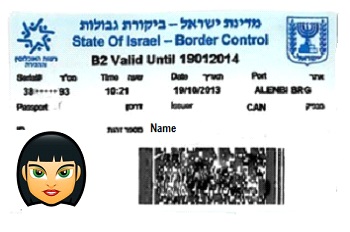
There are 65 countries around the world that have a visa waiver agreement with Israel and nationals thereof can visit Israel without a pre-arranged tourist visa.  All that is needed is a valid passport.  At your port of entry in Israel, your will be given a tourist visa that is valid for 3 months.   The tourist visa is free.

African Countries

  • The Central African Republic
  • Lesotho
  • Malawi
  • Mauritius
  • South Africa
  • Swaziland

Asian Countries & Oceania

  • Australia
  • Fiji Islands
  • Hong Kong
  • Japan
  • New Zealand
  • Philippines
  • South Korea

European Countries

  • Austria
  • Belgium
  • Cyprus
  • Denmark
  • Finland
  • Germany (date of birth after 1.1.28)
  • Gibraltar
  • Great Britain (England, the UK)
  • Greece
  • Hungary
  • Iceland
  • Ireland
  • Italy
  • Liechtenstein
  • Luxembourg
  • Malta
  • Monaco
  • The Netherlands
  • Norway
  • Portugal
  • San Marino
  • Slovenia
  • Spain
  • Sweden
  • Switzerland

North, Central & South American Countries

  • Argentina
  • Barbados
  • Bolivia
  • Brazil
  • Canada
  • Chile,
  • Colombia
  • Costa Rica
  • El Salvador
  • Ecuador
  • Guatemala
  • Haiti
  • Jamaica
  • Mexico
  • Panama
  • Paraguay
  • St. Kitts & Nevis
  • Surinam
  • Trinidad & Tobago
  • The Bahamas
  • The Dominican Republic
  • Uruguay
  • U.S.A.

If you are not a citizen, or national, of one of the above countries you can apply for a visa at the Israel Mission or Israeli Embassy closest to you.

Passport Validity

When visiting Israel, your passport must be valid for at least 6 months from your date of entry.  You don’t want to be turned away upon arrival so check that, often overlooked, detail when making your travel arrangements.

Travel Funds

Make sure you have sufficient funds to support yourself while you are in Israel.  This is a common international requirement and you do not want to be sent back on the grounds of ‘insufficient funds’.

Accommodation

You should also be able to give the name of the hotel, hostel or accommodation you are staying at.  If you are staying with friends or family, have their address and telephone number handy.

Note: This article is for information purposes only.  Any updates in the law or official requirements take precedence over the information provided here.

Confusing Hebrew Words: כָּרָה – קָרַע – קֵרָה

Reading Time: < 1 minute

Hebrew Homonyms that could confuse you.

כָּרָה – קָרַע – קֵרָה

The Hebrew language has many homonyms – words that sound the same but have different meanings and sometimes different spellings.  Mostly, olim and newcomers struggle with Hebrew word spelling and so when we are confronted with similar sounding words, we are completely confused.


FAQ: Is there an easy way to know if a word is spelled with a ה an א or an ע at the end, in Hebrew?

No, not if you’re in the majority of people who pronounce these letters the same. It’s just something you have to memorize.


Here are 6 new Hebrew words to learn

Hebrew Word

Transliteration Meaning

כָּרָה

Kara To dig a hole / to mine

כֵּרָה

Keira Feast or banquet

קָרַע

Kara To rip or tear
קָרָה Kara

Happen or transpire

קָרָה Kara

Cold

קֵרָה Keira

To roof