21 C
Jerusalem
Wednesday, May 13, 2026
Sample Page
Home Blog Page 68

The Hebrew Month of Nissan

Reading Time: 6 minutes

The Hebrew month of Nissan aligns with Aries in the zodiac.

Contributed by Rav Nissim Mordechai Makor
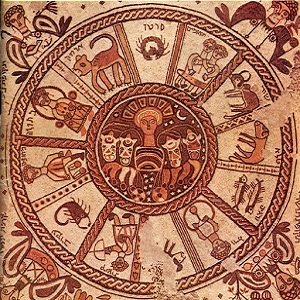
zodiac
Image credit – Wiki Commons:  6C mosaic pavement at Beth Alpha. Discovered in 1928. Signs of the zodiac surround the central chariot of the Sun, while the corners depict the 4 “turning points” of the year, solstices and equinoxes, each named for the month in which it occurs– Tishrei, Tevet, Nissan and  Tamuz.

Remember, Astrology is not about telling the future. By under-standing the energy of each month, we are able to navigate smoothly through the month, because one cannot act the same way every month. Every month has a different energy and it helps to know what it is.

In certain commentaries Nissan is considered the first month of the year. It is also the first sign of the Zodiac.  The most important thing about Nissan according to the Torah, is that it has to coincide with spring but why? 
This energy of rebirth in Nissan is only available in spring and that is why the Torah talks about Nissan coinciding with spring. In this month nature springs to life after winter.
The month of Nissan is a special month.
Hashem blessed Nissan with an abundance of chessed (mercy). This is the energy of this month. We did not have the merit for this energy, it is purely a gift from Hashem from creation.
What happened on the night of the tenth plague had never happened before and hasn’t happened since.
Rabbi Shimshon Ostropoli, explains this in his Ma’amar from a Kabbalistic point of view. He explains that normally the energy (shefa) that we receive in this physical world comes from the Sefirah of Yesod. Yesod is like a funnel that gathers all the energy from the Sefirot above and sends(funnels) it down to Malchut, the physical world. On the night of the tenth plague, energy came into this world from All the upper six Sefirot at the same time. There was such an influx of energy into the physical world, that it was able to destroy all the negative forces, the Egyptian’s first born.
He explains that with the sin of Adam, the Name of Hashem was damaged. The ten plagues brought about the revelation of Hashem’s Name and corrected the sin of Adam.
The entire purpose of Yetziat Mitzrayim was to rectify and reveal the Havayah to the world. As Hashem said to Moshe, the fathers did not know this Name. They knew the Name, but it was blemished. The very mention of Yetziat Mitzrayim, weakens the powers of impurity, and greatly strengthens the powers of Kedushah.
Every year on the first night of Pesach, an impression of this incredible energy is available at the Seder. Take advantage of it. If one is not aware of something, for example this energy at the Seder, unfortunately the connection made is very small compared to what is available.
This Ma’amar is very deep and it is recommended to read before Pesach. If anybody wants it, I can give them the link.


Nissan/Aries is a fire sign, but it is the right column of fire. The Tikkun of people born in Aries is that they have to realize that the unlimited flow of chessed in this month, is not because of them. From creation, this month was infused with this abundance of chessed. People born in this month, have to overcome their egos and just become channels for Hashem.

They can become exceptional people if they overcome their nature and their egos. They can also be very stubborn. Go and study the habits of a ram and you will notice this trait about the animal.
The planet that controls this month is Mars, the planet of war. On Pessach all battles for the next year are decided. We have the opportunity to control our year.
It is very important in Nissan to be calm and avoid any kind of arguments. What happens in Nissan will mirror your year.
The name of Hashem for this month is the regular straight Name of Hashem, Yud, Key, Vav, Key. This is very powerful. This is the original Name and now that it had been rectified with the plagues, the full power of this Name was manifested. You reach perfection in Nissan. There is a sense of pure joy. You transcend time and space. This is the power of this month.
The line of the month from the Ana Bekoach is the third line.
The whole month revolves around the holiday of Pessach and the Seders. The eating of the Matzah and the drinking of the wine are metaphysical tools given to us by Hashem to take control of our year. The punishment for eating chametz on Pessach is so severe (karet), that it is very important to take this Mitzvah very seriously. Try and get the best matzah and wine. According to the Halacha, it is preferable to use red wine. If you use white it is acceptable, but good red wine is better. The four cups of the Seder are against the four deaths mandated by the Sanhedrin. Each cup protects one from one of these deaths and the more kavanah we have when drinking them, the more Hashem protects us from bad decrees. Also try use handmade Shmura Matzah.
The Seder can be long and one wants to get to the eating, but remember, the telling of the story is the most important part of the Seder. When the Jews sit around the Seder table and tell the story of Yitziat Mitzrayim, Hashem gets a lot of nachas from this. He calls all the angels to listen to the Jews on Pesach night. It is a beautiful gift. Use it!!!!
Nissan is about freedom, going out of bondage. The whole story is called “The Exodus”. What does it mean to go free? Does it mean that suddenly we don’t have any more responsibilities and we can do what we want or does it mean that we have more responsibilities?
Hashem chose us to do His service. With that comes a lot of different responsibilities. Nissan is the month when e got the first commandment.
Even though we suddenly had a lot more responsibility, Hashem was giving us the tools(Mitzvot) to achieve freedom, SPIRITUAL freedom not physical freedom. By tapping into this incredible energy in Nissan, we are able to rise above our nature and go free spiritually.
When we talk about going out of Egypt, one idea is the idea of bondage to the physical.
We fail to properly focus on the greatest enslaver of all persons. This slaver is not a government, a society, or a culture. We are not bound in chains. Today, as in the past, our bondage is a state of mind. Essentially, it is our minds that are held imprisoned. It is our minds that need to be freed from the modern day Egypt of physicality. Look at the modern society and you will find more people with mental problems than ever before. Over 20 million prescriptions are written for anti depressants every year in America. People are so stressed out, some are even scared to leave their houses.
Being caught up in the secular world, is as much a bondage as the Jews were in Egypt.
Bondage is all about consciousness.
Remember this saying!!!  There are people in jail who are free, and there are people who are free who are in jail. 
Think about this statement for a minute and see where you fit in. What are you a slave to? This month gives us the power to change our year.
The battle between Moshe and Pharaoh can be looked at from a metaphysical angle. Moshe represents humility, and Pharaoh represents ego. This is one of the fundamental battles in life everyone goes through every day. Humility is the greatest character trait a person can acquire. It includes all the others. It says about Moshe, ‘he was the most humble’.
There is a custom that we start learning the laws of Pesach straight after Purim. If we have not started by now, Rosh Chodesh is a good time to start.
To show you how fair Hashem’s justice is, the first law of Pessach is to make sure the poor and needy have food for the holiday. Before the Matzah, the wine, all the fancy things, the chametz, Hashem worries about the poor. One should help the poor before the holidays, especially before Pesach, by giving generously. Hashem takes great pleasure when he sees the rich helping the poor celebrate the holidays the way the rich do, with new clothes, good food and wine etc.
Even if it is just one family a person helps. Hashem calls all the angels to see, and He gets a lot of nachas from his children.
Let’s all try and have a bit more compassion for our fellow Jews this holiday and, B’ezrat Hashem, we will bring Mashiach soon.
Chodesh Tov. Kosher Pesach Sameach
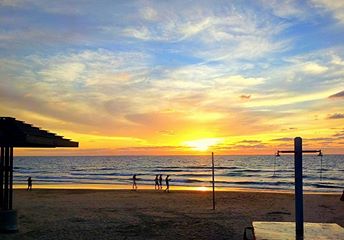

Beach season opens in Israel

0
Reading Time: < 1 minute

Lifeguards on duty as beach and bathing season opens in Israel.

Latest update:  The official bathing season in Haifa will open on April 12, 2019 and already on Friday (April 5th), 8 rescue stations will open along the beaches of Haifa. Lifeguard rescue stations will open here:

dado

1. Neot Beach, Kiryat Haim – Station No. 2

2. Bat Galim Beach – Station No. 2

3. Carmel Beach – Station no. 1

4. Carmel Beach – Station no.

5. Zamir Beach – Station No. 1

6. Zamir Beach – Station no. 3

7. Dado Beach – Station No. 5

8. Dado Beach – Station No. 6

Hours of operation

Lifeguards and rescue stations will be open from 08:00 to 16:00

On Friday 12th April, 2019 all municipal beaches in Haifa and Kiryat Haim will operate lifeguard rescue stations

Parshat Hashavua Metzorah

Reading Time: 7 minutes

Parshat Hashavua Metzorah

Contributed by: Rav Nissim Mordechai Makor

Parshat Hashavua Metzorah rav makor 220x220Parshat Hashavua Metzorah in a nutshell: This week’s Torah reading begins by detailing how the recovered metzora (a person who is ritually impure) is purified by the kohen (priest)

This shall be the law of the metzora on the day of his purification. (14:2)

Living outside the camp of society, the metzora has the opportunity to reflect upon the effect of his disparaging words. He learns to realize how much evil he has generated. Words can hurt. They can also soothe. They can ameliorate one’s grief. They can also cause untold pain. They can lift one’s spirit. They can also cause crushing despair. They can bolster one’s confidence. They can also rob one of his dignity. It all depends on one’s thoughtfulness in speech – or his malevolence. And what about words spoken in anger, with no aforethought? How many families have such harshly spoken words divided? How many friendships have they destroyed? How many marriages have they soured? Words used thoughtfully can enhance relationships, raise reputations, make people feel good – about themselves and others.

Candle Lighting Times for Shabbat Metzorah

Parsha Index

Words are not cheap; the old adage, “names will never harm me,” is not true. Names do cause harm. Just ask any adult who had been called a name as a child. Ask him if he still remembers the name, and if it still bothers him. Then there are the words which we have not said, the compliment we did not give, the apology we did not make. This is especially true of parents and teachers. That little compliment, the few words of encouragement, the smile that comes with a job well done, goes a long way. Everybody thrives on a compliment; some hunger for it. It goes without saying that the derogatory or thoughtless remarks we make to our children and students can come back to haunt us later in life.

The following story demonstrates the devastating effect of a parent’s scornful comment. It is a story about a woman who survived the Holocaust, moved to Eretz Yisrael and became an intelligent and articulate member of the community. She would often reminisce about her childhood in pre World War II Europe. Once, during her musings, she declared that one of the happiest recollections of her life was the day in which she was forcibly taken by the Nazis from her home and transferred to an extermination camp.

Those listening to her story were understandably taken aback. Responding to their shocked expressions, she explained that her family situation was far from ideal. Apparently, her older sister had been the favored, frum, observant daughter, while she was the rebellious one. If there was one pat of butter and one pat of margarine, her sister would get the butter, while she would get the margarine. “After all,” her mother would explain, “your older sister is exhausted from davening with such great kavanah, concentration, while you probably skipped a few pages. You can do with less.”

The derision would increase and become more spiteful when she did something to anger her parents – which, regrettably, occurred more often than not. In anger, her mother would complain, “You probably are not even my biological daughter! Your sister was born at home, whereas you were born in a public clinic. The doctors probably exchanged my real daughter with you.” This was certainly not her mother’s usually refrain, but the painful effect of a derisive comment endures.

In 1942, the Nazis came to her hometown and rounded up the children. Only she and her parents were home at the time. Her father immediately wrote a kvittel to the Gerrer Rebbe. Her mother threw herself at the feet of the Nazi beasts, begging that they spare her child, “Please, I beg you. Let my child stay. I will do anything. I cannot live without her!” She entreated upon deaf ears.

The young girl, now turned adult, remembered that moment with great joy. “I felt no pain; I had no fear,” she said. “I was overjoyed to finally hear that my mother truly loved me as a child.” The affirmation that she was, indeed, her own and beloved daughter, that she was accepted and not rejected, overshadowed the fear of being taken away to her death.

Imagine, after all these years, this woman looked back on a devastating experience as being her greatest source of joy. After all, it was this experience that erased the pain in her heart that had been caused by words.

And immerse himself in the water and become pure. Thereafter, he may enter the camp. (14:8)

The punishment for speaking lashon hora is meant to teach the slanderer a lesson. He now has some idea regarding the effect of his words. As a result of his slanderous tongue, he caused a break in relationships between people. Let him live alone, far from the center of the community, so that he will begin to realize the harmful consequences of his vile mouth. Furthermore, when he is alone, he now has time to introspect and focus on his life. He now has the opportunity to change his overall demeanor and work on bettering his character. Last, as Horav Avigdor Halevi Nebentzhal, Shlita, explains, the metzora, having been distanced from the three machanos, encampments, now realizes that Hashem views him as being on a very low spiritual plateau. The reason for this is that a person’s position relative to the center of kedushah, sanctity, is an indicator of his spiritual position.

There is a direct corollary between the two positions. This is to be noted from the fact that the Kohen Gadol walks into the Kodshei Hakodoshim, Holy of Holies, on Yom Kippur, the holiest day of the year, only after having been away from his home for seven days prior to Yom Kippur. During his separation period, he lives on the Har Habayis, Temple Mount, in preparation for his awesome experience. Residing in this elevated Makom, place, of kedushah, has a powerful effect on the Kohen Gadol – one which now gives him access to the Holy of Holies. Thus, the metzora, who is sent away from his original home, now understands that his spiritual position has now been changed; he has been distanced from his original standing.

Once we understand the depth of the punishment, we now have an idea of the incredible reward in store for he who speaks positively of Klal Yisrael collectively, as well as each Jew individually. The Toesfta in Meseches Sotah 4:1 says that Hashem’s reward is five hundred times greater than His punishment. This is all the more reason to look for the positive aspect in every person’s behavior. At times, it might take a bit of imagination to see the positive, as the following story demonstrates.

Two friends worked together, side by side, for an institution in Eretz Yisrael for many years. After awhile, one of them suddenly passed away. The funeral was attended by many of Yerushalayim’s elite, among them Horav Aryeh Levine, zl. It happened that Rav Aryeh was walking in the funeral procession together with the surviving friend, when the man left the procession and ran into a flower shop. A few minutes later, he rejoined the procession, this time carrying a flowerpot with him. The man’s action shocked Rav Aryeh, who was fully aware of his lifelong relationship with the deceased. It continued to bother him until he decided that he must give the man mussar, reproach, for his lack of respect for his friend. He began by asking, “Can you please enlighten me why you felt it necessary to leave your friend’s funeral procession to buy a potted plant?”

“Rebbe, let me explain my actions,” the man replied. “Yesterday, a man who was being treated for leprosy passed away in the hospital. My friend, the deceased, was very close to this leper and would visit him often. When the leper died, the hospital staff was about to burn all of his effects due to contamination. The problem was that among his few possessions were his Tefillin. My friend had been negotiating with the hospital administration concerning the Tefillin. At the end, the hospital deferred and agreed to have the Tefillin stored in a flowerpot and then removed and buried in the ground. There was one condition: They had to have the flowerpot in the hospital by 12:00PM – today. Regrettably, my friend died suddenly and the risk of the Tefillin being destroyed was considerable. This is why I left the procession to purchase a flowerpot, and I am going immediately to the hospital to bury the Tefillin.

Candle Lighting Times for Shabbat Metzorah

Parsha Index

Rav Aryeh concluded the story by emphasizing to what length one must go to judge another person favorably.

Va’ani Tefillah

Asher bochar banu mikol hoamin – Who has selected us from all the nations.

The Marpei Lashon explains the meaning of our selection over all the nations to receive the Torah, when, in truth, we were the only ones who were willing to accept the Torah. Chazal teach us that the Torah was given in seventy languages, so that every nation would have access to understanding it. Lashon Kodesh, however, is different from the other languages, because it alludes to the lessons and derivations of Torah SheBaal Peh, the Oral Law. Everything that Chazal derive is based upon the structure of the Torah’s text which is written in lashon kodesh. No other language affords this opportunity; no other language alludes to the oral law. Thus, we thank Hashem for giving us the Torah in lashon kodesh. He selected us for this unique distinction by giving us His Torah in the language that was written in Heaven.

All Birchos Hanehenin, blessings over food and fragrance, in which a person partakes and enjoys Hashem’s gifts do not have the extra clause, Asher nosan lanu, “which He gave us.” Rather, the brachah is a general statement, such as: Hamotzi lechem min ha’aretz, “Who brings forth bread from the earth;” or Borei minei mezonos, “Who creates species of nourishment.” Why is Birchos HaTorah different? Siach Tzvi explains that every form of material/physical good in the world can be beneficial for one and harmful for another. Bread may be healthy and nourishing for one person, while it is detrimental for another. Torah and mitzvos are the only gifts that present blessing and good for anyone, anytime, anywhere. Torah is the ultimate gift. Thus, its recipients acknowledge the fact that they have been chosen to receive the gift and that the Almighty gave it specifically to them.

Acknowledgement to Rabbi A. Leib Scheinbaum, My Teacher

Israel Election News 2019

0

Reading Time: 2 minutes

Israel election news 2019.

Latest news & headlines from the New York Times, Jpost, Haaretz, Times of Israel & Ynet

ISRAEL ELECTION NEWS 2019

Read this first! Israel’s elections & electoral system…click here.

Survey shows Likud gained two seats

Blue and White remained at 30 seats, despite a week of bad coverage due to a State Comptroller’s report on his bankrupt company’s contract with the police and two TV interviews that did not go well…

Netanyahu Says He Would Not Appoint Gantz as Defense Minister if Reelected

‘Benny Gantz who is collapsing under the pressure of an election campaign will be not be a defense minister in my government,’ PM retorts

JERUSALEM — The Israeli election on April 9 was supposed to be a referendum on Prime Minister Benjamin Netanyahu. Facing indictment on bribery charges and a stiff challenge…

Are ultra-Orthodox parties losing the allegiance of their younger voters?

The sixth in a series of articles and videos prepared by the Israel Democracy Institute in the run-up to April 9, explaining and critiquing what goes on during an election period…

One-On-One: The firebrand on the far Left

Ofer Kassif, the outspoken Jewish candidate on Hadash’s list for the Knesset, intends to challenge the dialogue in the country…

Gantz blames Netanyahu for Rabin assassination

Netanyahu: Gantz won’t be my defense minister…

Analysis // Seven Issues That Will Decide the Israeli Election

Or it could just be weed…

Feiglin says no preference between Gantz and Netanyahu for next PM

Ex-Likud MK, who heads ultra-nationalist libertarian Zehut that could emerge as kingmaker, says he’d join any government that will meet his demands…

Lebanese news: There is an ‘unprecedented’ ugliness in Israeli elections

Lebanese news channel Al Mayadeen slammed the state of Israeli politics in a special segment devoted to the April elections.

Making friends in Israel -Israel ranks in Top 10.

Reading Time: 6 minutes

Expats vote – Israel ranked one of the top 10 countries for making friends.

The best & worst countries for making friends abroad.

making israeli friends

Image credit: Unsplash

Expats often struggle to make friends abroad, and their social relationships seem to affect their personal happiness.

• Mexico, Bahrain, Serbia, Costa Rica, Ecuador, Uganda, Colombia, Taiwan, Israel, and Portugal are the top countries for making friends for expats.
• Expats in Mexico not only find it the easiest place in the world to make friends, they are also happiest with their life in general!
• Kuwait, Sweden, Denmark, Switzerland, Saudi Arabia, Germany, Norway, Finland, Austria, and Estonia are the countries where it is the hardest to make friends as an expat.

Finding friends is often a major challenge for people moving abroad: only 57% of expats worldwide find it easy to make new friends abroad, and an even lower share of 45% say that making friends with the locals in their new country of residence is easy. These findings are part of the latest Expat Insider survey, one of the most extensive studies about living and working abroad, annually conducted by InterNations, the world’s largest expat community. Based on the data of more than 18,000 respondents, InterNations compiled a ranking of the destinations where it is easiest and hardest to make friends as an expat. The survey reveals that Mexico is the best country for making friends abroad. The results highlight the positive impact that a good social network can have on people moving abroad: expats living in nine out of the top 10 countries not only find it easy to make friends, they are also substantially happier with their life than the global average. With 92% of expats saying that they are happy with their life, expats living in Mexico are the happiest in the world. At the other end of the scale, expats in Kuwait (68th out of 68 countries), Sweden, Denmark, Switzerland, Saudi Arabia, Germany, Norway, Finland, Austria, and Estonia (59th) find it hardest to make friends in their host countries. Similarly, those living in nine out of these countries are also below-average happy with their life in general.

Top 10 countries for making friends

1. Mexico

• 82% find it easy to make new friends
• 77% find it easy to make local friends
• 92% are happy with their life in general

After consistently ranking in the top 3 since 2014, Mexico comes first again for making friends abroad in 2018. Over four in five expats in the country (82%) find it easy to make new friends (vs. 57% globally), while 77% express that making local friends is easy, too (vs. 45% globally). The ease of forming friendships could be due to the friendly attitude towards expats: 90% rate this factor positively (vs. 66% globally). “I love the local people, their culture, and their openness,” states an expat from the USA. Maybe this is also what makes expats in Mexico happiest in the world: 92% of respondents are happy with their life in general (vs. 76% globally), and 40% state that they could not be any happier (vs. 21% globally).

2. Bahrain

• 77% find it easy to make new friends
• 68% find it easy to make local friends
• 88% are happy with their life in general

Bahrain rose from 6th to 2nd place out of 68 countries in relation to finding friends abroad within one year. Now, 77% of expats find it easy to make new friends (vs. 57% globally), and 68% say that making local friends is no problem either (vs. 45% globally). This might be due to the general friendliness of the local population, as 92% of expats rate this factor positively. Exactly three in five (60%) even find the Bahrainis extremely friendly, which is double the global average (30%). The lack of a language barrier might also help with making friends: while more than one-third (34%) find it hard to learn the local language (vs. 45% globally), an impressive 94% agree that it is easy to live in Bahrain without speaking it (vs. 46% globally). “There is no need for the local language,” says an expat from India.

3. Serbia

• 73% find it easy to make new friends
• 79% find it easy to make local friends
• 71% are happy with their life in general

Featuring in the Expat Insider survey for the first time, Serbia comes in 3rd out of 68 countries for finding friends abroad. The majority of expats (86%) finds the local attitude towards foreign residents friendly (vs. 66% globally), with one respondent from Romania describing the local population as “open, friendly, and helpful”. In fact, 79% of expats find making local friends easy (vs. 45% globally), and almost three-quarters (73%) are also happy with the ease of making new friends in general (vs. 57% globally). It might be no surprise then that close to half the expats in Serbia (47%) state they are mainly friends with local residents, which is the highest share in the world together with Brazil.

Followed by:

4. Costa Rica

5. Ecuador

6. Uganda

7. Colombia

8. Taiwan

9. Israel

• 73% find it easy to make new friends
• 66% find it easy to make local friends
• 83% are happy with their life in general

Making friends in Israel: Israel has gained an impressive 17 ranks within one year, coming in just 26th out of 65 countries in 2017 but ranking among the top 10 countries for making friends now. An above-average share of expats in Israel find it easy to make both new friends (73% vs. 57% globally) and local friends (66% vs. 45% globally). “They are easygoing and friendly people,” says an expat from the Netherlands. In fact, 75% of expats find the attitude of the Israelis towards foreign residents friendly (vs. 66% globally), and more than two in five (41%) think that they could not be any friendlier (vs. 28% globally). Maybe it helps that there is barely any language barrier: while close to half the expats (46%) find it hard to learn the local language, 64% agree that it is easy to live there without speaking it. This is 18 percentage points more than the global average (46%).

Following Israel, Portugal comes in at 10th place.

Sweden Is the Worst Nordic Country for Making New Friends

The Nordic countries perform badly when it comes to finding friends, with all four ranking in the bottom 10 since 2015. Expats in Sweden seem to have it particularly hard: more than half of them (51%) find it difficult to make new friends, which is 14 percentage points more than the second-worst Nordic country, Finland (37%), followed by Denmark (36%) and Norway (34%). What is more, almost one in five expats in Sweden (19%) think that it could not be any harder to make new friends, which is the highest share in the world, followed by Denmark (18%). One Chilean expat living in Sweden shares how she finds it “difficult to meet and make local friends even at work”. Considering this struggle, it might be understandable that an above-average share of expats in Norway (15%), Finland (16%), Denmark (18%), and Sweden (26%) are not happy with their life in general (vs. 11% globally).

Expats in German-Speaking Countries Find the Local Residents Generally Unfriendly

It is Switzerland’s fifth consecutive year in the bottom 10 countries for making friends, and Austria and Germany have not performed much better in past years. Close to one-third of expats in Germany (30%), Switzerland (30%), and Austria (31%) find the respective local population generally unfriendly, compared to 17% globally. One American expat even shares that the “general unfriendliness of the people” is one of the worst things about living in Germany. Large shares of expats in Austria (48%),  Germany (56%), and Switzerland (62%) find it hard to make friends with local residents (vs. 36% globally). In fact, 26% of the respondents in Switzerland even say it could not be any harder, which is twice the global average (13%). It might be the lack of social relationships that leaves expats in the German-speaking countries unhappy: 13% in Austria and 14% in both Switzerland and Germany say they are generally unhappy with their life (vs. 11% globally).

About the InterNations Expat Insider 2018 Survey

More than 18,000 expats representing 178 nationalities and living in 187 countries or territories provided information on various aspects of expat life, as well as their gender, age, and nationality. Participants were asked to rate up to 48 different aspects of life abroad on a scale of one to seven. The rating process emphasized the respondents’ personal satisfaction with these aspects and considered both emotional topics as well as more factual aspects with equal weight. The respondents’ ratings of the individual factors were then bundled in various combinations for a total of 17 subcategories, and their mean values were used to draw up six topical indices: Quality of Life, Ease of Settling In, Working Abroad, Family Life,

Personal Finance, and Cost of Living Index.

Except for the latter, all indices were further averaged in order to rank 68 expatriate destinations around the world. In 2018, the top 10 are Bahrain, Taiwan, Ecuador, Mexico, Singapore, Portugal, Costa Rica, Spain, Colombia, and Czechia. For a country to be featured in the indices and consequently in the overall ranking, a sample size of at least 75 survey participants per country was necessary. The only exception to this is the Family Life Index, where a sample size of at least 40 respondents raising children abroad was required. In 2018, 68 and 50 countries respectively met these requirements. However, in most countries the sample size exceeded 100 participants.

About InterNations

With 3.4 million members in 420 cities around the world, InterNations (www.internations.org) is the largest global community and information site for people who live and work abroad.

Hebrew English: Legal Terms

Reading Time: < 1 minute

learning hebrew180Hebrew, English & Transliterations: Legal Terms.

Learn some new Hebrew legal terms, words and phrases.

EnglishTransliterationHebrew
AffidavitTatzhirתצהיר
AppealIrurעירור
AttorneyOrech Din

עורך דין

BankruptcyP’shitat Regelפשיטת רגל
Child SupportMazonotמזונות
Continuing Power of AttorneyYipoy Koach Mitmashechייפוי כוח מתמשך
ContractHozehחוזה
Court ActionMishpatמשפת
Court HouseBeit Mishpatבית משפת
DefenseHagganahהגנה
DocumentMismachמסמך
GuardianApotroposאפוטרופוס
GuiltyAshemאשם
InheritanceYerushahירושה
JudgeShofetשופט
LegalChokiחוקי
PlaintiffTovei’aתובע
Power of AttorneyYipoy Koachיפוי כח
Small Claims CourtBeit Mishpat L’tviot Ketanotבית משפט לתביעות קטנות
TestimonyEidutעדות
To SueLitvoaלתבוע
Verbal ContractHozeh B’al Pehחוזה בעל-פה
WarrantTzavצו

Hebrew to English translation blunders.

Reading Time: < 1 minute

Translations gone wrong. More Hebrew to English translation blunders.

Among plenty of scandal and just ahead of the 2019 Israel elections here is a delightful Hebrew to English translation blunder direct from Google Translate!

election translation

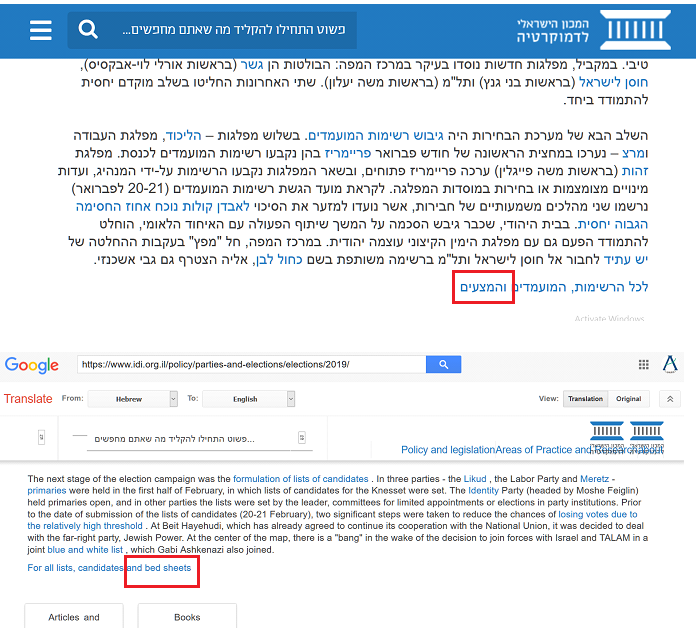
What is wrong with this English translation?

The Hebrew word מצע means platform (in the political sense).  The plural of the word is מצעים – political platforms.

The Hebrew word for bed sheets is also מצעים.

The correct English translation should read “For all lists, candidates and political platforms”

Translated from an article on The Israel Democratic Institute’s website

Hebrew English: Phones & Internet

Reading Time: < 1 minute

Learn new Hebrew words & phrases with English & transliterations: Phones & Internet

Hebrew  English: Phones & Internet

English Transliteration Hebrew
Area code/prefix Kidomet קידומת
Cost of a call Alut sicha עלות שיחה
Hello, goodbye Shalom שלום
I have a call Yeish li sicha יש לי שיחה
International dialing code kidomet bein leumi קידומת בין לאומי
Land-line number Mispar nayach מספר נייך
Mobile phone Telefon nayad (slang – mobeil) (טלפון נייד (מובייל
Mobile phone number Mispar (telefon) nayad מספר טלפון נייד
On-hold B’hamtana בהמתנה
Phone package Chavilat sichot telefon חבילת שיחות טלפון
Please call me Na le’hitkasher eilay נא להתקשר אלי
Telephone Telefon טלפון
Telephone number Mispar telefon מספר טלפון
Unlimited calls Sichot le lo hagbala שיחות ללא הגבלה
What is your mobile phone number? Ma mispar hanayad shelcha? מה מספר הנייד שלך
What is your telephone number? Ma mispar hatelefon shelcha? מה מספר הטלפון שלך
Internet package Chavilat internet חבילת אינטרנט
Extension number Shloocha שלוחה
(To) Surf the internet Liglosh לגלוש
Internet speed Mehirut מהירות
Calls abroad Sichot L’Chul שיחות לחו”ל
Emergency numbers Misparei Chirum מספרי חירום

Parties Competing in 2019 Israel Elections

0

Reading Time: < 1 minute

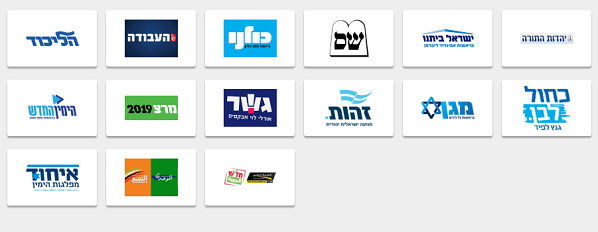
Parties competing in 2019 Israel elections.


parties competing in israel 2019 elections

Image credit: The Israel Democracy Institute


Party Transliteration Leadership On the Ballot
הליכוד  Likud  Benjamin Netanyahu מחל
 העבודה  HaAvoda Avi Gabbay  אמת
 כולנו  Kulanu Moshe Kahlon  כ
שס  Shas  Aryeh Deri שס
ישראל ביתנו  Yisrael Beteinu  Avigdor Lieberman ל
יהדות התורה  Yehadut HaTorah  Yaakov Litzman ג
הימין החדש  Hayemin HaHadash Naftali Bennet נ
מרצ  Meretz Tamar Zandberg  מרצ
גשר  Gesher  Orly Levy Abaksis נר
זהות  Zehut Moshe Feiglin  ז
מגן  Magen Gal Hirsh  מגן
כחול לבן  Kahol Lavan  Benny Gantz פה
איחוד Union of Right Wing Parties  Rafi Peretz טב
רע”ם בל”ד Ra’am Balad Mansur Abbas  דעם
חד”ש תע”ל  Hadash Ta’al Aimen Udeh ום


The pink voter identification slip

Election day – paid holiday or not?

Israel election resources


{module [624]}