20.4 C
Jerusalem
Monday, June 8, 2026
Sample Page
Home Blog Page 102

Yerida – Leaving Israel

1
Reading Time: 4 minutes

Yerida – Leaving Israel and After Aliyah

The Hebrew word ‘Yerida’ – ירידה – means ‘descent’ or to go down.  It refers to immigrants who leave the country after Aliyah and it also refers to Sabras (native Israelis) who have emigrated to another country.

According to the most recent figures publish by the Israel Central Bureau of Statistics, in 2014 nearly 16,00 Israelis left and stayed abroad for one year or more and 8,900 returned.  Figures for the four years – 2011-2014 reflect that approximately half of those that leave, return.  According to a national poll approximately one third of Israelis contemplate leaving Israel.

After months or years of planning their Aliyah, and the huge effort needed to adapt to the Israeli  lifestyle, what are the main reasons for Yerida – people leaving Israel? What makes other Olim want to stay?

Tell someone that you are leaving Israel and you are bound to get a bundle of mixed reactions that might include: “I don’t know why you came here in the first place!”, “You’re making the right decision, things can only get worse”, “You’ll be back soon – Israel changes you”, “This is OUR country, no one wants us anywhere else” and many more.

Whether politically, religiously or lifestyle motivated, a group of 27 Anglo olim, of all ages, recently got together to discuss their reasons for coming on Aliyah, staying in- or leaving Israel.

Best reasons to come in Israel

  1. More single Jewish girls and single Jewish men than in any other country.  It’s a well known fact that many singles come to Israel looking for a life partner.
  2. Families in the diaspora are frustrated by the rising costs of a Jewish education.  Those that cannot afford a private Jewish education abroad are confident that their children will get a decent religious education in Israel’s school system.
  3. Good healthcare and support services were also a huge motivation to make Aliyah and a significant reason to stay in Israel.  Israel ranks 4th globally in healthcare efficiency (2013).  Hong Kong, Singapore and Japan took the top three spots in the rankings.   The UK came in 14th, Canada 17th, and the US 46th.  South African ranks 132 out of 144.
  4. A couple with two autistic children were so grateful for the medical, educational and financial assistance they received for their special needs children.  This type of care was unaffordable for them back home.
  5. The South African members of the group had all had some personal experience with crime.  They had been involved in hold-ups, car-jackings or home invasions. In spite of terror attacks and wars, they all felt safer in Israel.
  6. The world-wide rise of Anti-Semitism was also cited as good reason to move to Israel.
  7. One of the older couples had retired to Israel.  Their U.K. pension afforded them a very comfortable lifestyle here.  Some of the seniors in the group had followed their children to Israel.  Some had more family here than there.  A couple of students had no family here but still felt part of the ‘one big Israeli family’.

Reasons to stay in Israel

  1. National pride, Zionist and religious idealism also topped the list for many.  Some members of the group maintained that their national pride had grown over the years.  While things are tougher here in Israel the religious members of the group were committed to staying and fulfilling their religious ideals.
  2. Great weather, great food, a relaxed lifestyle and a wide choice of cultural activities were also popular reasons for staying.
  3. Having a voice in a real democracy was important to one couple who are heavily involved in Hasbara. One of the younger members of the group had come to Israel as a student.  He came with a strong left-wing opinion but over time, his political opinions have changed significantly.  By the time the evening was over he was anxious to become involved in Hasbara
  4. Many said – “I feel at home here – this is MY country”

Reasons why some leave Israel

Each member of the group admitted that they had thought about leaving at one point or another.  Some said going back to their country of origin was not an option and if they eventually decided to leave, they were keen on the USA, Canada and Germany.

Frustrated by the cost of affordable housing in Israel had one member of the group fighting back tears.  She couldn’t see a way to become a homeowner one day and more immediately, she was struggling to pay her monthly rent.  She was tired of living in a shared space but because she was earning less than her friends abroad, she had no choice.  She did not feel secure in her current job and had been unemployed for 5 months before she found one.  Many of her friends were working in call-centers, customer service and sales at minimum wage.  Not finding work in their fields was a reason that many in her peer group thought about leaving.

Employment was discussed in depth.  Unemployment was an issue that caused anxiety amongst all the members in the group except for two English teachers who had work all the time.  The middle-aged members of the group (50 plus) were frightened that if they lost their jobs, they would never find another one.  One group member was self-employed.  He was anxious about his retirement and hoped that with all the financial advice he had received, he had put away enough to see him though.  If not, these seniors were faced with finding cheaper retirement options abroad.

One member of the group had come to Israel after living in the USA, England and Holland.   She felt incredibly isolated in Israel, she was also unemployed. Her political ideologies and opinions are far removed from government policies. She was actively trying raise money so that she could leave.

The army! The parents of one teen were anxious that their son would leave as he refused to serve in the Israel Defense Forces.

Common frustrations

Lack of manners and respect, a lack of customer service, unbearably hot summers and the general cost of living were common complaints.  Are those real reasons to leave or are they just the frustrations we all experience at one time or another?

While some said they came to Israel for religious idealistic reasons they were disappointed at by the divide that existed between the various Jewish religious groups.  It was not a reason to leave but they hoped this and many other things would improve with time.

Israel Olympic News 2016

0
Reading Time: 3 minutes

Israel Olympic & Paralympic News 2016

olympics

Brazil Fact-book

  1. Sources state that there are between 90,000 – 120,000 Jews in Brazil – the second largest Jewish population in Latin America after Argentina.  Brazil is home to the ninth-largest Jewish community in the world.
  2. Brazil is home to the largest Arab population outside the Middle East with some 10 million members, some 35,000 are Muslims and the rest are Christians
  3. The current population of Brazil is almost 210 million people.  The current population of Rio is estimated at 6.5 million
  4. Local currency is the Brazilian Real. One Brazilian Real (R$) is equivalent to 1.21 NIS
  5. The minimum wage in Brazil is 880 R$ per month.  There is an 11.3 per cent unemployment rate.  (source: http://www.tradingeconomics.com)
  6. In the city of Rio, close to 1.5 million people – around 23-24% of the population – live in favelas.

Latest Israel Olympic & Paralympic News

12.09.16
The accomplished sharpshooter, who has won seven Paralympic medals in the past, is the second Israeli athlete to medal in the Rio 2016 Games so far; ‘I know that I’m still missing gold in my career, as long as I have the strength I’ll go on.’

12.08.16

After Israel had to wait just under eight years, or to be more precise, 2,991 days, for a first Olympic medal since Beijing 2008, it took just three more days for the next to follow.  Ori Sasson claimed the bronze medal in the judo men’s over- 100 kilogram competition on Friday, giving Israel two medals in a single Olympics for the first time in 12 years after fellow judoka Yarden Gerbi had ended the drought three days earlier.

Israeli judoka Yarden Gerbi wins bronze at Rio Olympics

09.08.16

Athlete is first Israeli medalist since 2008 games, second female winner in history; Netanyahu, Rivlin congratulate her: ‘Today you are our hero’

Israeli judoka defeats US rival to reach Olympic semifinals

08.08.16

Sagi Muki, the reigning European champion in under-73 kg class, will face Rustam Orujov of Azerbaijan for spot in final

Israeli tennis champ defeats Bosnian in Olympic round 1

07.98.16

After 6:4, 6:4 win, Dudi Sela faces higher-ranked players, either from Belgium or Australia, in next round

Disappointing Showings for Israeli Olympians in Day One of Rio Games

07.08.16

Israeli gymnast Shatilov and swimmers Nevo and Ivry fail to break into finals, despite historic first appearance by female swimming team.

Lebanese Olympians ‘refuse to ride in bus with Israelis’

06.08.16

Israeli sailing team trainer says some Lebanese delegates tried to block Israelis from entering vehicle en route to opening ceremony

Police detonate backpack near finish line of Olympic cycling race

06.08.16

The boom heard near the finish line of the men’s cycling road race was a controlled explosion; officials believe the abandoned bag destroyed may have belonged to a homeless man.

Israeli Judoka Shira Rishony loses in first round

06.08.16

Israeli Judoka Shira Rishoni is out of the Olympics after losing her first match to Ukrainian opponent Maryna Cherniak in the women’s 48 kilogram division. Rishony was disqualified in the bout for illegally touching her opponent’s leg.

Israeli Victims of Munich Olympics Massacre Honored in Rio

06.08.16

‘This is an extremely emotional moment for us, one we have been waiting for since 1972,’ Yossef Romano’s widow says.

The Awesome Naf Naf

Reading Time: 3 minutes

The Awesome Naf Naf. An Israeli & Middle Eastern grill phenomenon.


nafnafYou probably learned how to build a fire in scouts or if not there then perhaps in the how-to section of “The Art of Manliness”.  All we need is a bit of kindling and tinder; wood, pine cones, dry leaves, paper, charcoal and a match.  We build massive bonfires to celebrate Lag B’Omer, and throw on old chairs, tables, book-cases or anything made of wood to create a blaze.  But rules for the Israeli BBQ are a little different.

Barbecue season in Israel officially starts on Yom Ha’atzmaut – Israel’s Independence Day – when at least two thirds of the country head outdoors.  Traditionally, families and friends get together and the meal of choice is a BBQ – Israeli style.

The Hebrew word for BBQ is Mangal – מנגל – (originally derived from Arabic and used all over the Middle East and some Mediterranean countries)  In Israel a BBQ is commonly referred to as ‘Al HaEish’ – על האש – which literally it means ‘on the fire’.  Whatever you choose to call it, there is a ritual.

You’ll need:

  • A BBQ – a metal box approximately 60 x 40cm, easily available at hardware stores and better petrol-stations.  Disposable one-time-use BBQ are available too.
  • A bag of charcoal
  • Firelighters or some form of accelerant and,
  • A Naf Naf

What is a the meaning of the word Naf Naf?

The Urban Dictionary defines the word ‘Naf Naf’ as ‘awesome’ and it is exactly that. 

What do I use a Naf Naf for?

The purpose of the awesome NafNaf is to ventilate a fire so that it lights and burns well. The Israeli NafNaf is a paddle, usually made of plastic.  You can buy Naf Nafim wherever you buy your BBQ and accessories and even at petrol stations.  If you cannot lay your hands on a traditional NafNaf, you can improvise.

Are there alternatives to the plastic paddle?

A disposable plate, a frisbee or a piece of cardboard will work just as well.

A true story

An Anglo immigrant (Oleh), having made thousands of BBQs in his lifetime,  prepares the fire for his family’s Mangal in a remote location in Northern Israel.  Suddenly out of nowhere a 4th generation and friendly Israeli arrives on the scene to offer some unasked for advice.  He tells the immigrant that he is doing it all wrong.  Mr. Friendly Israeli will show Mr. Immigrant how it’s done. He runs off to his car to get what he maintains is the ‘best tinder’ – off-cuts of pine from his carpentry workshop. Upon his return he reconstructs the fire altogether. He crumples up a few paper towels and puts them into the soon-to-be fire (note – the accelerant does not have to be fuel based or a flammable solvent).  He lights the fire and stands back proudly.  “Where is your Naf Naf?” he asks.  The immigrant shrugs his shoulders. In Hebrew he answers; “Ain li” – I don’t have one.

The friendly Israeli is gobsmacked! A BBQ without a Naf Naf is like French fries without ketchup or kreplach without soup.  He maintains that the plastic paddle is useless anyway and he always uses a piece of cardboard – and cardboard from an old Coke crate works best.  The dirtier the better.  He then proceeds to tell Mr. Immigrant that cardboard from a Sprite or RC crate does not work as well.  With difficulty the immigrant keeps a straight face and controls his urge to explode into laughter. Mr. Friendly Israeli says “Rega” – hold-on – he goes back to his car to search for his cardboard Coke crate Naf Naf.  In the meantime the fire is going well.  About 5 minutes later he arrives back on the scene with perspiration dripping from his brow.  In his hand is an old pizza box.  Mr. Immigrant is completely bewildered.  Mr. Friendly Israeli is a little embarrassed but with all the confidence he can muster, he says that he couldn’t find his Coke Naf Naf but never mind, an old pizza box works just as well.  The two families join together and share lunch. They talk as if they have known each other for years. They talk about politics, overdrafts and mortgages. The BBQ is a success and both families are happy and well fed.


With the start of the summer BBQ season, whatever your Naf Naf of choice is, make sure you have one so that you blend into the crowd and don’t obviously identify yourself as an ignorant immigrant Oleh.

5 more articles you might enjoy


2016 US Presidential Elections

0

Reading Time: 2 minutes

Voting in the Upcoming 2016 United States Presidential Elections

voteNovember 8, 2016, will be the 58th U.S. presidential election. Register to vote at least 90 days before Election Day. If you are a US citizen 18 years (on Election Day) or older and reside outside the United States, you may vote absentee in any election for Federal Office. US overseas voting is easy. There is only ONE form to complete for registration. Your first step is to complete the Absentee Ballot Request https://www.usvotefoundation.org/…/voter-registration-absen… Then simply print the form, sign, and mail it to the address listed under your State in the State Instructions. Use the address of the last real home you had in the U.S.— where you actually resided. 37 states* allow U.S. citizens, 18 years or older, who were born abroad, but have never resided in the U.S. to vote absentee. Their voting address in the U.S. is the last U.S. residence of their U.S. citizen parent. States vary in their voter registration identification requirements, and most commonly these are 1) the last 4 digits of your Social Security Number (SSN); 2) a valid state driver’s license. 3) a US passport

*(Alaska, Arizona, California, Colorado, Connecticut, Delaware, District of Colombia, Georgia, Hawaii, Illinois, Iowa, Kansas, Kentucky, Maine, Massachusetts, Michigan, Minnesota, Nebraska, Nevada, New Hampshire, New Mexico, New York, North Carolina, North Dakota, Ohio, Oklahoma, Oregon, Rhode Island, South Carolina, South Dakota, Tennessee, Vermont, Virginia, Washington (State), West Virginia, Wisconsin, and Wyoming)

Thanks to the AACI for this info

You may like these…

Rental assistance for Israel’s new immigrants – The oleh rent subsidy

0
Reading Time: 2 minutes

Israel Doubles its Rent Assistance for New Immigrants

housing Copy

Starting January 2016, Israel is doubling its rent assistance to new immigrants (olim), the first increase in 15 years.  The increase is vital as rental prices soar.

Individuals will receive 400 shekels ($103) a month, compared with the current 213 shekels; families will receive 800 shekels a month, up from 400 shekels. The assistance does not factor in family size.  Also,  immigrants can only start receiving the money once they have been in the country eight months.

In spite of the increased subsidy, with the high cost of rentals in today’s market, this subsidy will not make a huge difference.

This change will cost the Ministry of Aliyah & Integration 60 million shekels a year.

The last two years have seen more immigrants than in other years this decade (mostly from France).  Last year there were 26,500 immigrants, a 32% increase over 2013.

The ministry is also increasing assistance for elderly people living on their own. They currently receive between 800 and 1,400 shekels a month, depending on age and family status. They will now receive an extra 120 to 150 shekels a month, a move that will cost the ministry 30 million shekels a year.

Also, there will be a significant increase for families waiting for public housing, as well as for single-parent families, the disabled, wheelchair-bound and people suffering from serious illnesses, who are now entitled to  1,250 shekels a month.

These groups will now receive an extra 800 to 1,000 shekels a month. It was also decided to build an additional 1,000 public-housing units for immigrants.

The tenant’s committee – Va’ad Bayit

0

Reading Time: 3 minutes

Va’ad Bayit – The tenant’s committee & monthly levies

Hebrew: ועד בית

vaad-bayit

So you are setting up home in Israel for the first time, there is a knock on your door and the person standing there is collecting money for the Vaad Bayit. Vaad Bayit in Israel is a housing term used when referring to the tenant’s (residents or housing) committee in a communal residential building (Heb: Bayit Meshutaf).  Vaad Bayit is also used to describe the monthly tenant levy.

What is a Bayit Meshutaf?

A Bayit Meshutaf is any building that has two or more residential units and where part of the area or facilities are shared by the residents. A Bayit Meshutaf should have a Vaad Bayit.

Shared Areas, Facilities, Maintenance & Repair

Shared areas include the roof, the entrance, the stairwell, the public utility area, swimming pool, elevator, common garden and parking area etc., and the repair, general maintenance and upkeep thereof.

Shared utilities include water and electricity for the shared areas and the repair, general maintenance and upkeep thereof.

Ha’aguda LeTarbut Hadiyur – האגודה לתרבות הדיור

Ha’aguda LeTarbut Hadiyur is a government office that inter alia, oversees laws and practices pertaining to communal residential dwellings including Vaad Bayit.  The Aguda LeTarbut Hadiyur offers guidelines for good Vaad Bayit practices.  For a small monthly fee, you can become a member of the Aguda and this fee will entitle you to take advantage of some of the facilities and services offered by the Aguda (and also in the case of disputes).  They have a Hebrew only website.

How does Vaad Bayit work?

Tenants are expected to meet at least once a year to discuss, plan, argue and fight about all things that are for the general good of the building and the tenants.

A house committee with a chair-person is elected. Home-owners/landlords and NOT tenants have voting rights.  The house committee will establish the monthly levy that is to be paid by each tenant (it can be anything from 50 – 500 shekels per month).  In a rental apartment the tenant is responsible for paying the monthly levy and NOT the landlord.  The committee will also establish how the funds are to be managed; will the monthly levies be paid into a bank account or will the funds be kept in a petty-cash or shoe-box? (Small buildings operate well on the shoe-box system).  Whatever system you choose, your committee is responsible for keeping track of all revenue and expenses and provide a written report of all expenditure.  You are legally entitled to a receipt for your monthly levy.

Next year the tenants will meet again and vote for a new committee who will then discuss, plan, argue and fight over the plans for the coming year.  Vaad Bayit is much like the PTA – once you’re on it you never get off it.  It is most likely that your committee has been operating with the same chairperson for the past 20 years.  Nobody wants the job.

Typical Vaad Bayit Annual Meeting Agenda

  1. New committee
  2. Levies
  3. Roof maintenance: whitewashing and sealing
  4. Stairwell: new cleaner needed
  5. Electricity: replace broken light bulbs and switches on the 3rd floor
  6. Plumbing: blockage in main line – access required via Mrs. Cohen’s apartment
  7. Outstanding bills
  8. Other important matters
  9. Refreshments

Typical Vaad Bayit Minutes of the Last Meeting

  1. The meeting commenced at 8:00pm and all tenants were present.
  2. The existing chairperson was voted in for a further year by an overwhelming majority.  Mrs. Cohen remains in-charge.
  3. The monthly levy for the coming year remains unchanged at 50 shekels per month.  All tenants are requested to pay their dues in a timely manner and bring their money to Mrs. Cohen (apartment 3) – she cannot be expected to go to each tenant to ask for money all the time.
  4. It was decided that, owing to the large number of dead cockroaches and rats, the common area should be fumigated once a year.
  5. The gardener has retired.  Mrs. Cohen to get names and quotes from 3 new gardeners
  6. All tenants agreed that the stairwell needs to be repainted in “Snow White” by Tambour – color no. OW210P
  7. Tenants are asked to contribute refreshments at the next meeting.  Refreshments will no longer come out of the Vaad Bayit kitty.
  8. The meeting was adjourned at 8:45pm

Jokes aside, a good Vaad Bayit and a well maintained building is really quite wonderful.  Also, if you have the time and sufficient Hebrew skills, familiarize yourselves with services offered by HaAguda LaTarbut Hadiyur – they do offer some useful services.

Hebrew-English: Fish

Reading Time: 3 minutes

Learn new Hebrew words & phrases with English and transliterations

Fish Varieties

red mullet
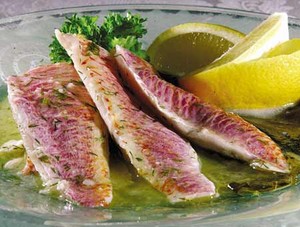
Barbunia – Red Mullet

Fish was a regular part of our weekly dinner menu back in the old-country. When we made Aliyah we assumed we would find the same varieties in the market and if not, we’d be able to buy good quality frozen fish, but it was not so.  Over the years, we’ve learned to love the local varieties and enjoy the flavors of the Mediterranean kitchen.  We will always miss our hake, kingklip and yellowtail  but fresh sardines, whitebait or tender morsels of freshly grilled mullet are equally delectable.

Here is a list of 20 fish varieties you’ll find in you local shuk or neighborhood supermarket.

English Transliteration Hebrew Comments
Anchovy Unchovi אנשובי Sold fresh in the shuk or in small bottles or cans in the supermarket.
Bream Zahavon זהבון Baked, you can stuff the cavity of the fish with garlic, red chili, onion (or leek), parsley and half of a sliced lemon
Cod Kod קוד Baked or pan-fried
Carp Karpion קרפיון The main ingredient of gefilte fish.  If you do not like the flavor, substitute with Nile perch.
Grey Mullet Boori בורי Grey mullet is a saltwater fish  that can be baked or pan fried successfully. Grey mullet has a distinctive flavor that is quite earthy.
Grouper Lokus לוקוס A firm, deep-water fish. Baked or grilled, it can also be used in spicy Moroccan fish.
Hake Hake הייק Also referred to as Bakala or Marluza although true hake is much thicker.  Periodically available in supermarket freezers.
Herring Herring הרינג Also referred to as ‘Dag Maluach’ (salty fish).  Pickled or chopped (a traditional Lithuanian way), you either love it or hate it.
Mackarel Makarel מקרל Baked, pan fried, grilled or smoked.
Nile Perch Nisichat Hanilus נסיכת הנילוס Baked with tomatoes and olives or pan fried. Works well as English style fried fish but make sure you cook it well as it is fairly thick. A fatty fish.
Red Mullet Barbunia ברבוניה Red mullet is a light-pink fish. It is delicately flavored and slightly sweet.  Red mullet is unrelated to grey mullet.
Red Snapper Faridah פארידה A good source of Vitamin B6, Phosphorus and Potassium, a very good source of Protein and Vitamin B12
Salmon Salmon / Altit סלמון / אלתית Traditionally bake salmon in the oven with lemon juice, olive oil, garlic and parsley.  Steaks can be pan fried or baked.  Salmon is dry when overcooked.
Sardines Sardinim סרדינים Fresh sardines are sold in the shuk.  Grilled on the BBQ or lightly coated with flour and fried in a skillet.
Sea Bass Lavrak לברק Israel’s master-chef, Yisrael Aharoni suggests cooking Sea Bass in a rich fresh tomato sauce in a covered skillet for 15 minutes.
Sea Bream Denis דניס Jamie Oliver suggests Sea Bream cooked with garlic, chili, cherry tomatoes and fresh parsley cooked in a skillet
Sole Sol סול A flat fish which needs to be cooked for a few minutes only.  Sole is available in the freezer section of the supermarket
St. Peters Fish (Tilapia) Moosht/Amnon מושט Dipped in flour and lightly fried in a skillet, it is delicious when served with a parsley pesto.  Also good in Moroccan fish stew (Chreime)
Trout Forrel פורל Pan fried, grilled or baked.
Tuna Tuna טונה Most commonly sold frozen in vacuum packs in the supermarket.  Fry tuna like a beef steak.

Jellyfish Season in Israel

Reading Time: 4 minutes

Jellyfish season in Israel begins. First reports. Beach goers beware!

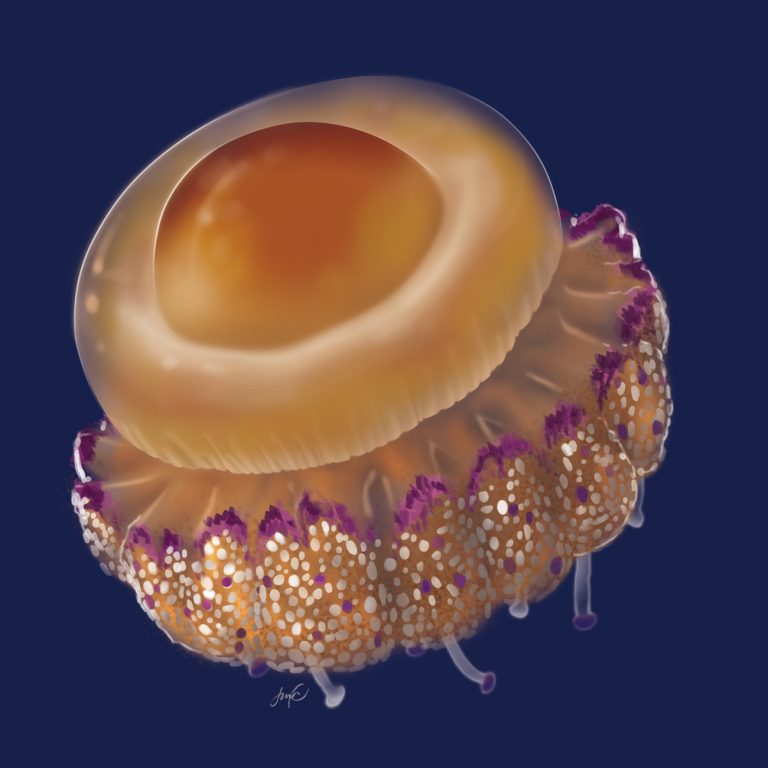
fried egg jellyfish
The Fried-egg Jellyfish – Image credit: Meduzot.co.il

The Israel Oceanographic & Limnological Center is responsible for informing the public of jellyfish activity along Israel’s shoreline.  Summer swarms of jellyfish, like the Nomadic Jellyfish (Rhopilema nomadica) are often spread along Israel’s coastline; from Ashkelon to Nahariya.  In the summer months from June – August,  jellyfish stings are regularly reported on the southern, central and on the northern beaches of Israel, where bathers describe “stinging waters” nearshore.  Offshore jellyfish clusters can reach a size of 300-400m.

Large blooms of jellyfish have  been reported on Israel’s Mediterranean coastline, around Tel Aviv, Netanya, Haifa and Akko and Nahariya.

Appearance

The are 17 different species of jellyfish that inhabit Israel’s waters. The  Nomadic Jellyfish for example, is light blue in color and can be confused with a ‘nylon’ grocery bag floating in the water.

One of the most common species in the Gulf of Eilat is the Golden Moon jellyfish – Aurelia – which generally arrives in Eilat during the spring season in gigantic swarms.

The fried egg jelly fish has a yellowish/orange dome surrounded by a ring resembling a fried egg.

The jellyfish sting

Some jellyfish stings have very little or no effect on humans, a slight redness or itchy patch could also develop, while the venom of others is more dangerous and can result is very panful injuries and even be life-threatening.

Nomadic jellyfish, common in Israel’s waters, have filaments covered in venomous stinging cells which are designed to paralyze their prey which includes plankton and fish.

In 2018 more people required hospitalization than ever before and was the worst year on record for jellyfish stings.

What if you get stung? Urine, sea-water, vinegar or Fenestil?  What’s best?

Treat a jellyfish sting as if it was a burn – that’s what the experts say. There are however varying opinions; the 24 hour poison center at Rambam Hospital suggest washing the sting with tepid, running water for 20 minutes, scientists at The University of Haifa say that treating the sting with vinegar actually makes it worse.  Vinegar works well on Box Jellyfish but they are generally not found in the Mediterranean.  What about urine – a commonly suggested remedy? NO, it’s a myth.  Also, do NOT rub beach sand into the burn as dirt and organisms in the sand can infect the wound.

For the type of jellyfish in Israel waters, it is recommend to was the area with clear saltwater or seawater (but if the water is infested with minute jellyfish, the sea water method is less effective).

If the sting covers a large area, if swelling is serious or you have an allergic reaction, seek medical treatment immediately.  Antihistamines may be prescribed by a doctor.

Emergency first-aid, here is what you can do

  • Wash the area carefully with water.  Do not rub.
  • Apply a mixture of equal parts water and baking soda for two minutes – this will block the firing of any stinging cells left on the skin.
  • Remove residual tentacles and the baking soda with the edge of a plastic credit card
  • Apply a cold pack (a plastic bag with ice, or even a cold soda can wrapped in a piece of fabric or a shirt) for 5-15 minutes
  • In pain persists, reapply the cold pack for another 5-10 minutes.
  • Consult a doctor and ask for appropriate treatment
  • If you get stung in or around your eyes, seek medical attention immediately. Call 101 for assistance or the Poison Control Hotline at Rambam Hospital for advice.

The end of the jellyfish season in Israel

Jellyfish season in Israel usually ends late in July or toward the middle of August.  Some say that jellyfish season coincides with the days leading up to Tisha B’Av, when swimming is forbidden.

Jellyfish trivia

  • The collective name of a group of jellyfish is a bloom, smack or swarm
  • The lifespan of a jellyfish is 2 – 6 months
  • Only 5% of the jellyfish is solid matter
  • The common Hebrew term for a jellyfish is ‘Meduza’.

If you are visiting Eilat, take in the aquarium and see the numerous species of meduzot in the jellyfish pool from a very safe distance.

Most common jellyfish species in Israel

(Rhopilema nomadica), commonly known as the Nomadic Jellyfish, is a species of jellyfish that is found abundantly along the shores of Israel. It belongs to the class of scyphozoan jellyfish and is considered the most common jellyfish species in the region.

The Nomadic Jellyfish can be easily identified by its physical characteristics. It has multiple long tentacles and its coloration is usually white, although young individuals may exhibit a transparent or pale green color. The jellyfish is relatively large, with a size that can reach up to 90 cm in diameter. Its bell, which is the main body structure, is flabby and wrinkled in appearance.

(Mnemiopsis leidyi), commonly known as the Sea Walnut or Comb Jelly, is a species of gelatinous zooplankton that has been observed in the waters of Israel. It is a translucent, oval-shaped creature with rows of cilia (hair-like structures) along its body, which give it a shimmering appearance when it moves.Originally native to the western Atlantic Ocean, Mnemiopsis leidyi was accidentally introduced into the Black Sea in the 1980s. From there, it rapidly spread to other parts of the world, including the Mediterranean Sea, reaching the coastal areas of Israel.

(Rhizostoma pulmo), commonly known as the Barrel Jellyfish or Dustbin Lid Jellyfish, is a species of jellyfish that can be found less in the waters of Israel. It is characterized by its large, bell-shaped body and a smooth, mushroom-like appearance. The Barrel Jellyfish is usually pale blue or white in color and can grow to impressive sizes, with some individuals reaching up to one meter in diameter.

Hebrew – English: Pests, Bugs & Insects

Reading Time: < 1 minute

Learn new Hebrew words & phrases with English & transliterations

Pests, Bugs & Insects

English Transliteration Hebrew
Ants Nemalim נמלים
Bees Dvorim דבורים
Cockroaches Tikanim / Jukim תיקנים / ג’וקים
Crickets Tzartsarim צרצרים
Fleas Paroshim פרעושים
Flies Zvuvim זבובים
Mosquitoes Yetushim יתושים
Moths Ushim עשים
Spiders Akabishim עכבישים

Error 404 Page

Reading Time: < 1 minute

Oooooops!

404 Error

The page you are trying to reach does not exist.

To go back to the Home Page – www.anglo-list.com – click here

Continue browsing the site

Employment | Lifestyle | Tour & Travel | Learn Hebrew | Aliyah & Relocation | Social | Information Resources | Business Directory