12.1 C
Jerusalem
Monday, April 20, 2026
Sample Page
Home Blog Page 88

Weekly Torah Portion: Parshat Hashavua Beshalach

0
Reading Time: 10 minutes

Parshat Hashavua Beshalach.

By: Rabbi Nissim Mordechai Makor

parshat hashavua beshalach Rav Nissim Mordechai MakorBeshalach in a nutshell:  Pharaoh pursues the Israelites. The Red Sea splits, the Israelites cross and the Egyptian army is drowned. The Israelites complain about a lack of food and drink. G‑d sends Manna and quail for them to eat, and miraculously produces water from a rock.

Near the start of this week’s Parshat Hashavua Beshalach, we learn of the miraculous forces with which God accompanied the Nation of Israel on their journey the desert.

In Shemos 13;21-22 it says God went before them by day in a pillar of cloud to lead them on the way and by night in a pillar of fire to provide them with light, so that they could travel by day and by night. Neither the pillar of cloud by day nor the pillar of fire by night departed from before the people.

The Shem Mishmuel writes it is curious that the verses emphasize that they needed to travel both by day and by night, as the necessity for this seems to be obviated by another verse: And I bore them on eagles; wings, and I brought them to Me.  It was 120 mil [approx. 120 miles] from Ramses to Sukkos [the first stage of their journey after the Exodus, and they came there within an hour, as the verse says, And I bore them on eagles’ wings. [Rashi, Shemos 12:37].

It should be clear that they did not need to travel at night at night, klal Yisrael [the nation of activity], miraculously reached their destination in no time at all. However, it is apparent that they traveled at night throughout their stay in the desert, and we hear of wondrously short journeys on other occasions during the forty years. What, then, was the function of journeying in the dark as well as by day?

Candle lighting times for Parshat Hashavua Beshalach 

Parsha Index

In Moshe’s negotiations with Pharaoh for the release of Klal Yisrael, the ultimate purpose of the exodus is made clear: Shemos: 3:12, When you bring out the people from Egypt, they shall serve God on this mountain.  “This mountain” was, of course, Mount Sinai, where klal Yisrael would accept the Torah. The need it was the driving force behind the whole Exodus. Indeed, there were four distinct phases to the Exodus process, culminating in Matan Torah.

The Me’am Lo’ez points out to us that the logical route from Egypt to Canaan would take the Israelites along the Mediterranean coast through the Philistine territory. Although this was the shortest path, God did not let the Israelites use it.

God did not let the Jewish Nation take the road precisely because it was short. If anything had frightened them, it would have been too easy for them to return.

Besides, there was another war that God did not want the Israelites to see.  The Ephramities had taken the direct route through Philistia, and had been killed by the Philistines, who had left their bodies to rot in the field. Now, 30 years later, the bones of the Ephraimites still the roadside.

God therefore said, “It would not be good to bring the Israelites through Philistia. They will see the remains of that earlier war and the skeletons of their kinsmen lying along the roadside. They will be terrified and will fell back to Egypt.

Of course, the Israelites knew about this episode. But hearing about it and seeing the dead are two different things. Seeing the skeletons of thousands of their brethren lying in the fields would break their spirit, and make them flee to the relative safety of Egypt.

God made the people take a roundabout route, by way of the Red Sea Desert. The Israelites were armed when they left Egypt. Because of these considerations, God led the Israelites along a roundabout route. Instead of bringing them along the Mediterranean coast, he led them into the desert, toward the Red Sea.

This shows how far one must go to avoid doing wrong. God Himself would not let the Israelites take the most diet route because He was concerned that they might return to Egypt. Obviously, God is omniscient; there is nothing that He does not know. Still, when God created the world, He gave man free will. God does not coerce man to be good or bad; if He did so, man would not deserve reward for his virtue nor punishment for his sins. God therefore gave man complete free will. Joseph had bound his brothers by an oath to remove his bones and to make that oath binding on their descendants [Bereishes 50:25].

Although the Jews were supposed to be in Egypt 400 years they only remained there for 210.  The numerical value of pakod [remember] is 190, the number of years reduced from the decree. [it was thus as if Joseph had said, “190 years early, He will remember you.”]

Besides the miracles that we described in the portions of the last two Parshas of VaEra and Bo, an additional 50 miracles occurred to the Jewish Nation between the Exodus and the drowning of the Egyptians in the sea. All of them were complete violations of the laws of nature.

These are the 50 miracles:

  • The Clouds of Glory that GOD sent to protect Israel. There were seven clouds, six surrounding the Israelites on 4 sides, and above and below. They were thus protected from the weather and from snakes and scorpions on the ground. The clouds carried them along day and night, like a huge ship. The 7th cloud went before them, smoothing out all hills and valleys, so they would be able to travel along a level route. The north wind did not blow so the clouds of Glory did not dissipate.
  • Hashem gave Pharaoh and his advisors the idea of pursuing the Jews. None of the Egyptians got discouraged after 3 days of pursuit.
  • On the 7th night of Pesach the clouds changed position standing behind the Jews. The cloud was half dark which was half dark for the Egyptians and half white for the Jews.
  • The Egyptians arrows were absorbed by the clouds.
  • When the Jews entered the sea, and the water reached their nostrils, God immediately split the sea.
  • On this 7th day of Pesach, all the waters in the world split.
  • The sea divided into the 12 paths, one for each of the 12 tribes
  • The sea was like a tent, covering the Jews on all sides
  • The sea bed was perfectly dry, ads if there had never been any water there.
  • When the sea dried up, it was not ordinary ground, but a beautiful mosaic, like that found in palaces.
  • When the sea divided into dividing the tribes remained perfectly transparent, so that the tribes were able to see each other.
  • When children began to cry while crossing the sea, God made the walls of the tunnel produce fruit and sweetness to comfort them.
  • Although the Red Sea is saltwater, and it was congealed at the time, the walls yielded fresh water for the Jewish people to drink.
  • Despite all the terror and confusion, not a single Jewish woman miscarried, even though there were many pregnant women them.
  • Although there were deep canyons and crevices in the sea bed, the Jewish People were able to walk on a level path.
  • After the Jewish finished drinking from a fountain in the walls surrounding them the water immediately solidified.
  • Although there were many aged and infirm among the Jewish people did not delay the march, and the entire group was able to cross during the night, reaching land by daybreak.
  • When the Torah says, “Flowing waters stood up like a wall” [15:8], it indicates that the water towered up on both sides of the Jews like huge mountains.
  • Vegetation grew out of the sea bed for the Jewish people’s animals to eat.
  • Even though the splitting of the Red Sea was an obvious miracle, the Egyptians pursued the Jewish right into the sea. This itself was a miracle.
  • Although the sea bed had become as hard as stone for the Jewish people, when the Egyptians were crossing, the pillar of cloud transformed it into mire. Just as the Egyptians had made the Jewish people tread in mud all day, now they too were up to their knees in mud.
  • The pillar of fire made this mud boiling hot, making the horses lose their hooves.
  • God removed one wheel from each chariot. When the panicked horses pulled these disabled war chariots, the heavy vehicles swung back and forth, breaking bodies as they went.
  • Many Egyptians fell from their chariots and were able to get up again as it says in the verse they sunk like lead
  • Although it was virtually impossible for the chariots to move with a single wheel, the chariots were able to ride toward the closing waters. Even when the Egyptians tried to turn their chariots around they kept heading toward the approaching waters.
  • Even though the sea bed had become like mire, when the Egyptians fell on it, it was like stone, breaking their bones. The water became so hard that the Egyptians broke their heads against it.
  • Stones, hail and fiery coals rained down on the Egyptians from the sky. Even the Egyptians who were not killed by this were totally confused.
  • The sound of the splitting of the Red Sea could be heard all over the world.
  • God sent a wind that did two opposite things. First it froze the sea, making it solid. Then it melted the sea so that it could drown the Egyptians. The same wind was both freezing cold and boiling hot.
  • Instead of melting slowly, the sea melted suddenly, all at once, engulfing the Egyptians
  • Even when Egyptians were able to leave the sea, the water pursued them and drowned them. Some Egyptians used their occult powers to escape the waters, but the genius of the sea pursued them relentlessly.
  • Not a single Egyptian survived, while at the same time, not a single Jew was harmed.
  • Instead of retreating to the shore, the Egyptians who had just entered the water, continued charging into the flood.
  • God agitated the Egyptians in the sea, as it is written, “God tossed the Egyptian in the midst of the sea” 14:27. The water threw the Egyptians in the air over and over, turning the wagons upside down over their riders.
  • Even when the horses and chariots were being thrown in the air, they remained together. All the treasures that the Egyptians had taken with them to battle, would thus fall into the hands of the Jewish people.
  • The subterranean ground water joined with the waters of the sea to drown the Egyptians. These powerful currents
  • The Egyptians sank to the bottom like lead [15:10]. Still, the waves were so powerful that they were so powerful that they were swooped up again, and tossed into the air.
  • The sea bed opened up and swallowed up many of the Egyptians. It is thus written, “You stretched out Your right hand, the earth swallowed them” [15;12]
  • God raised up the land of Egypt so that the survivors who remained at home would be witness to see the downfall of their armies.
  • Even after the sea closed, many Jews lacked faith. God then instructed the genius of the sea to spew out the Egyptians where the Jewish people would be able to see them. It is thus written, “Israel saw Egypt dead on the seashore” [14:30].
  • Although the Egyptians were crushed between the waters of the Red Sea, they did not die. Half alive they were washed up onto the beach. They then saw that only they perished not any of the JEWS.
  • When Pharaoh came to attack Israel, he brought along many foreign troops from other lands. Although these were also swept up by the sea, they did not drown. The sea was selective, only downing Egyptians.
  • Although Pharaoh had been at the head of his troops, he was spared. Pharaoh repented and instead of returning to Egypt, he went to Nineveh where he became an important leader
  • When the Jews lived in Egypt the Egyptians would substitute Jewish children for bricks
  • Not only were the lives of the Jewish spared but they did not lose any of their belongings at sea.
  • The Egyptians were washed up on the shore so that the Jews would be able to take the gold and silver from their horses and chariots.
  • There was a great dispute between the sea and the land since is they were afraid they would be punished as the land had been cursed for accepted abel [Bereishes 4:11]. Only after God promised He would not punish the earth did the land open up and swallow the Egyptians.
  • God restored Yaakov back to life. Yaakov and His sons were brought back to life to see the miracle of the Sea
  • All the Jews attained the level of prophesy and were thus able to sing the song of the Red Sea along with Moshe word for word.
  • Even young children joined in the song as well as infants as well as children in the womb. King David also alluded to the song of the unborn children in their mother’s womb, when he said, “In assemblies bless God, the Lord from the source of Israel” [Psalms 68:27]

For all time as we sing the song of Sea daily we must do so as if we just left Egypt as we thank HASHEM for our lives and freedom.

Shabbat Shalom

Candle lighting times for Parshat Hashavua Beshalach 

Parsha Index

The Pearls of Life bring R’ Chaim of Volozhin 1749-1821 who wrote that Hashem Yisborach [may He be blessed], created the universe out of nothing. And ever since Creation, the universe exists only by virtue of the fact that Hashem continually bestows an abundant flow of new [Divine] light on it. If this flow of light were to cease for an instant, the entire universe would revert to nothingness. G-d is called Elokim, “the All-Powerful” for He is the Master of all that exists in that He constantly infuses the forces of nature with the power to function. [They do not act by themselves] rather, Hashem has the capacity to change or direct nature in accordance with His will. Likewise, when G-d created man, He empowered him to control countless forces and worlds, handing them over to him so that He should direct them according to his actions, words or thoughts whether for good or, Heaven forbid for the opposite. With his good deeds, words and thoughts, man sustains and gives energy to countless forces and holy celestial worlds increasing their holiness and light. They are builders in the sense that [by doing mitzvos] they exert influence on the Higher Worlds, like a builder who designs a structure and brings it to completion. When the nation of Israel acts morally they give strength and power to G-d to counter the attacks by the accusing angels who want to complain and weaken G-ds strength.  Acting properly, doing Mitzvos, learning Torah literally “Gives strength to Hashem.” There can be no greater sanctification of Hashem’s name!
Golden Nuggets
More than success, more than money , more than honour, more than wisdom, a parent’s deepest desire is for his/her children’s welfare and success.
How can a parent realize his/hers fervent desire to help them grow into good, productive Torah observant Jews? The Gemara (Nidda 70B)answers “ Let him pray for mercy from Hashem, Who controls the birth of children”
Rav Chaim Kanievsky once when a couple asked for his advice to get children , responded  with TWO WORDS” ZEIT MITPALLEL” PRAY!
Many great Rabbis prayed for their children. The Chasam Sofer was asked the secret of his success in raising a child such as his son, The K’Sav Sofer. He responded, ”Do you know how many tears went into praying for my son?”
That’s why we have to pray for the success of our children. Rabbi Levovitz, frequently described sincere prayer as the Only Activity that can generate tremendous profit and yet does not consume any free time, as the person is praying anyway”
Yeshiva Pirchei Shoshanim

The Tu B’Shevat Seder

0
Reading Time: 12 minutes

The Tu B’Shevat Seder & the significance of Tu B’Shevat (the New Year of the trees).

Contributed by Rav Nissim Mordechai Makor – With thanks to The Pirchei Shoshanim Shulchan Aruch Learning Project
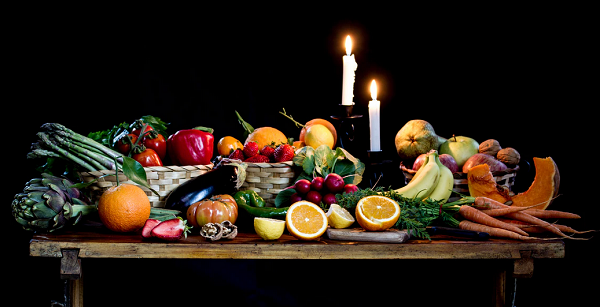
tu b'shevat seder

Of all the Jewish festivals and observances, Tu B’Shevat is a favorite mostly because of the fabulous selection of dried fruits and nuts that are available in the shuk and supermarkets.  It was only after our Aliyah to Israel, that we learned there is a tradition to have a Tu B’Shevat Seder. With the help of The Pirchei Shoshanim Shulchan Aruch Learning Project, we outline the Halachic significance and understanding of how one goes about observing Tu B’ Shevat and how we can pass down the importance of this day to our children for the generations to come.

“There are four New Years”…

“On the Fifteenth of Shevat (according to Bais Hillel) is the New Year for Trees.” Starting with the Gemara on Daf 14a through 15b the Halachas are brought down including the impact this day has on the type of Etrog you will have on Sukkot. It is apparent that the Rishonim intended that Tu B’ Shevat should be treated as a Chag as it is counted as one of the four New Years.

A) Just like on three of the New Years a Taanis is forbidden (The first of Nissan, The first of Elul and the first of Tishrei), so to the fourth which is the Fifteenth of Shevat it is forbidden to fast.

B) Even a Chasan (bridegroom) on the day of his wedding is not to fast on Tu B’ Shevat. When the Community desires to institute a fast on a Monday, Thursday and Monday, they should push off their fast so a fast should not be decreed on Tu B’ Shevat.

C) Tachanun is not said on Tu B’ Shevat and Mincha on the day before.

D) We also don’t say Kaal Erech Apiem on Monday and Thursday in addition to not saying Av HaRachamim on Shabbos as well as Tzedkesecha Tzedek by Mincha on Shabbos.

E) Many are not accustomed to give Eulogy’s (Hespeidim).

Shabbat and festival candle lighting times

Tu B’ Shevat in Halacha Today

The Rosh Hashana or the New Year for Trees acts as the boundary or cut off date between one year and the next since most of the rains of the previous year, in Eretz Yisrael have already fallen. A certain percentage of the fruit have reached the stage where it has begun to ripen. This is defined as from the time of blossoming until the fruit has reached one third of its full growth. Fruit which have reached this stage are attributed to the previous year. Any new blossoming of fruit after this day falls into the category of the New Year. As a result Tu B’ Shevat is a decisive factor in determining the Laws of Maaser and Orlah. The Fifteenth of Shevat is the midpoint of winter and we are looking forward to the spring. The sap of the trees is beginning to flow and rise in the roots of the trees, though unseen by man and as a result the fruits are manifesting their first stage of formation.  The Rosh Hashana for Trees is a time of Tefilla (Prayer). We joyously celebrate this day in asking our creator to continue to shower his benevolence on his children the Bnei Yisrael as well as the rest of his creations in the world as it says in Bircat HaMazon “Hazon es HaOlam Kulo Betuvo” (He Nourishes the entire world in his goodness).

The Tu B’Shevat Seder

Despite the fact that Tu B’ Shevat is discussed in both the Mishna and Gemara there is very little information available about the Holiday as well as not having a well defined structure to follow it. In the mid 1500’s the students of the Ari, Rabbi Isaac Luria Ashkenazi Zt’l formulated a special Tu B’Shevat Seder that was set up along the lines of the Pesach (Passover) Seder. They wrote a brief pamphlet entitled the Pri Eitz Hadar which offers us a structure that provides a positive and enjoyable way to celebrate this spiritual and meaningful holiday. This is the first stage of the countdown to Pesach which is in exactly 60 days from Tu B’Shevatt. The Seder is broken down into 4 sequences. In the beginning of each sequence wine is poured which we do not drink until the end of the sequence. After the conclusion of the entire Seder a festive meal is served accompanied by music, song and the feeling of the joy of life while enjoying the wine and good food. White table cloths are placed on the tables with candles lighting up the room. One should dress up in their Shabbos clothes. Incense, preferably myrtle, which is taken during Sukkot, is placed on the tables as well as many flowers which are used to decorate the tables and give the air a pleasant fragrance. Your finest drinking vessels should be used as each participant will be drinking four glasses of wine or grape juice. The size of the glasses will determine how much wine will be needed. You will need an equal amount of Bottles of White and Red wine. A full wine glass (regular size). Figure 1 Bottle per person (½ Bottle Red and ½ Bottle White).  If you use shot glasses then figure each bottle will be ample for 4-6 people.


Why do we eat dried fruit?

Why do we eat dried fruit when fresh fruit is so abundant?  One is supposed to eat the ‘fruits of Israel’ during Tu B’Shevat but they were often difficult to come by outside of Israel and so it became customary to eat dried fruit imported from Israel.  This custom has remained.


Fruits for Tu B’Shevat

Fresh dried/candied fruits: Olive, Date, Grape/Raisin, Fig, Pomegranate, Etrog (candied). Apple, Walnuts, Almonds, Carob, Pear, Azarole (or Mango), Quince (or Filbert), Cherry, Red Crab Apple (or Apricot), Pistachio, Pine Seed, Hackberry (or Prune), Lupine (or Pecan). Also one should have a wheat cracker or cake. All should be reminded to check for Bugs where it may be a problem. All should have a copy of a Chumash and a Tanach in a language that they can understand. Everyone at the Seder should have one of the Species, whole or a piece that will be glorified at the Seder…and eaten. Someone should of course lead the Seder.

Get comfortable and let’s start the Seder!

Sequence I

  • Pouring the Wine
  • Wheat Cracker
  • The Olive
  • The Date
  • The Grape
  • The Wine

The first sequence starts with everyone filling each others cups just like the Pesach Seder with all white wine. This first sequence represents the northerly direction and the winter season, when the earth is dormant and there is no vegetation. The white wine is the symbolic representation of a world without life blood. Everyone takes a Cracker or Cake and makes the appropriate blessing (Borei Me-nay Mezonos) and says Tehillim (Psalm) 81:17) “But he would feed him with the finest wheat.” We now comment on the wondrous gift of wheat. Some say wheat was once a tree.


Baruch atah A-donay, Elo-heinu Melech Ha’Olam borei minei mezonot.

Blessed are you L-rd our G-d, King of the Universe, Who creates various kinds of sustenance.

בָּרוּךְ אַתָּה ה’ אֱלֹהֵינוּ מֶלֶךְ הָעוֹלָם, בּוֹרֵא מִינֵי מְזוֹנוֹת.


We now take the time to give notice of the taste- flavor, consistency, texture, color, etc. of the wheat. Our purpose in life is to give praise and acknowledge all the good our creator does in creating and sustaining us by providing the delicacies that are derived from wheat.

We now read from the verse from Jeremiah (Yeremiah) 11:16 “That G-d had called your name, “A leafy olive tree, beautiful with Shapely fruit.” We then make the Blessing prior to eating the Olive of Borei Pri HaEitz, (having in mind the rest of the fruits that will be eaten at the Seder that require the blessing of HaEitz).


Baruch atah A-donay, Elo-heinu Melech Ha’Olam borei pri ha-aitz.

Blessed are You, L-rd our G‑d, King of the universe, who creates the fruit of the tree.

בָּרוּךְ אַתָּה יְ‑יָ אֱ‑לֹהֵינוּ מֶלֶךְ הָעוֹלָם בּוֹרֵא פְּרִי הָעֵץ


We then recite from Tehillim (Psalms) 128:3 “Your children shall be like Olive plants surrounding your table.” A characteristic of an Olive Plant is they never whither.  No additional Blessing is necessary on all fruits until the conclusion of the Seder due to the initial Blessing on the Olive. We now read in Tehillim (Psalm) 92:13 “A Righteous man flourishes like the Palm Tree, like the Cedar in the Lebanon he will grow tall.” The fruit of the Palm Tree is sweet. We now read from the Verse in Shir HaShirim (Song of Songs) 7:9 “That your stature is like a Palm Tree.” The Palm tree doesn’t bend or sway to the changing winds and so too the Jewish People who remain steadfast and strong throughout the generations in faithfully following the laws of the Torah in all its exactness. Tehillim (Psalm) 128:3 “Your wife shall be like a fruitful vine in the recesses of your house.” Since the vine is nearby, it receives proper attention. When a man gives his wife the proper attention and respect they will have many fine children.  The next verse is taken from Ya’akov’s blessing of Yehuda that it would flow with wine like a fountain (Rashi). It also refers to the Moshiach (Messiah) who would come from Yehuda as well as his teeth which is white from an abundance of Milk. Now all read Bereishis (Genesis) 49: 11-12 “He Loads his young donkey with grapes of vine, and his she-donkey’s foal with a vine branch. He washes his clothes in wine, and his cloak in the blood of grapes. His eyes are red from wine and his teeth are whiter than milk. Now we drink the cup of wine while reclining on our left hand side and reciting the Blessing of Borei Pri Ha-Geffen.

Sequence II

  • Pouring the Wine
  • The Fig
  • The Pomegranate
  • The Etrog (Citron)

The second sequence starts with everyone filling each others cups with ¾ white and ¼ red wine. This is the easterly direction and the spring season, when New Life enlivens the dormancy of the barren winter. We now turn to Mishlei (Proverbs) 27:18: “He who guards the fig tree shall eat its fruit, and he who watches his master will be honored” If one doesn’t guard his fig tree another will come and eat its fruit. Similarly, he who helps his employer will be honored. Shir HaShirim (Song of Songs) 7:13 – "Let us get up early to the vineyards; let us see if the vine has flowered, if the grape blossoms have opened, if the pomegranates are in flower; there I will give you my loves." The "Ripening of Pomegranates" alludes to those fitting to guide the Jewish people in the wisdom of the Talmud. Leviticus (VaYikra) 23:40) "And you should take for yourselves on the first day, the fruit of the tree hadar, branches of the palm trees, and the boughs of thick leaved trees, and willows of the brook; and you shall rejoice before the L-rd your G-d seven days." From this verse, we learn of the commandment to take the four species: (1) Lulav, (2) Etrog, (3) myrtle and (4) willow, during Sukkot. Here the Etrog is described as the “Pri Eitz Hadar” (fruit of the majestic tree). On Tu B’Shevat, every tree is judged; either it will live or die, flourish or fade. Therefore, mystics have used this day to pray for a perfect Etrog for Sukkot.  DO NOT MAKE A SHECHIYANU ON THE Etrog.

  • The Apple – Song of Songs (Shir HaShirim) 2:3: “Like the apple trees of the wood, so is my beloved among the sons. I sat down under his shadow with great delight, and his fruit was sweet to my taste.” The flavor of the apple refers to the Jewish People's recognizing Hashem and the sweetness of Torah.
  • The Wine
  • Pouring the Wine
  • The Walnut
  • The Almond

Song of Songs: (Shir HaShirim) 2:4 “He brought me to the banqueting house, and his banner over me was love.” Mt. Sinai was the banquet house where all Jews satisfied their desire for the truth. There they said: “We will do and we will understand.” Now we drink the 2nd cup of wine while reclining on our left hand side. (A brocha is only said on the first cup).

Sequence III

The third sequence starts with everyone filling each others cups with ½ white and ½ red wine. This is the direction of the south, and the summer season, where the trees are producing fruits and ripening.  Song of Songs (Shir HaShirim) 6:11: “I went down into the garden of nuts to see the fruits of the valley, and to see whether the vine had blossomed, whether the pomegranates were in flower.” The garden of walnuts, with its pleasing fragrance, refers to the Temple. While the Kohanim offered sacrifices and burned incense, the Levites' sang Psalms. At the same time, the Israelites from all over Eretz Israel recited special prayers called "mah-a- ma-dos ". These services enabled the Great Sanhedrin (Jewish Supreme Court and Legislature) to properly interpret the law.
Numbers (Bamidbar) 17:22: “And it came to pass, that on the morrow, Moshe went into the Tent of Testimony; and behold, the rod of Aharon from the house of Levi had sprouted, and brought forth buds, and blossomed, and yielded almonds.” Korach contested the authority of his cousins. Moshe and Aharon. He believed that they had usurped the priesthood. The dispute was adjudicated in the following manner: The AI-mighty commanded Moshe to collect a staff from each tribe and to place them in the Tent of Testimony. The blossoming of Aharon's rod was conclusive proof that indeed, he had been divinely chosen. Rashi, the famous Biblical commentator, explains the significance of almond sprouting in this way: “Just as the almond tree is quickest to sprout, so too, the one who arouses strife against the priesthood is quickly punished.”

  • The Carob
  • The Pear
  • The Wine
  • Pouring the wine

Genesis – 2:8-10: “And the Eternal L-rd, AI-mighty planted a garden eastward in Eden: and there He put the man whom He had formed. And out of the ground the Eternal L-rd, Al- mighty made to grow every tree that is pleasant to the sight, and good food; the tree of life also, in the midst of the garden, and the tree of knowledge of good and evil. And a river went out of Eden to water the garden.” After the destruction of the Second Temple, Rabbi Shimon bar Yochai fled from the Romans to a cave in the small Galilean village of Peki'in. For the next thirteen years, both he and his son, Elazar, toiled day and night writing the holy Zohar, the basis of Jewish mysticism. In order to sustain them, the Almighty created a spring and a carob tree outside their cave. The reading for pears comes from the tractate “Kilayim” (Hybrids): the fourth Mishna of Chapter I: “Amongst the trees, the pears, the Curstumenian pears, the quinces, and the azarole are not heterogeneous. Therefore, a cross-breed between any two is Halachically permitted. The apples, the crab apples, the peaches, the almonds, the jujubes, and the lote, although resembling one another are heterogeneous and a crossbreed is prohibited.” Since twelve fruits (corresponding to the twelve arrangements of the Tetragrammaton) have been eaten, a special I'chaim for a “hi'nas tova u-brocha, pree u-tnuvah” (a year of goodness and blessing, gain and productivity) is made.

The following verse from Micah 4:34 is recited:

“And they shall beat their swords into ploughshares, and their spears into pruning hooks; nations shall not lift up a sword against nation, nor shall they learn war any more. But they shall sit, every man under his vine and under his fig tree; and none shall make them afraid, for the mouth of the L-rd of Hosts has spoken.”

Now we drink the 3 rd cup of Wine while reclining on our left hand side.

Sequence IV

The fourth sequence starts with everyone filling each others cups with ¾ Red wine and ¼ White. The fourth sequence is of the west, and the autumn season when the vast majority of the fruits have either ripened or are in the final stages of ripening; and winter's dormancy has begun to creep back into the earth.

  • The Azarole (or Mango)
  • The Quince (or Filbert)
  • The Cherry
  • The Red Crab Apple (or Apricot)
  • The Pistachio
  • The Pine Seed
  • The Hackberry (or Prune)
  • The Lupine (or Pecan)

Mishna Brachos (Blessings) 6:2: “If one says over fruit of the tree the blessing,‘who creates the fruit of the ground', he has performed his obligation. But if he said over produce of the ground, ‘Who creates the fruit of the tree’, he has not performed his obligation. If he says 'by Whose word all things exist' over any of them, he has performed his obligation.” Fruit of the tree is considered "of the land" as well. The reverse, however, does not hold true. Everything fits into the category of "all".

Mishna Brachos 6:3: “Over anything which does not grow from the earth one says: 'by Whose word all things exist’.”

Mishna Brachos 6:4: “If one has several varieties (of fruit) before him, Rabbi Yehuda says, that if there is among them one of the seven kinds (for which Eretz Israel is noted), he makes the blessing over that, but the Sages say that he may make the blessing over any kind that he pleases. ”The law is according to Rabbi Yehuda (Shulchan Aruch, Orach Chaim 21 1: I).

Mishna Brachos 6:6: “If those at the table are sitting upright (i.e. do not form a party), each one says grace-after- meals for himself; if they have reclined, one says grace for all.” The others fulfill their obligation by answering "Amen".

Mishna Brachos 6:7: “This is the general principle: whenever, with one of food, another is taken as subsidiary, a blessing is said over the principal
kind and this serves for the subsidiary.”

Mishna Brachos 6:8: “If one has eaten grapes, figs, or pomegranates, he saysa grace of three blessings after them. So says Rabbi Gamliel. The Sages, however, say: (he says) one blessing which includes three.” Rabbi Gamliel is referring to grace-after- meals. He is of the opinion that it should be said after the fruits Israel is noted for. However, the law is according to the Sages.

Mishna Brachos 7:1: “If three persons have eaten together, it is their duty to invite (one other to say grace).”

Mishna Brachos 8: 1: “Bais Shammai say that the blessing is said first on the day (e.g. Kiddush on Shabbos or festivals) and then over the wine, while Bais Hillel say that the blessing is first said over the wine and then over the day.”

  • The Wine
  • The Festive Meal

Now we drink the 4th cup of Wine while reclining on our left hand side. After the fourth cup, the rest of the evening is spent singing, dancing, and learning Torah for the glory of the Eternal. Another ten varieties of fruit are eaten making a total of thirty.

We now make our after Bracha’s wash and serve the festive meal. Many have the custom of playing Music, singing, speaking more words of Torah. Feel the Joy of being Alive. Enjoy the wine and good food. Daven for your Etrog and try to imagine its Size, Color and Shape…
Our mystics teach that there are four worlds and in descending order of purity they are:

  • Atzilus – The world next to G-d (i.e. His thought that wills existence), emanation, – The First Sequence
  • Briyah – the World of creation, – the Second Sequence
  • Yetzirah – The World of formation, – The Third Sequence
  • Assiyah – The World of integration (action) – The Fourth Sequence

This Seder is offered in Loving Memory of Yehoshua Moshe Ben Akiva Bergman Zt’l who spent countless days and nights in bringing the light of Tu B’Shevat into the world. In addition, we remember another special light, R’ Dovid ben Avraham Gold a’’h, who was called to the Olam HaEmess whose legacy and the way he conducted himself is affecting 10’s of thousands of others years after his passing which occurred on this holy day of Tu B’Shevat. We as well as remember Devorah bas Moshe Avigdor Ha Levi a’’h, who left on the 12th of Shevat and who was the epitome of what a Jewish Grandmother should be in carrying on and passing to her grand-children and great grandchildren the proud traditions from a world that was almost totally destroyed. Despite being the sole survivor of a huge family that was destroyed in the Holocaust, she always maintained her sweetness, smile and pureness of Heart. They are all sorely missed.

The uniqueness of this work again comes from the Diaspora Yeshiva in Yerushalayim which continues to bring so much light into this world, may they continue their holy work until the days of Moshiach and beyond.

English Speakers & Anglo Life in Israel

0
Reading Time: < 1 minute

Anglo-List and Nefesh B’Nefesh welcome you to attend an evening of research results and discussion on “Olim on Life in Israel”

Registration is now closed

Parshat Hashavua Bo

0
Reading Time: 6 minutes

Parshat Hashavua Bo

By: Rabbi Nissim Mordechai Makor

parshat hashavua bo Rav Nissim Mordechai MakorAt this point, the Torah relates that Hashem commanded Moshe to go to Pharaoh once again, but it does not mention any instructions He gave concerning the next plague, that of locusts. For this we have only Moshe’s later statement to Pharaoh and they said to Pharaoh, “So said Hashem, God of the Hebrews. For if you refuse to send forth My people, behold, tomorrow I shall bring a locust swarm into your border. Only from this verse do we know that Hashem must have commanded Moshe concerning this plague at the same time.

R’ Moshe Feinstein reveals to us that we must say that the opening verses of this parsha are intended only to explain why Moshe was told to return to Pharaoh yet another time.  Pharaoh could easily have let the Jews leave without further ado when he said, after the plague of hail [9:27], Hashem is the Righteous One, and I and my people are the wicked ones. Certainly his servants realized this, as they told him in exasperation, do you not know that Egypt is lost!

The first 7 plagues did not suffice to ensure that this display of Hashem’s power would be remember forever, since such things can easily be forgotten over the course of time. For this, 3 additional plagues were necessary, and therefore Moshe had to go to Pharaoh once again.

The Rebbe of Kotzk, explained that each of the plagues had a special effect on Yisrael. Just as the Egyptians were punished with frogs, lice, etc., so did Yisrael receive comparable spiritual gifts. As the Egyptians were lowered, Yisrael were raised in a corresponding manner. This means that as the Egyptians received their last and harshest punishment, the annihilation of their firstborn, Yisrael gained a great and commensurate gift and injection of Kedusha [holiness] into their firstborn. As the first fruit of Egypt, their firstborn, lay in their death throes, the Jewish world received a great measure of permanent sanctity to all aspects of firstness. This means that not only did the firstborn children become sanctified, but also every other manifestation of firstness.

This Pesach, the first of all the festivals in the cycle, received a special measure of spirituality. Likewise, Eretz Yisrael [the Land of Israel] and the Beis HaMikdash, the primary spots on earth, gained special sanctity, as did the primary elements of the intellect and emotions in man, which are the first powers of the soul.

This “sanctification of firsts” is actually the theme of the last part of the sidrah which we are trying to analyze. As always, there are three distinct aspects of this firstness in space, in time, and in the soul of mankind which are the primary arenas of human experience. Each of these is discussed by the verses following the introduction of the laws of bechoros: [the first born].

Shabbat candle lighting times for Parshat Bo

Parsha Index

And it shall be, when GOD WILL BRING YOU TO THE LAND, WHICH He swore to you and your forefathers to give to you.

This refers to the Land of Israel. We have already seen above that the verses discuss Pesach, the first festival, whose principal focus is in the Beis HaMikdash, the primary spot in the Land of Israel. These are the expressions of firstness in time and space. Finally, the mitzvah of tefillin represents the dedication of the primary forces of the mind and emotions to GOD AND His rule, which are the expressions of firstness in mankind. The tefillin are placed on the bicep, opposite the heart, “tying” the powers of the emotions to the Torah. The head tefillin is placed slightly above the hairline, between the eyes, to represent the fact that control over the intellect is dependent on control over one’s faculty of sight.

We can see that the end of the sidrah is dealing not specifically with the sanctification of the bechor [first born], but with the entire realm of firsts. Each of these firsts finds its Kedusha [holiness] originating from the destruction of the firstborn of Egypt. We thus find that the verses describe the fact that even firsts outside the person, such as Eretz Yisrael and the Beis HaMikdash are sanctified, as are one’s material possessions. This is expressed by the laws of the firstborn animals and, of course, by the human firstborn.

The rule of the firstborn of the tamei [non-kosher] animal i.e. first born donkey relates to the sanctification of the body. The body and the donkey (representing man’s material possession’s) are the least spiritually inclined aspects of human life. The firstborn of kosher animals, which could be offered in the Beis Hamikdash stem from the holiness of the emotional soul.  It is the soul of an animal which in some way is sacrificed as an atonement as an atonement for the soul of the sinner who brings an offering.

The final, and highest level is the firstborn human child, who is imbued from birth with a special sanctity. This corresponds to the intellect as the first child is a kind of conduit, enabling the father to pass his intellectual powers to his children.

Yeshiva Pirchei Shoshanim.

The Plague of Darkness

The darkness became matter, a tangible thing [Rashi].

Rabbi Nachman asks the question of Why was there a plague of Darkness? There were wicked Jews who refused to leave Egypt. They died during the Plague of Darkness and were buried at that time [so the Egyptians would not see the Jews suffering]. (Rashi on Exodus 10:22).

There is a body, there is a soul. There is matter, there is form. There is darkness, there is light. There is life. The first of each pair are all one concept, as are the second [Likutey Moharan I, 37:2]. Those who pursue the material the body are actually pursuing matter and darkness. Those who pursue spiritually merit to form and light.

Therefore, the Egyptians, who were steeped in bodily lusts, literally felt the darkness envelope them. And the wicked Jews who did not want to leave the materialistic lifestyle of Egypt died, since matter, body, darkness and death are the same concept. But those Jews who sought spirituality and anticipated the salvation had light in their homes, for spirituality and light are synonymous. In fact, they merited to the light of the Future, which is similar to the light of creation that enveloped the entire world. Rashi, [Bereishes 1:3]

The Jews willingness to leave Egypt quickly, without proper preparation for their journey through the desert, displayed great faith. From whence did they derive that faith? Moreover, the Jews were steeped in the lowest levels of idolatry, without any means of understanding the truth about God. Had they been in possession of the Torah, they would have had the means to learn about God and to have faith in Him. Without Torah, what motivated them to follow God?

Shabbat candle lighting times for Parshat Bo

Parsha Index

This is the miracle of the Exodus that God, knowing the Jews were not quite ready, nevertheless gave them an illumination of faith and truth by which they could accept Him and follow Him into the desert. The same holds true for anyone who seeks God today. When a person displays a willingness to accept God. God will send him an illumination of faith and truth to help him begin his spiritual journey.

Pearls of life

Personal prayer or hitbodedut is a topic the Pearls of Life would like to portray as a couple in a lovers bedroom where one’s words must be filled with passion, spoken lovingly. The major objective in the Bedroom of hitbodedut is to relingquish one’s grip on their ego. One must ask “are my actions of the type that my Beloved wants me to do?” In the Bedroom of hitdodedut one will realize that God’s love for you is unconditional, no matter what you have done. He is only waiting for you to make up with Him, and He’s been trying to get you to give your love back to Him and to Him only. The Pearls of Life emphasize that your Love for God will be unconditional no matter how He treats you, you won’t leave Him. When one is ready to leave the safety of their ego and its illusive pleasures, hitbodedut, your personal prayers to Hashem will offer you protection and security at a higher level. Hitbodedut will offer refuge in the Shekhinah. Come inside and let Her give you shelter from the storms of life. Yeshiva Pirchei Shoshanim
[1/15, 19:33] HaRav Fishel Todd: The Pearls of life teach us that Hitbodedut is the idea of talking to Hashem in your language and your own words is a key teaching of Rebbe Nachman of Breslov, a chassidic master of the early nineteenth century. Rebbe Nachman calls this practice “hitbodedut” unstructured, spontaneous, individualized prayer and recommends it as the highest path to self-awareness and God-consciousness. Reb Noson his main student, tells of how Rebbe Nachman put his arm around my shoulder and said “It’s true very good to pour out your heart to God as you would to a true, good friend.” in the Refuge/recovery room, you can use hitbodedut to improve your relationship with God.  in the conference room , you can use hitbodedut to think about and plan for the future. In the Bedroom, you can experience the delight of loving Hashem for no reason. The least known room is the NoPlace a silent form of Hitbodedut.  As you explore each of these rooms, you will find yourself changing and growing in ways you never thought possible. This is the power of hitbodedut, that one hour a day of talking to Hashem: It makes you more human and the world and Africa more humane.
Yeshiva Pirchei Shoshanim

Israel price comaprisons

0
Reading Time: 2 minutes

Israel Price Comparisons: Average & Range 2018.

As published on Numbeo.com


Restaurants Average Range
Meal, Inexpensive Restaurant 57.50 ₪ 50.0070.00
Meal for 2 People, Mid-range Restaurant, Three-course 220.00 ₪ 180.00270.00
McMeal at McDonalds (or Equivalent Combo Meal) 47.90 ₪ 43.0054.00
Domestic Beer (0.5 liter draught) 28.00 ₪ 25.0032.00
Imported Beer (0.33 liter bottle) 26.00 ₪ 18.0030.00
Cappuccino (regular) 11.79 ₪ 7.0015.00
Coke/Pepsi (0.33 liter bottle) 8.66 ₪ 6.0012.00
Water (0.33 liter bottle) 6.92 ₪ 5.0010.00
Markets    
Milk (regular), (1 liter) 5.59 ₪ 5.006.70
Loaf of Fresh White Bread (500g) 6.33 ₪ 4.1910.00
Rice (white), (1kg) 7.95 ₪ 6.0010.00
Eggs (regular) (12) 12.48 ₪ 11.4515.00
Local Cheese (1kg) 42.45 ₪ 30.0060.00
Chicken Breasts (Boneless, Skinless), (1kg) 32.50 ₪ 25.0040.00
Beef Round (1kg) (or Equivalent Back Leg Red Meat) 62.78 ₪ 43.0081.00
Apples (1kg) 8.83 ₪ 6.0012.00
Banana (1kg) 7.67 ₪ 5.9010.00
Oranges (1kg) 5.51 ₪ 3.998.00
Tomato (1kg) 5.14 ₪ 3.007.50
Potato (1kg) 3.93 ₪ 2.906.00
Onion (1kg) 3.20 ₪ 2.005.00
Lettuce (1 head) 5.26 ₪ 4.008.00
Water (1.5 liter bottle) 4.28 ₪ 2.007.00
Domestic Beer (0.5 liter bottle) 8.47 ₪ 7.0012.00
Imported Beer (0.33 liter bottle) 11.31 ₪ 8.0015.00
Pack of Cigarettes (Marlboro) 34.00 ₪ 30.0035.00
Transportation    
One-way Ticket (Local Transport) 5.90 ₪ 5.006.30
Monthly Pass (Regular Price) 215.00 ₪ 200.00250.00
Taxi Start (Normal Tariff) 12.00 ₪ 11.0018.00
Taxi 1km (Normal Tariff) 3.73 ₪ 3.005.00
Gasoline (1 liter) 6.01 ₪ 5.786.30
Utilities (Monthly)    
Basic (Electricity, Heating, Cooling, Water, Garbage) for 85m2 Apartment 731.84 ₪ 420.001,000.00
Internet (60 Mbps or More, Unlimited Data, Cable/ADSL) 86.20 ₪ 50.00120.00
Movie    
Cinema, International Release, 1 Seat 40.00 ₪ 38.0045.00
Childcare    
Preschool (or Kindergarten), Private, Monthly for 1 Child 2,699.68 ₪ 2,000.003,500.00
International Primary School, Yearly for 1 Child 49,625.00 ₪ 30,000.0050,000.00
Clothing And Shoes    
1 Pair of Jeans (Levis 501 Or Similar) 318.34 ₪ 200.00450.00
1 Summer Dress in a Chain Store (Zara, H&M, …) 200.22 ₪ 130.00300.00
1 Pair of Nike Running Shoes (Mid-Range) 425.01 ₪ 320.00600.00
1 Pair of Men Leather Business Shoes 425.06 ₪ 300.00600.00
Rent Per Month    
Apartment (1 bedroom) in City Centre 3,743.60 ₪ 2,400.006,000.00
Apartment (1 bedroom) Outside of Centre 2,666.83 ₪ 1,700.003,800.00
Apartment (3 bedrooms) in City Centre 6,313.66 ₪ 3,600.0010,000.00
Apartment (3 bedrooms) Outside of Centre 4,586.32 ₪ 3,000.006,500.00
Buy Apartment Price    
Price per Square Meter to Buy Apartment in City Centre 30,178.68 ₪ 13,000.0055,000.00
Price per Square Meter to Buy Apartment Outside of Centre 18,666.93 ₪ 8,027.0032,000.00
Salaries    
Average Monthly Net Salary (After Tax) 8,815.95 ₪  

Prices in Israel

These data are based on 11609 entries in the past 18 months from 1018 different contributors.

Last update: January 2018


Cost of living in Israel 2018

0
Reading Time: 2 minutes

Cost of living in Israel 2018

price labelNumbeo.com have just released their latest Cost of Living Index.  Latest figures show that the cost of living in Israel is 18.48% higher than in United States (aggregate data for all cities, rent is not taken into account). Rent in Israel is 7.70% lower than in United States (average data for all cities).

Here is summary for Tel Aviv, Jerusalem, Haifa and Ramat Gan:

Tel Aviv

Four-person family, monthly costs: 12,216.11₪ without rent

A single person, monthly costs: 3,452.11₪ without rent.

Cost of living index in Tel Aviv-Yafo is 10.47% higher than in Haifa.

Cost of living rank: 33th out of 527 cities in the world.

Tel Aviv-Yafo has a cost of living index of 90.37

According to an article in the Jerusalem Post on March 17th, 2018 they state that Economist’s Intelligence Unit annual report lists Tel Aviv as the 9th most expensive city in the world – a significant difference between the figures listed on Numbeo.  Only paying subscribers are able to access the Economist’s individual country reports at a cost of more than $800 dollars.  So, we rely on the credibility of the JP for this information.  Here is a link to the JP article…

Jerusalem

Four-person family, monthly costs: 12,006.97₪ without rent

A single person, monthly costs: 3,453.07₪ without rent.

Cost of living index in Jerusalem is 9.55% higher than in Haifa.

Cost of living rank 36th out of 527 cities in the world.

Jerusalem has a cost of living index of 89.62

Haifa

Four-person family, monthly costs: 10,859.46₪ without rent

A single person, monthly costs: 3,053.39₪ without rent.

Cost of living index in Haifa is 9.48% lower than in Tel Aviv-Yafo.

Cost of living rank 95th out of 527 cities in the world.

Haifa has a cost of living index of 81.80.

Ramat Gan

Four-person family, monthly costs: 11,078.49₪ without rent

A single person, monthly costs: 3,132.92₪ without rent.

Cost of living index in Ramat Gan is 1.27% higher than in Haifa.

Cost of living rank 83rd out of 527 cities in the world.

Ramat Gan has a cost of living index of 82.84.

Cost of living in Israel 2019.

0
Reading Time: 2 minutes

What is the cost of living in Israel 2019?

cost of living israelNumbeo.com have just released their latest Cost of Living Index (October 2019).  Their latest figures show that the cost of living in Israel is 11.5% higher than in United States (aggregate data for all cities, rent is not taken into account). This figure is 7% lower than in 2018.  Rent in Israel is 23% lower than in United States (average data for all cities).

Here is summary for Tel Aviv, Jerusalem, Haifa and Ramat Gan:

Tel Aviv – Yafo

In Numbeo’s estimation, for a four-person family, monthly costs are: 12,845.20₪ without rent

A single person’s monthly costs: 3,612.74₪ without rent.

Cost of living index in Tel Aviv-Yafo is 7.377% higher than in Haifa.

Cost of living in Tel Aviv-Yafo ranks 23rd out of 356 cities in the world.

Tel Aviv-Yafo has a cost of living index of 85.3

According to the Economist Intelligence Unit’s (EIU) Worldwide Cost of Living Survey for 2019 (dated March 2019), Tel Aviv is the 10th most expensive city in the world and according to Bloomberg’s (a respected business and financial management website) July 2019 report, Tel Aviv is listed as the 15th most expensive city in the world for expats – unchanged since 2018  Here is a link to that article…

Jerusalem

Numbeo estimates that the average monthly salary in Jerusalem: 7,378.33 ₪

Average monthly rental for a 3 bedroom apartment in the city-center 6,167 NIS

Basic monthly utilities (Electricity, Heating, Cooling, Water, Garbage) for 85m2 apartment: 630 NIS

Price per square meter to buy an apartment in Jerusalem’s city-center is 32,392.94 NIS

Preschool (or Kindergarten), Full Day, Private, Monthly for 1 Child is 2,325.00 NIS compared to 3133 NIS in Tel Aviv

Haifa

Average monthly net salary (after tax): 7,777 NIS per month

A four-person family,  monthly costs are: 11,815.52₪ without rent

Haifa basic utilities (Electricity, Heating, Cooling, Water, Garbage) for 85m2 Apartment according to Numbeo:  635NIS per month

Consumer Prices in Haifa are 7.37% lower than in Tel Aviv

Restaurant Prices in Haifa are 5% lower than in Tel Aviv

Cost of living ranks 34th out of 356 cities in the world.

Ramat Gan

Basic monthly utilities (Electricity, Heating, Cooling, Water, Garbage) for 85m2 Apartment: 562 NIS

Average monthly net salary (after tax): 8188NIS

Preschool (or Kindergarten), Full Day, Private, Monthly for 1 Child: 2,600 NIS

Numbeo says that rent is approximately 35% higher than in Haifa

Most expensive cities in the world

The Economist Intelligence Unit’s report ranks Singapore, Paris, Hong Kong, Zurich and Geneva as the most expensive cities in the world.

Bloomberg ranks Hong Kong as the most expensive city in the world followed by Tokyo, Zurich and Singapore, Seoul, Luanda and Shanghai.

The cheapest cities in the world

The Economist Intelligence Unit’s report ranks Caracas, Damascus, Tashkent, Almaty and Bangalore as the cheapest cities in the world.

Canadians making Aliyah and living in Israel.

0
Reading Time: 2 minutes

Canadians who have chosen to make Aliyah and living the dream in Israel.

canada israel flag

If you’re tired of cold weather, snow and even more cold weather, Israel’s dry, hot climate certainly tops the list for a best-weather, relocation destination.  Not intended to poke fun but you’ll spot Canadians in Israel wearing a short-sleeve T in mid-winter (anything above 0 centigrade is a heatwave) or desperately trying to find a converted basement rental property in Tel Aviv, and searching for two-fours of Molsons and maple syrup on the supermarket shelves.

High-profile Canadians in Israel

Nadine Baudot-Trajtenberg is one of the most notable Canadians in Israel.  As Deputy governor of The Bank of Israel, she helps set Israel’s monetary policies.  Nadine made aliyah in 1985.  She holds an undergraduate degree in economics from the University of Montreal, an MA in philosophy, economics and politics from Oxford, and a doctorate in economics from Harvard.

First steps to making Aliyah from Canada

Start your Aliyah process with the Jewish Agency or Nefesh B’Nefesh by filling out the online application forms on the Nefesh B’Nefesh website.  You will then be contacted by a shaliach (aliyah emissary) who will arrange an interview with you and guide you through the rest of the process.

The AACI 

The AACI – Association of Americans and Canadians in Israel is a community organization that encourages Aliyah from the USA and Canada and assists its members with their absorption. With branches around the country, members can take advantage of information, workshops, social gatherings and other community orientated activities. 

Canadian Citizens living in Israel-The Canadian Embassy

Address: Canada House
3/5 Nirim Street
Tel Aviv, 6706038 
Israel

Tel:  +972 3 636-3300 

The appointment system at the Consular Section of the Canadian Embassy in Israel

From January 1st 2018, Canadian citizens need to book an appointment at the Embassy of Canada in Israel for consular services (passport, proof of citizenship and notarial services) via the appointment website. As a result of the new requirement the processing time has increased significantly. Average processing time is now 5 weeks. You don’t need a Canadian passport, a Canadian visa or an ETA to fly to Canada if you are traveling with a valid American passport. But American citizens must carry proper identification and meet the basic requirements to enter Canada.


Americans in Israel

Reading Time: < 1 minute

Americans living in Israel.

From the U.S. Embassy in Tel Aviv: Improvements to Safety and Security Information


americans in israelThe Department of State is making changes to their safety and security information to make it easier to find, understand, and use. Travel Advisories will replace Travel Warnings and Travel Alerts. Every country will have a Travel Advisory, which will provide one of four standard levels of advice. The Travel Advisory will give an explanation for the level and include clear actions U.S. citizens should take. Alerts will replace Security Messages and Emergency Messages. Alerts follow an easy-to-understand format with clear actions U.S. citizens should take.

Religious Holidays in Israel 2018

Reading Time: 3 minutes

Religious Holidays in Israel 2018

Jewish, Christian, Muslim, Druze & Bahai Festivals


{slider Jewish Festivals}


Jewish Holidays & Festivals 2018

Please note that Jewish holidays and festivals commence in the evening and continue through the following day (eve/day) 

In the Diaspora the frestivals of Passover, Shavuot & Sukkot have one extra day added at the end.  So if you are in Israel, the holiday will end one day earlier than that listed here.

Tu B’shvat:   31 January

Purim:  1 March

Passover:  31 March – 7 April

Holocaust Remembrance Day (Yom HaShoah): –  12 April

Israel Memorial Day (Yom HaZikaron): – 18 April

Israel Independence Day (Yom HaAtzmaut): – 19 April

Lag B’Omer: 3 May

Jerusalem Day: 13 May

Shavuot: –  20 May

Tisha B’Av: – 22 July

Rosh HaShanah: 10-11 September

Yom Kippur:  19 September

Yom HaAliyah: 16 October

Sukkot:  24 – 25 Septemeber

Shemini Atzeret & Simchat Torah:  1- 2 October

Hanukkah: 3 – 10 December 


{slider Christian Festivals}


cross

Christian Holidays & Festivals 2018


Ash Wednesday – 14 February

Palm Sunday – 25 March

Good Friday- 30March

Easter Sunday – 1 April

Easter Monday: 2 April

Ascension Day – 10 May

Pentecost – 20 May

Christmas- 25 December


{slider Muslim Festivals}


muslim symbol

Muslim Holidays and Festivals 2018


Ramadan: 16 May

Eid-Ul-Fitr: 15 June

Eid-Ul-Adha: –  22 August

Al-Hijra: – 11 September

Ashura: 20 September

Milad un Nabi: – 20 November


{slider Druze Festivals}


druze religious symbol

Druze Holidays &  Festivals 2016


Druze celebrate Eid El Fitr, and Eid El-Adha (see Muslim festivals)


{slider Bahai Festivals}


bahai symbol

Bahai Holidays & Festivals 2018


Naw-Ruz (Baha’i New Year) — 20 March

Festival of Ridvan — 20 April

Declaration of the Bab — 23 May

Ascension of the Baha’u’llah — 28 May

Martyrdom of the Bab– 9 July

Birth of the Bab– 1 November

Birth of Baha’u’llah– 2 November

Ascension of ‘Abdu’l-Baha – 27 November

19 days of fasting: 2 -20 March


{slider Terminology}


Learn New Hebrew Words & Phrases

Hebrew, English & Transliterations


English Transliteration Hebrew
Fast Tzom צום
Holiday or festival Chag חג
Festival eve Erev chag ערב חג
Intermediate days of a festival Chol ha’mo’ed חול המואד
New month Rosh ho’desh ראש חודש
New year Shana hadasha שנה חדשה
Greetings     
Happy Sabbath Shabbat shalom שבת שלום
Happy holidays Chag sameach חג שמח
Happy new year Shana tova שנה טובה
Have an easy fast Tzom kal צום קל
May you be inscribed Chatima tova חתימה טובה
Have a good week Shavua tov שבוע טוב


Learn these words too

Days of the Week

Months of the Year

Learn Hebrew fast with our free transliterated word sheets – by topic


{/sliders}


Find our more about the Jewish festivals

Shabbat candle lighting times

Join in the fun at the annual Holiday of Holidays Festival in Haifa


Fun facts & Israel info…

{module [396]}


{jcomments off}