18.2 C
Jerusalem
Sunday, April 19, 2026
Sample Page
Home Blog Page 80

Weekly Torah Portion: Parshat Hashavua Eikev

Reading Time: 6 minutes

Weekly Torah Portion – Parshat Hashavua EIKEV

By: Rabbi Nissim Mordechai Makor

Parshat Hashavua EIKEV in a nutshell; Moses encourages the Israelites, cautioning them not to fear the Canaanite armies for G‑d will wage battle for them. Moses reminds the Israelites of their many transgressions. The commandments of prayer and Grace After Meals are mentioned. The second part of the Shema is also found in this portion.

rav makor 220x220

We have been selected against our will to be players in the game of life. Right from the very beginning, the “conspiracy” began. The first humans, created in the idyllic Garden of Eden, were expelled because they exercised their powers of free choice improperly. Life after the Garden entailed making choices for right or for wrong .

In the ten generations from Adam to Noach (Noah), mankind generally chose improperly and a new world was formed. After that time, all of mankind was required to live by a set of seven laws, the “Seven Noachide Mitzvot [Commandments]” that became and still is the basis for all human behaviour:
1. Belief in G-d 2. Do not murder
3. Do not steal
4. Do not commit adultery
5. Do not blaspheme
6. Setup a court system
7. Kill your food before eating it.

In the ten generations from Noach to Avraham (Abraham) again, the world chose improperly. The former single world-wide nation became splintered into seventy different nations and languages and dispersed around the planet. Avraham and his future offspring were “chosen” to be the examples of how to chose correctly.

After receiving the Ten Utterances (Commandments), the Torah (with its 613 Mitzvot) and after spending 40 years in the desert absorbing the Torah and its many regulations and lessons, the Children of Israel thought themselves ready. But prior to Moshe’s death, just as Am Yisrael (the Nation of Israel) was about to enter Eretz Yisrael (the Land of Israel), he gave three discourses of admonition to his flock, so that they might learn from mankind’s history and from their own, how to LIVE successfully in Eretz Yisrael. And it is here, in his first discourse that Moshe makes known the essence of the Torah.

In chapter 10 verses 12 – 13, Moshe rephrases the nature of the Torah into just a few words:

“And now Israel, what does Hashem your G-d demand of you? Only this: to revere Hashem your G-d, to go in His ways, and to love Him and to serve Hashem your G-d with all your heart and soul. To guard the commandments of Hashem and His statutes, which I enjoin upon you today, for your own good.”

Two very important teachings are learned from these verses. Rashi (an acronym for Rabbi Shlomo Yitzchaki, France, 1040 – 1105) cites the famous Chazal (Rabbinical teaching) from the Talmud (Brachot 33) based on these verses: “All is in the hands of Heaven – except the reverence of Heaven.” Mankind can only serve Hashem properly if it has reverence for Him. No matter what situation one faces one must first have a sense of reverence for Hashem in order to be able to choose correctly. Without it, one may be swayed either by the temptation of the action or by the fear of punishment (which isn’t really free choice). Only a highly developed sense of reverence allows one to exercise true free will.

The second lesson, reciting 100 blessings per day, was incorporated into the Seven Mitzvot of the Rabbis (while the Rabbi’s enacted thousands of ordinances within the framework of Jewish Halachah [law], only these had the same stature as G-d given commandments. They are:

  1. Lighting candles each night of Hanukkah,
  2. Reading the Scroll of Esther on Purim,
  3. Giving gifts of food and charity on Purim,
  4. The use of an ERUV [to carry on Shabbat, or to cook on a festival in preparation for Shabbat],
  5. Reciting Hallel on Holidays and New Moons,
  6. Reciting 100 blessings per day.

The Talmud (Tractate Menachot 43) records: “…every person (Jew) is obligated to recite 100 blessings per day, because it says [in the Torah] ‘And now Israel, what does Hashem your G-d demand of you?’ ” Rashi comments: “when the Torah wrote “Mah” (what – does Hashem…) read instead Me’ah (100).” In other words, instead of reading “And now Israel, what does Hashem your G-d demand of you?” One should read, And now Israel, 100 does Hashem your G-d demand of you?

The S’fat Emet (Rabbi Yehudah Leib Alter, 1847-1905, the second Gerer Rebbe and leader of Polish Jewry) commented on this Rabbinical Commandment: “Since everything that happens to mankind, stems from a blessing from Hashem, the more one is reverent [of Hashem] and fortified [by the performance of His Mitzvot], the more one can connect to His blessings.”
(The Crowns of the Torah, by A.I. Greenberg, page 72)

By making at least 100 blessings per day, we become aware of the many blessings that Hashem showers upon us. The more we are aware of how many blessings we receive, the more appreciative we become of all the good that comes our way.

Gathered around the Shabbat table at a Kiddush invChutz Le Aretz we ate, we sang, and we related stories of the many blessings that Hashem has provided us. Someone told the story of how he approached a wealthy man in the community and asked him to sponsor an upcoming Kiddush (a post prayer light reception during which we bless Hashem and sanctify the Shabbat or Holiday).

The man pointed at others eating herring and asked my father why he didn’t ask any of those people to sponsor the Kiddush?

Hashem created two types of Jews. To one group He gave checkbooks, so they could write as many checks as they desired and none would ever bounce. To the other group, He provided as much herring as they desired. The man told this wealthy man that if he was unhappy with the checkbook, he could trade it in for some herring. Put in this light, the man happily agreed to provide for as many Kiddushim as were needed.

In order to see Hashem’s many blessings we must bless Him so that we can literally, “count our Blessings.” Every time we pray, or make a blessing before or after we eat food, or see a rainbow, or witness a beautiful landscape, we become conscious of the great gifts that He bestows upon us.

Hashem doesn’t need our blessings, we do. Those whose attitude toward life is negative, are unaware of the many blessings that surround them.

Traffic Lights of the Soul

“Communities have adopted red, yellow and green traffic signals to help insure the safety of people and their vehicles. We need to marvel at the many thousands of wonderfully complex devices that have developed to make people’s lives better.”

The Torah and its laws are traffic lights of the soul, which maintains our physical and spiritual health. (Norman D. Levy; Based on Rabbi Miller’s, Duties of the Mind)

The Pearls of Life

The Pearls of Life presents: THE HEAVENLY COURT DECIDES

A trial or court case is a classic test of emuna (faith). Like in any other challenging situation, remembering the three basic laws of emuna (faith) is the key to success. Whether or not a person is guilty of wrongdoing in this world, by contractual, federal, or state law is immaterial; the fact that he or she is faced with a court case is an indication from Heaven of outstanding spiritual debits that need rectification.

One should know that the outcome of a trial or hearing is actually determined in Heaven. A person that appears in the flesh before a judge and/or jury is simultaneously being judged in the Heavenly Court, which scrutinizes the individual’s credits and debits. Once the Heavenly decision is reached, Hashem subsequently instills the “upstairs” verdict in the hearts of the judge and/or jury members in the “downstairs” courtroom.

Even though a person tries his or her best to succeed in court by hiring the best legal counsel, seeking the best witnesses and evidence and carefully preparing arguments a true believer knows that one can’t fool the Heavenly Court. No fast talking attorney can alter the truth of one’s deeds or misdeeds as recorded in the Heavenly Court register. The verdict upstairs will dictate the verdict downstairs. Therefore, to win a court case, one’s plea bargaining should be first and foremost with Hashem.

Sometimes, a person feels that he or she has an open and shut case, with complete success assured. Other times a person may feel that there are no chances of success. Both feelings are false; Hashem decides the outcome, of the case in every event. Therefore, the best way to prepare for any day in court is to carefully examine oneself, confess any and all wrongdoing to Hashem, express remorse for one sins ask for Hashem’s forgiveness, rectify one’s actions and make a firm commitment to improve from this point onward.

Even when a person makes a sincere effort of repentance (teshuva) something that will undoubtedly help one’s case or ease a severe verdict – he or she should be emotionally prepared to accept an unfavorable outcome. One’s efforts at repentance [teshuva] don’t always suffice to clean the entire list of Heavenly debts.

Yeshiva Pirchei Shoshanim

All honor to my Torah Masters

Shabbat Shalom

With Torah Blessings from Rabbi Nissim Makor.

Israel Drinking & Driving Laws – Spanish

Reading Time: 2 minutes

Leyes para beber y conducir en Israel – traducción al español

Un agradecimiento especial a Beatriz Stein por contribuir con esta traducción..

drink drive 2

La ley en Israel según lo publicado por el Ministerio de Transporte y Seguridad Vial de Israel dicta;

Conductores jóvenes

Conductores menores de 24 años; conductores de vehículos comerciales o de trabajo cuyo peso total permitido, de acuerdo con la licencia del vehículo, exceda de 3.500 kg; y los conductores de vehículos de pasajeros con transporte pagado están prohibidos para conducir bajo la influencia del alcohol si el contenido de alcohol en la sangre (BAC) excede los 50 microgramos de alcohol por litro de aliento exhalado, o 10 mg de alcohol por cada 100 ml de sangre.

Conductores experimentados

Todos los demás conductores tienen prohibido conducir un vehículo con un BAC superior a 50 mg de alcohol por cada 100 ml de sangre, o 240 microgramos de alcohol por litro de aliento exhalado.

Pruebas

Si la policía sospecha que está conduciendo bajo la influencia del alcohol, se le permite solicitar que pase una prueba de alcoholemia en el camino (alcoholímetro) o que proporcione una muestra de sangre u orina para una prueba de laboratorio. La pena por negarse a someterse a dicha prueba: prisión por un año o una multa de 10.000 NIS.

Suspensión de licencia

Si se encuentra conduciendo bajo la influencia del alcohol, su licencia de conducir puede ser suspendida en el acto por un oficial de policía por un período de 30 días. Esta pena no es en lugar de una sentencia dictada por un tribunal.

Revocación de la licencia

Si es declarado culpable de conducir bajo los efectos del alcohol, el tribunal revocará su permiso de conducir durante un período de dos años.

Puntos

Si se lo declara culpable de conducir bajo la influencia del alcohol, se le asignarán 10 puntos de demérito a su registro , de acuerdo con el sistema de puntos actual.


Conducir en israel – recursos en inglés

Israel Railways updates August 2018

Reading Time: 2 minutes

Israel Railways updates for August 2018.

The night-train: Nahariya – Modiin (including Ben Gurion) – Nahariya.

 ISRAEL RAILWAYS AUGUST 2018 UPDATES

Changes to the train schedule will begin on the night between Saturday 11.8.18 and Sunday, 12.8.18 (00:01) And will be completed on the night between Thursday (16.8.18 and Friday 17.9.18 (00:01) as follows:
Karmiel – B. S. Mercaz
  • Train service will not be operational
Nahariya – Modiin 
  • Trains leaving the Nahariya station at XX:54 will end their journey at the Tel Aviv Savidor Mercaz station (except for trains leaving at: 18:54, 19:54, 20:54, 21:49).
  • Trains leaving the Modiin Merkaz Station at XX:48 will begin their journey at the Tel Aviv Savidor Merkaz Station.
Nahariya – B.S. Merkaz:
  • 6:00 – 9:00 and 15:00 – 19:00:
    To/ from the northern direction:  Trains will begin and end their journey at the Tel Aviv Savidor Merkaz Station.
    Trains traveling between Tel Aviv Savidor Merkaz – B.S. Merkaz will begin and end their journey at the Lod Station.
Binyamina – Ashkelon 
  • Trains traveling between the Ashkelon and Netanya Stations will operate between the Lod Station and the Ashkelon Station in both directions.
Beit Shemesh – Netanya 
  • The trains will operate between the Beit Shemesh Station and the Lod Station in both directions.
  • Hod Hasharon – B.S. Merkaz Line will operate as usual.
  • The night trains will work as usual.
  • On Fridays and Saturday nights, the trains will operate based on a designated schedule for weekends.

Due to work on electrified tracks in preparation for the opening of the Tel Aviv-Jerusalem express line. Changes to train schedules from Friday (00:20) (The night between Thursday and Friday) until Sunday (04:45). Every weekend, changes will be valid until further notice.

Night Train (Nahariya – Ben Gurion Airport):

  • Trains will operate in both directions between Tel Aviv Savidor Central Station and Nahariya Station and will not stop at Ben Gurion Station.

  • Free shuttle services will operate in both directions between Tel Aviv Savidor Central Station and Ben Gurion Station

Nahariya – Modi’in Line:

  • Trains will operate in both directions between Tel Aviv Savidor Central Station and Nahariya Station (No train to Ben Gurion StationOr Modiin)

  • Free shuttle services will operate in both directions between Tel Aviv Savidor Central Station and Ben Gurion Station and between Modi’in Station and Ben Gurion Station according to train schedules.

A free shuttle service will be available – 2 per hour

 Call *5770 for more information.

{module [397]}

Drinking & Driving Laws for Israel

Reading Time: 2 minutes

Drinking and driving laws for Israel.

drink drive 2Another tragic and senseless death.  A young, innocent child, knocked down by a driver under the influence – Eylon Shalev-Amsalem z”l.
When you drink, you lose the ability to focus and function properly. Along with being distracted and speeding, driving under the influence of alcohol is one of the top 3 causes of vehicle accidents and it can be easily avoided. Always use a designated driver if you are going to be drinking.
Even at very low concentrations alcohol impairs your judgement, response time, driving skills, vision and may even induce sleep.

The law in Israel as published by the Israel Ministry of Transport and Road Safety dictates;

Young drivers

Drivers under the age of 24; drivers of commercial or work vehicles the overall permitted weight of which, according to the vehicle license, exceeds 3,500 kg; and drivers of paid-transport passenger vehicles, are forbidden to drive under the influence of alcohol if the blood alcohol content (BAC) exceeds 50 micrograms of alcohol per liter of exhaled breath, or 10 mg of alcohol per 100 ml of blood.

Experienced drivers

All other drivers are forbidden to drive a vehicle with a BAC exceeding 50 mg of alcohol per 100 ml of blood, or 240 micrograms of alcohol per liter of exhaled breath.

Testing for alcohol

If the police suspect that you are driving under the influence of alcohol, they are permitted to request that you pass a roadside breath test (breathalyzer) or provide a blood or urine sample for a lab test. The penalty for refusing to undergo such a test – imprisonment for a year or a fine of NIS 10,000.

License suspension

If found driving under the influence of alcohol, your driving license is liable to be suspended on the spot by a police officer for a period of 30 days. This penalty is not in lieu of sentencing by a court.

License revocation

If convicted of driving under the influence of alcohol, your driving license will be revoked by the court for a two-year period.

Demerit points

If convicted of driving under the influence of alcohol, 10 demerit points will be assigned to your record, according to the current point system.

FYI

ינשוף (מתקן לבדיקת אלכוהול) – In Hebrew the breathalyzer is called Yanshuf (owl)

A Spanish translation of this article

Paid web analytics tools

0

Reading Time: 3 minutes

Top 5 paid web analytics tools.

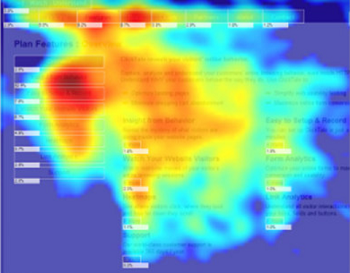
heat mapA typical heat-map showing mouse activity on a web page

Last time we spoke about free web analytics tools the best of which, for any small business, is Google Analytics (GA). This time we will speak about paid web analytics tools.

Avinash Kaushik, one of the gurus of data analytics, sums up web analytics like this…

  • The analysis of qualitative and quantitative data from your website and the competition
  • To drive a continual improvement of the online experience of your customers and prospects
  • Which translates into your desired outcomes (online and offline)

When selecting the web analytics tools for your website, there are many options and features to choose from. Before committing to a paid subscription, bear in mind that many of these tools offer a free trial period. Take advantage of this and narrow down your options by comparing each product’s functionality with your business goals. You can spend anything upward of $10/month for analytics tools.  Before you choose a paid solution, ask yourself the following questions:

  1. What do the visitors on my website do?
  2. Are they completing what they set out to do?
  3. If not, why not?
  4. How satisfied are my visitors?

Clicktale offers a multitude of solutions including data on marketing and conversion funnels, a heat-map of mouse movements, in-page paths, behavioral patterns, psychological analytics and much more.  They do not advertise their prices online but you can expect to pay hundreds of dollars every month for their software.

Matomo, in addition to heat maps, media analytics, a detailed search engine keyword tool (missing in GA) offers session recording. record all activities on a page of a real visitor such as clicks, mouse movements, scrolls, window resizes, page changes, and form interactions. You can then replay these interactions in a video to see exactly how a visitor interacted with your website.  Starting price $8/month.

Woopra, apart from the usual data, Woopra allows real-time, individual level, analysis. Examine every user and every action they’ve taken in real-time. See who is making payments, interacting with your website, opening emails and using key product features all within a single platform.  Their core package if free, but like most free tools, this package has limited functionality.  Their Pro edition comes it at $999/month.  

Clicky has a plugin for WordPress, Joomla, Drupal, Angular as well as other Content Management Systems (CMS).  Their Analytics API allows you to extract your web site’s traffic data into several common formats, making it easy to integrate, analyze, or store your data within your own application.  Their platinum package sells for $20/month.  Some of the features include heat maps, segments, campaign tracking, track downloads, video analytics, Twitter keyword monitoring and custom data tracking.

SimilarWeb is a online tool for businesses that offers its customers insights into both their own and competitor’s website traffic volume; referral sources, including keyword analysis; and website “stickiness” (time on site, page views, bounce rate), among other features.  Their pricing is based on modules that you can combine according to your needs.

Two decades ago Bill Gates coined the phrase ‘Content is King”.  Yes it’s true, content is top-dog. Good, original content will get you better Google rankings. It’s the type of content you need, what you do with it and how you interpret the analytical data that will help convert clients.


{module [

Weekly Torah Portion: Parshat Hashavua Vaetchanan

Reading Time: 6 minutes

Parshat Hashavua Vaetchanen

Contributed by: Rabbi Nissim Mordechai Makor

Parshat Hashavua Vaetchanen rav makor 220x220

Parshat Hashavua Vaetchanen in a nutshell:  Moses tells the Jewish people about what happened during the years of his leadership and how he asked G‑d to let him go into the Land of Israel but G‑d refused. He then reminds the people of two major events in our history: the Exodus from Egypt and the Giving of the Torah on Mount Sinai.  Moses also talks about the future; idolatry worship and exile.

The Ten Commandments are repeated and Parshat Vaetchanen also mentions the mitzvah of putting on tefillin and of putting a mezuzah on the doorposts of our homes.

“Lo sosifo al hadavar asher anochi metzaveh eschem, ve’lo sigr’eu memenu” Deuteronomy 4:2 “You shall not add to that which I have given to you, nor shall you subtract from it.”

The word “mimenu” (from it) in the verse appears superfluous, certainly, this verse refers to the taryag (613) commandments. This verse teaches us that the word taryag itself alludes to the notion that Hashem’s commandments should neither be added to or subtracted from.

If one adds a commandment to 613, we get 614 or “tarid” commandments. “Tarid” is a language meaning descent as in “yeridah.” This teaches us that if one comes up with his own innovation and adds a commandment to our perfect Torah even if he means to praise or glorify the Torah with this addition, he instead sullies the Torah because it shows that the Torah is based on man’s intellect and is thus not divine. An addition puts into question the divine authenticity of the entire Torah which may likewise be construed as man-made and not the work of the King of kings.

Similarly, if one subtracts a commandment from the Torah, we would have “tariv” (612) commandments instead of 613. “Tariv” indicates fighting. Fighting and quarreling would ensue between Jews because certain groups would endeveor to eliminate specific commandments and other groups different commandments. Some are strong in particular commandments but weak in others and would therefore wish to eliminate those commandments that spotlight their weaknesses. And what is a weakness to one in Israel may be a strength to another. No consensus could be gotten to decide which commandment would be eliminated and fighting would be inevitable. Therefore taking one commandment away from “taryag” would lead to “tariv.”

Candle lighting times for Parshat Hashavua VaEtchanan

Parsha Index

The prohibition of the addition or subtraction of commandments is learned “memenu” or from the fact that we have exactly “taryag” commandments in the first place. Even if one’s motivations are proper, adding extra commandments leads to a downfall and subtracting commandments lead to fighting

Two of the most profound pronouncements in the Torah can be found in our Parsha this week. They are: the declaration of our faith – The Shema (6:4-10); and the Ten Utterances or also known as the Ten Commandments (5:6-19). These two declarations have held the Children of Israel together for more than three millennia.

The Shema in its simplicity teaches us of the love relationship between Hashem and His people Israel. The Ten Utterances, categorize all of the Torah’s 613 Mitzvot (commandments) into ten principles of our faith.

“Shema Yisrael, Hashem Elokaynu, Hashem Echad. Hear O Israel, Hashem is our G-d, Hashem is the One and Only.”

The first time that the Shema was uttered was recorded in the Midrash on Parshat Vayichi. In the “Vortify” of that week (Dec. 28, 1997) this Midrash was rephrased:

“…Prior to Ya’acov’s death, he wished to inform his sons of the time of the final redemption. He gathered his children around his bed and suddenly his memory failed and Ya’acov was despondent. He thought that it was his sons’ unworthiness that caused Hashem to take away the memory of the redemption. The 12 sons of Ya’acov knew what their father was thinking and tried to reassure him that they fully believed in Hashem.

They said in unison;
全hema Yisrael – Hear us our father Israel,
Hashem Elokaynu – Hashem is our G-d,
Hashem Echad – and Hashem is One.’

When Ya’acov heard his sons’ response to his doubts, he knew that his lapse of memory had nothing to do with their worthiness, but, rather, it was Hashem who did not want this information to be revealed. With this realization

Ya’acov replied;
Baruch Shaym K’vod Malchuto L’olam Va’ed –
Blessed be the Name of His glorious kingdom, forever and ever.’

These well known phrases became the mainstay of Jewish prayer for ever and ever.”

Moshe Rabbaynu (Moses our teacher) incorporated their first declaration of faith into the declaration made twice daily by the Am Yisrael (the Nation of Israel).

By the way, when the Torah records the words of the Shema, the last letter of the first word, the letter “Ayin” in ShemA, is enlarged. Also, the last letter of the last word, the letter “Daled” in EchaD, is also enlarged. Bring these two letters (Ayin and Daled) together and they form the word “Ayd” (witness).

This declaration, as well as the Ten Utterances that precede it, are a testimony to the Torah by the Nation of Israel. We do not accept the document only because Moshe was a trustworthy leader of Israel. We accept the Torah because we, a small nation of slaves, witnessed and testify daily, that Hashem is the One and only G-d.

Our role in the world as a “light unto the nations” (Isaiah 42:6) is dependant upon a high level of spiritual, social and ethical behavior that will act as a beacon of enlightenment to all nations. That level of behavior can only come about as a result of an eyewitness account of the interaction between the Nation of Israel and Hashem. No other nation or religion can make this claim, no other nation or religion has experienced the events or the encounter that Israel has. This is the uniqueness of the Shema and the Ten Utterances. They represent Eydut (witnessing) of the personal encounter with Hashem.

But there is another very important element to this encounter, the element of forgiveness. After the first 2 tablets with the Ten Utterances were given, Moshe dropped and shattered the tablets when he observed that the Israelites were worshiping the Golden Calf. On the first day of the sixth month (Elul), Moshe again ascended Mt. Sinai for forty days and nights and engraved the second tablets (mentioned on this week’s Parsha) returning them to the Nation of Israel on the tenth of the seventh month (Tishre), or Yom Kippur.

During the time that Moshe spent on Mt. Sinai, Hashem revealed to him His Thirteen Attributes of Mercy (Shemot [Exodus] 34:5-6). These Thirteen Attributes of Mercy are recalled as a formula to be used whenever a time of crises arises and Hashem’s Mercy is required. Truthfully, the Sin of the Golden Calf was so deplorable that we should not have survived as Hashem’s Treasured Nation (Shemot 19:5) but His mercy is abundant and He is slow to anger.

During the post Tisha B’Av period, from now until the High Holidays we look at our spiritual side and begin a process of self-examination. This self-analysis goes through a number of stages. The second stage is during the month of Elul, refining our selves as individuals and as a nation. The third state is during the Aseret Yimay Teshuva (the Ten Days of Repentance) between Rosh Hashana and Yom Kippur when we attempt to offer our changed personalities as a personal testimony to Hashem’s forgiveness. And finally, the Joy that we experience having received forgiveness from Hashem manifests itself in the festival of Sukkot (tabernacles), referred to as Z’man Simchataynu (the time of our rejoicing).

Today only Am Yisrael can say, “Shema Yisrael, Hashem Elokaynu, Hashem Echad (Hear O Israel, Hashem is our G-d, Hashem is the One and Only).” But we all pray for the day when as the prophet Zachariah foretold (Zach. 14:9):

“Hashem will be King over the entire world – on that day Hashem will be One and His Name will be One.”

Let us live up to our destiny and rectify the world with our personal deeds of righteousness. Let these deeds testify to the uniqueness of Hashem’s desire for mankind to live in peace and harmony with all nations and all peoples. And let us show by example that this is all possible the same way that we were shown the kindness of the One and living G-d.

Candle lighting times for Parshat Hashavua VaEtchanan

Parsha Index

The Pearls of life teach us that a person should not make himself afraid! A person should as well be happy with their troubles. With Emuna (faith) one should accept their suffering with Simcha (happiness) NO matter what it is. Painful experiences, virtually neutralizes any of those harsh or severe judgments. This is because there is no bad in the world because Hashem is only good and merciful. Hashem responds in kind and treats that person with no severe judgments. Such a person is capable of invoking miraculous salvations. Hashem guides a person in accordance with his Emuna.

Yeshiva Pirchei Shoshanim

As heard from my Torah Masters

Shabbat Shalom

Website Analytics Made Easy

0

Reading Time: 2 minutes

Website analytics made easy. Free content tools for small business owners.

website analytics

Do-it-yourself, drag and drop software like WIX, Site123 and Web.com have made it possible for amateurs to build a website.  You may think that once you have a visually appealing site with what you believe is good content, you’ll get page 1 rankings and the customers will come pouring in and when they don’t, you are exasperated. Every business owner needs a website and every business owner needs to understand the strengths and weaknesses of their site based on website analytics and data.

Quite simply put, website analytics is the measurement, collection, analysis and reporting of web data for purposes of understanding and optimizing web usage and ultimately increasing conversions.

Website analytics and data comes from a number of sources; from your website itself, from your server and from specialized tools and software (some of which are free, others are not).

Free website analytic options

The software you use to build your website will give you some basic data; creation and revision dates, page views, hits, votes, ratings and other little tidbits of information to improve your site’s structure and performance, but this is not enough.

Your server will provide analytical data that has already been partially segmented by day, by week, by month or other periods.  Technical data like disk space, CPU usage, number of visits, unique visitors, page views are usually available.

Then there are these analytical tools

Alexa is a web analytical tool (basic services are free) that provides data relating to keyword searches, engagement, bounce rate, local rank, global rank and some geographical data.  The paid version offers you keyword research tools, site comparisons, site audits etc.  There is much controversy about the Alexa tool and ranking system but that is another topic altogether.

Google Analytics is a fine, free, robust platform that you can use to extract even more data about your site visitors; behavior, loyalty, user flow, engagement, traffic sources, retention, demographics, interest groups and more.  The basic data is easy to interpret but if you are working on specific marketing campaigns and tracking, the help of a Google Analytics geek, is useful.

Google and Alexa require you to add a line of tracking code into your site’s root directory.  Some website platforms make this easy but others require you to access your website’s ‘Root’ file in your file manager.

There are many, many more options out there, there is no one-size-fits-all solution, but for most small- and medium-size businesses Google Analytics remains the tool of choice.

Remember that even the best or most expensive web analytics tool will fail to give you insights if you are not skilled in using and interpreting them.  If you can’t, it may be time to call in a professional SEO expert to help you extract vital data.

20 Essential SEO Terms

0

Reading Time: 3 minutes

20 essential SEO terms business owners should know.

seo terms

Image credit: Unsplash

You understand how important it is to optimize your website but are you having trouble researching or communicating your needs to a professional? Here are 20 essential terms every layman should know.

Alt Text

A description of an image in your site’s HTML (Hypertext Markup Language). Search engines read only the ALT text of images, not the images themselves. Add ALT text to images whenever possible.

Blog

Part of your website where you should regularly publish website relevant content; industry related, events, news, videos etc.  Every new blog post is an opportunity for search engines to index and rank your content.

Canonical URL

The canonical URL is the best address on which a user can find your information. You might have a situation where the URLs differ, for a variety of reasons but serve up the same or similar content.  Specifying the canonical URL helps search engines understand which address is the best one for a piece of content.

Domain

The main web address of your site

Fold

The “fold” is a term used to describe the point on your website where the page gets cut off by the monitor or browser window. Anything below the fold needs to be scrolled to and isn’t seen right away. Search engines place some priority on content above the fold, since it will be seen right away by new visitors.

H1 and H2

Text on your website that you want to stand out and instruct the search engine to read and index.  The main heading on this page has been assigned an H1 tag and the sub heading have been assigned an H2 tag. Do not use H1 and H2 for styling your content.  Style content with font sizes, color, bold, italics and underline.

Inbound link

A link from another website to yours.  Inbound links improve your SEO and website’s credibility.

Internal link

An internal link is a link from one page within your website to another page within your website.

Keywords

Keywords refer to a single term or string of words that users enter when searching for information, services or products. Knowing your industry’s essential keywords help you design relevant content to get you found on search engines and draw potential clients to your website. Do not confuse this with Meta Keywords (explained later).

Landing page

Basically, a landing page is where a visitor “lands” once they have clicked on a particular link.  A landing page is a single, standalone web page, created specifically for the purposes of a marketing or advertising campaigns and should include a call-to-action. 

Metadata

Metadata is a snippet of data that tells search engines about your website.

Meta-description

The meta-description refers to a snippet of information – 160 characters long – is a sample of text that tells the user what the specific page is about. When search engines display results, the meta-description is found below the page title.

Meta-keywords

Assigning meta-keywords was a popular aspect of SEO.  It was used in conjunction with the meta-description.  It is no longer used by any of the major search engines.

Outbound Link

An outbound link is the exact opposite of an inbound link.  It’s a link from your website to another website.

Page Title

The page-title is the name you give your webpage.  The page-title should include industry related keywords.

PPC – Pay per click

Pay-per-click is an online advertising method.  Your advert generates interest, and whenever the advert is clicked, the advertiser pays for that click through.

Sitemap

A sitemap is a special piece of software, created by your developer, which provides a map of your website to search engines making it easier for search engines to index your site.

Spiders

A spider is a program that browses the internet and collects information from websites.

Traffic & Traffic Rank

Traffic refers to the number of visitors to your site.  You can buy traffic or follow our tips to create free, organic traffic using proven SEO techniques.

The ranking of how much traffic your site gets compared to other sites on the internet. Alexa is a great tool for checking your site’s Israel and world wide ranking compared to others in your industry.

URL

The URL or Uniform Resource Locator, is quite simply the web address for your webpages and usually includes the article title and reference.


{module [509]}


Learn the basics of SEO

0

Reading Time: 2 minutes

Learn the basics of SEO and build sustainable organic traffic.

seo analytics
Website Analytical Data – Image credit: Unsplash

If you are a small business owner and believe you don’t need a website, you are wrong. A Facebook business page, Twitter, Instagram and LinkedIn profiles are just not enough. Eighty five percent of all transactions today start with an internet search.  More people use mobile devices to access the internet and if you are not concentrating your efforts on building a mobile-friendly (responsive), search engine optimized (SEO) online presence, soon it will become impossible to find you.

SEO is more than just a buzz word.  It’s an ever changing and complicated science but it’s the way search engines (Google, Yahoo, Bing etc.) find and rank you.  It’s the way your website gets traffic and referrals that can, in turn, be converted into sales.

We are in constant communication with new olim, small business owners just like you who are trying to grow their business in Israel.  They want to hold on to their standards and best business practices but at the same time, they are trying to break into the Israeli, Hebrew speaking, market.

Hebrew, English, which way to go? In this series of articles we will introduce you to the many aspects of search engine optimization; analyzing your traffic, extracting data, measuring, tracking, changing and optimizing your content as well as tips and tools to improve your rankings.