18.2 C
Jerusalem
Sunday, April 19, 2026
Sample Page
Home Blog Page 79

Five Napkin Folding Ideas

Reading Time: < 1 minute

5 napkin folding ideas to WOW your guests this holiday season.


napkin fold


No need to spend extra money on new tableware – just reach into grandma’s linen closest and borrow her fabric napkins (paper napkins work just as well). Watch the video to learn 5 ways of implementing napkin origami.  It’s quick and really easy and you can make your place settings look extra special for the upcoming holidays.  

https://www.youtube.com/watch?v=1N6UzwejIfs


Economical ways to set your table this holiday

This page is being redesigned.

0
Reading Time: < 1 minute

This web page is being redesigned and will be back online in a few days. In the meantime, you can continue to browse the site for Aliyah, Israel relocation and lifestyle information.

Here are a few topics you might want to look at:

We’d love to get your feedback.  Please tell us what you think about the information we offer and if there is a topic you suggest we cover.  If you have a minute, please drop us a line and let us know.  HERE…

Rosh HaShanah: Tzaddikim, Reshaim & Beinonim

0

Reading Time: 2 minutes

Tzadikim, Resha’im & Beinonim.

Adapted from the Ta’amei ha’Minhagim & contributed by Rav Nissim Makor

rav makor 220x220The Gemara in Rosh Hashanah, discussing the three Books that are open before Hashem on Rosh Hashanah, speaks of the Book of Tzadikim (who are written and sealed immediately for life), the Book of Resha’im (who are written and sealed immediately for death), and the Book of Beinonim (who hang in the balance until Yom-Kipur, when their fate is sealed, depending on whether they earned the necessary merits by then or not.

This Gemara, explains the Tanya, citing R. Oshaya, cannot be referring to regular Tzadikim and Resha’im, as we will find in the forthcoming year many Tzadikim who will die and many Resha’im, who will live. The Tzadik that the Gemara is talking about must therefore be someone who has won his lawsuit in the Heavenly Court (for a variety of reasons that do not necessarily reflect his true title). And by the same token, the Rasha (who may in real terms be a total Tzadik) is so called because, for one of numerous reasons, he came out of the Heavenly Court guilty. Indeed, we find this concept in the Torah, which writes in Ki Seitzei (25:2) “And they shall declare the righteous man righteous and the wicked man wicked”, even though in real terms, either litigant may belong to any of the three above categories.

Rosh Hashana guide and resources

Candle lighting times for Shabbat & festivals

(Seen from another angle, a Tzadik in this context may well be a not-so-big-Tzadik whose allotted number of years in this world have not yet come to an end (and who will therefore need to have perpetuated many sins to forfeit his remaining time on earth); and by the same token, a Rasha may be a veritable Tzadik, whose allotted time is up [and who will require great merits to extend his stay here]).

Strive to be a Beinoni. Master your Yetzer HaRa and control the impulses.

L’Shana Tova! May You, All of My Brothers and Sisters, be Inscribed and Sealed for another Year of Life… Now and always!

With Torah Blessings

Rabbi Nissim Makor.

September 2018 Israel Rail Updates

0

Reading Time: 2 minutes

Israel Rail Updates for September 2018

ISRAEL RAILWAYS september 2018 UPDATES

From Sunday to Thursday between 20:00 to 05:00 (morning), Modi’in Station will be closed.

A free shuttle service will be available:

  • From Modi’in Central Station, via Pa’atai Modi’in to Ben Gurion International Airport Station, at these times:

19:48, 20:20, 21:20, 22:20 and 23:20.

  • From Ben Gurion International Airport Station, via Pa’atai Modi’in to Modi’in Central Station, at these times:

9:55, 20:25, 20:55, 22:05, 23:05 and 00:15

Commencing 15.9.18 changes will be made to the Nahariya – Be’er Sheva line

Be’er Sheva – Nahariya line: The line will be shortened and will operate between Herziliya and Be’er Sheva Central station in both directions.

In addition, the following changes will be implemented:
  • A new stop has been added for trains on Sunday to Thursday at the Kiriyat Hayim station and Haifa Hotzot HaMifratz station.
  • A train has been added on Sundays at 07:03 from the Haifa HaShmona Central Station to Tel Aviv HaHagana station.
  • A train has been added on Sundays at 05:00 from Tel Aviv HaHagana Station to Haifa HaShmona Central station.
  • Bet Shemesh – Jerusalem Malcha line: trains will run once every two hours. On Friday’s and after the Sabbath (Saturday evening), trains will run once per hour.
  • The Emek line: Extended night train services between Bet She’an station and Haifa HaShmona Central station will continue throughout September and the High Holy Days in both directions.
  • Hadera station: Trains on the Carmiel – Be’er Sheva line will stop and Hadera West station.
Trains have been added to the new timetable:
  • Sundays at 09:45 from Be’er Sheva North station to Ra’anana West station.
  • Sundays through Thursdays at 23:34 from Ashkelon station to Rehovot station.
  • Between Haifa HaMifratz Central station and Carmiel station.
  • Trains leaving Ra’anana West station and traveling south on Sundays at 05:44 and 07:14 will continue their journey to Be’er Sheva Central station.
Soldiers!
  • The train from Nahariya station departing at 06:05 to Be’er Sheva, will end its journey at Be’er Sheva North station instead of at Be’er Sheva Central station. Shuttle services to the training bases (BaHadim) will operated from Be’er Sheva North station.

Israel Weather Live Forecast

Reading Time: < 1 minute

Israel weather forecast for today

A day at the beach, an unbearable heatwave, rain or snow here is the weather forecast for Israel, today:

+7
°
C
H: +
L: +
Jerusalem
Wednesday, 26 January
See 7-Day Forecast
Thu Fri Sat Sun Mon Tue
+ + + +10° + +10°
+ + + + + +
+12
°
C
H: +13°
L: +10°
Tel Aviv
Wednesday, 26 January
See 7-Day Forecast
Thu Fri Sat Sun Mon Tue
+14° +14° +13° +16° +14° +14°
+10° +11° +10° +11° +12° +13°
+10
°
C
H: +13°
L: +
Haifa
Wednesday, 26 January
See 7-Day Forecast
Thu Fri Sat Sun Mon Tue
+13° +13° +12° +15° +13° +15°
+ + + + +11° +11°
+11
°
C
H: +12°
L: +
Beersheba
Wednesday, 26 January
See 7-Day Forecast
Thu Fri Sat Sun Mon Tue
+10° +10° +12° +14° +12° +14°
+ + + + + +
+11
°
C
H: +15°
L: +
Eilat
Wednesday, 26 January
See 7-Day Forecast
Thu Fri Sat Sun Mon Tue
+13° +14° +15° +16° +14° +16°
+ + +10° +10° +11° +10°

Weekly Torah Portion: Parshat Hashavua KI TAVO

Reading Time: 4 minutes

Parshat Hashavua KI TAVO.

Contributed by. Rav Nissim Mordechai Makor

parshat hashavua ki tavo rav makor 220x220Ki Tavo is the 50th weekly Torah portion (פָּרָשָׁה‬, parashah) in the annual Jewish cycle of Torah reading and the seventh in the Book of Deuteronomy.  In a nutshell Parshat Hashavua Ki Tavo tells of the ceremony of the first fruits (בִּכּוּרִים‬, bikkurim), tithes, and the blessings from observance and curses from violation of the law.

For you Hashem

Bikkurim is a mitzva (commandment) that is applicable when the Jewish people are settled in Eretz Yisroel (the Land of Israel). This mitzva entails bringing the first fruits of one’s field to the Kohen (priest) in the Mikdash (sanctuary).

It is remarkable that the Torah commands the farmer to give away to the Kohen his very first fruits – fruits which give him special joy and pride. After all, it makes no difference to the Kohen if he receives the farmer’s first fruits or his second fruits. Why then does the Torah command the grower to take fruit that is dear to him and give it to a recipient who would just as soon receive any other fruit?

Candle lighting times for Parshat Hashavua Ki Tavo

Parsha Index

It is appropriate that as one enjoys the bounty of his harvest, he should bear in mind that all the blessings that he enjoys come from Hashem. By bringing Bikkurim, one demonstrates and internalizes this by celebrating his new harvest with the real owner of his fields – Hashem. So to speak, by bringing Bikkurim to the Mikdash one “shares” the joy of the first fruits with Hashem.

We can now understand why Bikkurim had to be brought from the first fruits. While the Kohanim had the privilege of partaking of these fruits, the focus of Bikkurim was to heighten the people’s awareness of Hashem’s role in their lives. The benefit was for the giver not the recipient.

(Darash Moshe)


True Nationhood

“Hayom Hazeh Nihyayso L’om LaHashem Elokecha” “This day you became a nation for Hashem, your G-d”

This verse refers to the time that the Jews were in the desert, before they actually entered Eretz Yisroel (the land of Israel). What was it that made the Jews into a nation if they did not yet have a common homeland? Now, this verse follows the account of a covenant that the Jews made with Hashem. It bound them to keep the laws of the Torah. Thus, the Torah way of life is the bond that unites all Jews. Torah is the reason that the Jews were able to preserve a strong national identity throughout the millennia in exile – despite their lack of a homeland.

(R’ S. R. Hirsch)

Cursed

“Cursed is one who will not uphold the words of this Torah, to perform them.”  (Debarim 27:26)

This pasuk is the last of a series of curses that were said on Har Gerizim and Har Eival when Bnei Yisrael entered the land.  The Rabbis ask: What does it mean to uphold the Torah?  They explain that this is referring to one who has the ability to uphold and strengthen the observance of the Torah and mitzvot by those who are neglecting it.  Since we are all guarantors one for another, even someone who is fulfilling the entire Torah but fails to encourage others to keep the mitzvot is included in this statement.  The Gemara, however, teaches that each of the twelve curses listed in the parashah was preceded by a parallel blessing.  So before this curse was stated, they said “Blessed is one who upholds the words of the Torah.”  This means that anyone who succeeds in encouraging others to follow the Torah will be blessed.

This is something that does not just apply to the Rabbis and teachers.  Hashem has given abilities to each and every one of us to raise the level of observance and Torah learning in others.  If someone was blessed with wealth, he has the opportunity to support Torah institutions.  One who was blessed with wisdom can teach others.  Someone who has management skills can set up organizations to help others in many different ways.  And every one of us can serve as a role model for others, especially for our children.  By living our lives according to the standards of the Torah, others will see the beauty of the misvot and be inspired to grow as well.  May we succeed in upholding the standards of the Torah, in ourselves and in others, and thereby enjoy the blessing that was declared by the entire nation when they entered the land of Israel.

Candle lighting times for Parshat Hashavua Ki Tavo

Parsha Index


Pearls of Life

HaRav Yitzchok Scheiner enlightens the Pearls of Life telling us that in the future Hakadosh Baruch Hu will judge all of us: What did we make of ourselves? And even discounting the supernatural abilities hidden within us, how many of us ever fulfill our natural potential! Every person has hidden strengths, potential he hasn’t tapped into. We all have the ability to become much greater than we are now.  We all have excuses. One person will say he didn’t have good health. Another will say he had parnassah worries. There is an unlimited amount of excuses one can give for not reaching his potential. But all of the nation of Israel’s great Rabbi’s had these same issues, and they became great despite their challenges and they learned despite their hardships.  Woe to us from the Day of Judgment; Woe to us from the Day of Rebuke. A man once approached the Steipler. “I have problems at home and it is very difficult for me to learn. What is going to be with me?” The Steipler told him, “You can’t pay attention to the distractions. If I would have focused on my problems, I would never have made anything of myself. I didn’t pay attention to any outside issues when I was learning. I blocked it all out, as much as I humbly could.” That is what we all must do. We all to work on improving ourselves slowly, one percent at a time. No more excuses. Work on yourself to reach your full potential, so when the Day of Judgment comes, you won’t need excuses, and you will be proud of what you accomplished.

Yeshiva Pirchei Shoshanim

As head from my Torah Masters

SHABBAT SHALOM!

Weekly Torah Portion: Parshat HaShavua Ki-Teitze

Reading Time: 6 minutes

Parshat HaShavua KI-TEITZE

By: Rabbi Nissim Mordechai Makor

rav makor 220x220“Ki sivneh bayis chadash ve’asisa maakeh le’gagecha, ve’lo sasim damim be’baisecha ki yipol hanofel mimenu.” – “When you build a new house, create a fence around its roof, for blood may befall on your house lest someone falls from your roof.” Deuteronomy 22:8

The Jew is referred to as “Adam” or man in the Torah. When he sins, he splits this word “adam” into aleph and “dam,” blood. Chazal teach that Adam brought blood and death into the world because by sinning, he shore off the aleph from his name, leaving blood in its wake. The shape of the letter aleph is that of the Hebrew letters vav with two attached yudim; therefore the aleph shares the same gematria as the word “gagecha,” your roof (26). When one repents properly it is very similar to him building a new house because his body and soul are considered newly formed. And much as a roof protects a physical house, one’s mind protects his “spiritual house.” To summarize, the knowledge of one’s sins and awareness of Hashem are excellent deterrents to sinning. Both the aleph and the word gagecha share the same gematria as the four letter name for Hashem, the tetragrammaton. Man must therefore strive not to sin because sinning separates the aleph from adam which brings death (sin) into the world and removes himself from his Maker.

Candle lighting times for Parshat Hashavua

Parsha Index

Furthermore, there are four traits that are termed “mayim” (water) that a baal teshuvah must keep himself distant from. These traits are arrogance, anger, argumentativeness and lust. Arrogance is called water because the verse states the waters on high which separate. Argumentation stands for the waters of argument. The third, anger, is represented in the Book of Nahum as waters of anger and lust is symbolized by water as Proverbs teaches that stolen waters are sweet. When we return to Hashem properly, we recreate ourselves. To armor ourselves, we are enjoined not to place “damim” in our house. “Damim” is the combination of dalet and the word mayim, “four waters.” This verse subtly teaches us to avoid those four character traits which may distance ourselves from Hashem.


A man marries a woman and lives with her. If she does not please him, or he has evidence of sexual misconduct on her part, then he shall write her a bill of divorce… (24:1, translation follows Gittin 90a).

Abarbanel considers the fundamental matter: why does a man marry at all? No divorce can take place without marriage.

He explains that a man needs a successful and productive marital relationship for flourishing in livelihood, social status, physical fulfillment, spiritual development, and children. All that is without, of course, negating her position and feelings or the importance of his contributing to the relationship.

Abarbanel proposes that the ideal reality forms part of the very opening of the Torah:

Adam said: “[She is] a bone from my bones, and flesh from my flesh” (Gen. 2:23).

In other words, man and woman are one; they are part of each other. Not two grown-ups of opposite gender staying under the same roof. In sharp contrast to the Gentile practice in his day that condemned the mismatched couple to live in perpetual misery, Abarbanel explains that the Torah presents the opportunity to end the marriage in the spirit of:  “It is better to live on the corner of a roof, than with a wife who is a source of discord” (Proverbs 25:24). The husband would have to go through the painstaking procedure of “writing a bill of divorce” (24:1) which would give him plenty of time to reflect on whether he was doing the right thing before deciding on the finality of “placing it into her hand” (ibid), thereby severing the relationship.

Like the merging of two similar plants or the transplant of an organ from one human to another, the couple have to be potentially compatible or the marriage will just not “take”. The year between engagement and marriage, explains Abarbanel following the custom of his day, is a window for exploring whether there is enough common ground for each to grow into the other when eventually united as a couple. This reduces, but does not eliminate uncertainties that may make the relationship non-functional.

Thus Abarbanel explains that “if she does not please him”, he will not flourish spiritually, economically, and in his role in the family. He will come to hate his wife: not because she is a bad person, but because she turned out to be unsuitable for him. His life cannot progress and develop; no “flesh from my flesh” merger is possible. The marriage did not “take”. Divorce is the best course in such a situation.
The idea can be extended. Deciding not to divorce when it is best to do so and persisting in a dysfunctional marriage can create the situation at the beginning of the parasha where a man’s marital situation includes a “hated woman” (21:15). The text follows that with the ben soreh u-moreh, the wayward and rebellious son. Rashi’s explains the ordering to imply that it is through hatred between the parents that a child may behave in such a way…

Jacob Solomon

Extra Protection

“An Amonite or Moabite shall not enter the congregation of Hashem…Because of the fact that they did not greet you with bread and water…and because they hired Bilaam …to curse you.”

The Torah clearly presents two reasons for banning an Amonite or a Moabite from marrying a Jew.  Rashi, however, cites only their procuring Bilaam to effect our spiritual destruction as grounds for their exclusion.  Why does Rashi omit their lack of character refinement as motive for barring them from Klal Yisrael?  Rav Elyakim Schlesinger responds to this question by first addressing a similar question regarding the death of Lot’s wife.

When Lot and his family were escaping the inferno which destroyed Sedom, his wife disobeyed the command not to look back.  Consequently, she was turned into a pillar of salt.  Rashi explains that her punishment was specific; it was a direct result of her refusal to serve salt, a simple condiment, to her guests.  Such a punishment seems overly harsh and inconsistent with the transgression.  Rav Schlesinger suggests that her insensitive treatment of her guests was not the reason for her death.  Every transgression has a specific retribution consistent to the degree of its gravity.

The performance of certain mitzvot and various good deeds serve as a safeguard against punishment.  Thus, retribution can be averted through the earned merit of mitzvot.  Lot’s wife was destined to perish and be transformed into a pillar of salt because of her violation of the angel’s command.  Had she had the merit of treating her guests decently by serving them properly, being sensitive to their simple needs, she would have been spared punishment.  Her lack of sensitivity to others sealed her fate, but was not the actual rationale for her punishment.

Similarly, the Amonite and Moabite people deserved severe sanctions as a result of their attempts to catalyze the spiritual downfall of our people.  Had they shown some human decency when we were in need, they might have been spared.  Their continued lack of character refinement sealed their ultimate doom.

We may derive from here that one should be meticulous in observing all mitzvot regardless of their apparent level of significance.  We do not know by virtue of which mitzva or good deed our deserved punishment has been mitigated or even reprieved. (Peninim on the Torah)

Candle lighting times for Parshat Hashavua

Parsha Index


Pearls of Life

The Nesivos Shalom lights the Pearls of Life with the words of the Kubriner Rav, zy’a, who tells us that the time of self-examination is in the JEWISH MONTH OF ELUL. Now is the time to fix things up and do Teshuva [repent], not Rosh Hashana. Rosh Hashana is for the purpose of coronating and proclaiming the kingship of Hashem on every part of us and on everything in the world. The time of teshuva is before that, during the next few weeks, where we can prepare ourselves to be able to come to Hashem and proclaim Him the King over us and King over the whole world. In this month of Elul, we have to think if we acted according to Torah Law, have we followed what Hashem wants us to do. All this has to be thought about now. When it comes to Rosh Hashana, if we didn’t prepare during Elul it is certainly a bit late. As long as we continue to act like a non-Jew, we are not able to properly have deveikus haShem [attaching to HaShem], to connect to Hakadosh Baruch Hu like we should. If we complete ourselves, if we work on our hearts, our minds and our physical actions and we concentrate on the things that we are supposed to be doing during Elul, then we will be with Hashem. Yeshiva Pirchei Shoshanim adapting the words of Rabbi Yisrael Meir Shapiro.

Shabbat Shalom!

Rosh Hashanah Dvar Torah: Hearing the sound of the Shofar

Reading Time: 3 minutes

Hearing the sound of the Shofar on Rosh HaShanah.

Hearing the sound of the Shofar
Based on Likutey Moharan I, 250
“Know that any type of pain and suffering is only due to lack of daat (awareness). For anyone who has daat and knows that everything happens according to God’s plan has no suffering and feels no pain, ‘for the Lord giveth and the Lord taketh away’ (Job 1:21). And even though there is suffering that must be felt… nonetheless, the tribulations are very light and easier to accept when one is clearly aware that everything happens according to Hashem’s plan.”
“If one hears the shofar blasts on Rosh Hashanah from a God-fearing religious person, he will not be afraid of thunder all year long.”
(Likutey Moharan II, 5)
The mitzvah of hearing the voice of the shofar, like all mitzvot, has innumerable reasons. Even the bottom line of each mitzvah is “God said it, we do it,” God does want us to learn the right lessons from each so that are hearts will be open to feeling His presence. Neither God nor we gain by our ignorance of Torah, written or oral, legal or homiletic. It is a disservice and a disgrace, to ourselves and to Judaism, to observe the mitzvot blindly, without considering their lessons. (Of course we have to do them, just not unthinkingly.) But I digress.
The voice of the shofar is many voices. It is crying and it is thunder. It is the voice of the tzaddik, the voice of his teachings. Rosh Hashanah, the anniversary of mankind’s creation, is a day we have to respond to the angels’ protest: “What is man that You think of him?!” (Psalms 8:5). They argued against our creation by saying that we would sin, we would be argumentative. Again we must answer their challenge, their attempt to deny us life.
The thunder of the shofar is meant to remove the crookedness of our heart, the deceit with which we fool others and ourselves. The crying of the shofar is our tears of regret for having turned our backs on God, His Torah and His people for too long. The crying of the shofar is our tears of appreciation for being Jewish; our Jewish breath, our Jewish heartbeat, our Jewish hands; that we eat, breath and think Jewish.
The voice of the shofar is the voice of daat, the voice of the tzaddik’s teachings. The purpose of Creation, the Zohar teaches, is l’ishtamudan lei, to be aware of Him. Each and every teaching and lesson of the tzaddik, of any tzaddik, in the Torah or in the Prophets; in Talmud, Midrash or Zohar; or in post-Talmudic works till today, is meant to instill in us the trepidation and exhilaration that comes with being aware of God, with having daat.
This is the daat that precludes and eases suffering. But only the voice of the shofar sounded by one who is “a God-fearing religious person” can bring us this awareness. If the sound of the shofar comes from one who lacks these criteria, then we will lack the awareness we were meant to have, the awareness that rebuts the charge of the angels, the awareness that eases our suffering.
The voice of the shofar enables us to understand that God has a plan, that what happens to us, as individuals, as a community, as a nation, is not, God forbid, random. The “thunder” of bombs or personal tragedy, may God spare us, will not frighten us away from our spiritual goals. Au contraire! If such things God forbid occur, they will remind us of the daat of the shofar and remove the crookedness of our hearts and move us to tears. We will acknowledge and submit to God’s plan, to His authority and ruler-ship, as we do on Rosh Hashanah.
With thanks to Rav. Nissim Mordechai Makor
As heard and adapted from my Torah Masters
Shana Tova

Elul: The month spent preparing for the High Holidays

Reading Time: 5 minutes

Elul: This is the month spent preparing for Rosh Hashana and the High Holidays.

With grateful thanks to Rabbi Nissim Mordechai Makor

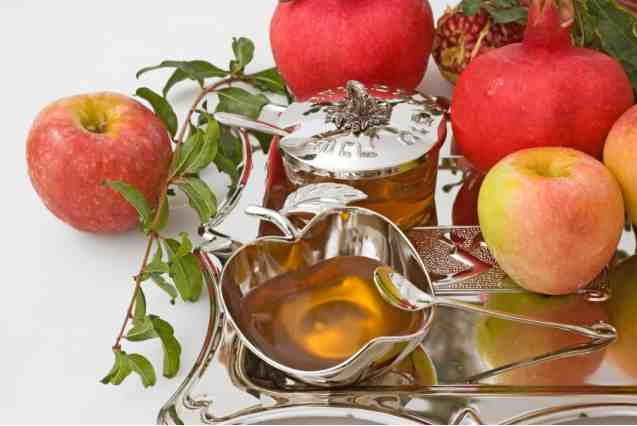
apples and honey

Elul is a very interesting month. Officially it belongs to the year that is finishing, yet it is completely connected to the new year. How is this possible? It is written that from the fifteenth of Av, Heaven begins preparing the chairs for judgement and it is a good time to start doing teshuvah.  Summer is drawing to a close. In the world of nature, especially in the very cold climates, all the animals are very busy at this time getting ready for the upcoming winter. They have to make exact plans for food or otherwise they won’t survive the harsh winter. They take this time very seriously. They know instinctively what to do and how to prepare.  Every animal is seeking to do while there is still time left, because the Master will call. When we say this, we mean that Rosh Hashanah will come around and everybody will have to answer for the last year. We must remember, on Rosh Hashanah we are judged on the situation at that moment. What we did in the last year has brought us to this point. Remember, Elul also includes the whole of the next year.

In nature, obedience is the rule. All of nature stands around Hashem’s throne, each one bringing Hashem the product of it’s labor. No animal or plant would dare to go against it’s nature. Nature has rules and the animals have to follow them. This is a definite.

Only man can be enticed from this set path. Man is casual and inattentive and ignores the seriousness of this time. The animals shiver with fear that Hashem won’t destroy the world.

With free will, man has to choose with his own intellect what is right or wrong. He has the power to go against what is right (nature). This is one of the reasons we start to blow the shofar the beginning of Elul, to wake us up.  Elul is a gift from Hashem. Nobody would dare go into a court case in this physical world without preparing. A persons lawyer would be interviewing witnesses, checking facts etc. Elul is the time for preparation for Rosh Hashanah.  Hashem made it easy for us to do teshuvah in Elul. It says in the writings that in Elul, “the King is in the fields”. What does this mean? During the rest of the year, if a person wants to do teshuvah, he has to go to Hashem. The analogy is the person has to make an appointment with Hashem, go to him and present his case. In Elul it is different. Hashem makes it easy for us and comes to us, “the King is in the fields”. Wherever we are, Hashem is listening and waiting for us every second.

Let’s ask the question, what actually is teshuvah? We say it is repentance but what is repentance? It is very simple. Stop doing the negative thing or things we are doing. It sounds easy but is actually very difficult. To change our nature is the most difficult thing in this world for us to do.

Yoma 86b: “Great is teshuvah, for it brings healing to the world.”

Teshuvah is so far above human comprehension as it is a supernatural concept. It is one of the biggest Chokim. A chok is a law which is very difficult for humans to understand. Some of them are, meat and milk, the red heifer and Shatnez. Why is it a chok? In the physical world if a person is caught by the police doing a serious offense, and he goes to court and tells the judge he is sorry and won’t do it again, the judge will never let him off. In the spiritual world, when we teshuvah,(we are truly sorry for what we have done), Hashem looks into our heart to see if we are serious and not just doing lip service. This is the key to teshuvah, as we can’t hide anything from Hashem. If Hashem decides to give us a second chance, He wipes the slate clean. This is mind boggling to think that we can be forgiven just like that for our sins. This is the reason we cannot comprehend teshuvah. Remember there can be no growth without honesty. Please understand, I have simplified the process.  Also know that Elul includes the whole of the next year. What we do in Elul is going to affect Rosh Hashanah and the whole of next year.

One of the ways the Tzadikkim suggest we should prepare fo Rosh Hashanah is to write two lists, one what we want from Hashem for the new year and one with things we will do for Hashem in the new year. Write down ten things on each list. With the list for Hashem, try to put down things that we have been trying to do for years. Things like, trying to change a bad character trait, to do mitzvot better, to get healthier, go to the gym etc. On the other list put down things you want from Hashem. Things like better parnasah, health, nachat from the children etc.

Think about ways you can achieve your goals. Read the list on Rosh Hashanah and also read it every day. You most probably won’t achieve the ten things for Hashem. It is doubtful if you can achieve half, but if you achieve one or two, guaranteed you will have a good year. It seems like this is kind of childish, but believe me it is a very powerful tool to do teshuvah. If you read it everyday, slowly the things on the list will become achievable goals and you will change.

Elul is the month of perfection. The word for this month in Hebrew is Betula, which means virgin, the same as the English word, Virgo which is connected to virgin, which implies purity. In this month we have the ability to cleanse ourselves of a lot of dirt. Teshuvah is equal to all the mitzvot.

The tikkun of people born in Elul is that they focus on details too much and don’t see the big picture. Virgo’s live in a world of fantasy and because they have the ability see perfection, they have the trait of judgement. They can’t understand why people can’t see things the way they do.

Remember, even though this month is for people born in this month, we all experience these tests during this month. That is the whole idea of the months and astrology. You cannot act the same way every month. Every month has a different energy. Hopefully by knowing how to act in this month, Hashem will have mercy on us and grant us a good month and good year.

It is easy to find faults if you look at things with a microscope. See the big picture. Daven for Massiach. Don’t be fragmented because when you don’t see the big picture, you start to judge, which is the tikkun for Virgo’s. Look for the good in situations.

Moshe was in Heaven during Elul and received atonement for the golden calf. Let’s take Moshe Rabeinu’s example.

Wake up!!!!

Take the example of the animals. Get ready now for the upcoming year. It will help you a great deal on Rosh Hashanah.

Chodesh Tov. Chag Sameach. Shana Tova.

As from Reb Kalman

Israel National State Bill 2018

Reading Time: 3 minutes

חוק הלאום – The Israel National State Bill of 2018

Israel’s basic National State Bill informally known as the Nation-State Bill or the Nationality Bill, comprises eleven clauses, as follows:

220px israel coat of armsBasic Principles

This section enumerates three basic principles, namely, that the Land of Israel is the historical homeland of the Jewish people, in which the State of Israel was established; the State of Israel is the national home of the Jewish people, in which it fulfills its natural, cultural, religious and historical right to self-determination; and that the right to exercise national self-determination in the State of Israel is unique to the Jewish people.

Symbols of the State

This section defines the name of the state as “Israel” and the various symbols of the State, with further details regarding the state symbols determined by specific laws:

  • the flag of the State of Israel is white with two blue stripes near the edges and a blue Star of David in the center.
  • the emblem of the state is a seven-branched menorah with olive leaves on both sides and the word “Israel” beneath it.
  • the anthem of the state is Hatikvah.

Capital of the State

This section declares that Jerusalem, “complete and united”, is the capital of Israel.

Language

This section defines Hebrew as the official language of the State; it gives the Arabic language a special status in the state and specifies that regulations for the use of Arabic in state institutions or by them will be determined by specific law and that the status given to the Arabic language before this law came into effect will not be harmed.

Ingathering of the Exiles

This section declares that the State “will be open for Jewish immigration and the ingathering of exiles.”

Connection to the Jewish people

This section enumerates three principles that the State of Israel will strive for with regards to the Jewish people:

  • ensure the safety of the members of the Jewish people in trouble or in captivity due to their Jewishness or their citizenship.
  • act within the Diaspora to strengthen the affinity between the State and members of the Jewish people.
  • act to preserve the cultural, historical and religious heritage of the Jewish people among Jews in the Diaspora.

Jewish Settlement

This section declares that the State views the development of Jewish settlements as a national value and will act to encourage and promote its establishment and consolidation of such settlements.

Official Calendar

This sections declares that the Hebrew calendar is the official calendar of the State and that the Gregorian calendar will be used along with the Hebrew calendar as an official calendar; use of the calendars will be determined further by law.

Independence Day and Memorial Days

This section defines the official holidays of the State, namely, Independence Day as the official national holiday and the Memorial Day for the Fallen in Israel’s Wars and Terrorist Events and Holocaust and Heroism Remembrance Day as official memorial days of the State.

Days of Rest and Sabbath

This section defines the Sabbath and the Jewish holidays as the established days of rest in the state; it ensures the right of non-Jews to maintain days of rest on their Sabbaths and festivals; and further details to be determined by applicable law.

Immutability

This section provides that this Basic Law will not be amended, unless by another Basic Law passed by a majority of Knesset members.