16 C
Jerusalem
Sunday, April 19, 2026
Sample Page
Home Blog Page 77

Free Sudoku online

Reading Time: < 1 minute

Play Sudoku online.  It’s free!

In the late 1800’s crosswords were already popular and number puzzles appeared shortly thereafter.

It’s thought that a man named Howard Garnes, a puzzle constructor, designed the modern version of the classical 9 x 9 Sudoku grid but since then, many variations on this original design, have been made.

Studies show that Sudoku playing could improve the working memory in older people and even if they don’t, Sudoku is a great way of passing the time on the airplane when you are traveling from Israel to the ‘old-county’.

Enough of all that, let’s start solving…

Now that you have solved the Sudoku, how about cracking a crossword?  New puzzles every day…

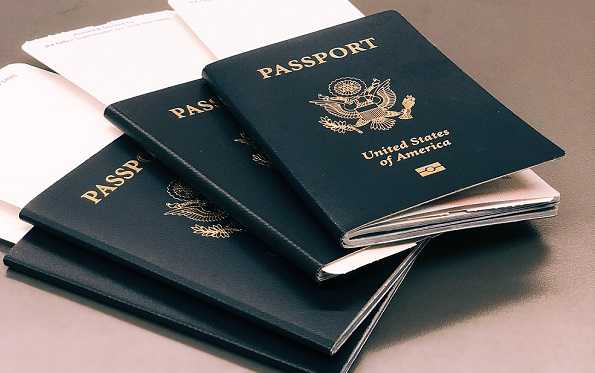
American Passport Renewal for Israel

Reading Time: 3 minutes

Renewing you American passport in Israel.

american passport

US citizens who come to Israel on an Oleh (immigrant) visa or changes their status to that of an Oleh while in Israel, automatically acquire Israeli citizenship unless they file a declaration refusing it within three months of their arrival or change of status.

The Israel Nationality Law of 1952 allows its citizens to hold dual (or multiple) citizenship. A dual national is considered an Israeli citizen for all purposes, and is entitled to enter Israel without a visa, stay in Israel according to his own desire, engage in any profession and work with any employer according to Israeli law.

US citizens can hold more than one passport or nationality. Naturalization in a foreign country, employment with a foreign government, and/or voting in a foreign election does not automatically jeopardize U.S. citizenship. Take note – all U.S. citizens, even dual nationals, must enter and depart the United States on U.S. passports.

When it comes to renewing your American passport there are some things you need to know:

1. You may renew your passport at any time before or after it expires. You never know when you may need to travel back to the United States for an emergency so renewing your passport at a convenient time is a good idea.

2. Your passport is proof of your U.S. citizenship and every U.S. citizen abroad should have valid proof of his/her citizenship at all times.

3. You cannot submit your passport directly to the United States – you must submit your application directly to the embassy here in Israel (in Jerusalem).  Please note that the consulate office in Haifa has closed down.

4. Before schlepping off to the embassy, call them and check if you are eligible to renew your passport by mail. Otherwise you might have to wait a considerable amount of time for an in-person appointment.

5. Children under the age of 16 are issued passports which are valid for 5 years.  If you are over the age of 16, your passport is issued and valid for 10 years.  An emergency passport is valid for one year only.

6. Passport fees are determined by the type of application you are making and the exchange rate on the day. Personal checks for payment of passport fees are not accepted. You can pay in US dollars or in New Israeli Shekels at the embassy in Jerusalem or at the branch office in Tel Aviv.

7. The US Embassy website details the supporting documents you will need to provide upon your passport application.

8. The US Department of State – Bureau of Consular Affairs states that one photograph – 51mm x 51mm is required for passport application. Photos printed on your home printer are not allowed.

9. It takes a few weeks for a passport to be processed.  Bear this in mind, during the busy, holiday season it might take longer.

10.  All children, including babies, must have their own passport.  They cannot be included on an adult’s passport.

There are many other details according to specific circumstances that will affect your passport application. Please consult the US Embassy website for detailed information on passport services.

Today’s crossword puzzle

Reading Time: < 1 minute

crosswordDaily, free, English, online crossword puzzle.  Get cracking!

Cracked the crossword? How about solving sudoku?  Try these new puzzles every day

Do you like this feature?

Yom Kippur Prayers and Blessings

Reading Time: 2 minutes

Yom Kippur prayers, blessings and brachot.

Listed here are some of the prayers and blessings (Heb: Brachot) recited on Yom Kippur.

1. Candle lighting for Yom Kippur

בָּרוּךְ אַתָּה אַדֹנָ-י אֱ-לֹהֵינוּ מֶלֶךְ הָעוֹלָם אֲשֶׁר קִדְּשָׁנוּ בְּמִצְוֹתָיו וְצִוָּנוּ לְהַדְלִיק נֵר שֶׁל יום הכיפורים

Blessed are you, L‑rd our G‑d, King of the universe, who has sanctified us with His commandments, and commanded us to kindle the light of Yom Kippur

Transliteration: Baruch atah Adonai, Eloheinu melech haolam asher kid’shanu b’mitzvotav v’tzivanu l’hadlik neir shel yom hakippurim.

2. Shehechiyanu

בָּרוּךְ אַתָּה ה’ אֱלֹהֵינוּ מֶלֶךְ הָעוֹלָם, שֶׁהֶחֱיָנוּ וְקִיְּמָנוּ וְהִגִיעָנוּ לַזְּמַן הַזֶּה

English Translation: Blessed are You, L-rd our G‑d, King of the Universe, who has granted us life, sustained us and enabled us to reach this occasion.

Transliteration: Baruch Atah Adonay E-loi-hei-nu Me-lech ha-o-lam she-he-chee-ya-nu v’ki-yi-ma-nu vi-hi-gi-ya-nu liz-man ha-zeh.

Note: After lighting the candles, the Yom Kippur fast officially commence


How many candles do I light on Yom Kippur?

There are five sets of candles that one could possibly light for Yom Kippur:

1. The regular Yom Tov candles. These are the two candles one lights before the onset of any Shabbat or Chag. Recite the blessing “…Lhadlik Ner Shel Yom Hakippurim” as well as Shecheyanu

2. Many light a “yahrtzeit” or memorial candle for relatives who have passed away. These burn for 24 hours and are lit, at home before the Yom Kippur candles.

3. There is a custom to light a “ner bari”, a candle for the living which is lit by each married male and is intended to last the entire Yom Kippur.

4. The Shulchan Aruch writes that we should light many candles in the synagogue on Yom Kippur out of respect for the day.

5.  When making Havdala after Yom Kippur one is obligated to use a “ner sheshavas”, light that rested, which requires that one use as their Havdala candle on Motzai Yom Kippur a flame that has been burning from before Yom Kippur

Haifa Carmelit Underground Funicular Reopens

0

Reading Time: < 1 minute

Haifa Carmelit underground funicular opens again after 18 months.

new carmelit
Image: The new Carmelit – Golomb Bnei Zion Station

A fire in February 2017 damaged the Carmelit.  The cause of the fire is not clear but a technical or electrical fault was suspected.

After 18 months of intensive repairs, Haifa’s underground subway finally reopened on Thursday, October 4th, 2018. The subway has been refurbished with new carriages and a new main cable.  The cost of the entire refurbishment was 100 million Shekels.

The Carmelit underground subway works on a funicular system – 2 carriages travel in each direction, one pulling the other.  The carriages meet in the middle.

The Carmelit has 6 stations:

1. Gan HaEm in the Central Carmel

2. Golomb/Bnei Zion

3. Massada

4. HaNeviim

5. Solel Boneh

6. Kikar Paris (Paris Square downtown)

It takes around 8 mins to travel the entire line.

Weekly Torah Portion: Parshat HaShavua Bereishit

Reading Time: 7 minutes

Parshat HaShavua Bereishit. The first Torah Portion of the 5 Books of Moses.

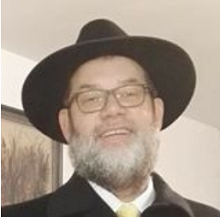
Contributed by: Rav Nissim Mordechai Makor

rav makor 220x220During Sukkot and the Shabbat thereafter, we begin a new cycle of Torah readings. It is always fascinating to see how each year we can discover new insights into the Torah. The Torah’s source, G-d’s word – is infinite and thus His Torah bears the stamp of infinitude, an infinite capacity to reveal new insights.

Dvar Torah for Parshat HaShavua Bereishit

Based on Likutey Halakhot, Shomer Sakhar 4:2

“In the Beginning….” (Genesis 1:1)

Rashi comments: Why does the Torah commence with “In the Beginning” rather than with the first mitzvah given to the Jewish people? “Koach maasav higid l’amo, latet lahem nachalat goyim” (He told His people of the strength of His deeds, to give them the inheritance of the nations; Psalms 111:6). Should some united nations accuse the Jews of forcibly occupying gentile lands, the Jews are to answer: The entire world belongs to God. He created the land and gave it to the one He wanted. When He wanted, He gave it to them and when He wanted, He took it from them and gave it to us.

By our believing and showing that God created the world, the Sitra Achra (forces of evil) is unable to claim that we are oppressors. Everything is ours because everything was created for our sake (Bereishis Rabbah 1:1). When God wants, He gives it to them and when He wants, He takes it from them and gives it to us (Likutey MoHaran II, Lesson #78).

Candle lighting times for Parshat Hashavua Bereishit

Parsha Index

When a fruit grows, the first part of it to grow is the kelipah (shell). So too, when some “fruit,” something good, comes to the world, its kelipah precedes it (Likutey MoHaran II, 5:10). However, even after the “fruit” has come to one’s hand, the kelipah possesses it until one “purifies” it. For example, the last stages of “purifying” a walnut are cracking the shell and making the appropriate blessing.

Just as the “fruit” has different manifestations, so do kelipot (plural of kelipah). Though kelipot are meant to protect the “fruit,” they may become agents of destruction, causing “fruit” to be lost, stolen or ruined. In virtue of their prior custodianship, the kelipot have permission to withhold the benefits of the “fruit” until it is “purified.” How does one protect, and purify, his possessions from kelipot? King Shlomo (Solomon) tells us twice, “Prudence [i.e., Torah] will protect you….” and “when you lie down she [Torah] will watch over you” (Proverbs 2:11, 6:22).

When one has sufficient faith to observe the mitzvot of the Torah and indeed observes them, he is revealing—proclaiming—that God created everything and that everything is under His jurisdiction, as the Torah starts, “In the Beginning God the Heavens and the earth.” Once one has made such a declaration the kelipot have no permission to claim that anything is theirs and certainly they have no permission to damage. The more robust and broader one’s observance—the stronger one’s proclamation—the deeper and more thorough the “purification.”

When the “fruit” is something that belongs to the entire Jewish people, then not only as individuals, but also as a community and as a nation we must strengthen our observance in order to purify the “fruit.” If, God forbid, we ourselves abuse the “fruit” and treat its innate sanctity and specialness with contempt, the kelipot are empowered and become more vociferous and violent in their attempts to wrest it back from us, God forbid.

God created everything. It’s all His. Our believing that and our living that belief is our answer to our enemies. When we live that answer no one can take away from us that which God wants us to have.

Insights into Parshat Hashavua Bereishit

At the end of the sixth day of creation the Torah states, “And God saw all that he had made, and behold it was very good” (Bereishis 1, 31). In Bereishis Rabbah, Chazal say (9,9) that the phrase “it was very good” is referring to the yetzer horah (evil inclination). It is difficult to understand the concept of “good” when discussing the yetzer harah.

A person once approached the Chofetz Chaim zt”l, lamenting that the constant pressure of his yetzer harah gave him no rest. The Chofetz Chaim responded that man should rejoice because of his yetzer harah, for without it, man would have no purpose on earth.

The Chofetz Chaim compares the yetzer harah to a watch. A watch works by the internal chains pulling against each other, causing the hands to move, and thereby keeping accurate time. Similarly, man’s yetzer tov (good inclination) pulls him towards good and his yetzer harah pulls him towards evil. This “tug of war” keeps man focused on the fact that Hashem created us to conquer the desires, which pull us away from Him. By reestablishing Hashem’s dominance over our lives, we have fulfilled our purpose on earth.

A person once praised a talmid chochom by saying that he possessed no yetzer horah at all. Upon hearing this, the Chazon Ish zt”l declared that, on the contrary, this talmid chochom is a bal mum (blemished soul), since true praise is for one who conquers his yetzer harah.

Since the yetzer harah is part of the process that is necessary in crowning Hashem upon ourselves, the word “good” can apply.

The yetzer harah gives each Jew the potential to reach levels above an angel. On one hand, an angel is a purely spiritual being who always performs the will of Hashem. However, the angel has no free choice and no power attempting to distract him from his mission. How could an angel ever sin? Conversely, in order for a person to discharge Hashem’s will, he must overcome a very powerful force that impedes his desire to do good. Therefore, if man fulfills a command of Hashem, he has actually raised himself to a new level by conquering his yetzer harah. With each additional triumph, one attains even higher spiritual planes. Man is given the opportunity from Hashem to continually defeat the yetzer horah and soar to levels above angels. In responding to the snake’s question regarding the permissibility of eating the fruit in the Garden of Eden, Chava said “Of the fruit of the tree which is in the center of the garden God has said: ‘You shall not eat of it and you shall not touch it, lest you die’ ” (Bereishis 3,3). Since Hashem never commanded Adam or Chava not to touch the Tree of Knowledge (only not to eat from it), Rashi comments, “She (Chava) added to the commandment, therefore she came to detraction.”

Rav Yaacov Kaminetzky zt”l points out that Chava did not know that the prohibition against touching the Tree was not legislated by Hashem. Had she been aware of this, the snake’s argument, that her not having died after touching the Tree proved that it was permissible to eat from the tree, would have fallen on deaf ears.

In supporting this assertion, Rav Kaminetzky cites Avos D’Reb Noson who says that Adam actually told Chava that they were not allowed to touch the Tree of Knowledge. His purpose in doing this was to make a “fence around” the prohibition against eating from the Tree of Knowledge, which Hashem did forbid. By telling Chava not to even touch the Tree, Adam reasoned that neither of them would even venture near the tree, thus assuring that neither Chava nor himself would eat from it.

It is clear from the text of the Torah that Chava was under the notion that the proscription against touching the Tree was divinely ordained (“God has said: ‘You shall not eat of it and you shall not touch it, lest you die’ “). Chava’s misconception provided the snake with the opening to convince her that it was not improper to eat from the Tree. When the snake pushed Chava against the Tree and she did not die, he was then able to persuade her that just as touching the Tree did not cause her to die, so too eating from it would not cause death. Had Chava known that the prohibition against touching the Tree was an “additional” fence accepted by Adam upon himself, she would not have expected to die when she came in contact with the Tree. With this knowledge, she would not have been induced by the snake’s reasoning and would not have eaten the fruit.

When Rashi states that adding to Hashem’s word caused Chava’s downfall, Rashi does not mean that it was improper for Adam to have placed a “fence around” the command of Hashem. The legislation of Rabbinical laws is for the purpose of keeping a Jew away from violating a divinely ordained precept. However, Adam’s transgression of adding “a fence” was his failure to inform Chava, in a clear and exact manner, the distinction between the prohibition mandated by Hashem and the “fence” Adam had accepted upon himself.

When a person is confronted with a chumra, which is difficult for him to follow, it may cause him to abandon his obligation of

fulfilling the Torah commandment as well. Therefore, issur (prohibition) and chumra (stringency or fence) must be clearly delineated and defined when influencing people in regard to their obligations in fulfilling a positive commandment or not transgressing a negative commandment.

Sifrei Kodesh – From the Bookshelf

Thousands of seforim (books) fill the shelves of a Beis Medrash. This section is devoted to highlighting seforim and their authors, so that every Jew can derive everlasting pleasure and benefit from the great Torah wisdom contained within them.

Candle lighting times for Parshat Hashavua Bereishit

Parsha Index

“Iggeres HaRamban” – (The Letter of the Ramban)

Although Iggeres HaRamban is not an actual sefer, but a letter, the wisdom and insights contained in it are more than many multiple volume works. The Iggeres HaRamban is a letter that the Ramban zt”l wrote while residing in Eretz Yisroel to his son, Nachman, who lived in Spain.

In the letter, the Ramban instructs his son to read the letter once a week “and neglect none of it.” The letter is aimed at inspiring humility and training youth in fear of Hashem. As the Chida zt”l states, “Ramban outlines a program for achieving the qualities of sanctity and humility. The Mussar Masters (Masters of Ethical Teachings) encouraged their students to study the letter periodically, as the Ramban’s holy words have the power to pierce the innermost recesses of the heart, filling it with a spirit of sanctity.”

The Iggeres HaRamban was first printed in 1579 in Venice, Italy, as part of the classic mussar sefer, Reishis Chochmo, written by Rabbi Eliyahu de Vidas. Though a second, expanded version of the letter was also printed, the version that first appeared in Reishis Chochmo has become the accepted version.

Not only did the Ramban’s son derive great benefit and strength from this letter, Jewish People wishing to attain humility and fear of Hashem have studied this letter throughout the centuries as well. In concluding his letter, the Ramban states, “Every day that you shall read this letter, heaven shall answer your heart’s desires – Amen, Selah.”

Pearls of Life

The Nesivos Shalom tells the Pearls of Life readership that Shabbat is inherently holy. It had nothing to do with how we prepared for Shabbat or what we did on Shabbat before the event of the Golden Calf. However, the Shabbat after the sin now requires that we must make every effort not to come into Shabbat encumbered with all of our sins that we did over the past week and we must leave that baggage behind. The Ten Commandments describes Shabbat with the words “Zachor” to remember, and “Shamor” which means to guard. Zachor refers to the Shabbat before the sin. Shabbat, we have never done before.

As heard from my Torah Masters

Shabbat Shalom

The Official Flag of the State of Israel

0

Reading Time: 2 minutes

The flag of the State of Israel.

Hebrew: דגל מדינת ישראל

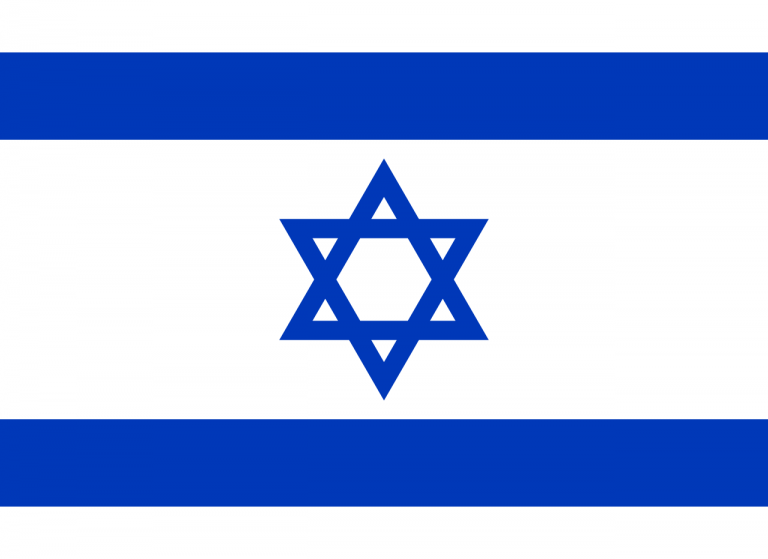
The official flag of the State of Israel (Israel Flag) , which represents the State, its sovereignty, institutions and citizens, both in Israel and around the world has a white background, with two horizontal stripes of dark blue and a Star of David with the same color.

israel flag

After the establishment of the State of Israel, the Provisional Council of State debated the flag of the State. On October 28, 1948 the flag of the Zionist movement was officially chosen to serve as the flag of the State of Israel mainly because of its popularity among the Jewish public.

The legal status of the flag was anchored in the Law of the Flag and the Symbol, and in the year 2018 it was granted constitutional status in the Basic Law: Israel – the nation-state of the Jewish people.

In the days preceding Yom HaAtzmaut – Israel Independence Day – the flag is proudly displayed on homes and cars.

Why is Israel’s flag blue and white

The famous Austrian Jewish poet Ludwig August Frankl devotes one of his poems to the “colors of the land of Judah”:

He stands in prayer and wrapped in a white robe. The hem of the white robe has broad blue stripes, crowned like the coat of the High Priest, adorned with ribbons of blue thread. The colors of the beloved country are white, blue and white, the borders of Judea and white, the glory of the priesthood, and the blueness of the heavens.

History of the flag of The State of Israel

After many design proposals and rejections, the flag with two stripes of blue (Tekhelet) on a white background (Lavan) representing an image of the prayer shawl with a blue thread was presented in 1884 at the celebrations marking the 100th anniversary of Moses Montefiore.

Tekhelet is a blue dye which was mentioned 49 times in the Hebrew Bible. It was used in the clothing of the High Priest, the tapestries in the Tabernacle, and the tassels on the Prayer Shawl.  The dye is sourced from a sea snail called the Chillazon

Another delightful story is that the flag represent the Exodus from Egypt. The Hebrew people are represented by the Star of David and the blue stripes represent the blue waters of the Red Sea.

The Capital of Israel – Jerusalem

0
Reading Time: 2 minutes

The Capital of Israel – Jerusalem. 15 fascinating Jerusalem facts.

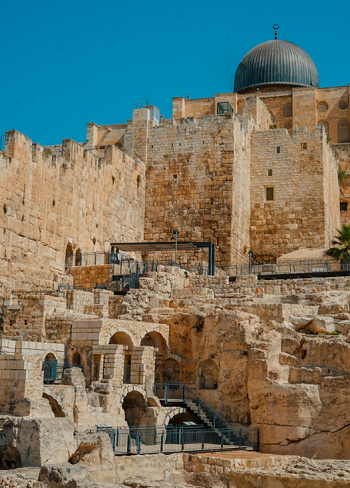
jerusalem ruins
Some of the ancient ruins in Jerusalem, Israel’s capital city – Image credit Unsplash

1.The capital of Israel is Jerusalem.  Jerusalem is one of the oldest and most well-known cities in the world, and is a significant city to many religions

2. As at October 2021, the World Population Review lists the population of Jerusalem at 944,000

3. The city of Jerusalem according to the Jewish Midrash, has 70 names”. The name Jerusalem is derived from the Hebrew word for ‘peace’ – shalom.

4. Today, Jerusalem is called Yerushalayim (Hebrew: יְרוּשָׁלַיִם‎).  Jerusalem is also affectionately called  “The City of Gold (Heb: Yerushalayim shel zahav)”.

5. Israel’s parliament and seat of government – The Knesset, is located in Jerusalem.

6. Jerusalem Day is an Israeli national holiday commemorating the reunification of Jerusalem in the 1967 Six-Day War

7. Jerusalem has more synagogues per capita than any city in the world.

8. Jerusalem’s Mount of Olives is home to 150,000 Jewish graves, dating back to the 1400s.

9. Under Israeli rule, Jews are not allowed to pray on the Temple Mount, their religion’s holiest site.

10. The Old City of Jerusalem is divided into the Muslim Quarter, Christian Quarter, Jewish Quarter and Armenian Quarter.

11. The Dome of the Rock is an Islamic shrine located on the Temple Mount

12. Jerusalem’s population is comprised of 61 percent Jews, 36 percent Muslims, 1 percent Arab Christians and 1 percent non-Arab Christians.

13. Nearly 37 percent of all Jerusalem families live below the poverty line, which represents 61 percent of all Jerusalem’s children.

14. Jerusalem is home to more than 400 high-tech companies.

15. The American Embassy was recently relocated to Jerusalem

If you’d like to share a Jerusalem fact with us, please do so in the comments section below.

Weekly Torah Portion: Parshat Hashavua VeZot Habracha

0

Reading Time: 5 minutes

Parshat Hashavua VeZot HaBracha

By: Rabbi Nissim Mordechai Makor

Rav Nissim Mordechai MakorVezot HaBracha is the 54th and final weekly Torah portion (פָּרָשָׁה‬, parashah) in the annual Jewish cycle of Torah reading and the 11th and last in the Book of Deuteronomy.  The parasha sets out the farewell Blessing of Moses for the 12 Tribes of Israel and concludes with the death of Moses.

The Day that Moshe Died

(Adapted from the Rosh of the Chumash)

When the time came for Moshe to die, he declared ‘I will not die, for I will live and relate the deeds of G-d’. But G-d replied in the negative, and that Moshe was obligated to go the way of all mankind.

So as a final request, Moshe asked that all the gates and all the depths should split open, and the nations of the world should see with their own eyes that there is no-one besides G-d. When G-d complied, Moshe announced ‘Ein od mi’Levado (There is none besides Him)!’ G-d’s response was that ‘Since you said about me ‘There is none other besides Me’, I will say about you “And there never arose a Navi in Yisrael like Moshe” ‘.

Candle lighting times for Parshat Hashavua VeZot HaBracha

Parsha Index

At that point, G-d Himself descended together with the three Angels, Micha’el, Gavri’el and Zagnegi’el. Gavri’el spread a sheet on Moshe’s bed, Micha’el a purple cover, and Zangnegi’el a cushion made of a precious wool. At that moment, G-d stood at his head and Zagnegi’el at his feet, Micha’el on one side and Gavri’el on the other. G-d ordered him to place his feet together, which he did, and to close his eye-lids one on the other, which he did.

Then He gently called his Soul to leave him, explaining how he had allotted for her a hundred and twenty years to be inside the body of Moshe, and how the time to leave it had now arrived. To which she replied that, in spite of knowing that G-d was the Master of Spirits and Souls, she did not wish to leave Moshe’s body, since there was no purer body in the world than it, a body that would not be subject to worms after death, and no fly or hornet had ever approached it during its lifetime. That was why she loved Moshe’s body and did not want to depart from it.

G-d replied that she should no longer delay, for her time had expired, and He would take her to the uppermost Heaven, and place her beneath His Throne of Glory, beside the Serafim, the Ofanim and the Angels. Yet again, she refused, insisting that she preferred to be inside the body of Moshe than in the company of the Keruvim and the Angels. And this time, she argued that two Angels, Uza and Aza’el, had descended to earth (prior to the Great Flood), had desired the daughters of the land and had even had relations with them, and had corrupted their ways, until G-d took them and suspended them between Heaven and earth. In contrast, Moshe had separated from his wife from the time that G-d revealed Himself to him at the Burning Bush. When G-d saw how loathe Moshe’s Soul was to leave its body, He drew her out with a kiss.

At that moment, G-d wept and announced ‘Who will stand up for Me against the evil-doers’ Who will pray to Me on behalf of My children?’ And the Angels wept and announced ‘Where is wisdom to be found, and where is the location of understanding?’

Whilst the Heavens wept and announced ‘The Tzadik is lost and nobody cares … They fail to understand that he was gathered in so that he should not see the evil that is destined to befall the world’.

The sun and the moon wept and announced ‘Understand you stupid people’, and the Mazalos wept and announced ‘and when will you foolish ones become wise?’ And the Divine Spirit said ‘Save oh G-d, for the pious are no more’.

“And there did not arise in Yisrael a Navi like Moshe”. This is what Shlomoh Hamelech was referring to when he wrote in Mishlei (31:29) “Many daughters did acts of valor, but you exceeded them all”. How is that?

Adam ha’Rishon claimed that he was greater than Moshe, in that he was created in the image of G-d. But Moshe replied that he was greater than Adam, for whereas Adam was stripped of the glory that was given to him when he was created, his remained with him even on the day of death, as the Pasuk testifies “and his moist did not depart from him”.

No’ach claimed that he was greater than Moshe, since he was saved from the Great Flood. But Moshe replied that he was greater still, for whereas he (No’ach) was not able to save his generation, he succeeded in saving Yisrael from extinction following the episode with the Golden Calf.

Avraham claimed that he was greater than Moshe, since he fed and sustained the wayfarers. But Moshe replied that he was greater still, for where Avraham had sustained gentiles, he had sustained the Jewish nation; and whereas Avraham fed them in the inhabited land, he had fed them in the desert.

Yitzchak claimed that he was greater than Moshe, because he had been bound on the Mizbei’ach and had, out of love for Hashem, stretched out his neck to be slaughtered, at which point he saw the Shechinah. But Moshe replied that whereas he (Yitzchak) had become virtually blind upon beholding the Shechinah, he (Moshe) spoke with the Shechinah, and as the Pasuk testifies, “his eyes did not become dim”.

Ya’akov claimed that he was greater than Moshe, for he struggled with an Angel and overcame him. But Moshe replied that if he met an angel on home ground, he (Moshe) met angels on their territory, in spite of which it was they who were afraid of him.

And this is what Shlomoh meant when he said “Many daughters did acts of valour, but you (Moshe) exceeded them all”.

Candle lighting times for Parshat Hashavua VeZot HaBracha

Parsha Index

The Pearls of Life

The Pearls of Life want to remind the nearly 100,000 who around the world now receive the Pearls shouldn’t allow the festivities of the Succos to forget Yom Kippur was only a week ago. HaRav Avigdor Nebenzahl tells us that as the Torah concludes its description of the Yom Kippur service, it presents a precis of sorts: This shall be to you an eternal decree to bring atonement upon the Children of Israel for all their sins once a year [Vayikra 16:34]. The entire Yom Kippur service is described by the Torah as chukat olam, an eternal decree or statute. The term chukim, as opposed to Mishpatim, implies mitzvot whose reasoning lies beyond the grasp of our limited human intellect. Yom Kippur is beyond Human Comprehension. What aspect of Yom Kippur is a chok? The entire concept of Yom Kippur is beyond our understanding! There can be no greater chok than a day that atones, a day that contradicts everything that we are accustomed to during the rest of the year. The concept of teshuvah [repentance] contradicts the regular order of the world. Anything a person does affects either the present or the future.  Is there anything we can do now that will retroactively affect what has already taken place?   Teshuvah is capable of doing just that! When we repent out of love [teshuvah me’ahavah], we are moving backward in time and transforming our past sin into a mitzvah. The moment Yom Kippur begins, the teshuvah [repentance] goes into effect. During that moment, the inexplicable happens the past is rewritten! Let us all keep that past rewritten with no new negative entries into our book of Life. 

Yeshiva Pirchei Shoshanim

As heard from my Torah Masters

Shabbat Shalom

Eurovision Song Contest 2019

0
Reading Time: 2 minutes

The Eurovision Song Contest 2019.

Tel Aviv to host the 2019 Eurovision Song Contest from May 14th – 18th.

It’s final! After months of speculation the 2019 Eurovision Song Contest will take place in Tel Aviv, Israel in May 14-18, 2019. This will be the first time in 20 years that Eurovision has been hosted in Israel.  The last time was when Dana International won the contest in 1998.  The following year, 1999, the Eurovision Song Contest was held in Jerusalem.

The contest first Semi Final will take place on May 14, while the second Semi Final on May 16. The Grand Final is scheduled for May 18, 2019.

eurovision 2019 tel aviv
Image credit: Eurovisionworld.com

If you are planning to visit Israel for the Eurovision Song Contest, you can base yourself in any of Israel’s 3 major cities.  Tel Aviv is less than 1 hour’s drive from the country’s capital – Jerusalem and it is also a very pleasant and comfortable, one hour train ride from Haifa.

While exploring Jerusalem make sure you take in the holy sites; The Western Wall, the Church of the Holy Sepulchre, The Dome of the Rock as well as the Israel Museum where you can see the Dead Sea Scrolls.

Take some time out in trendy Tel Aviv.  LGBT friendly, Tel Aviv is known as the city that never sleeps – fabulous cafes and restaurants, the Jaffa Port, the Carmel Market, Sarona and a White City Tour are a must.

No visit to Haifa is complete without a visit to the Bahai Temple and the terraces.  Haifa is the world center of the Bahai religion. Haifa also offer miles of golden beaches, mountains and forests and the Sea of Galilee is just an hour’s drive away.

If you have the time, hop on a bus and 4 hours from Tel Aviv you’ll be in snorkelers paradise – Eilat.  The aquarium, scuba diving, a ride on a glass-bottomed boat and Coral Beach should be on your bucket list.

How many times has Israel won the Eurovision Song Contest?

To date there have been four Israeli victories in the contest. Izhar Cohen and Alphabeta won in Paris in 1978 with the uptempo A-Ba-Ni-Bi. On home ground in Jerusalem the following year, Israel won again, this time with the song Hallelujah performed by Gali Atari & Milk and Honey. Unusually, Israel did not defend the title in 1980. The third victory came almost 20 years later in Birmingham in 1998. Singer Dana International took top honours with the song Diva, setting off widespread celebrations in Israel. Twenty years later, Israel earned their fourth victory at the 2018 contest in Lisbon, Portugal. The song was “Toy” sung by Netta Barzilai, which earned Israel their highest-ever score of 529 points.

The date chosen to host the Eurovision Song Contest in 1980 coincided with Memorial Day in Israel, and the country was forced to withdraw. This made Israel the only country to date unable to defend its title.